
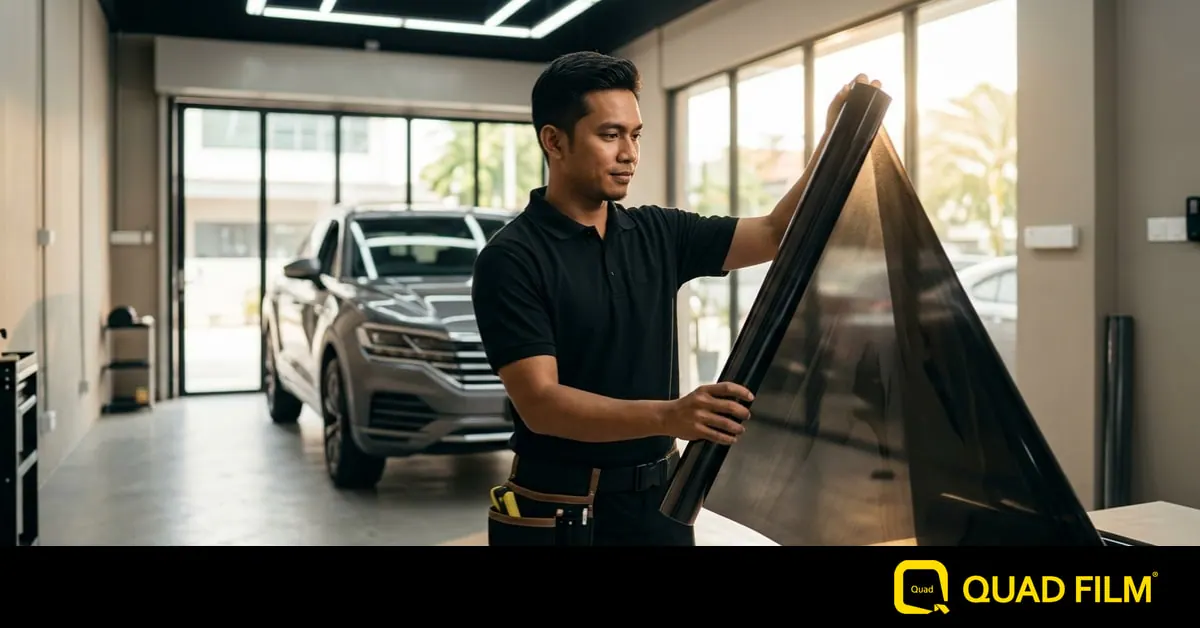
- JPJ allows a minimum of 70 percent VLT on the windscreen and front side windows, with no legal limit on the rear glass.
- Compare film by TSER, the total solar energy rejected, not by a single headline IRR figure.
- A real warranty is written, clearly scoped, and backed by a brand you can verify.
- The true cost of tint is measured over ten years of heat, not on the day you pay.
The best car tint in Malaysia is the film that keeps your cabin cool, stays legal under JPJ rules, and still performs after years of tropical sun, not simply the darkest or cheapest option on the menu. Most buyers decide in a hurry at the counter and regret it two years later when the film fades, bubbles, or turns purple. This guide gives you twelve clear checks to run before you pay, so you buy once and buy right.
What Counts as the Best Car Tint in Malaysia
The best tint is a balance of heat rejection, legal compliance, clarity, and lifespan. A film that blocks a lot of heat but sits below the legal VLT limit will fail inspection. A film that is perfectly legal but fades in two years is a poor value. The right film holds its performance and colour for years while keeping you on the right side of the law. Treat tint as a long-term purchase for the car, not a quick accessory.
In practical terms, the best film scores well on four fronts at once:
- Heat rejection. A high total solar energy rejected figure keeps the cabin cooler on a 35 degree afternoon and eases the load on your air conditioning.
- Legal compliance. The film must clear the JPJ minimum of 70 percent visible light transmission on the windscreen and front side windows.
- Clarity and night vision. A good film stays crisp after dark and does not turn the glass into a mirror.
- Lifespan. The film should hold its colour and performance for years rather than fading or turning purple after a season or two.
Why the Wrong Tint Costs More in Malaysian Heat
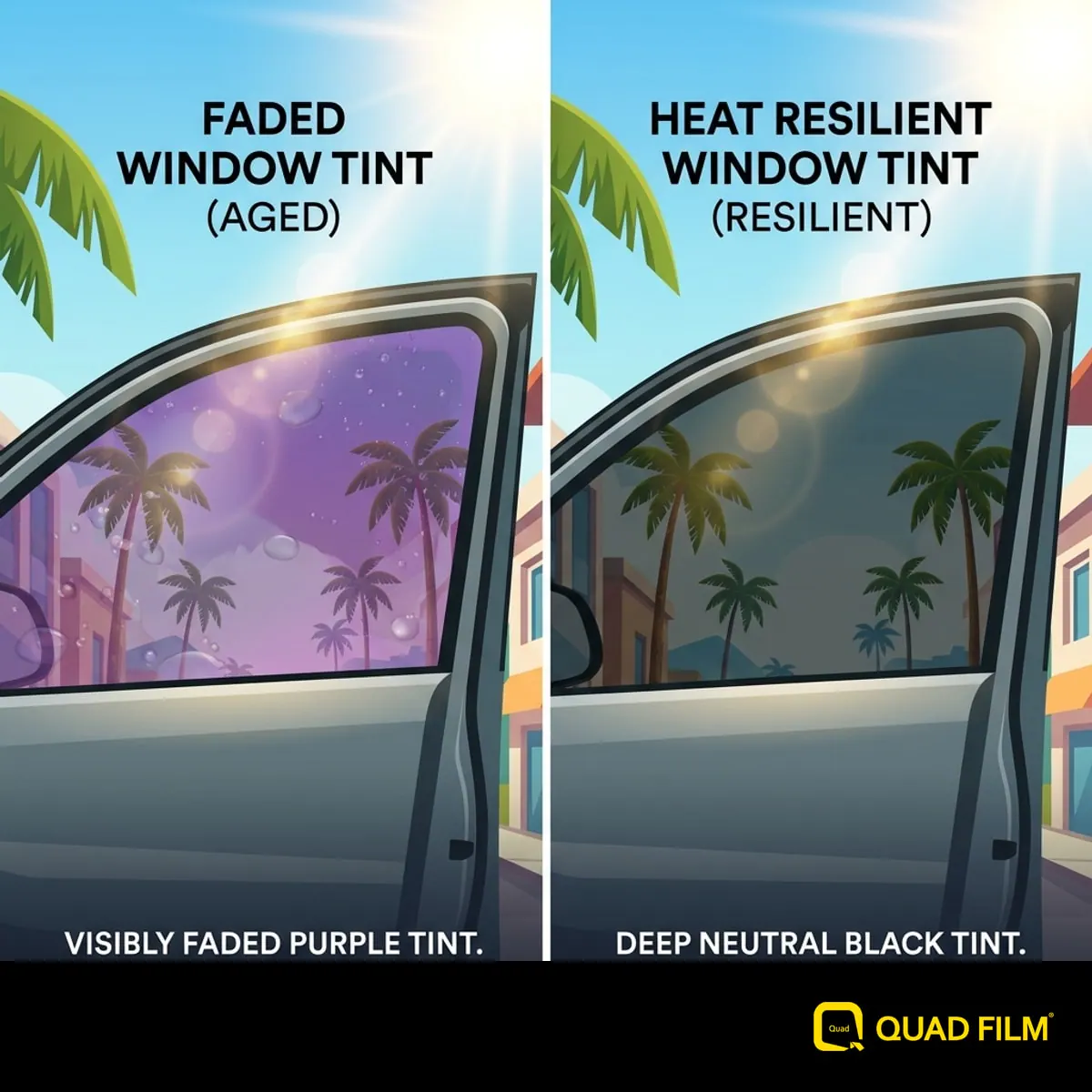
Malaysia runs hot and humid all year, and that is the harshest test a window film can face. Cheap dyed film breaks down under constant ultraviolet load, which is why you see older cars with purple or patchy windows. When film fails you pay twice, once for the original job and again to strip and replace it. A quality film carries a higher sticker price but a lower cost per year of service, which is the number that actually matters.
It helps to picture how a Malaysian car actually lives. Most of us park in open-air mall lots and roadside bays, crawl through traffic under a midday sun that can push the UV index to 11 to 13, then sit out a sudden monsoon downpour on the way home. Highway commuters on the PLUS and KESAS expressways add hours of direct glare on top of that. Cheap film faces this soak and bake cycle every single day, which is why it ages so quickly here while a quality film shrugs it off.
Checks 1 to 4: Legal Limits and Real Heat Performance
The first four checks decide whether a film is even worth considering. They cover the legal limits you have to meet and the real heat numbers that separate a premium film from a dark piece of plastic. Settle these before you look at anything else on the menu.
Check 1, JPJ VLT limits. Malaysian law requires a minimum of 70 percent visible light transmission on the windscreen and front side windows, while the rear windows have no limit. Confirm the installer measures VLT and can supply film that keeps the front legal.
Check 2, TSER over IRR. Total Solar Energy Rejected is the honest measure of how much heat a film keeps out across the full solar spectrum. Many shops quote a single high infrared rejection number because it sounds impressive, but it only describes part of the spectrum. Ask for the TSER figure and compare on that.
Check 3, ultraviolet rejection. Good film blocks close to 100 percent of ultraviolet light, which protects your skin and slows interior fading. Quad Film states up to 99 percent and 100 percent UV rejection across its tint range, depending on the series.
Check 4, glare and clarity. A film that cuts heat should not turn the windscreen into a mirror or wash out night vision. Look for a high-clarity film that keeps the view crisp.
Checks 5 to 8: Film Technology, Warranty, and Signal Safety
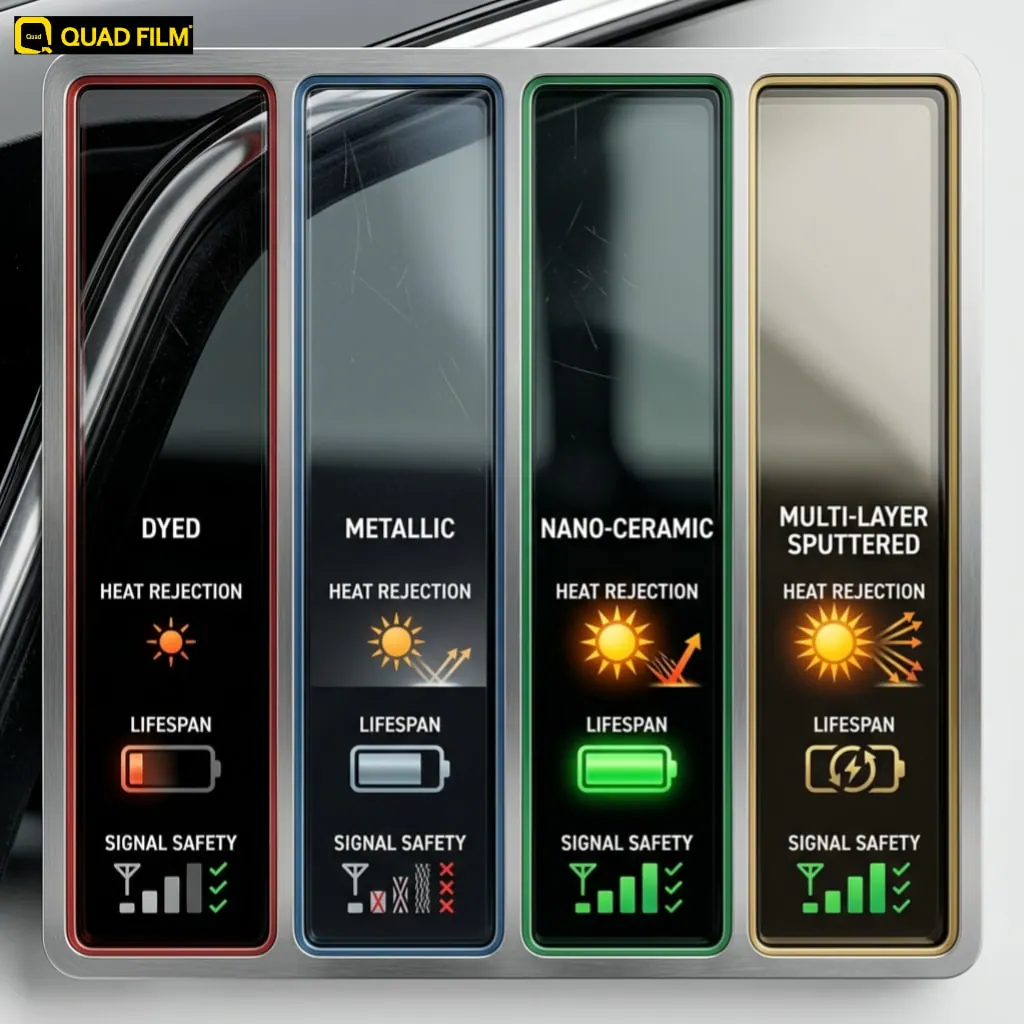
Check 5, film technology. The four broad families are dyed, metallic, nano-ceramic, and multi-layer sputtered. They age very differently in heat, which is covered in the comparison below.
Check 6, warranty length and scope. A serious film carries a written warranty against fading, bubbling, and delamination. Quad Film lists warranties from 5 years on its MATRIX nano-ceramic film up to 15 years on its MEGALUX multi-layer sputtered film. Read what the warranty actually covers and whether it transfers.
Check 7, signal safety. Modern cars rely on RFID toll tags, GPS, and keyless entry. Note that Touch n Go SmartTAG is infrared based and is not affected by window film. For radio based systems, Quad Film states its MATRIX nano-ceramic film is non-conductive and friendly to SmartTag and RFID. If signal safety matters to you, ask specifically about the film going on the windscreen.
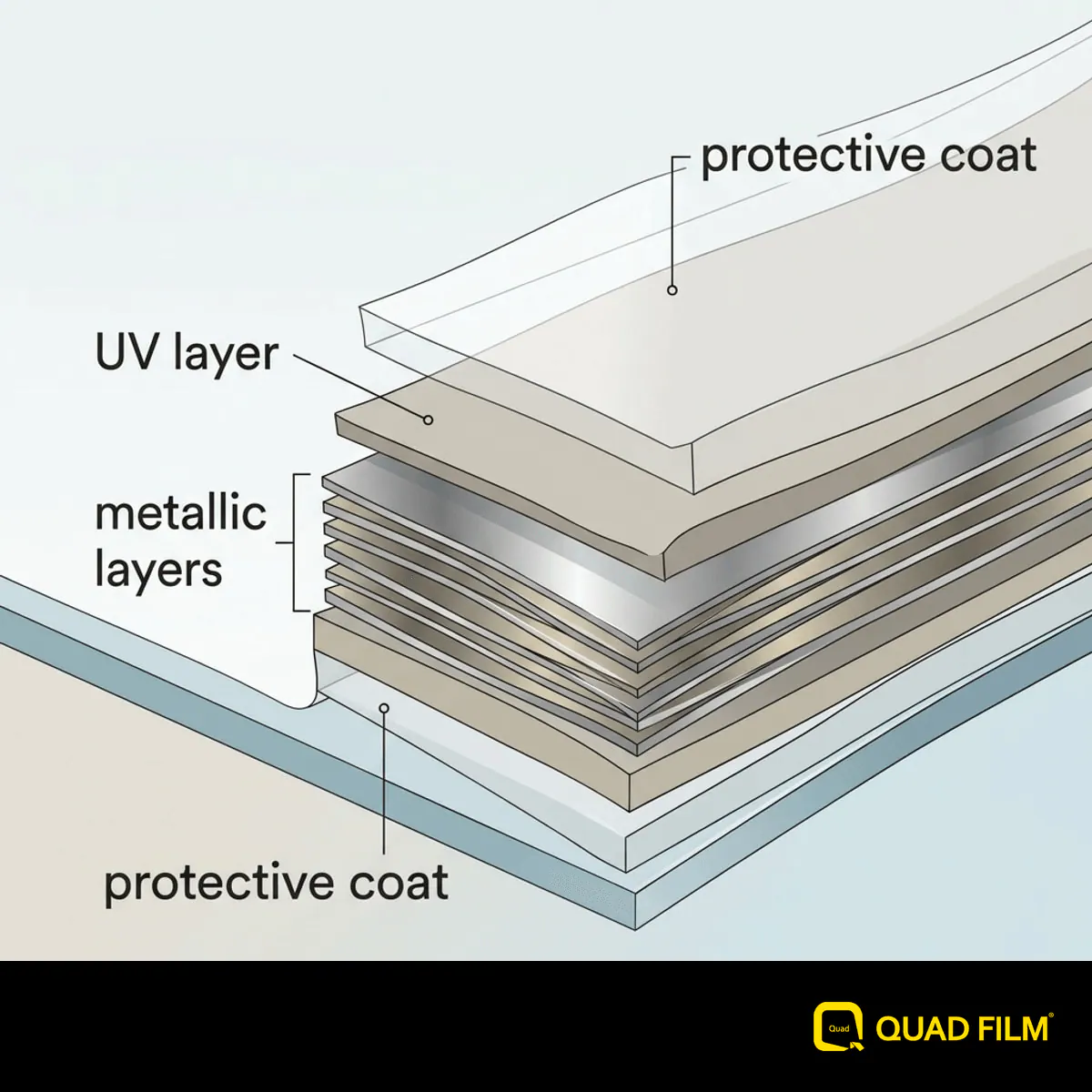
Check 8, build and layers. Premium films are built in many layers. Quad Film uses a German Leybold dual-vacuum chamber and up to 36 rare earth metals in its sputtered range, with MEGALUX at 48 layers and METALUX at 24 layers.
Checks 9 to 12: Installer, Price, and Scam Red Flags
Check 9, installer credentials. Film is only as good as the hands that fit it. Ask how long the installer has worked with the specific film, and ask to see recent work on a similar car.
Check 10, install environment. A dust-free, enclosed bay matters. Open-air installs trap dust and create the specks and bubbles you will stare at every day.
Check 11, price over time. Divide the price by the warranty years to get a cost per year. A RM1,000 film that lasts 5 years and a RM4,600 film that lasts 15 years are closer in real cost than the stickers suggest.
Check 12, scam red flags. Be wary of unbranded rolls, missing warranty cards, IRR numbers with no TSER, and prices that look too good. Verify the brand and the warranty registration before you pay.
Tint Types Compared
Four broad families of film sit on the Malaysian market, and they age very differently under our heat. Dyed film is the cheapest and the shortest lived, while multi-layer sputtered film holds its performance the longest. The table below sums up how they compare before we look at each in turn.
| Film type | Heat rejection (TSER) | Warranty | Best suited for |
|---|---|---|---|
| Dyed film | Low | Short, often none | Tight budgets and short ownership |
| Metallic or single-layer sputtered | Moderate to good | A few years before oxidising | Mid-priced heat rejection |
| Nano-ceramic (Quad Film MATRIX) | 60 to 73 percent | 5 years | City drivers wanting signal friendly comfort |
| Multi-layer sputtered (Quad Film MEGALUX and METALUX) | 70 to 85 percent | 10 to 15 years | Long-term owners and highway drivers |
Dyed film
The cheapest option. It darkens the glass but offers weak heat rejection and fades fastest, often turning purple within a couple of years.
Metallic and single-layer sputtered film
Better heat rejection through a reflective metal layer, but a single layer can oxidise within a few years and may interfere with some signals.
Nano-ceramic film
Non-metallic and signal friendly. Quad Film MATRIX is a nano-ceramic film at 2 mil with a 5-year warranty and a TSER of 60 to 73 percent, a strong choice for the windscreen.
Multi-layer sputtered film
The longevity leader. Quad Film MEGALUX is a 48-layer film at 4 mil with a 15-year warranty and a TSER of 72 to 85 percent, while METALUX is 24 layers with a 10-year warranty and a TSER of 70 to 83 percent. These hold their performance far longer than single-layer films.
Which type suits most Malaysian drivers
For most owners the choice comes down to nano-ceramic against multi-layer sputtered. A nano-ceramic film like MATRIX is the value pick for city driving and anyone who wants a signal friendly film on the windscreen. A multi-layer sputtered film like MEGALUX or METALUX is the long-term pick, with the highest TSER in the Quad Film range and a warranty that runs for a decade or more. Dyed and single-layer metallic films make sense only for very short ownership or the tightest budgets.
Common Mistakes When Buying Car Tint
The most common mistake is choosing by darkness alone, since a dark dyed film can reject less heat than a lighter premium film. The second is trusting a lone IRR number. The third is skipping the warranty card. The fourth is paying for an open-air install that traps dust. Avoid these four and you avoid most tint regret in Malaysia.
A few more traps catch buyers every week:
- Not measuring VLT before fitting. Confirm the front glass will stay at or above the 70 percent JPJ minimum so the car passes inspection.
- Ignoring your signal needs. If a signal friendly windscreen matters to you, say so up front, since only the MATRIX nano-ceramic film is described as friendly to SmartTag and RFID.
- Skipping the cost per year maths. A cheap film replaced twice can cost more than a premium film fitted once.
- Trusting a vague lifetime claim. A promise with no written, scoped warranty card behind it is not a warranty at all.
How to Match Tint to Your Budget and Driving Pattern
The right film for you depends on how you drive, where you park, and how long you plan to keep the car. Use this quick guide to narrow the choice before you ask for a quote.
- Short city trips, mostly covered parking. A quality nano-ceramic film keeps the cabin comfortable at a sensible price.
- Long highway runs on the PLUS or KESAS, daily sun parking. A multi-layer sputtered film pays back through higher TSER and a far longer lifespan.
- Planning to keep the car many years. Lean towards the longest warranty you can justify, since cost per year falls the longer the film lasts.
If you mostly drive short city trips and park indoors, a quality nano-ceramic film keeps the cabin comfortable at a sensible price. If you face long highway runs, daily sun parking, or you plan to keep the car for many years, a multi-layer sputtered film pays back through lower heat and a much longer lifespan. Full-car tint pricing from Quad Film runs from about RM1,000 for MATRIX to about RM4,600 for MEGALUX, so there is a clean step up at each budget. When you are ready, ask a verified installer to measure your glass and recommend a legal, high-TSER setup for how you actually drive. You can compare the range on the Quad Film window tint page and find a vetted fitter through the installer directory.
Closing
The best car tint in Malaysia is the one that stays cool, stays legal, and stays looking right for years. Run these twelve checks, compare on TSER, confirm the warranty, and choose an installer who can prove the work. Get those right and the film will earn its price every hot afternoon you spend behind the wheel. For the full picture, start with our complete car tint guide, then read how nano-ceramic compares to sputtered film and why cheap film turns purple.
Frequently Asked Questions
What is the best tint for a car in Malaysia?
The best tint balances high TSER heat rejection, legal VLT, clarity, and a long warranty. A multi-layer sputtered film suits long-term owners, while a quality nano-ceramic film suits city drivers on a tighter budget.
Is 70 percent tint legal in Malaysia?
Yes. JPJ requires a minimum of 70 percent VLT on the windscreen and front side windows. The rear glass has no legal limit.
How much should car tint cost in Malaysia?
Quality full-car tint ranges from about RM1,000 to about RM4,600 depending on the film series. Judge value by cost per year over the warranty, not by the sticker alone.
Does darker tint keep a car cooler?
Not necessarily. Heat rejection comes from the film technology and its TSER, not from how dark it looks. A lighter premium film can reject more heat than a dark dyed film.
How long does good car tint last?
A premium multi-layer sputtered film can carry a warranty of 10 to 15 years, while a quality nano-ceramic film is typically warranted for 5 years.
Does car tint block Touch n Go SmartTAG or RFID?
No. Touch n Go SmartTAG is infrared based and is not affected by window film. For radio based systems like RFID, Quad Film states its MATRIX nano-ceramic film is non-conductive and friendly to SmartTag and RFID, so ask for that film on the windscreen if signal safety matters to you.
Why does cheap car tint turn purple?
Purple film is dyed film that has broken down under constant ultraviolet load. The dye fades unevenly and shifts colour, which is common on older cars left in Malaysian heat. A nano-ceramic or multi-layer sputtered film resists this and holds its neutral colour for years.
What is the difference between TSER and IRR?
TSER, or total solar energy rejected, measures how much heat a film blocks across the full solar spectrum. IRR describes only the infrared portion, so a high IRR number alone can look impressive while the film rejects less total heat. Always compare films on TSER.
Protect your Investment today
Don't wait for stone chips to ruin your paint. Speak to our experts about custom PPF and Tinting solutions.