
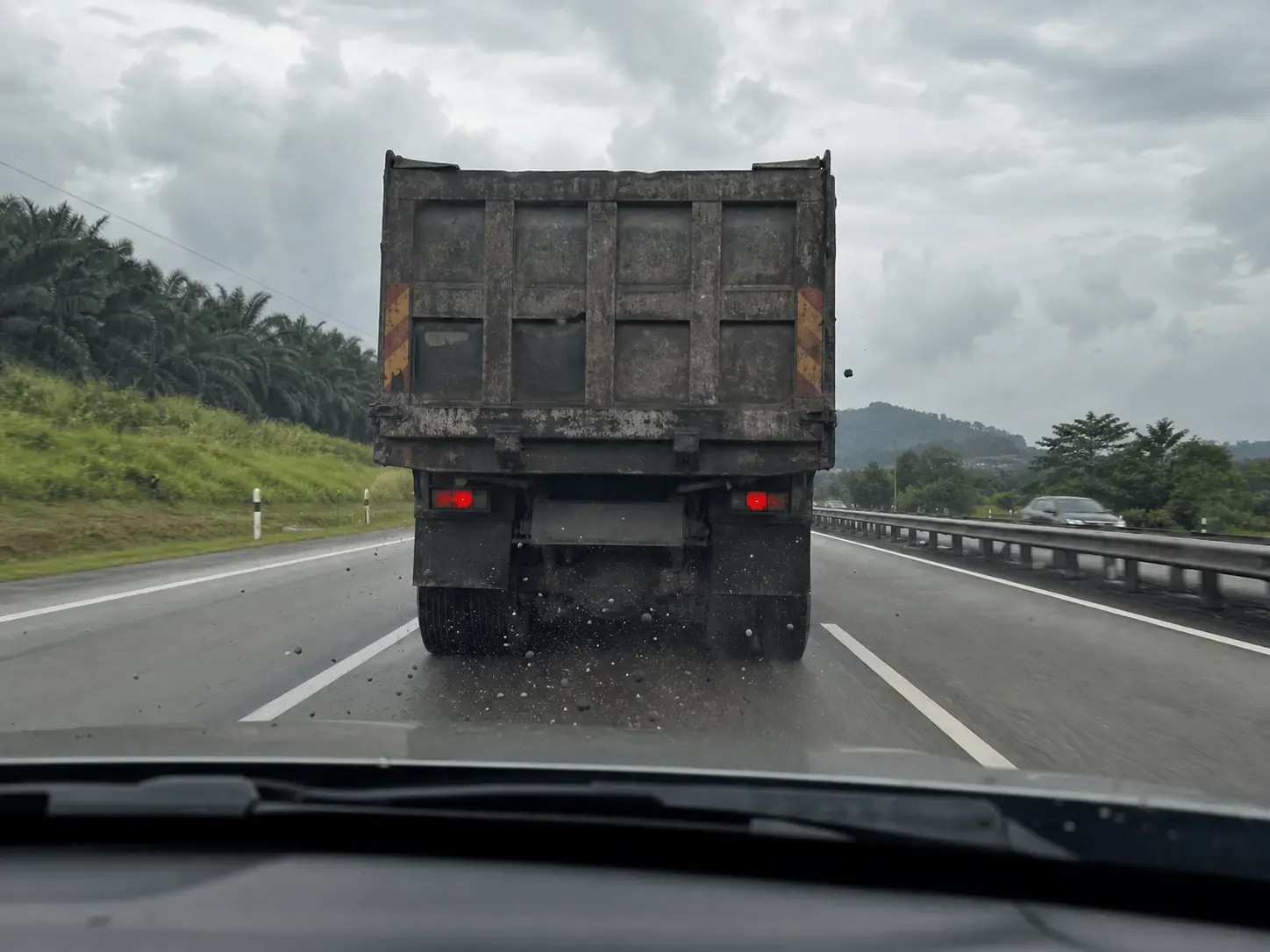
The lorry in front of you
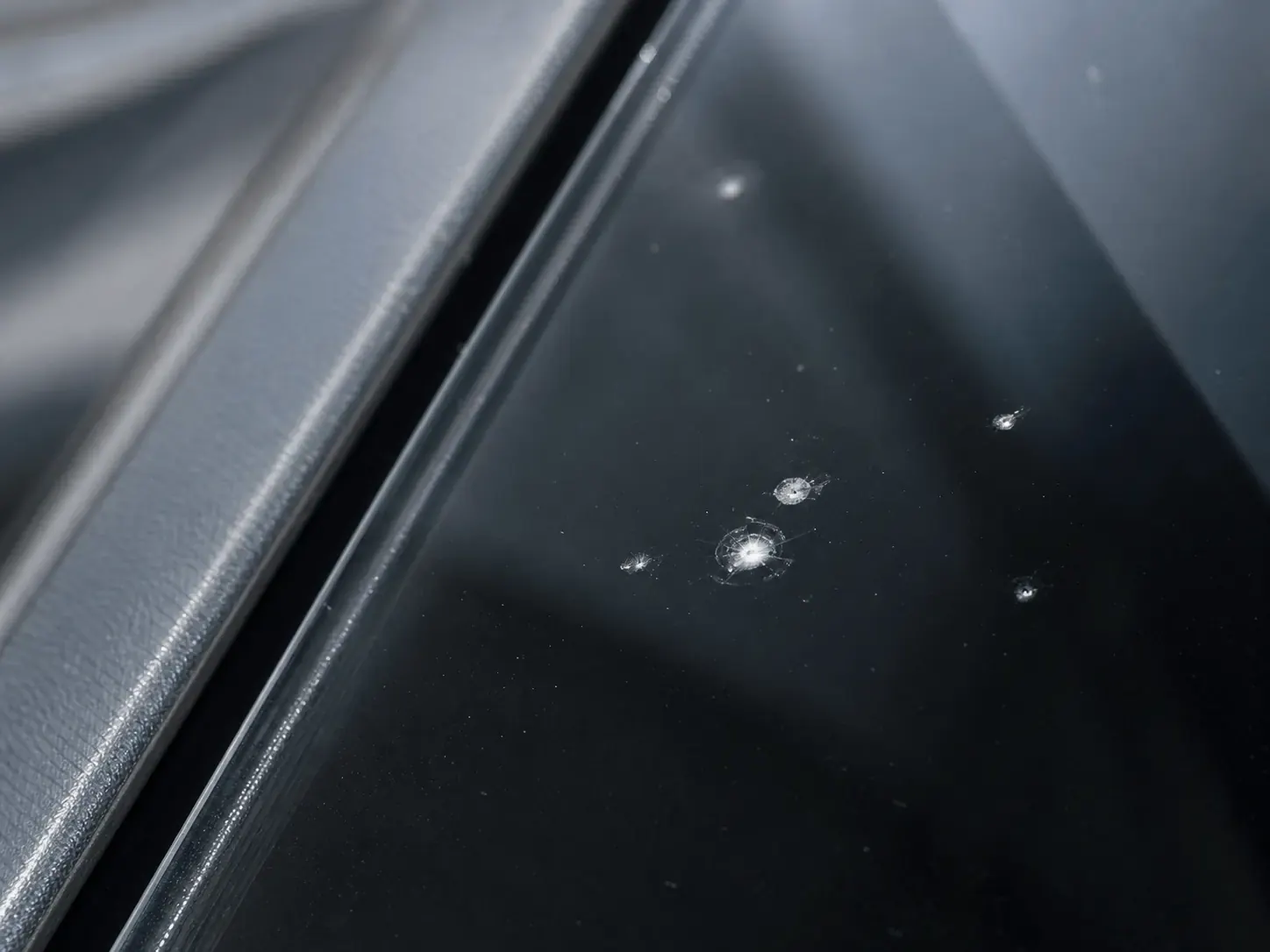
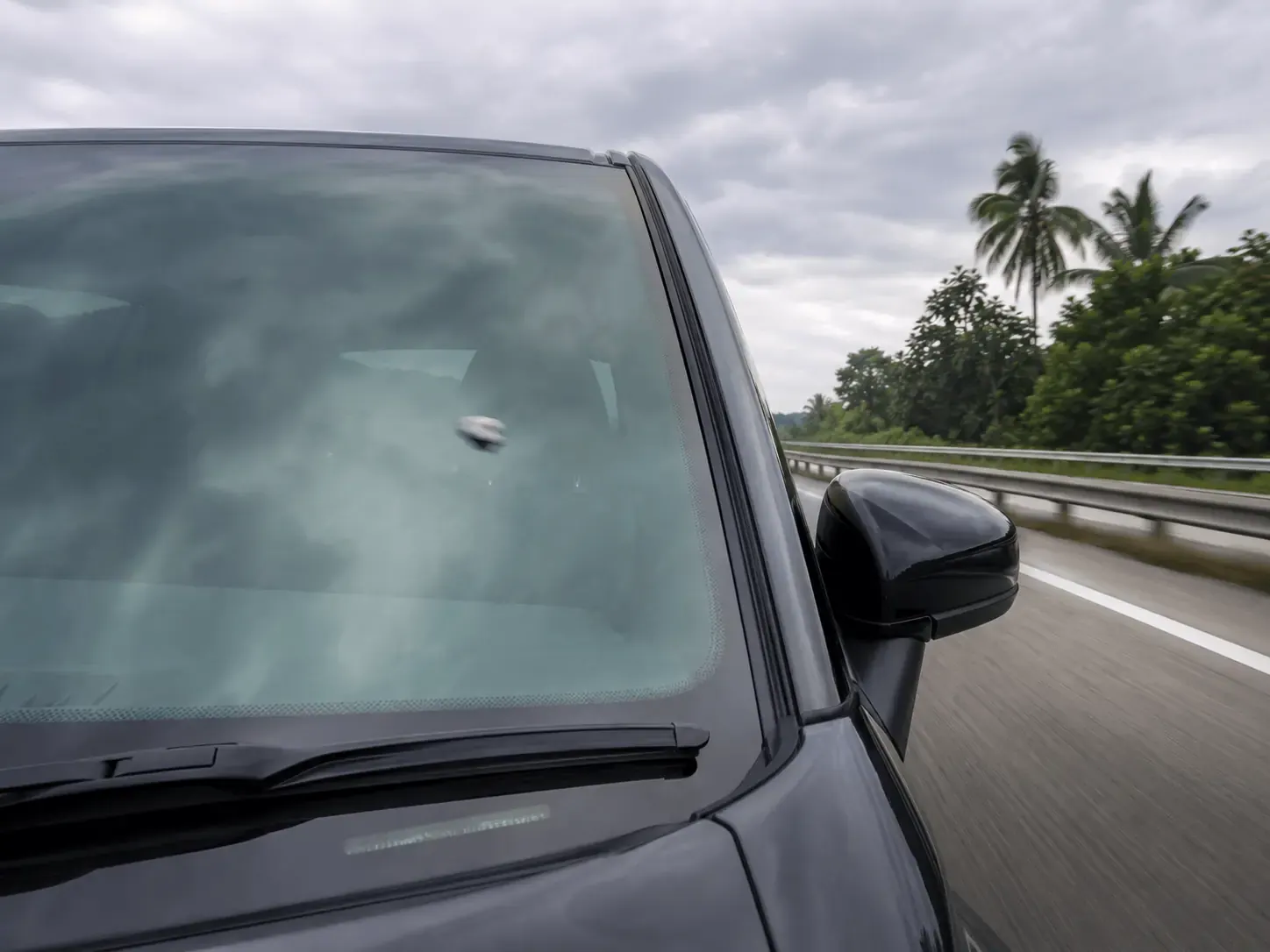
A lorry tyre flicks a stone at your windscreen at 110 km/h. The stone chips the glass. In our hot weather, that small chip grows into a long crack within weeks. By then, repair is not possible. You need a new windscreen.
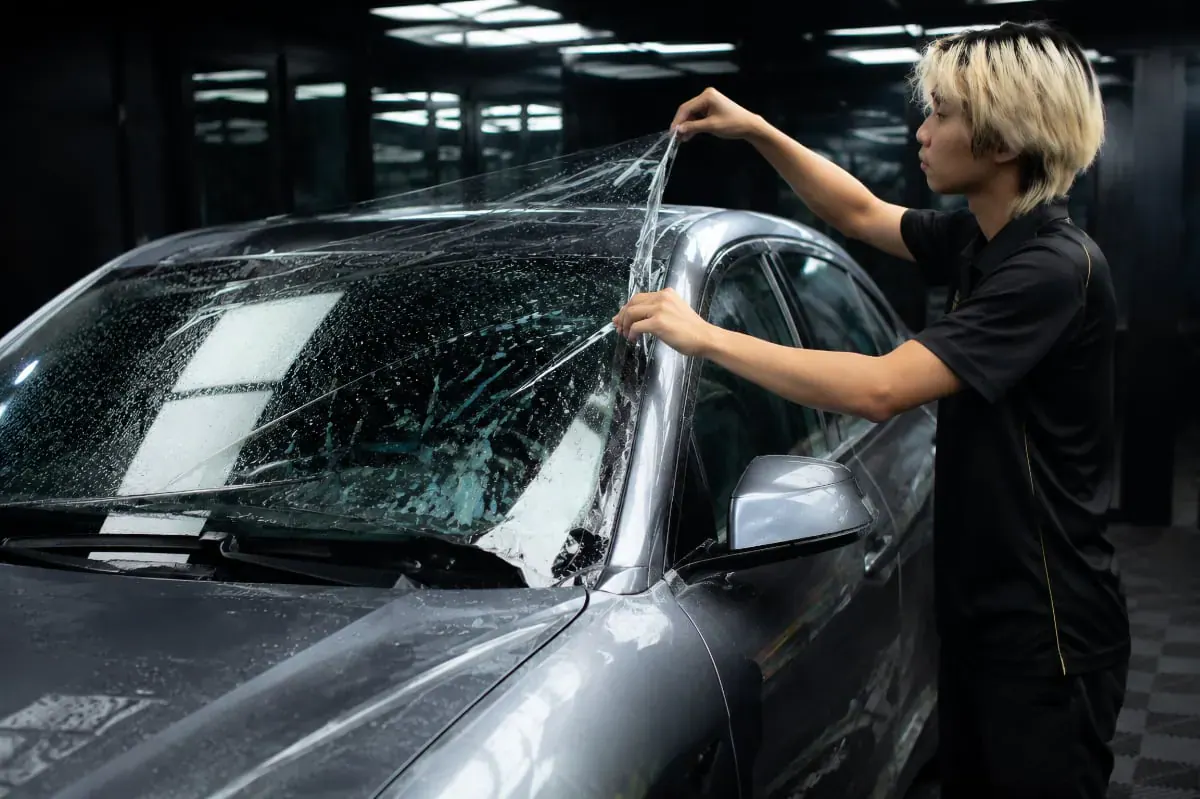
A lorry tyre flicks a stone at your windscreen at 110 km/h. The stone chips the glass. In our hot weather, that small chip grows into a long crack within weeks. By then, repair is not possible. You need a new windscreen.
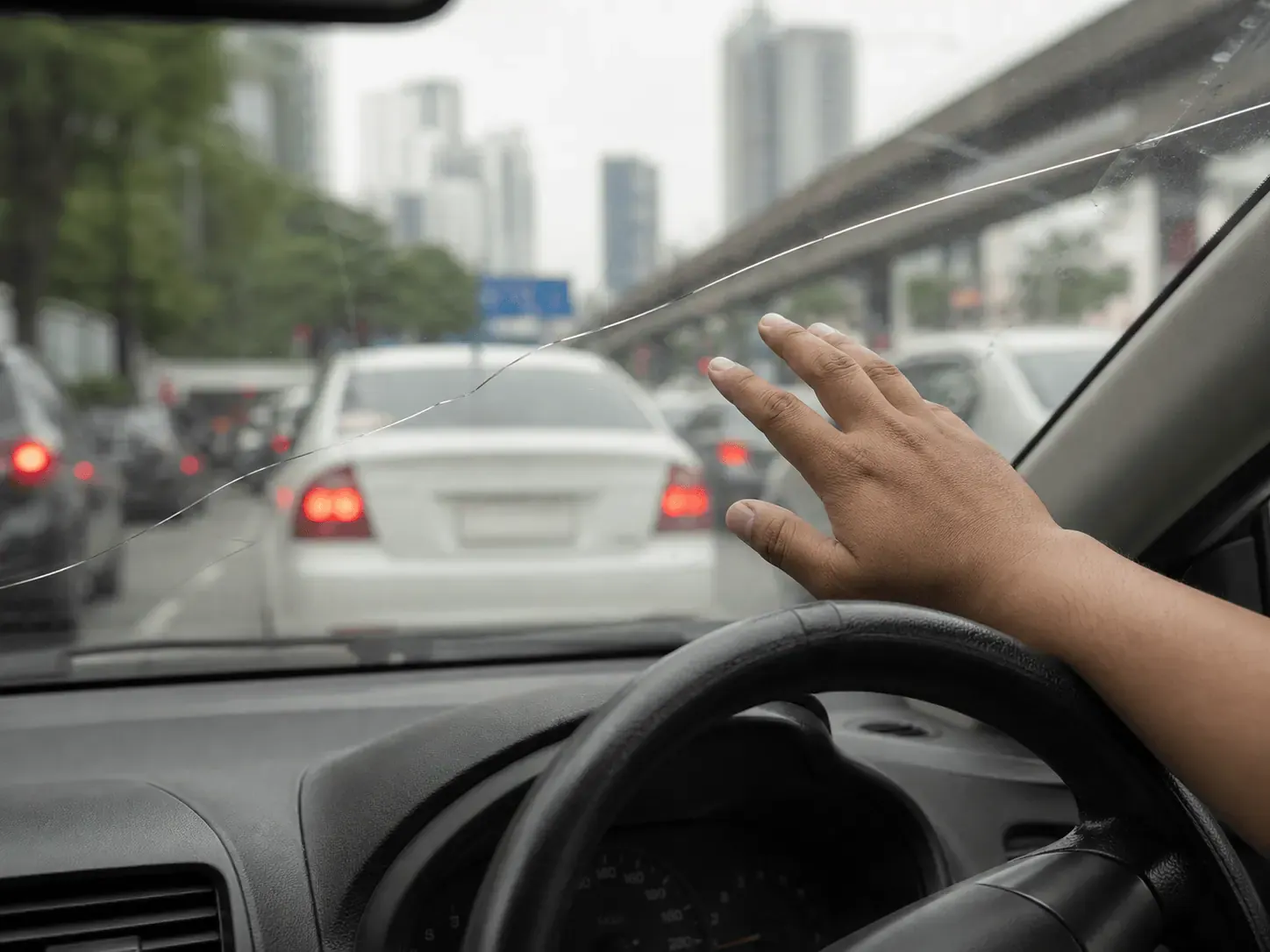
A basic windscreen starts around RM800. If your car has acoustic glass, rain sensors, HUD, or a front camera, the bill jumps to RM3,000 to RM5,000. Then the workshop still needs to recalibrate the camera. EV and premium car owners pay the most.

Windscreen insurance pays once. After you claim, your windscreen cover premium goes up at renewal. So many drivers end up paying from their own pocket just to keep their record clean.
Windscreen protection film is a clear TPU layer installed on the outside of your car windscreen. It absorbs stone chips and road debris before they reach the glass. Think of it as a screen protector for your windscreen. The stone damages the film, and the glass under it stays safe. Quad Film Windscreen Protection Film uses a 5.5 mil (140 micron) optical-grade TPU, the same material class as premium paint protection film. It passes 95% of light and has haze below 0.5, so you will not see it from the driver's seat. If a very hard hit does break the glass, the film holds the broken pieces together instead of letting them fly into the cabin.
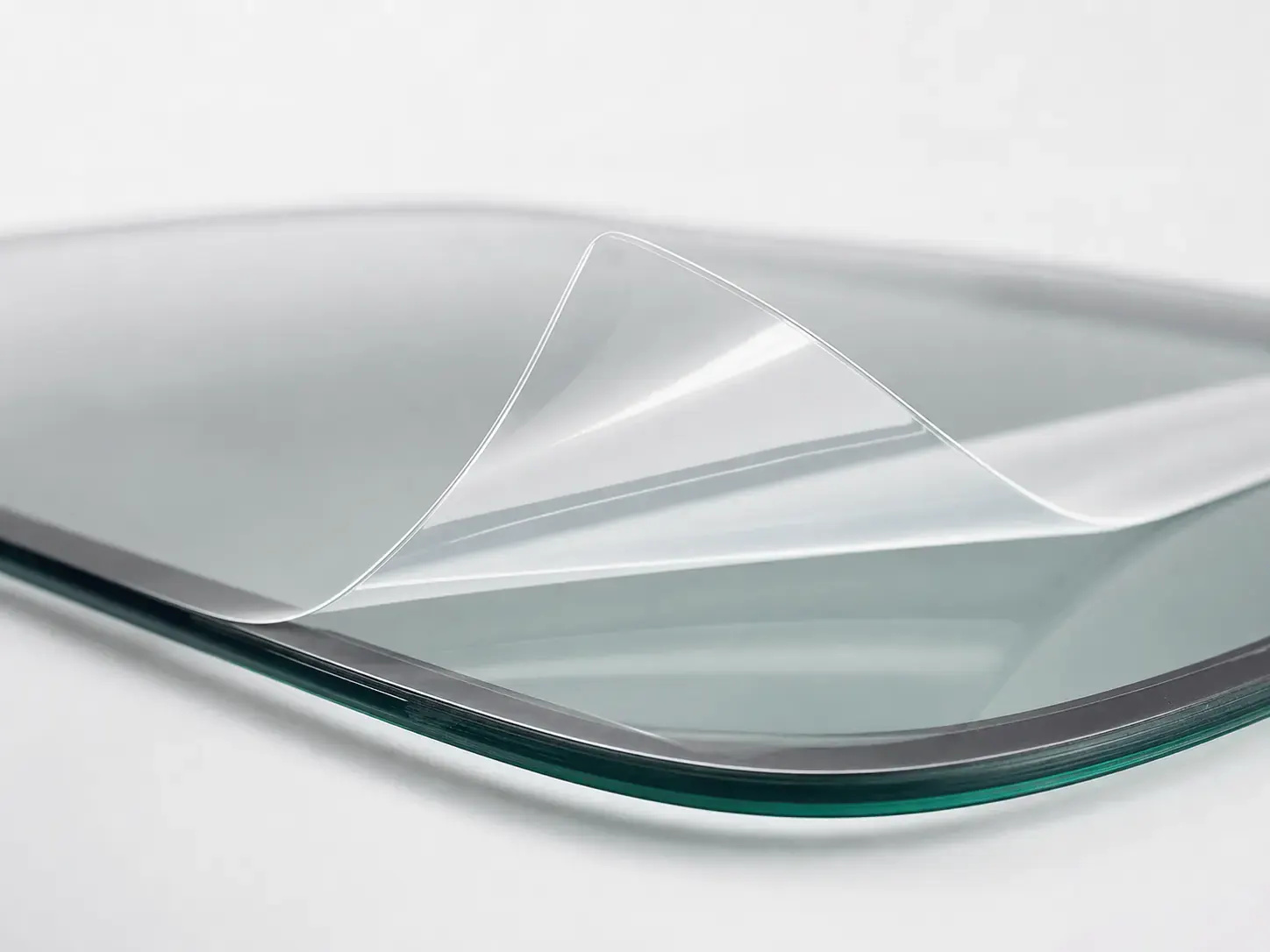
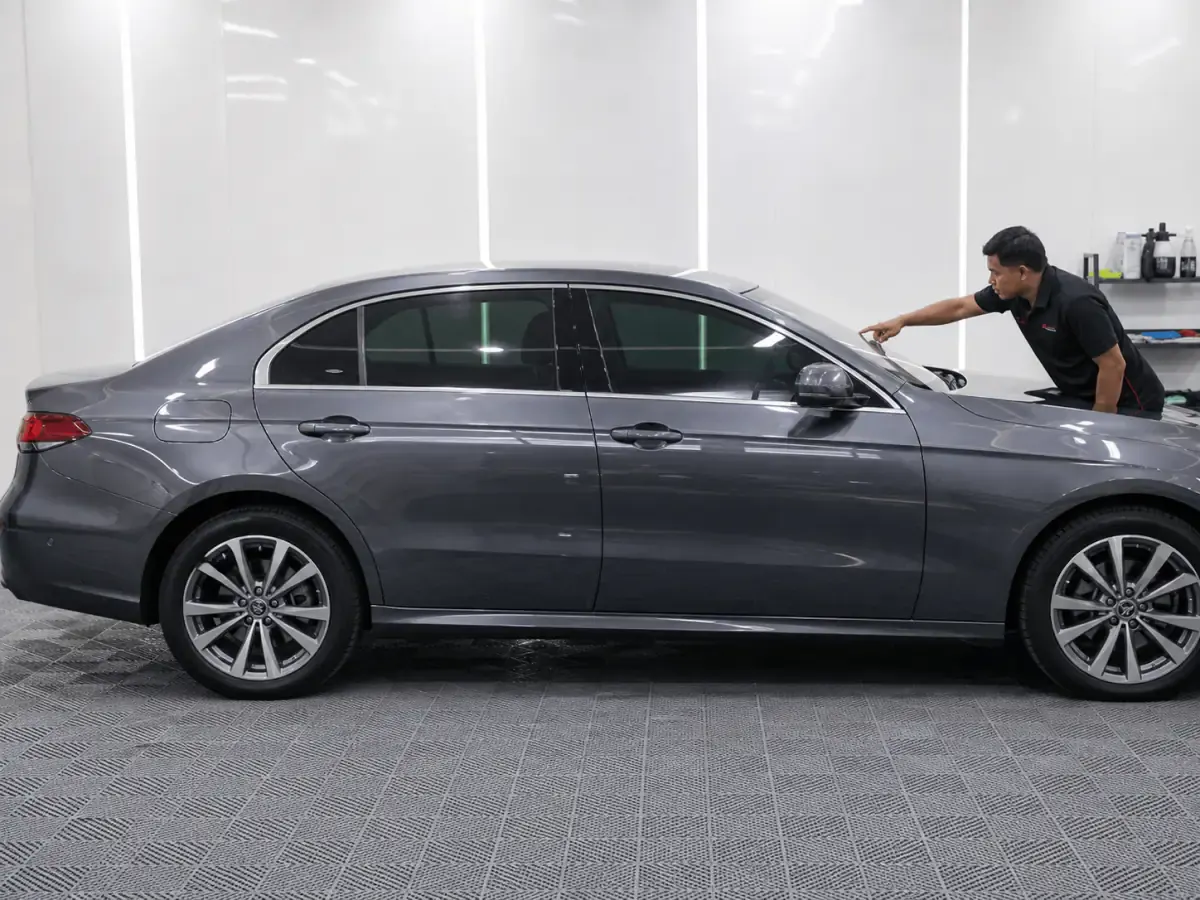
No. Tint goes on the inside of the glass and blocks heat. Windscreen Protection Film goes on the outside and blocks impact. Tint protects you from the sun. Windscreen Protection Film protects the glass itself. They do different jobs, and they work well together. If your car already has tint, this film adds the protection your tint cannot give.
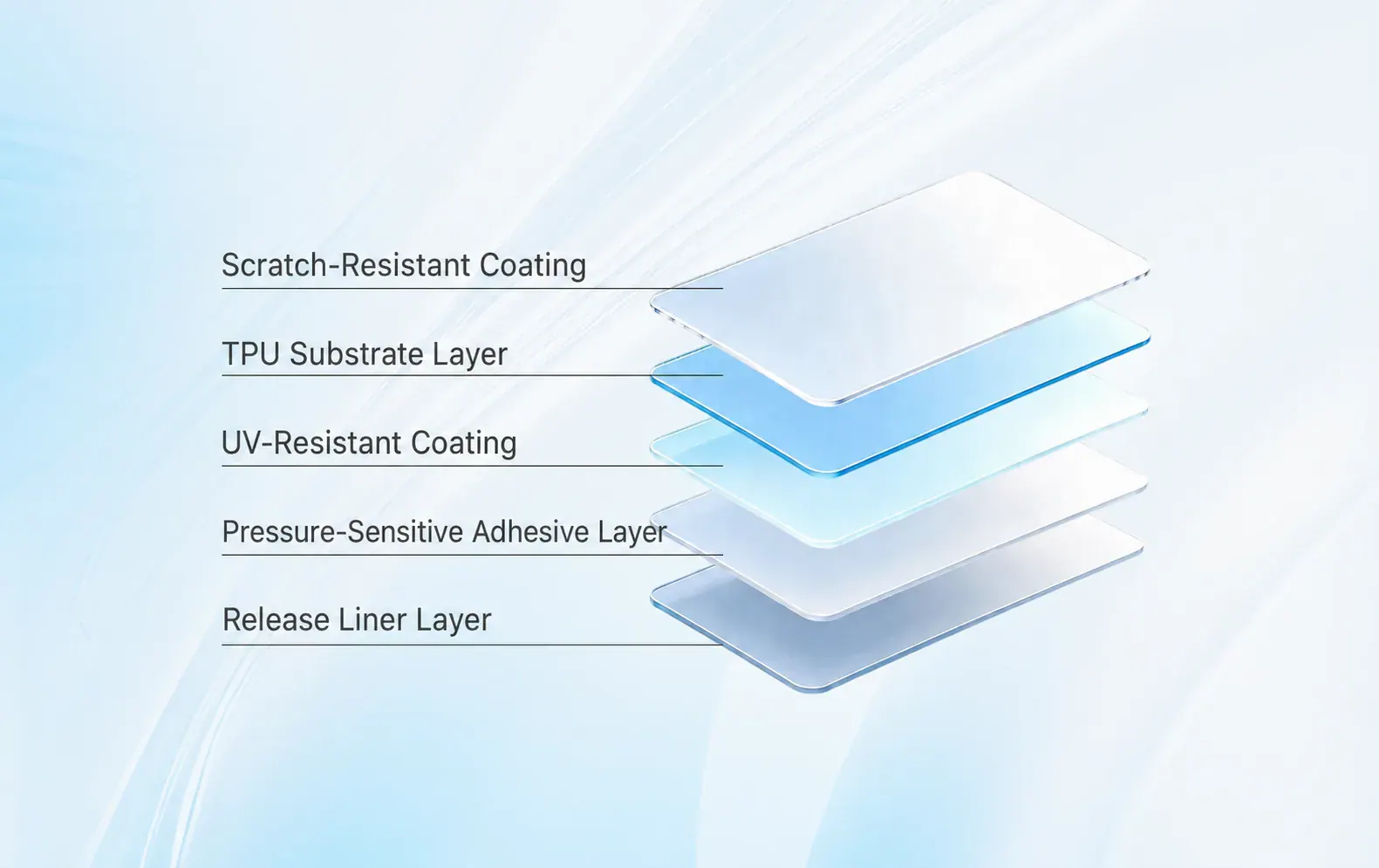
See Quad Film window tintWindscreen Protection Film is more than a sheet of clear plastic. Each layer has one job, from taking wiper wear at the surface to holding the film flat against the windscreen.
The road-facing surface takes wiper contact, rain and grime. Its hydrophobic finish sheds water, while warmth helps light scratches close.
The flexible 5.5 mil core absorbs and spreads the force from small stones instead of passing the full impact straight into the glass.
This layer filters UV and helps the film resist yellowing under Malaysia's sun while keeping the view through the windscreen clear.
A clear adhesive bonds the film evenly to the windscreen. It supports wet positioning during installation without adding visible distortion.
The final layer protects the adhesive in the roll. The technician removes it during installation, so it does not remain on the car.
01
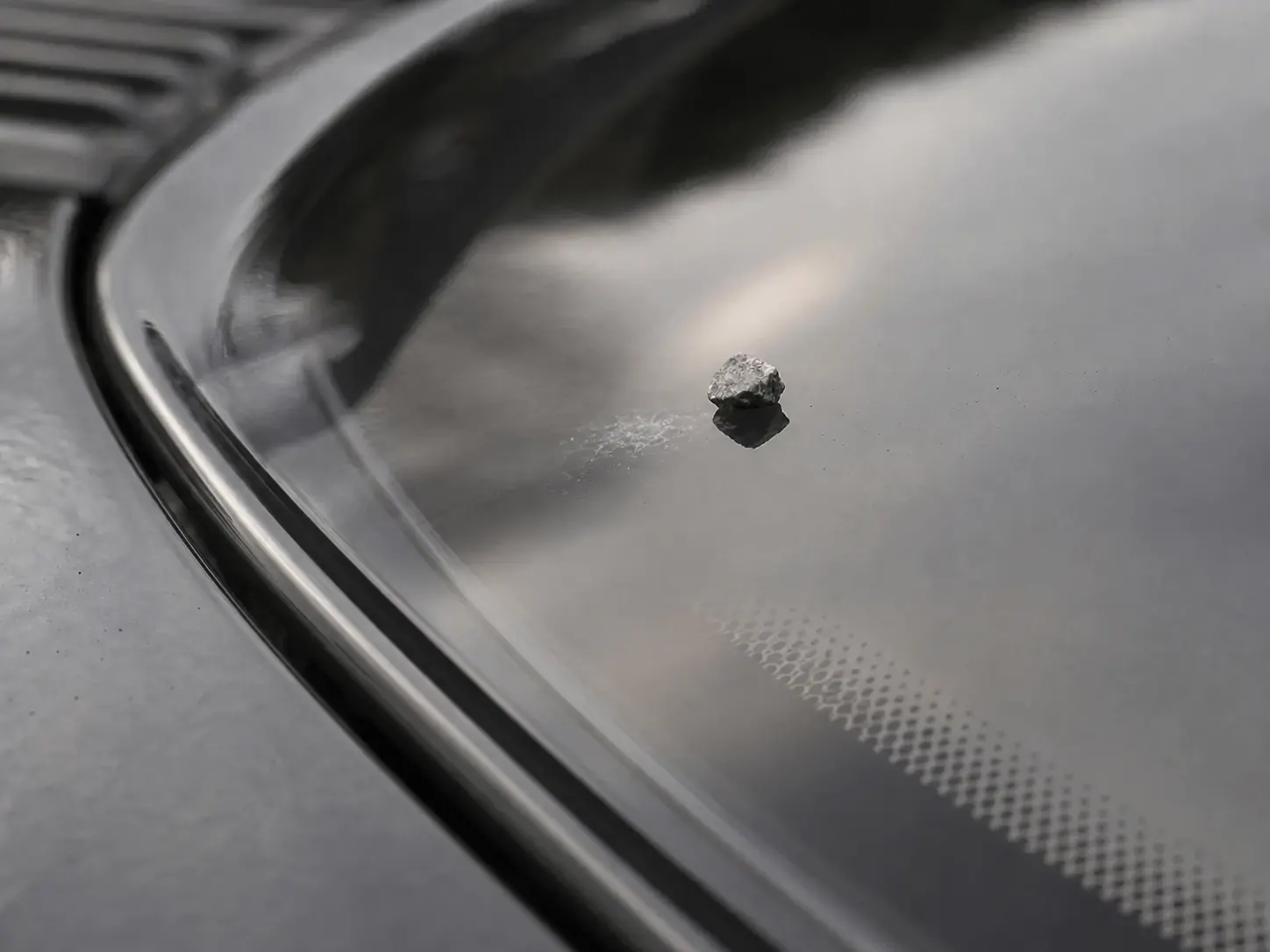
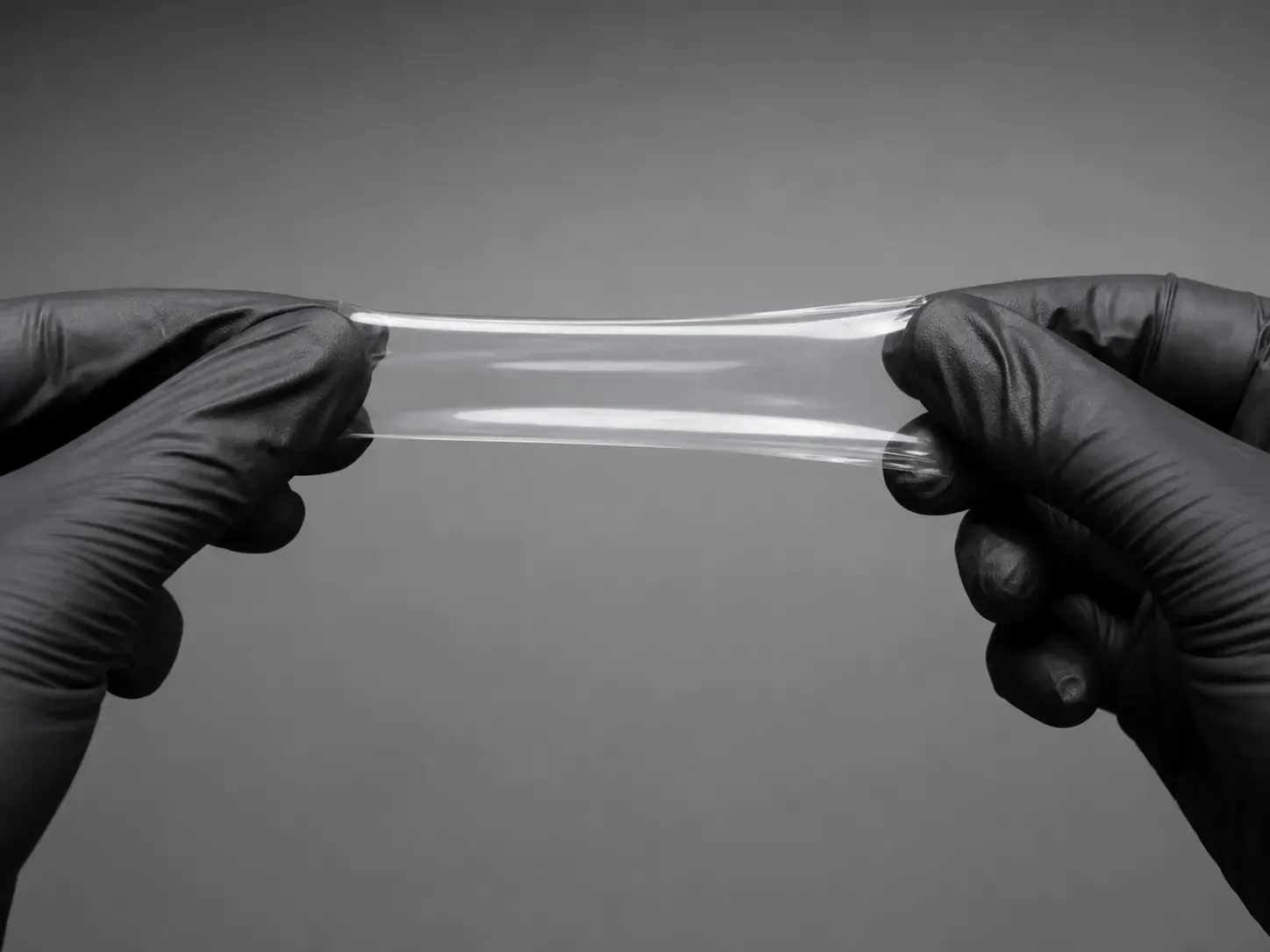
TPU is soft and stretchy, so it absorbs the force of a stone hit. You get a small mark on the film, not a chip in your glass. After a few hits, you change the film for a few hundred ringgit and keep your original windscreen. And if a big impact does crack the glass, the film grips the broken pieces so they do not spray into the car.
02
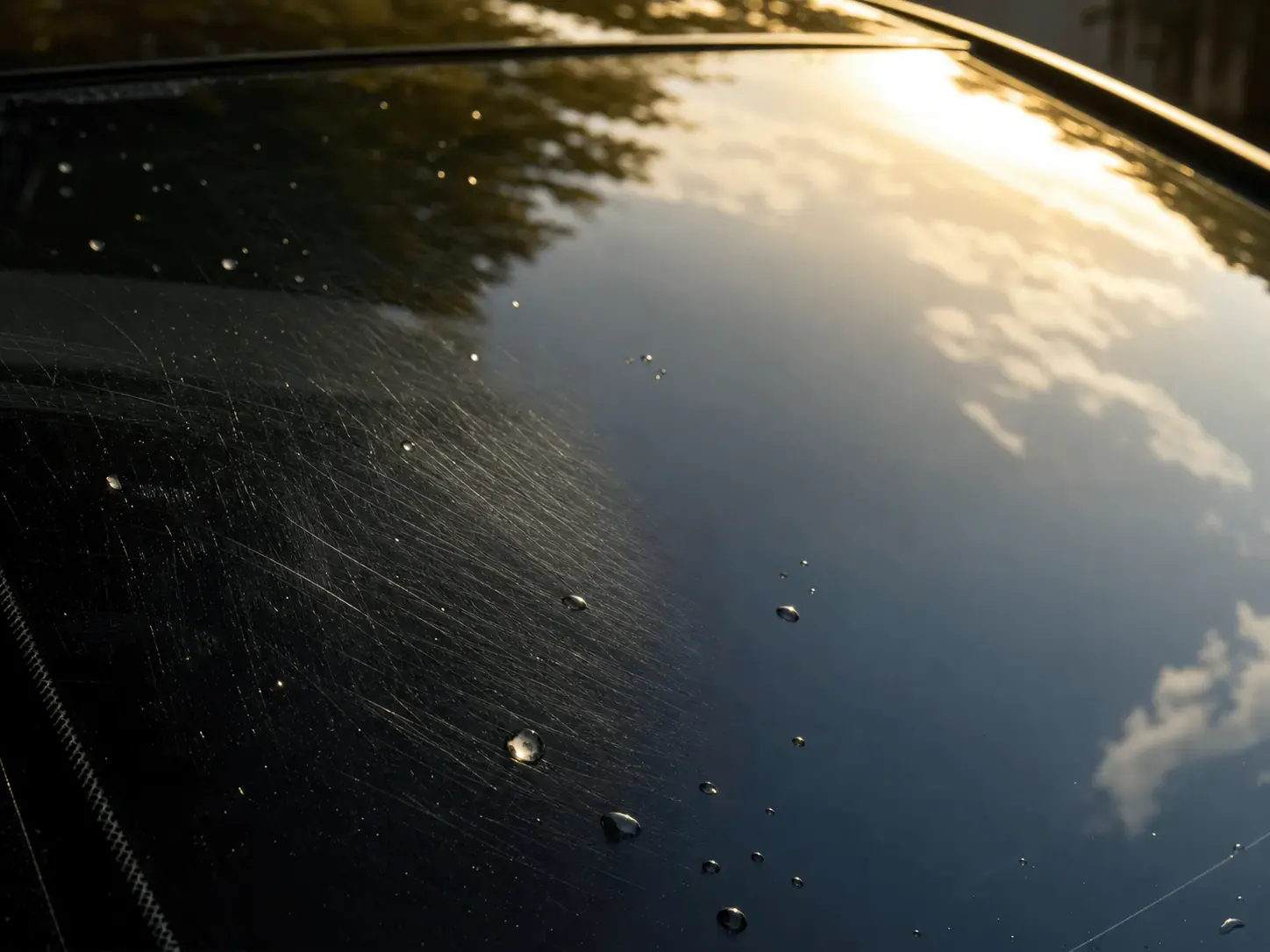
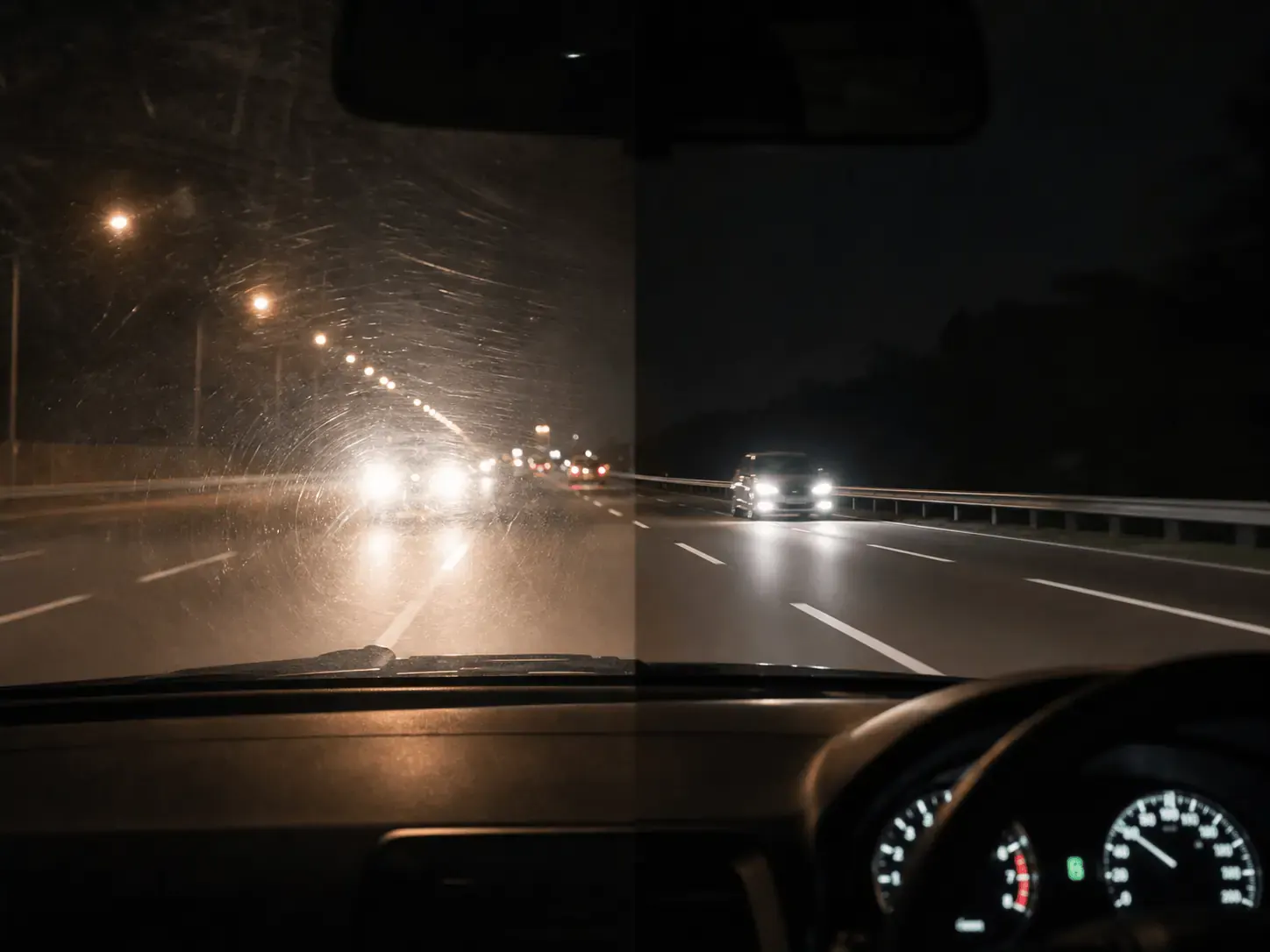
Wipers drag sand and dust across your glass every rainy day. Over time, this leaves fine scratches. Those scratches are why oncoming headlights look like starbursts at night. The Windscreen Protection Film top coat is self-healing. Light scratches close up on their own under the hot sun or a warm water rinse. No polishing needed. It heals from 40°C, and any car parked outside in Malaysia reaches that by lunchtime.
03
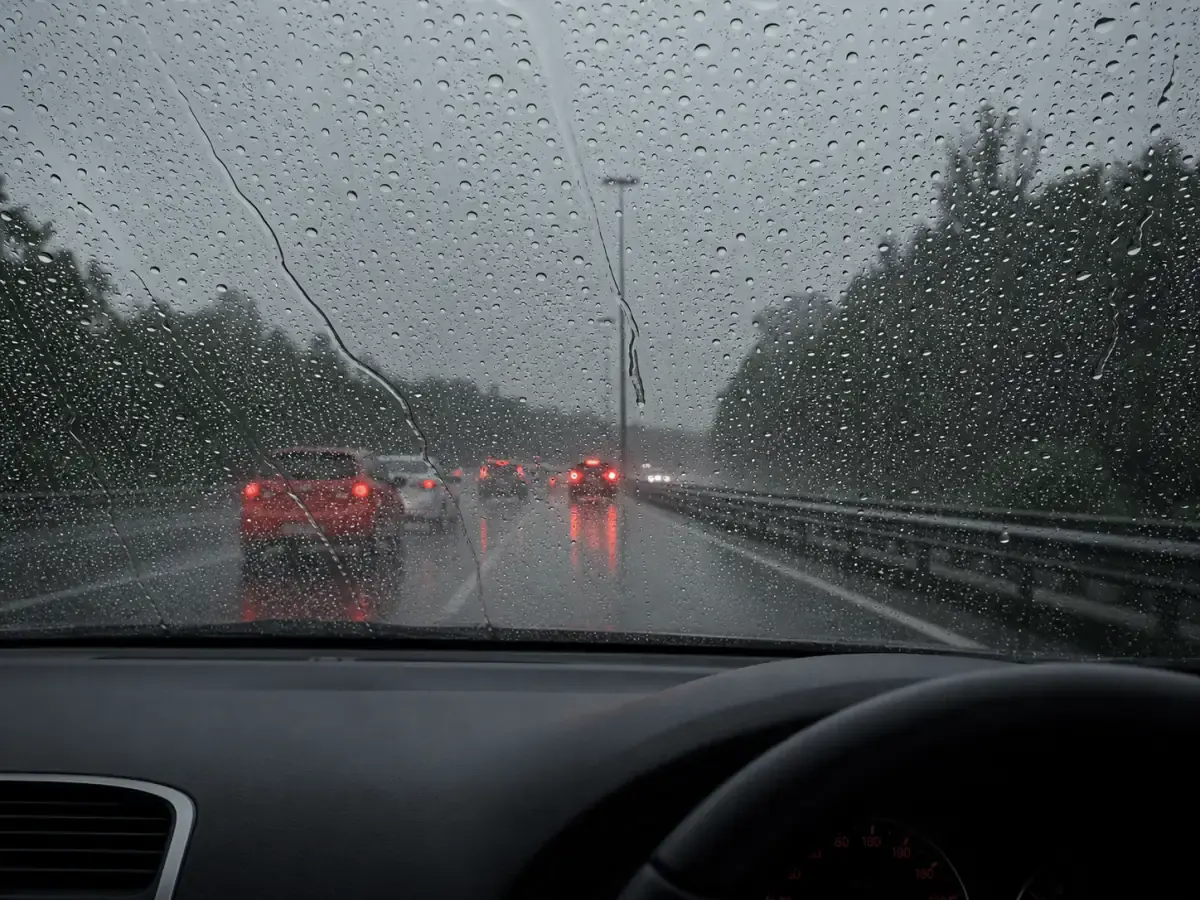
The surface has a water-repelling coating. At speed, raindrops turn into beads and roll off, so you use your wipers about half as much in heavy rain. Bird droppings, dead bugs, tree sap and acid rain sit on the film instead of eating into the glass. A plain water rinse cleans them off.
04
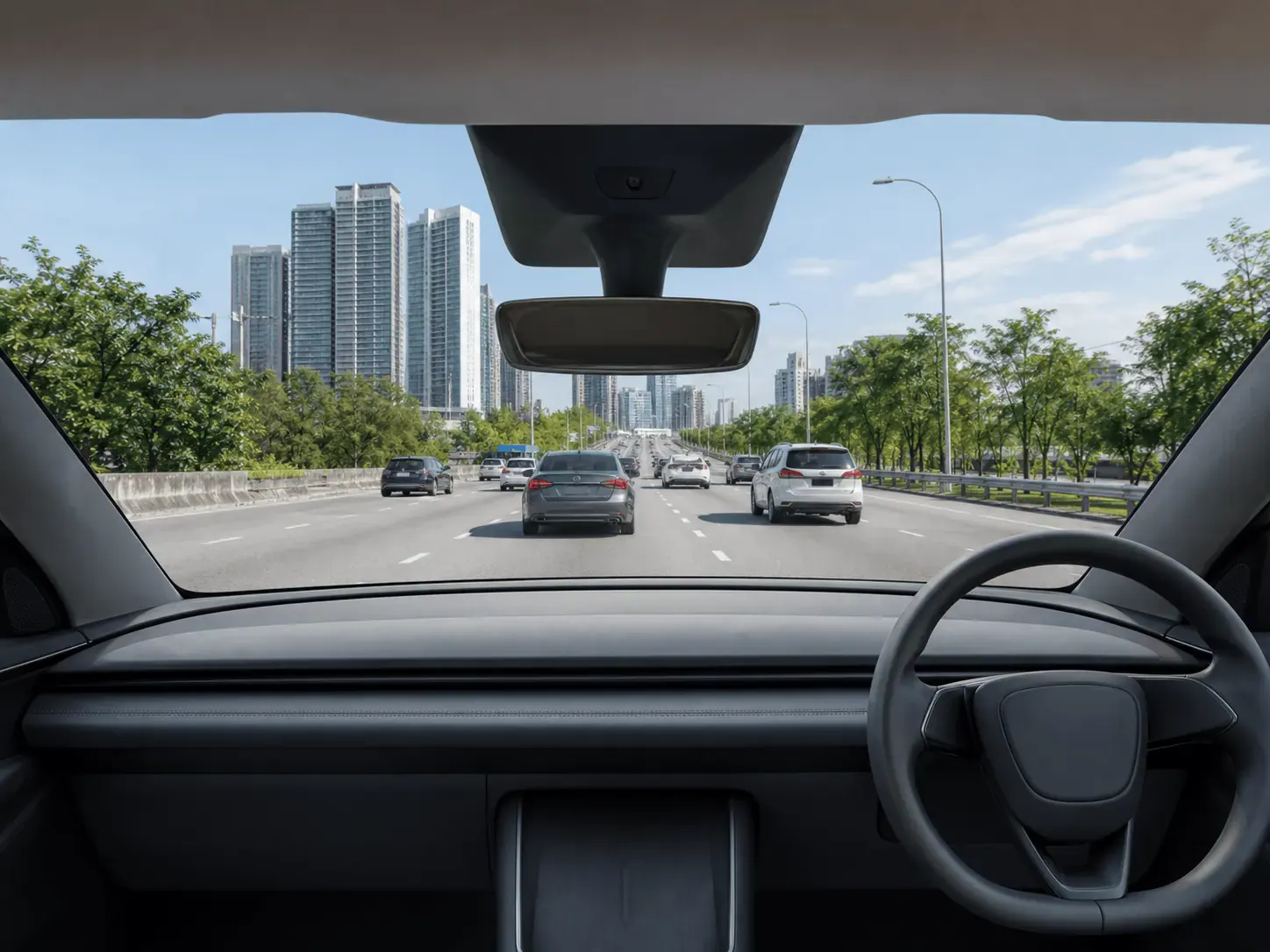
JPJ rules require at least 70% light through the front windscreen. This film passes 95% and adds no darkness at all. It has no metal layer, so your front camera, radar, rain sensor, GPS, Touch 'n Go RFID and all driver-assist features work exactly like before. Safe for EVs.
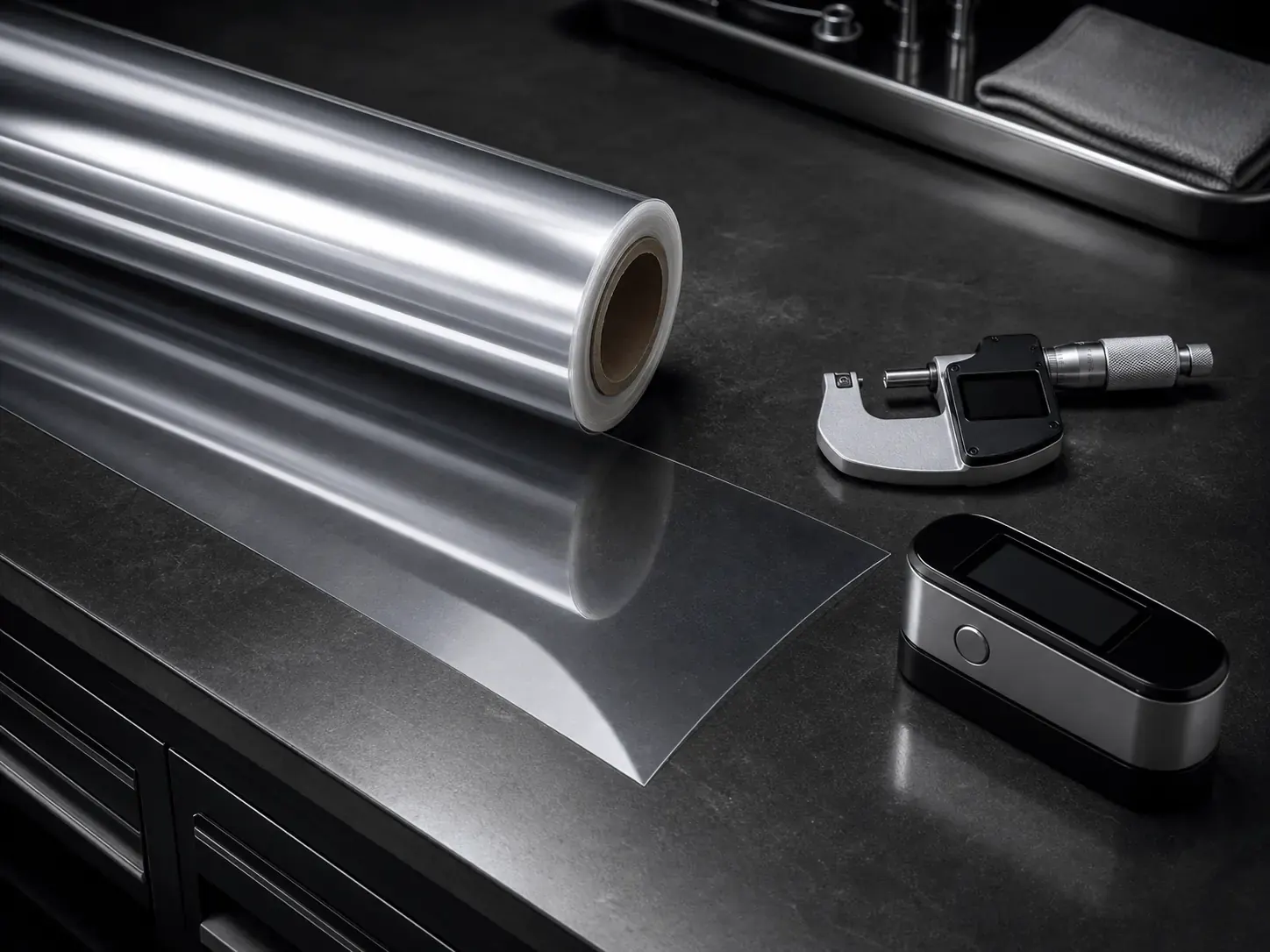
Most films sold in Malaysia only tell you two or three numbers. Here is our full factory sheet, next to a typical PET windscreen film.
| Property | Quad Film Windscreen Protection Film | Typical PET film |
|---|---|---|
| Material | Optical-grade TPU | Rigid PET |
| Thickness | 5.5 mil (140 μm) | 4 mil (100 to 120 μm) |
| Visible light transmission | 95% | 88 to 91% |
| Haze | 0.4 | 0.8+ |
| UV rejection | 99% | 99% |
| Self-healing | Yes, from 40°C | No |
| Hydrophobic coating | Nano anti-fouling | Varies |
| Tensile strength | ≥40 MPa | Lower elasticity |
| Elongation at break | ≥150% | Rigid, cracks under flex |
| Yellowing resistance | ΔE ≤ 0.03 | Yellows with UV exposure |
| Adhesive | Ashland clear low initial tack PSA | Generic PSA |
| Peel adhesion | 17 N/25mm | Varies |
| Heat resistance | Up to 140°C | Lower |
| Gloss | ≥90 GU | Varies |
| Roll format | 1.52 m x 15 m | Varies |
In Malaysia, three very different products are sold as "windscreen protection". Here is the difference in plain terms.
| Quad Film Windscreen Protection Film (TPU) | PET safety film | Windscreen coating | |
|---|---|---|---|
| Stops stone chips | Yes, absorbs the hit | Partly, hard film passes more force to the glass | No |
| Scratches heal by themselves | Yes | No, wiper scratches build up | No |
| Rain beads and rolls off | Yes | Sometimes | Yes |
| Holds broken glass together | Yes | Yes | No |
| Night glare from scratches | Prevented by self-healing | Can develop over time | Not covered |
| Typical price | Mid | Around RM1,200 | From RM250 |
| Typical lifespan | 1 to 2 years* | Varies by product and usage | Varies by coating and maintenance |
*Typical service life is 1 to 2 years. Actual lifespan varies with mileage, sun exposure, wiper use, how the film is cared for and the number of impacts it absorbs.
PET film is the older generation of this product. If you have read complaints about windscreen film getting scratched up, that was PET. TPU with self-healing is the fix, and it is the reason we chose it.
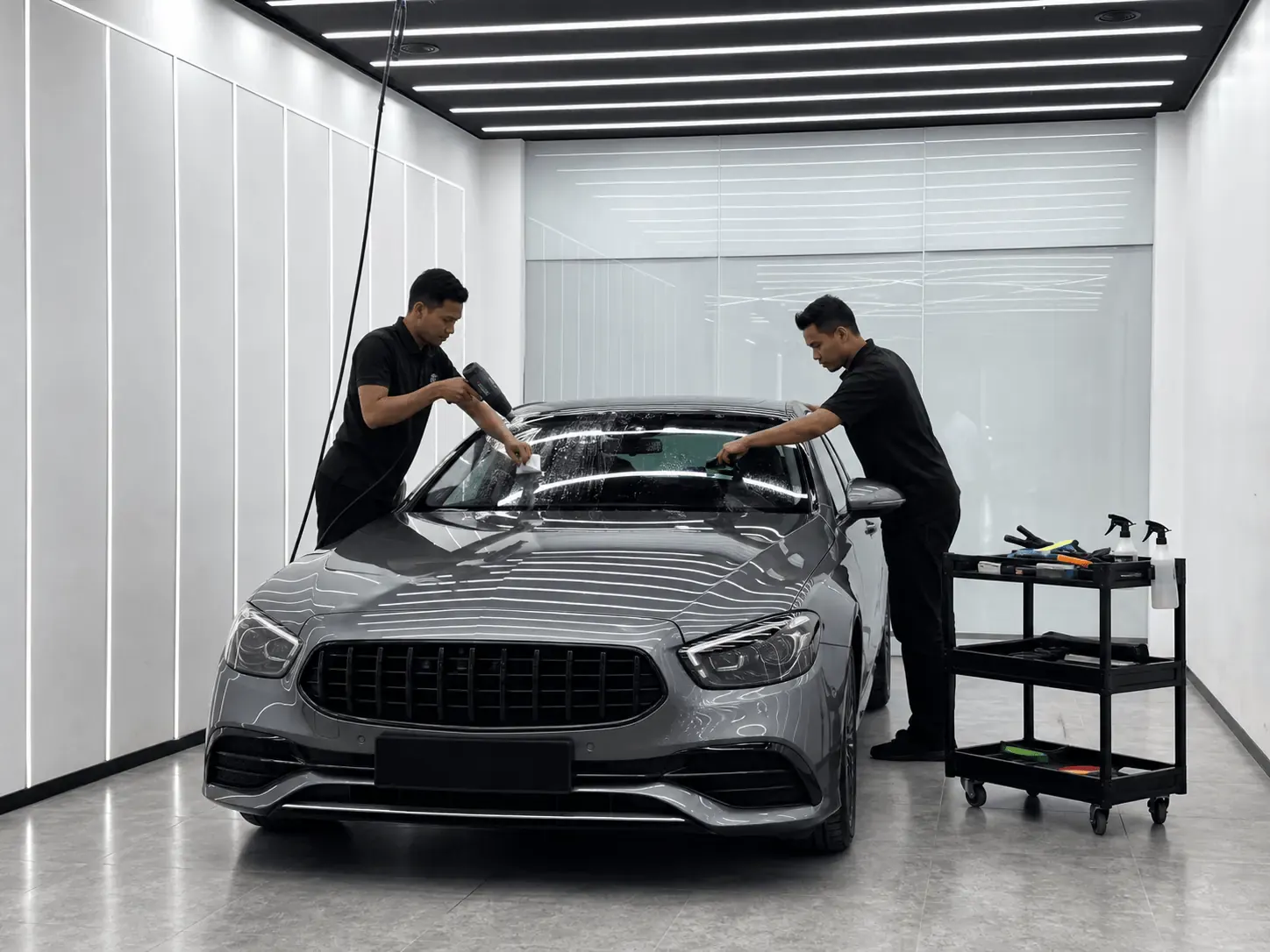
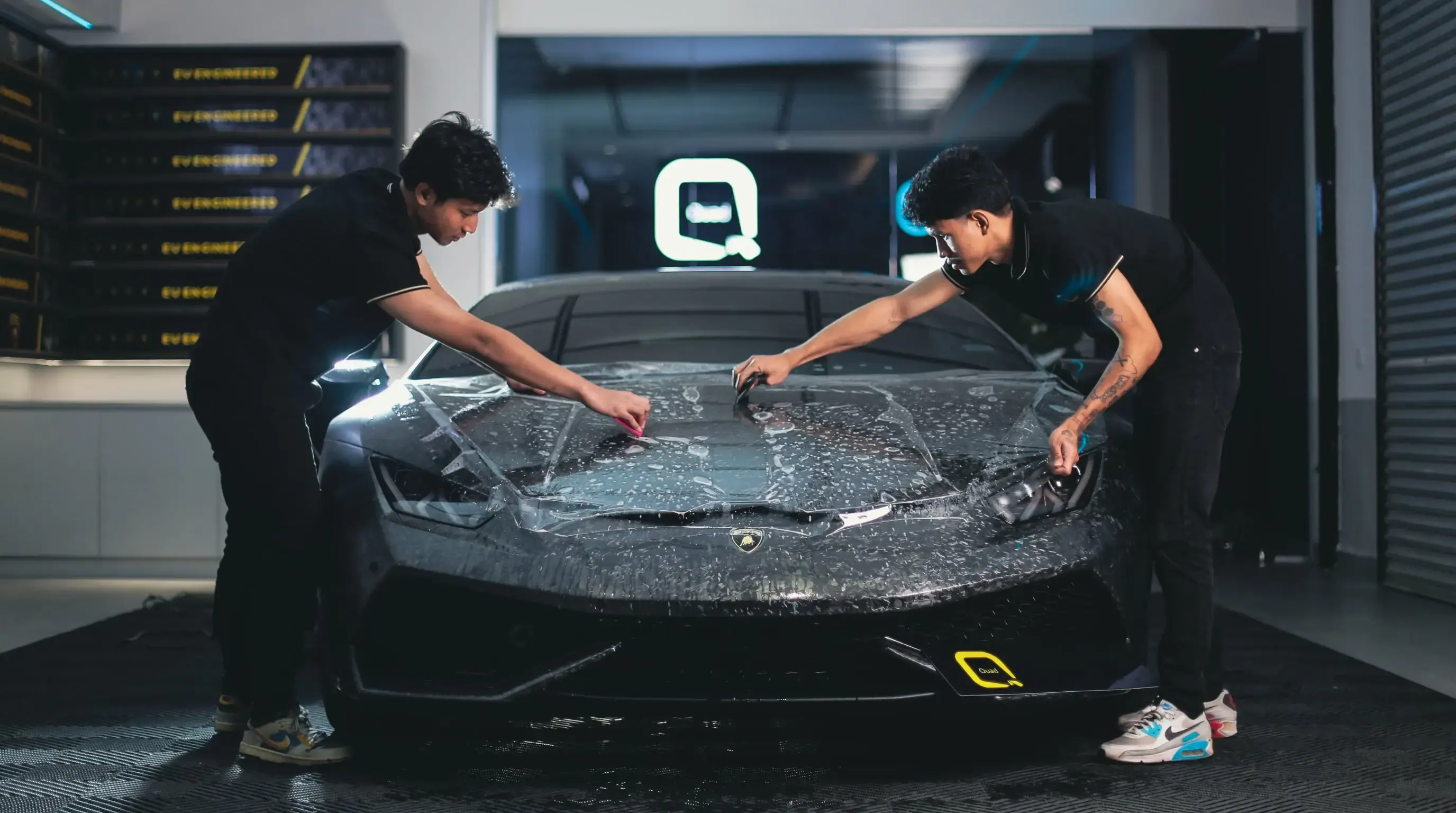
Workmanship decides everything in this industry. A good film with a rushed install still gives you bubbles and distortion. Every Windscreen Protection Film install is done by a trained Quad Film technician in a dust-controlled bay, and takes about 4 to 5 hours. Here is exactly what happens to your car.
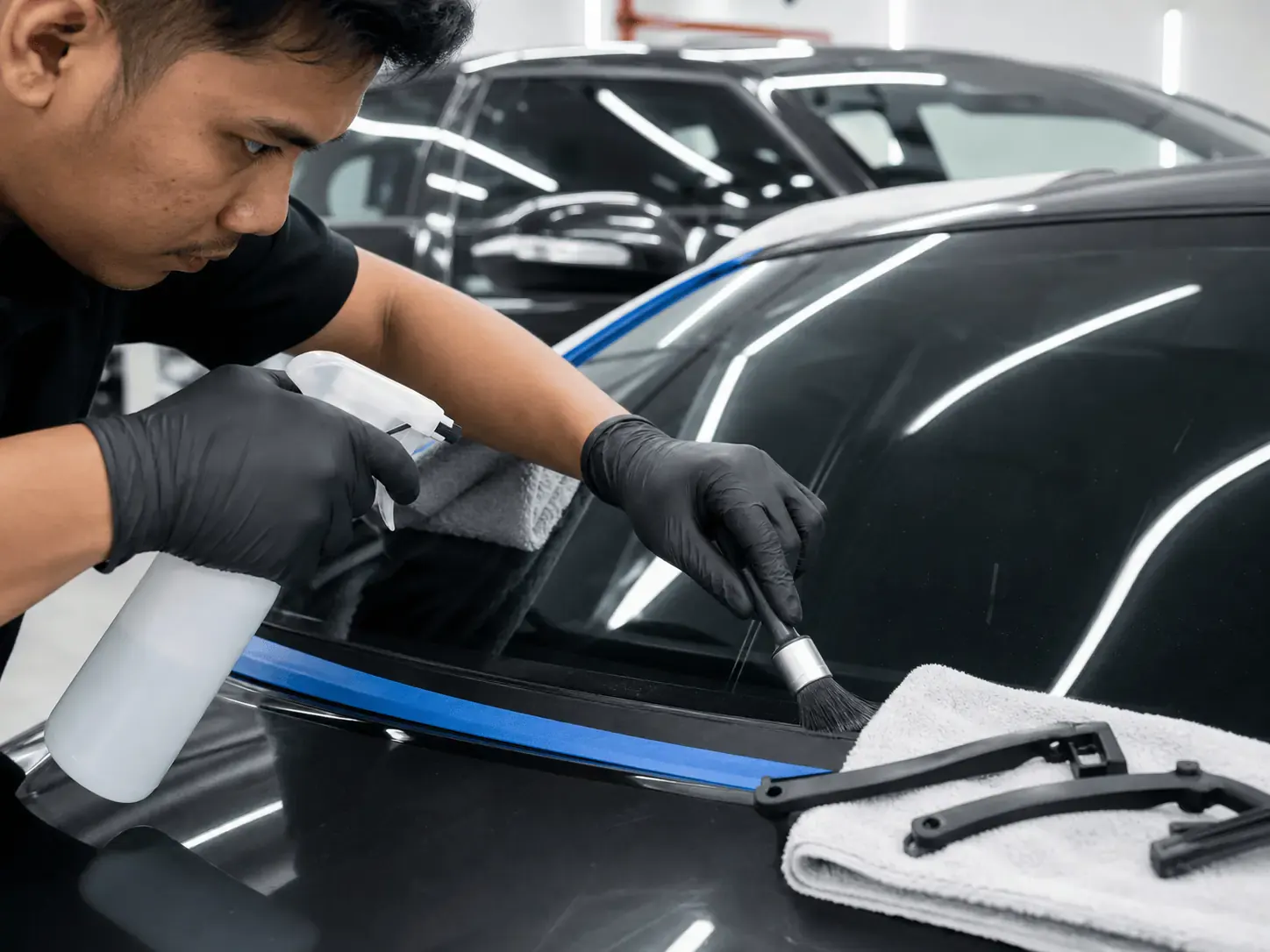
Step 1
The technician washes and decontaminates the windscreen to remove oil film, wax and wiper residue. If your glass has an old coating, it is stripped off with watermark remover first, because film cannot bond to a coated surface. The edges around the windscreen are brushed clean so no dust creeps under the film during installation. Wipers, trim and bonnet edges are masked with tape, and on some car models the wipers are removed for full access.
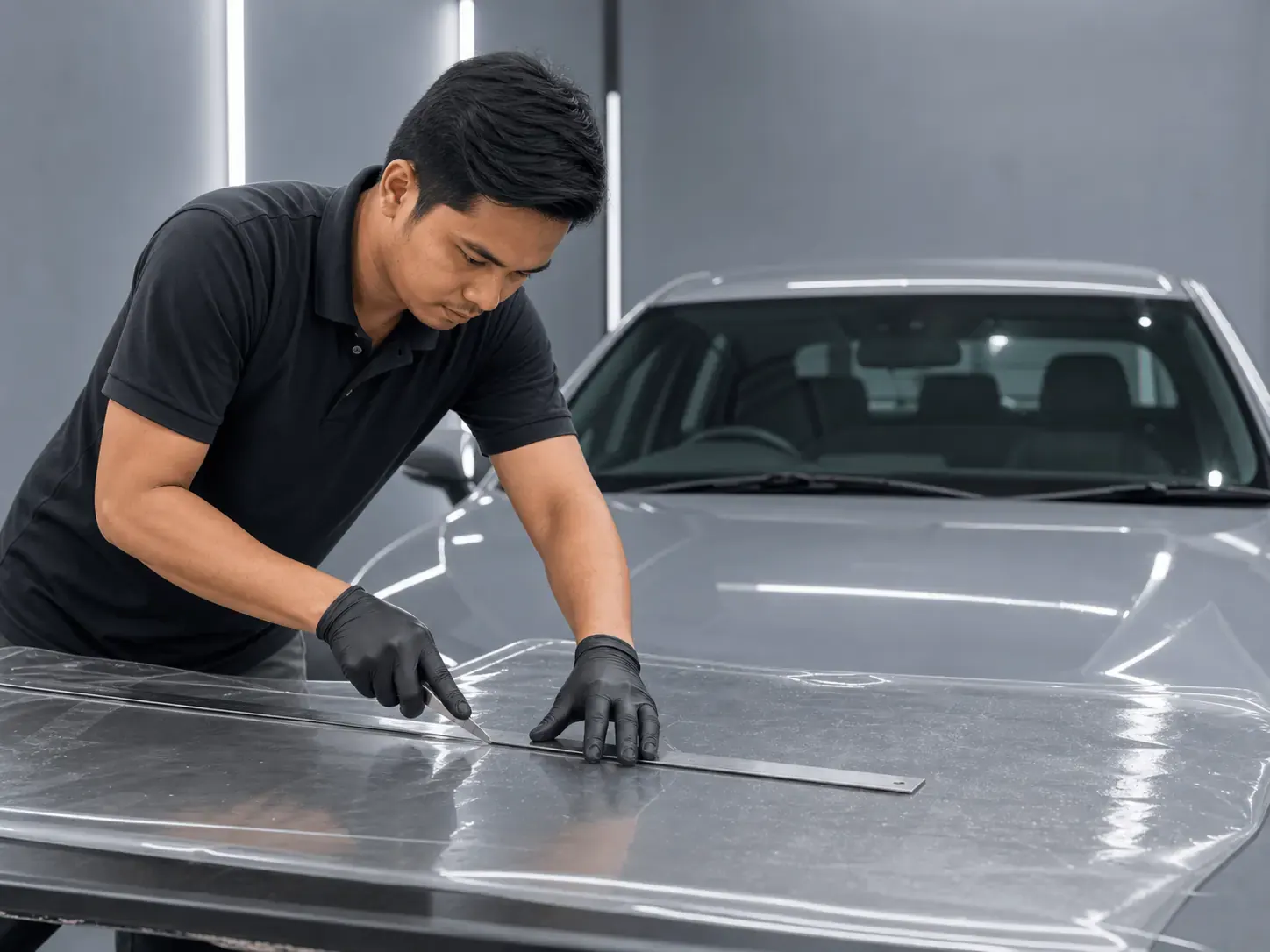
Step 2
The film is cut about 2 inches wider than your actual windscreen on each side. This extra margin lets the technician position and adjust the film properly on the glass. The exact trimming comes later, after the film has taken the shape of your windscreen.
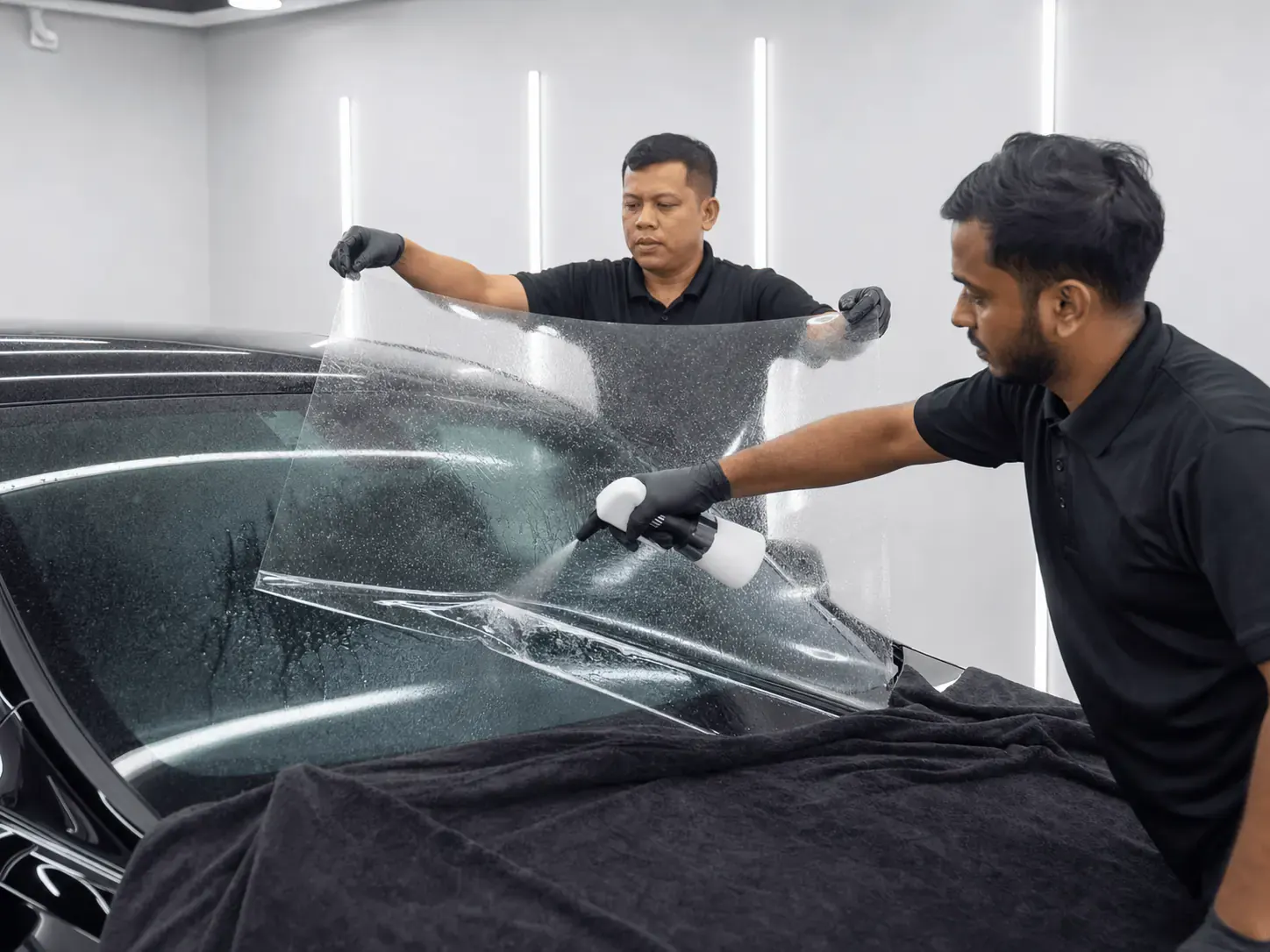
Step 3
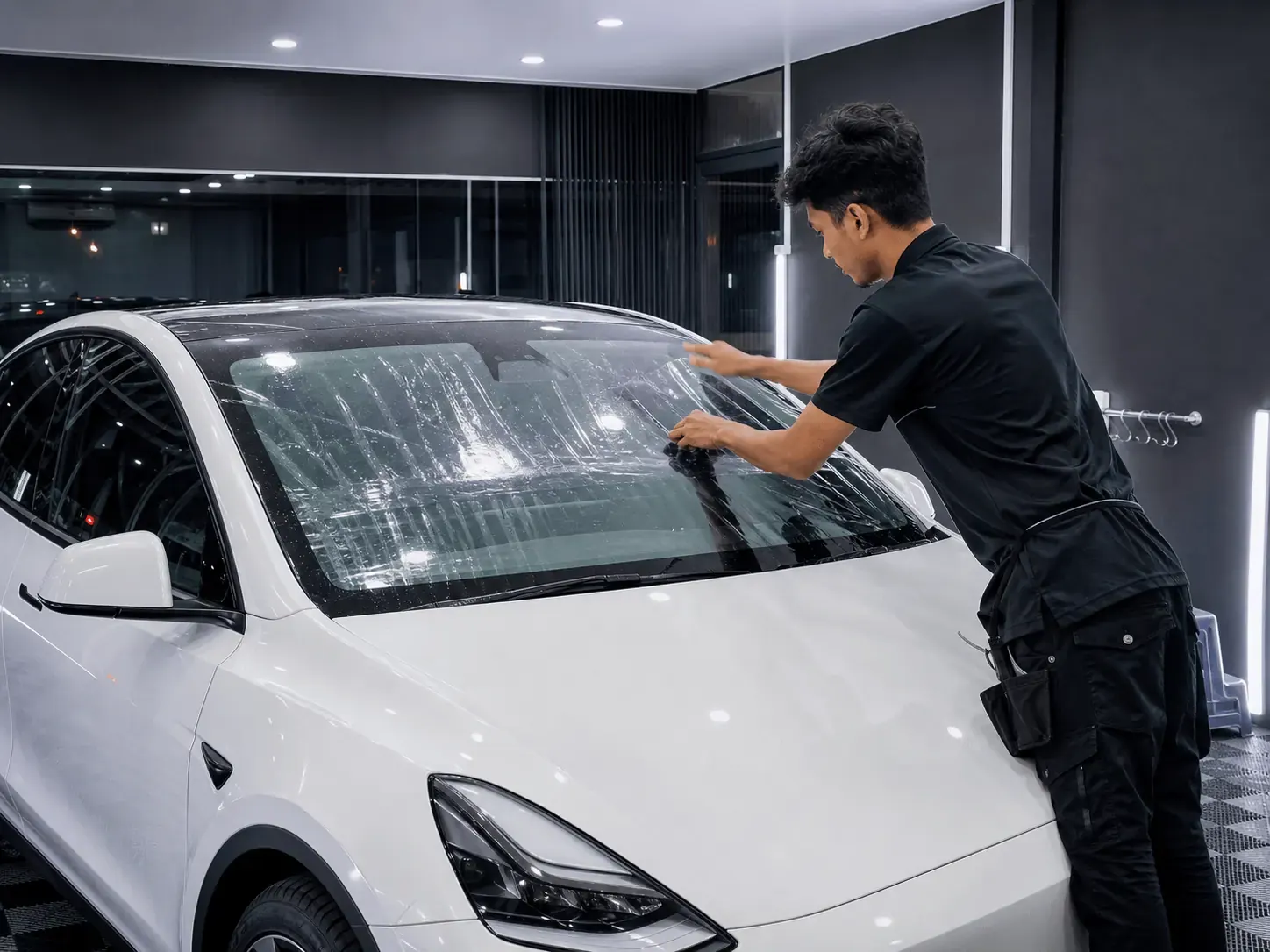
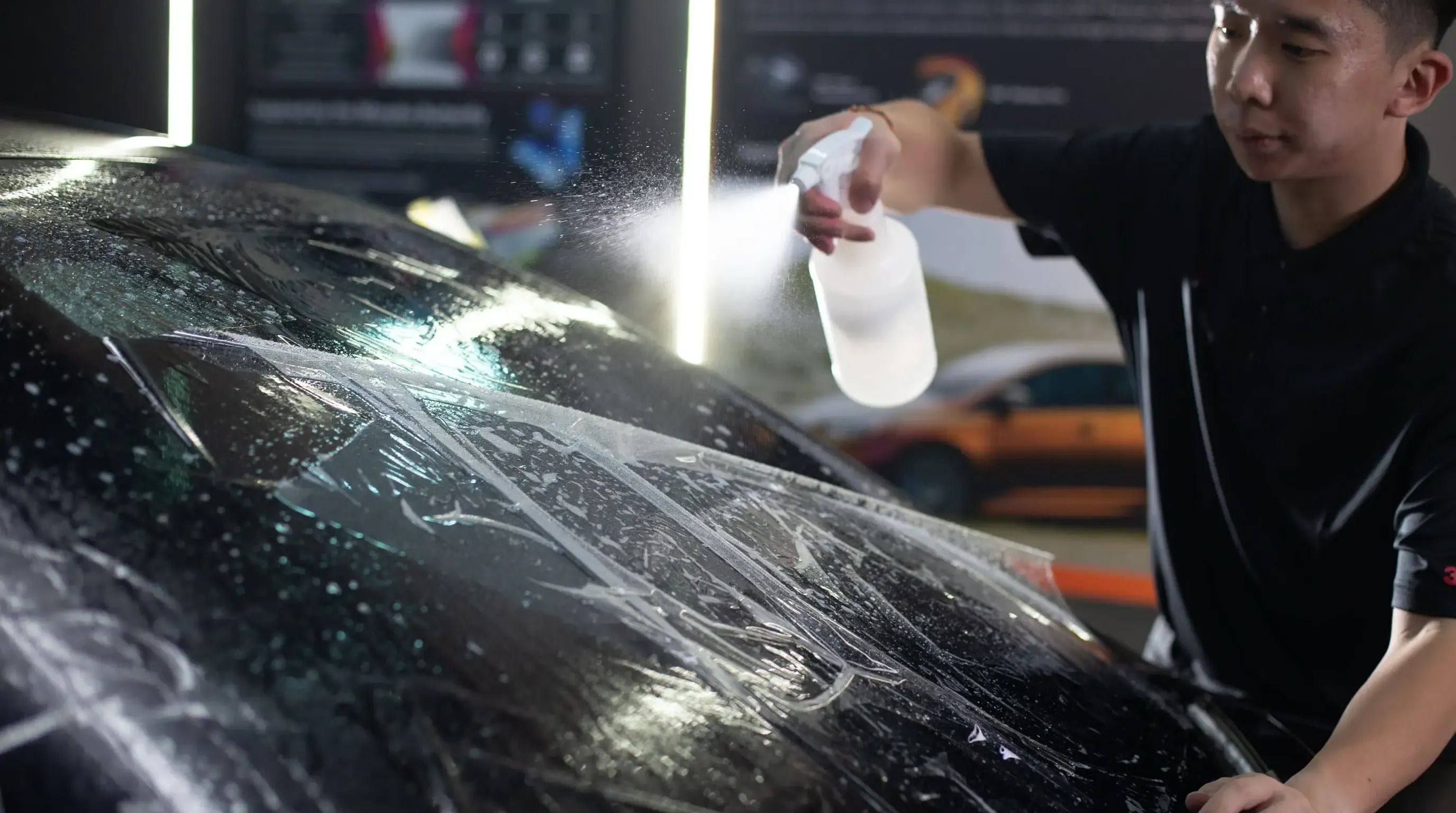
The glass gets one final clean, then a slip shampoo is sprayed across the whole windscreen. The technician removes the protection liner, then peels the second liner back slowly from top to bottom while spraying slip solution onto the exposed adhesive, and floats the film into position. This slow peel is the step that decides a perfect result, so we never rush it.
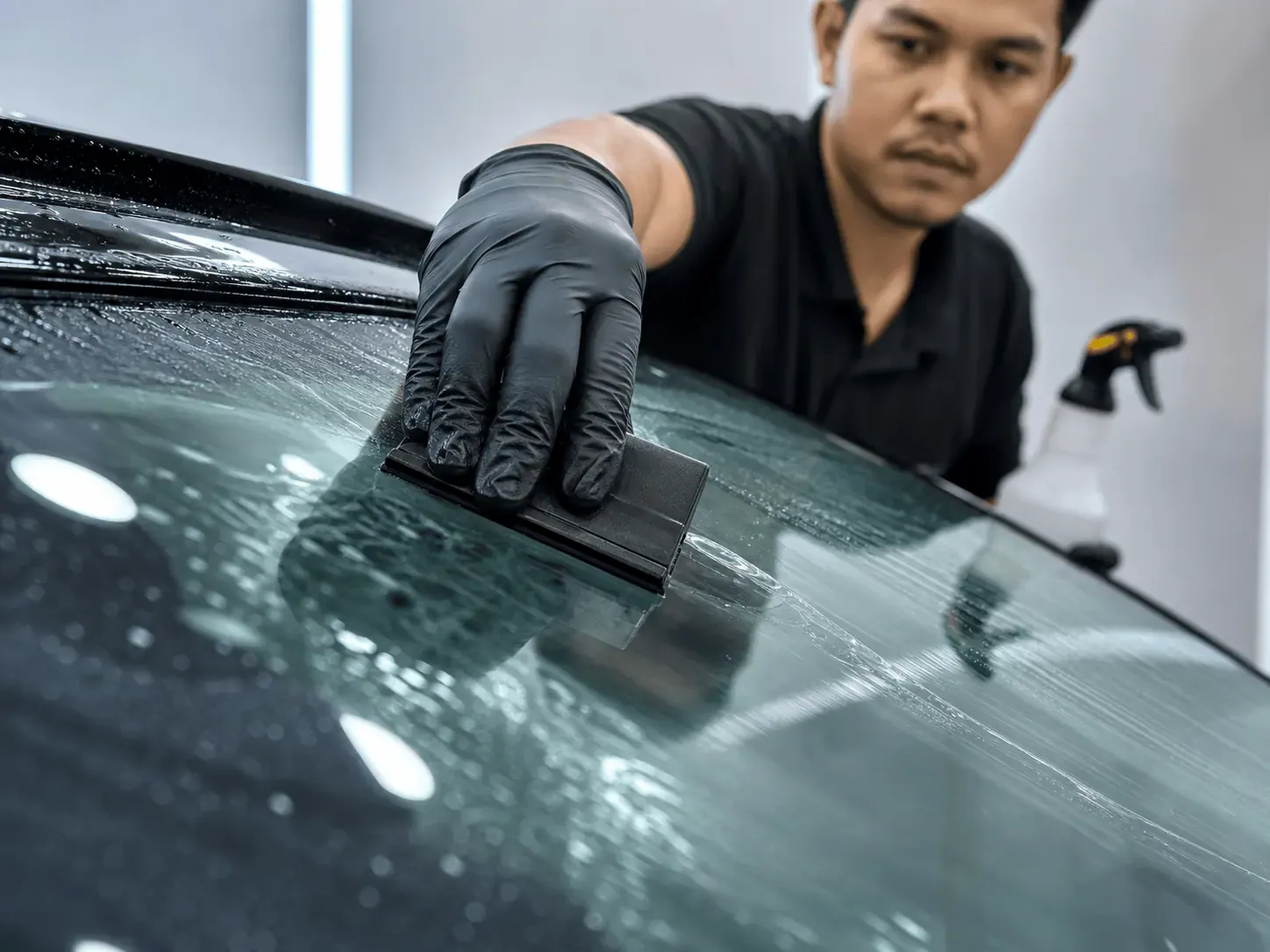
Step 4
The technician adjusts the film until it sits evenly on the windscreen, then sprays shampoo on the film surface so the squeegee glides smoothly. A soft squeegee seats the film with light pressure. A firm pass then drives the remaining solution out from the centre to the edges. Finally, water is sprayed along the edges between the film and the glass to flush out the shampoo, so the film bonds directly to the windscreen.
Step 5
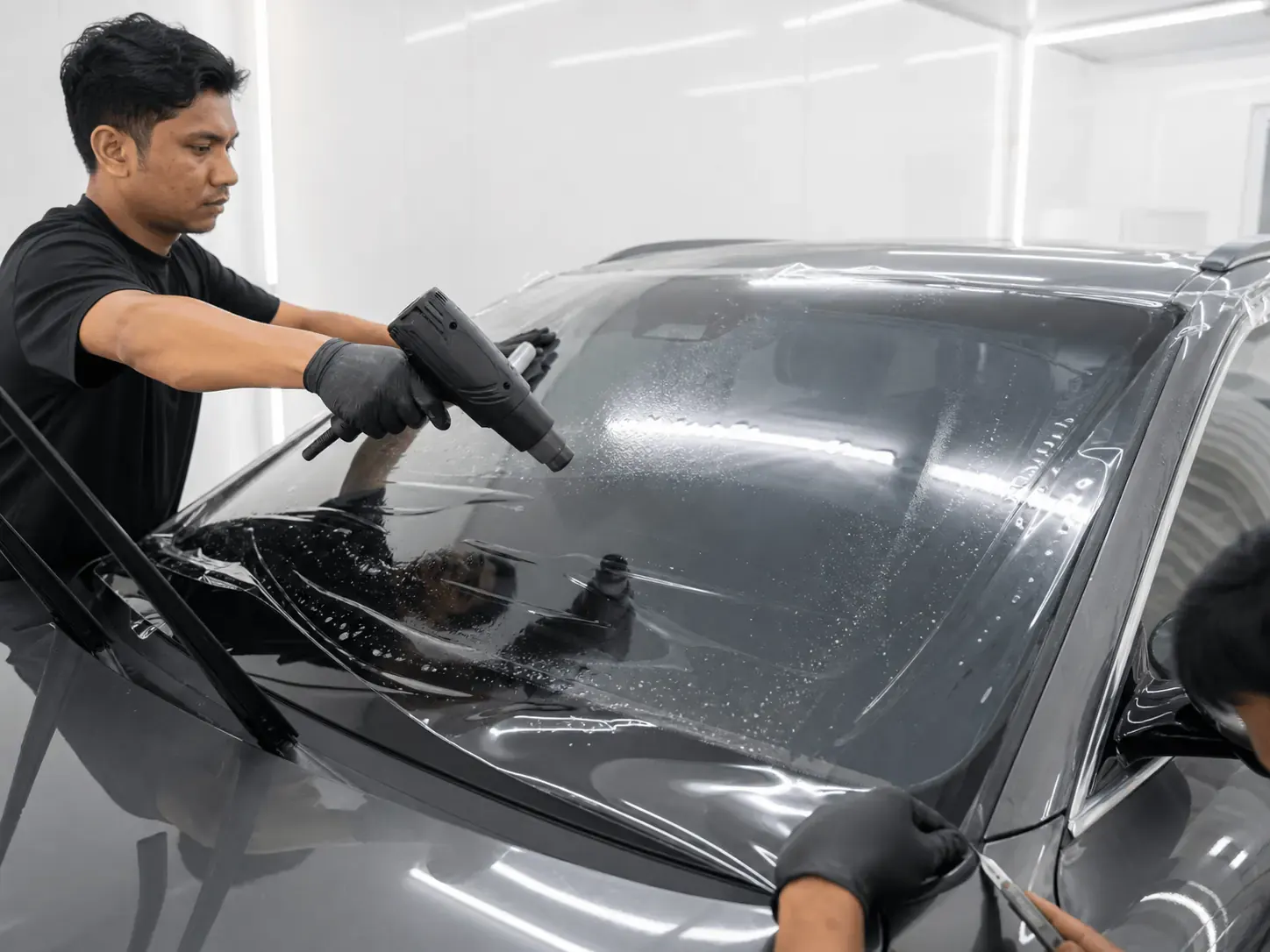
In a closed bay with the airflow switched off, the film is heat-formed at a controlled temperature to follow the curve of your windscreen. The technician then trims the extra margin with a knife so the film fits your windscreen edge perfectly. This is how a flat film sits flush on curved glass, with no stress lines and no distortion.
Step 6
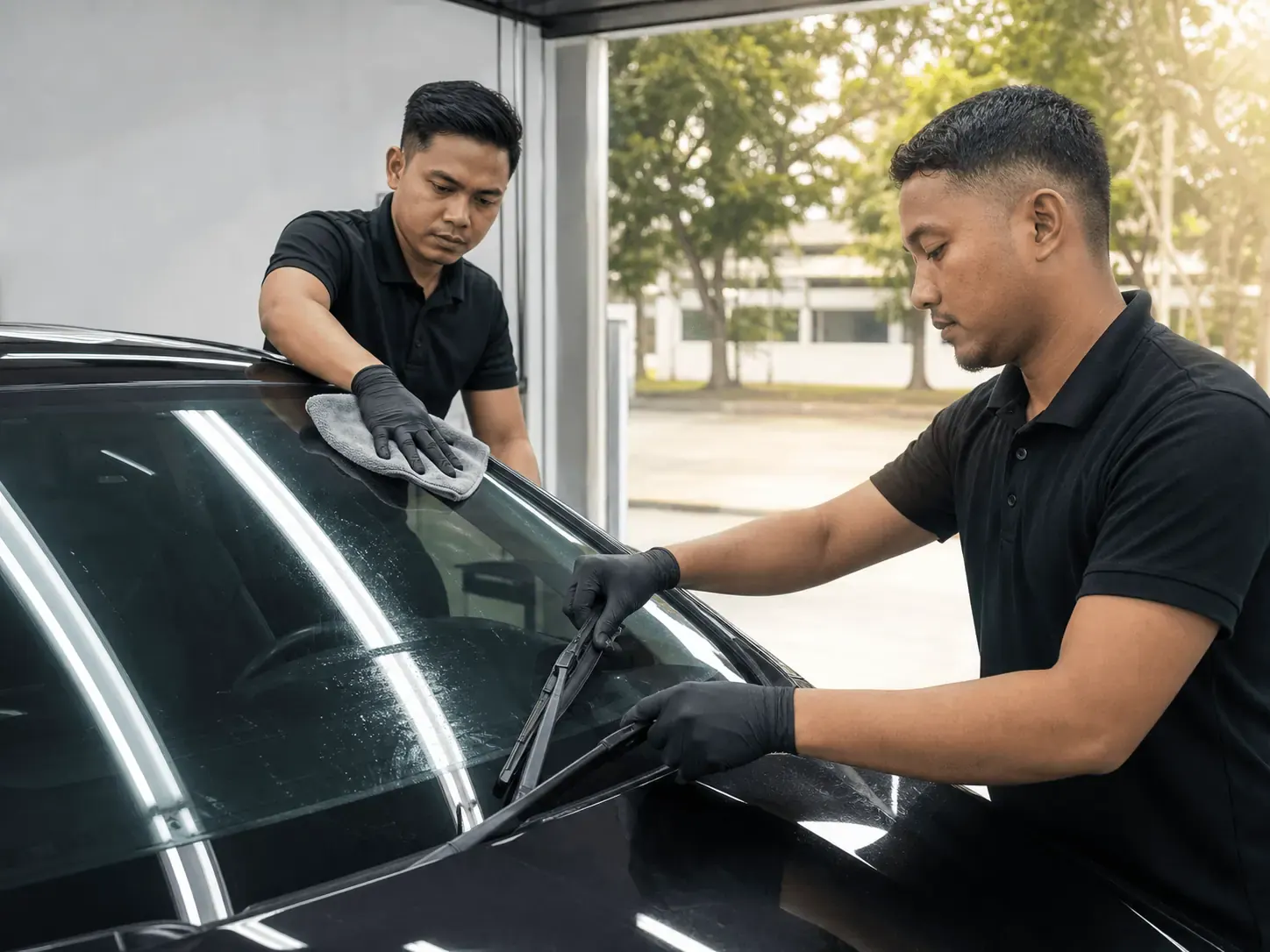
The film is wiped down with a microfibre cloth and any removed parts, like the wipers, are installed back. You may notice light watermarks on the film at first. This is normal. They clear up as the film cures under the sun over 3 to 5 days, depending on the weather.
Workmanship promise
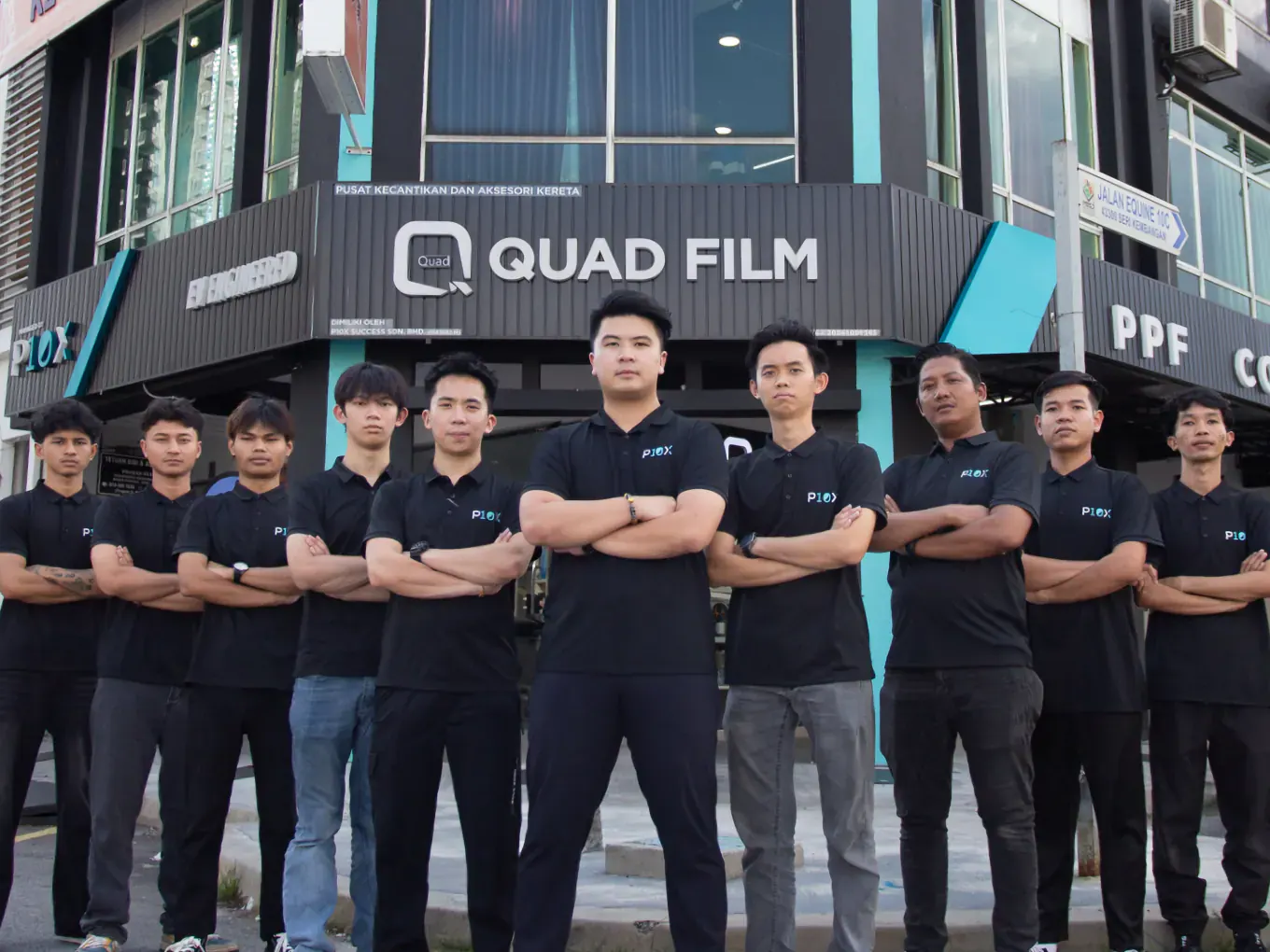
Every install is checked against the same 6-step standard at all 6 branches, and registered under your 1-year warranty. If you see a bubble or lifted edge within the warranty period from workmanship, we redo it.
Let us be honest first. No film makes glass unbreakable. A big object at highway speed can still crack a protected windscreen. The film is made to sacrifice itself. On a daily driver, it typically lasts 1 to 2 years, depending on mileage, sun exposure, wiper use, how it is cared for and the number of impacts it absorbs. If you drive a city car with a RM800 windscreen and rarely take the highway, insurance may be the cheaper choice.
The film makes sense in three cases. You drive highways often, where stone chips happen the most. Your windscreen has sensors, HUD or acoustic glass, where replacement plus recalibration costs RM3,000 to RM5,000. Or you want to keep your insurance record clean. In these cases, stopping one chip already pays for the film.
We publish our prices because you will ask anyway, and because nobody else in Malaysia does.
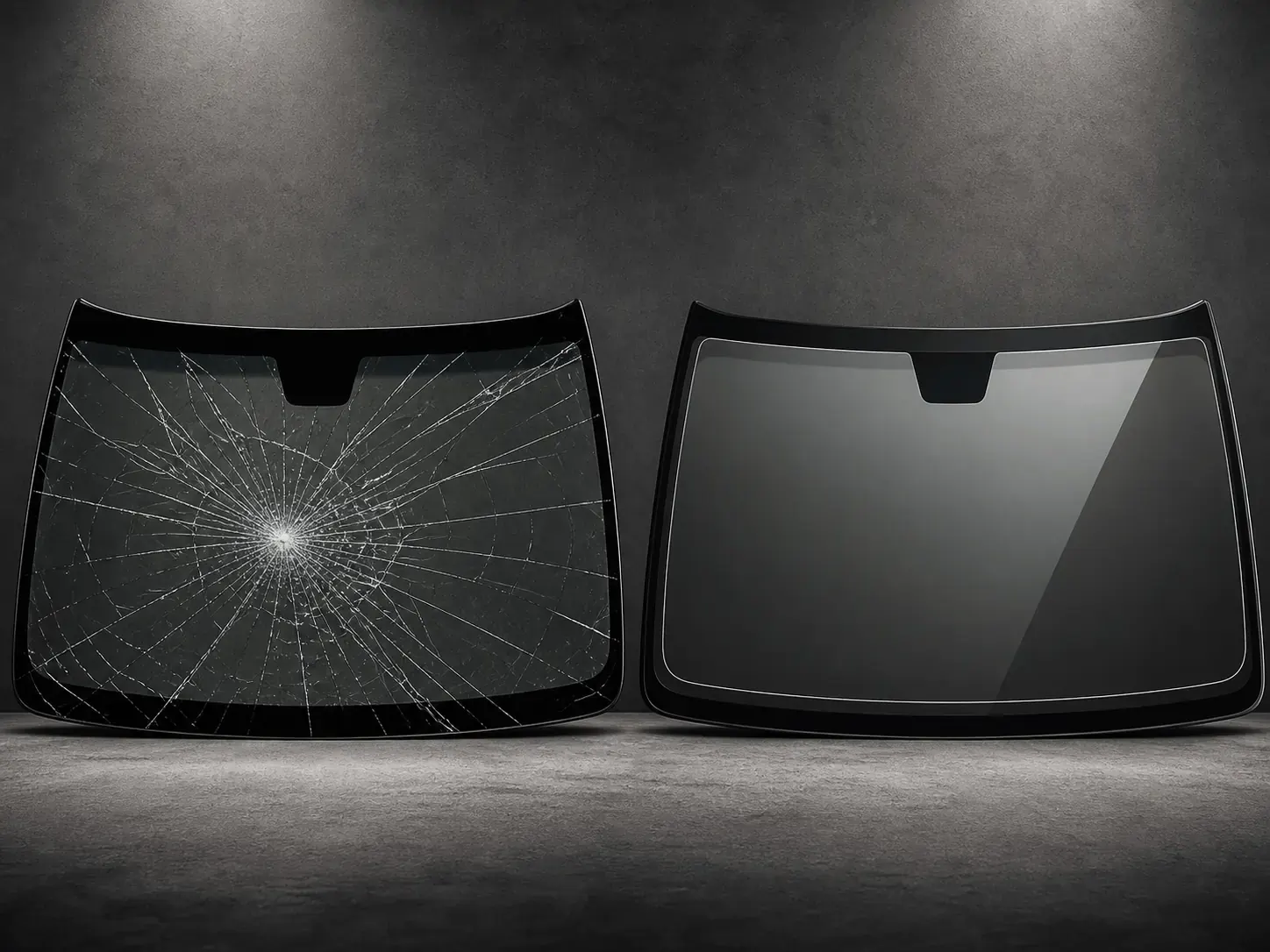
A Hilux windscreen replacement costs about RM1,200 to RM1,800. A Tesla Model Y windscreen with camera recalibration can pass RM4,000. If the film takes the chip instead, you change the film, not the glass, and your insurance record stays untouched.
Includes: installation by a certified technician and a 1-year warranty against yellowing, cracking and delamination, registered under Quad Film's warranty programme.
Ask for Your PriceQuad Film has made protection film since 1996, starting in Las Vegas, and is now sold in over 40 countries. The TPU in this film comes from our paint protection film experience: the same material class trusted on car paint, tuned for glass with 95% clarity and 0.4 haze. Every installation at our branches is done by certified technicians and registered for a 1-year warranty covering yellowing, cracking and delamination. The anti-yellowing rating of ΔE ≤ 0.03 is printed in our spec sheet, not just a promise.

Clear answers about fit, lifespan, sensors and daily use.
Yes. It works like a heavy-duty screen protector for your windscreen. Windscreen Protection Film is a 5.5 mil optical-grade TPU layer applied outside the glass. Its elasticity absorbs everyday stone impacts. It does not make glass indestructible, but it can prevent the chips that often lead to full windscreen replacement.
It often makes sense for highway drivers and cars with acoustic glass, HUD or ADAS cameras. Those windscreens can cost several thousand ringgit to replace and recalibrate. A city car with inexpensive glass and low highway mileage may be better served by insurance.
A windscreen needs dedicated optical-grade film, not ordinary paint PPF. Windscreen Protection Film uses TPU, but it is made for glass with 95% visible light transmission and a 0.4 haze value.
Typical service life is 1 to 2 years. Actual lifespan varies with mileage, sun exposure, wiper use, how the film is cared for and the number of impacts it absorbs. Replace the film once accumulated wear or damage affects its clarity or protection.
The supplied specification lists 95% visible light transmission and 0.4 haze. Its self-healing top coat also helps prevent the fine wiper scratches that cause starburst glare around headlights.
JPJ requires at least 70% visible light transmission through the front windscreen. This clear film is specified at 95% and adds no tint. Your full glass-and-film combination must still meet the legal limit.
The film has no metal layer. Front cameras, rain sensors, GPS, RFID and other driver-assist systems should continue to work normally when the film is installed correctly.
Small impact marks stay in the film layer. Light scratches can self-heal with warmth. Deep gouges or accumulated damage mean replacing the film. A very large impact can still break the glass.
Outside. Window tint sits inside the vehicle to control heat and glare. Windscreen protection film faces the road so it can absorb stones and debris before they touch the glass.
A coating is a thin liquid layer that helps rain bead. It does not absorb stone impact. Windscreen Protection Film is a 140 micron TPU barrier that combines water repellence with physical protection and self-healing.
WhatsApp us your car model and location. The nearest Quad Film branch will confirm your price and booking within the hour.
Invisible armor for your vehicle's paint against stone chips and scratches.
Premium solar control films for heat rejection and UV protection.
Transform your car's color while adding the protection of PPF.
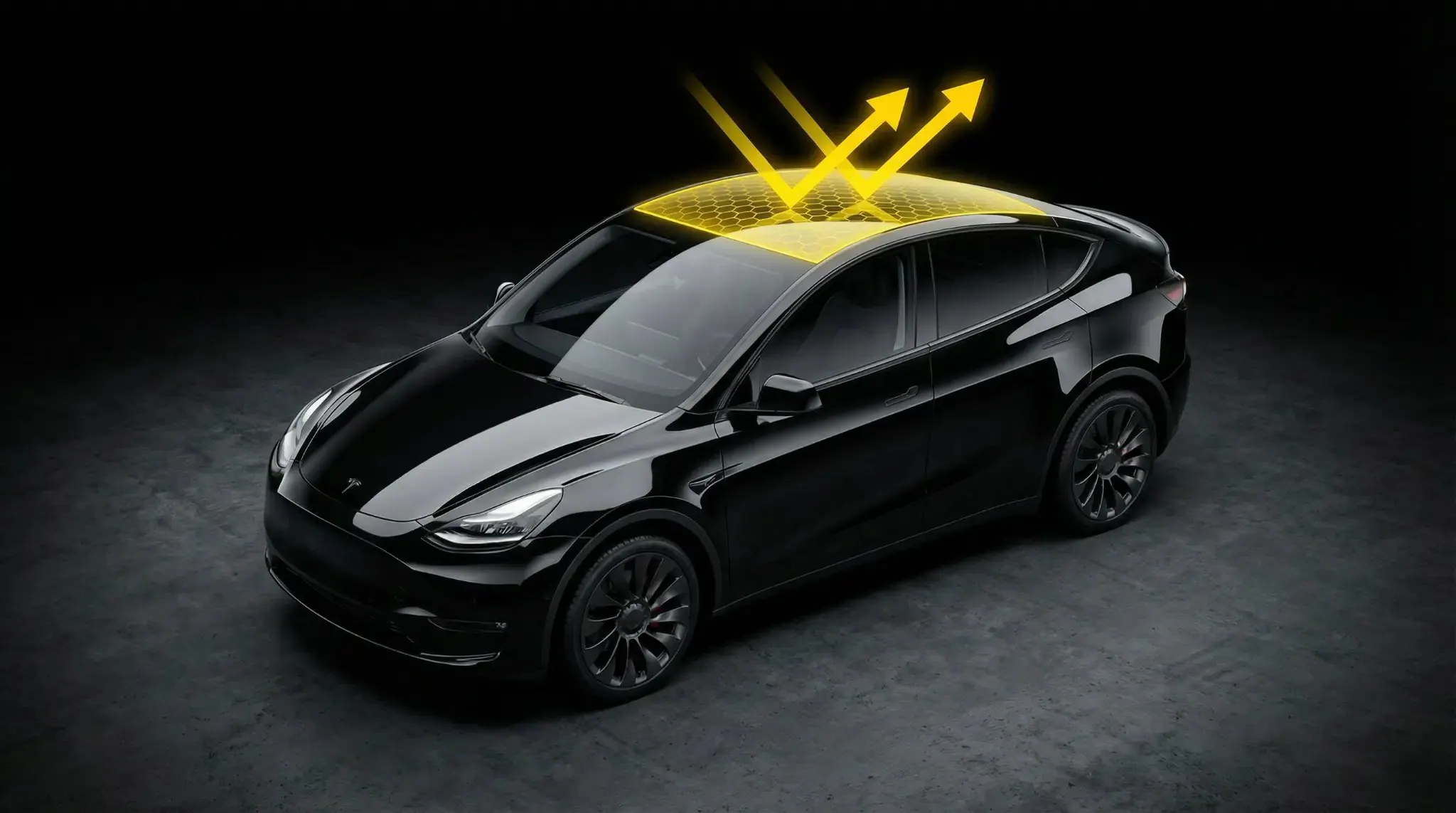
Specialized heat rejection and protection for panoramic sunroofs.
Search products, blog posts, and installer locations