
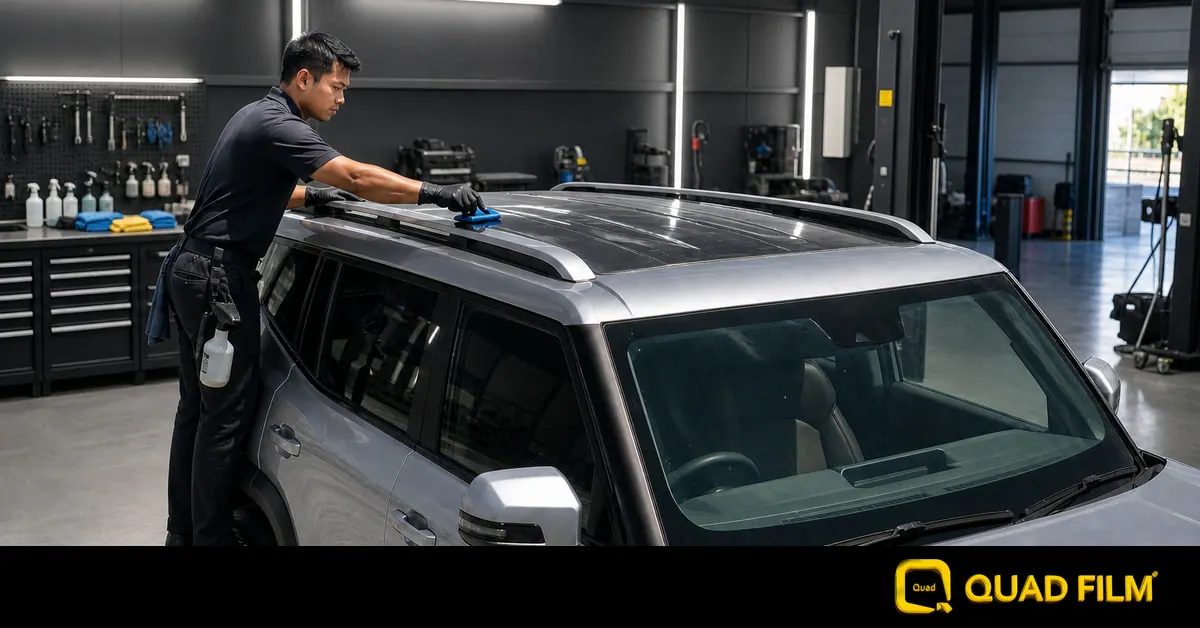
- The Jetour T1's standard acoustic glass is tuned for noise, not heat, so a heat-rejecting window film is the upgrade that changes daily comfort in Malaysian traffic.
- JPJ rules for the T1: front windscreen at least 70% VLT, front doors at least 50% VLT, and no VLT limit on the rear glass of a private car.
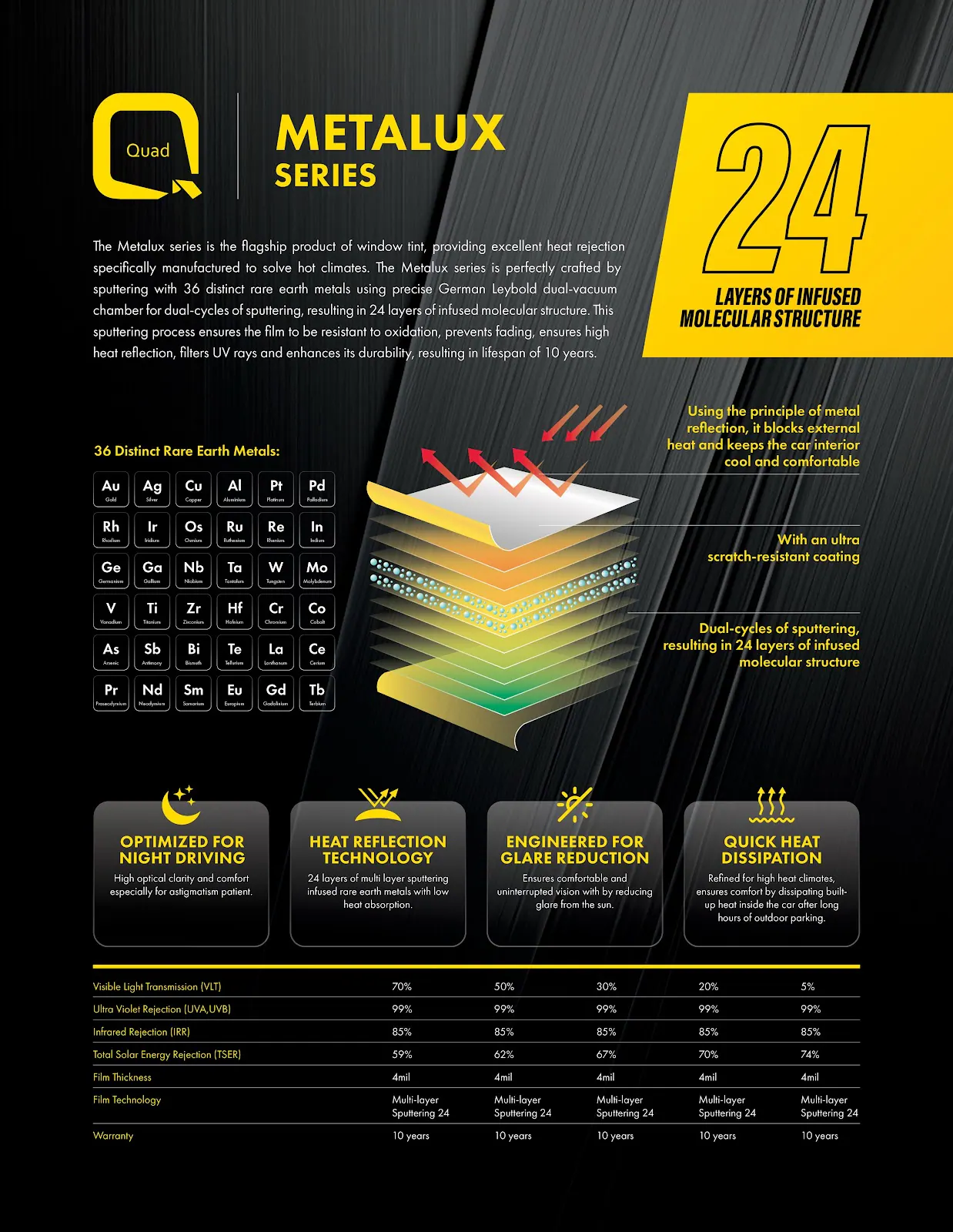
- METALUX and MAGNETRON are the recommended Quad Film series for this SUV, with 97% and 99% infrared rejection respectively.
- The 2.0T XWD's panoramic roof is the single largest heat entry point, and a reflective roof film handles it without darkening the cabin.
- Book your tint within the first week of ownership, before sun exposure starts ageing the dashboard and seat trim.
Sorting out a Jetour T1 window tint in Malaysia is usually the first job a new owner books, sometimes before the registration number is even fitted. The T1 arrived locally on 22 July 2026, and the first batch of owners is discovering the same thing: a boxy SUV with a generous glass area heats up fast under our sun.
This guide walks through what the factory glass already does, the JPJ limits for each window, which Quad Film series fits each piece of glass, and what the 2.0T XWD's panoramic roof needs. If you want the broader buying checklist first, our best car tint in Malaysia checklist covers the twelve things to verify before you pay anyone.
Everything below is written for both T1 variants, with the differences between the 1.5 TGDi 2WD and the 2.0 TGDi XWD called out where they matter.
Factory Glass: What the T1 Already Blocks
The Jetour T1 comes with all-round acoustic windows as standard, and acoustic glass is built to quieten the cabin, not to reject heat. It dampens wind and road noise at highway speed, but it lets a large share of infrared energy straight through, which is why the cabin still bakes when the car sits in the sun.
Picture a T1 parked on the open-air rooftop of a mall in Mutiara Damansara at 1 pm. By the time you return from a 90-minute lunch, the dashboard top is too hot to rest a hand on and the seat fabric radiates heat through your shirt. The acoustic glass did exactly what it was designed to do on the drive over: it kept the cabin quiet. Against parked heat soak, it does almost nothing.
The T1's design makes this harder than on a sleeker car. The glasshouse is tall and upright, the side windows are large, and the roofline is flat, so more glass area faces the afternoon sun at a steep angle. That is the trade for the boxy styling and the headroom, and it is why tint choice matters more on this body style than on a low sedan.
The close-up below shows what that clear acoustic glass actually looks like under a midday sun, with the heat passing straight through it.
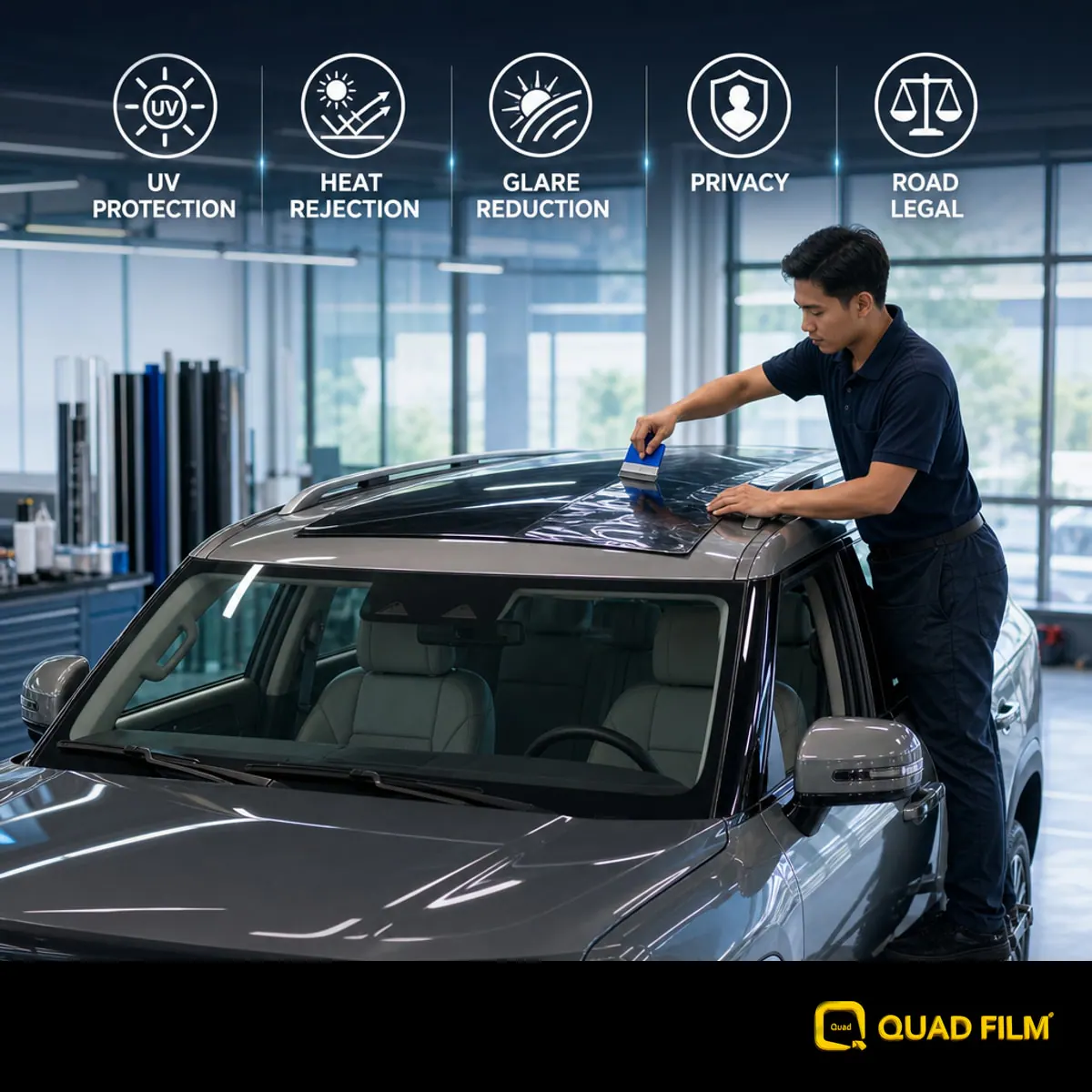
Factory glass does block a portion of UV, which matters for your skin on long drives, and we break that down in our guide to car tint and UV skin protection. Where it falls short is infrared, the part of sunlight you actually feel as heat on your arm in traffic.
Films differ mainly in how they handle that infrared load, and our sputtered vs multi-layer sputtered tint comparison explains why some films keep performing for years while cheaper dyed films fade within one or two hot seasons. For a new T1, this infrared gap is exactly what your tint choice needs to close.
JPJ Rules for Every T1 Window
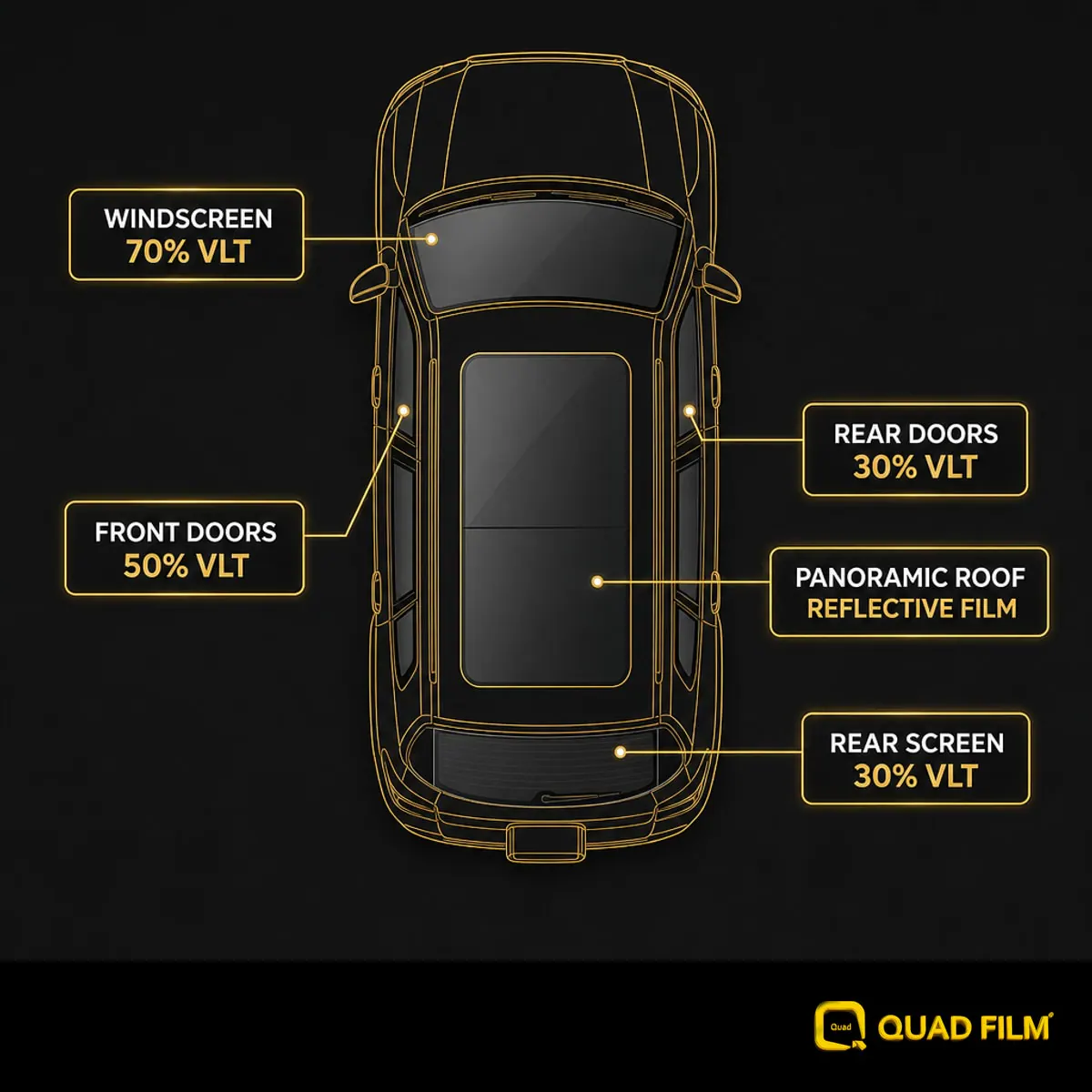
For a private car like the T1, JPJ requires at least 70% visible light transmission on the front windscreen and at least 50% on the two front doors. VLT, visible light transmission, is the share of light that passes through the glass, so a higher number means a lighter film. The rear doors, rear quarter glass and rear windscreen carry no VLT limit for private cars, so you can go as dark as you like there.
Enforcement is quick and unforgiving. At a roadblock along Jalan Klang Lama at 10 pm, an officer with a handheld tint meter checks your front door glass in under two minutes. If the film reads below 50% VLT without an exemption, you are looking at a four-figure summons for a first offence. The limits have been stable since May 2019, so there is no grey area left to argue from.
Exemptions do exist for medical conditions and approved security cases, applied for through the MyJPJ app before you tint, not after. For almost every T1 owner, the sensible play is to stay comfortably legal in front and use the freedom at the rear, where passengers actually sit in the afternoon heat.
The table below maps every piece of glass on the T1 to a legal, sensible Quad Film setup. The film figures come from Quad Film's current spec sheets, and the legal column reflects JPJ rules for private cars.
| Window | JPJ rule | Recommended film | Fitted VLT | TSER | IRR | Status |
|---|---|---|---|---|---|---|
| Front windscreen | 70% minimum | METALUX | 70% | 70% | 97% | Legal |
| Front doors | 50% minimum | MAGNETRON | 50% | 70% | 99% | Legal |
| Rear doors | No limit | MAGNETRON | 30% | 74% | 99% | Legal |
| Rear windscreen | No limit | MAGNETRON | 30% | 74% | 99% | Legal |
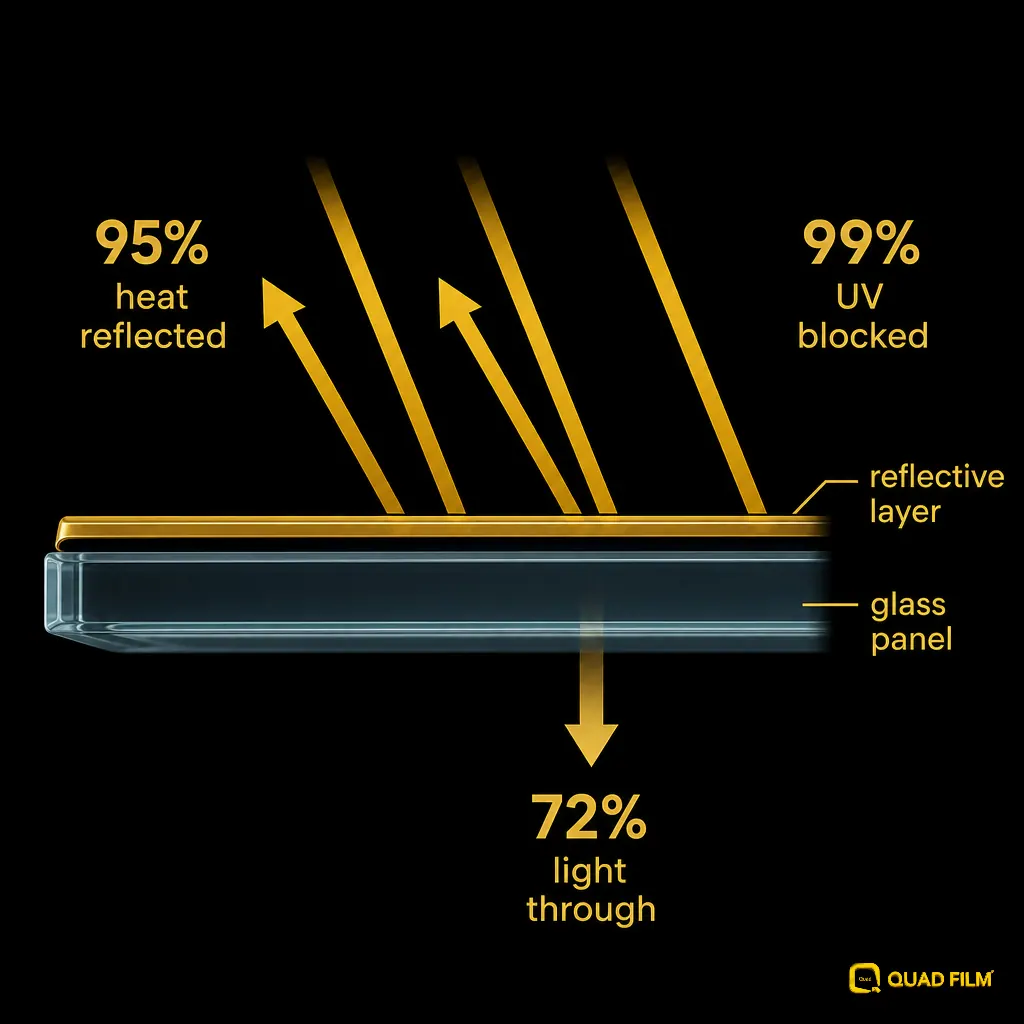
| Panoramic roof (2.0T XWD) | No limit | EV Sunroof PPF | 72% | 95% heat reflection | 99% UV | Legal |
The roof row uses a reflective film rather than a conventional tint, so its figure is heat reflection instead of TSER. The next sections explain the thinking behind each choice.
If you prefer the same plan as a picture, the infographic below maps it onto the T1's glass, zone by zone.
Heat Rejection: Which Quad Film Series
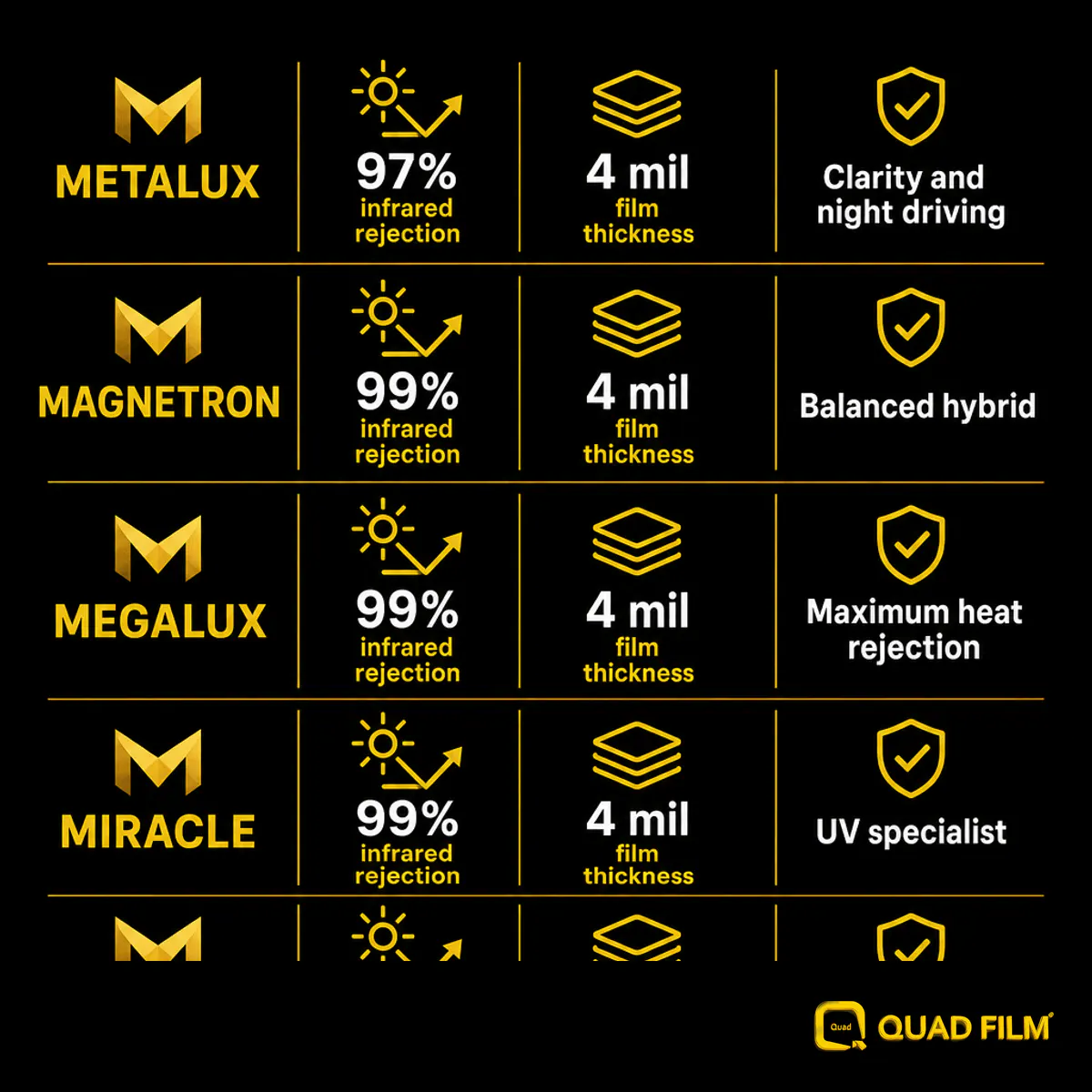
For this SUV, start with METALUX or MAGNETRON. Both are 4 mil multi-layer sputtered films. METALUX is the clarity and night-driving film with 97% infrared rejection, and MAGNETRON is the balanced hybrid at 99%. Above them sits MEGALUX, the 48-layer flagship for maximum total heat rejection. MIRACLE is the UV specialist at 100% UV block with 99% IRR, and MATRIX is the entry nano-ceramic at 99% IRR.
Two terms carry this whole section. IRR, infrared rejection, measures how much of the heat you feel is turned away. TSER, total solar energy rejected, measures the film's whole-job heat performance across the full solar spectrum. On a Federal Highway crawl at 5.30 pm from Subang to KL, 45 minutes with the air-conditioning at 22 degrees and the blower on level three, the gap between a 60% TSER film and a 79% TSER film is whether the blower can drop to level one by the time you pass the Guinness brewery.
If you often drive at night, weight METALUX heavily. Its sputtering stack is tuned for optical clarity, so oncoming headlights and wet tarmac stay readable on a rainy MEX run at 9 pm, and it still carries 97% IRR. Drivers who prioritise maximum heat rejection over ultimate night clarity should look at MEGALUX instead.
The series comparison below puts the five films side by side so you can see the trade-offs at a glance.
One caution before you book anyone. Multi-layer sputtered film is harder to install than ordinary tint, and few shops do it well. Our piece on why less than 1% of tint installers in Malaysia can install multi-layer sputtered film properly is worth ten minutes of your time.
For the exact figures by shade, Quad Film publishes a spec sheet per series, and the METALUX sheet below is the one to ask for at the counter.
The 2.0T XWD Panoramic Roof Question
Only the 2.0T XWD gets the panoramic sunroof, and on that variant the roof is the largest single entry point for heat. Standard tint film applied under the glass absorbs heat and re-radiates part of it into the cabin. A reflective roof film mounted above the glass pushes most of that energy back out before it ever becomes cabin heat.
Here is the arithmetic for a Saturday noon drive up to Genting Highlands. The T1's roof glass measures roughly 1.1 metres by 0.8 metres, about 0.88 square metres, estimated from the car's 1,967 mm width and the official gallery photos. Peak midday sun in Malaysia delivers close to 1,000 watts per square metre on a flat panel. Through bare glass, that is about 880 watts of heat pouring in, roughly a small fan heater aimed at the rear seats. With Quad Film's EV Sunroof PPF reflecting 95% of that energy, the figure drops to about 44 watts. That is 836 watts of heat your air-conditioning never has to fight.
The film keeps 72% of visible light, so the roof still feels open, and it blocks over 99% of UV. Our MG S5 EV window tint guide covers the same panoramic roof problem on another SUV if you want a second data point. The 1.5 TGDi 2WD has no panoramic roof, so it skips this section entirely.
The infographic below shows how the reflective layer works above the glass.
Tint, RFID and T1 Driver Aids
A correctly planned tint does not interfere with the T1's driving aids. Both variants share the same Level 2 ADAS suite, and it reads the road through a camera behind the windscreen and radar hardware in the front of the car, not through the side glass. The one area that needs planning is the windscreen camera housing, which a careful installer keeps clear or works around with a precise cutout.
Toll payments need a small amount of care too. The Touch 'n Go RFID sticker works on UHF radio, and metallic sputtered films can weaken radio signals passing through glass. If your T1 runs a metallic film such as MEGALUX, METALUX or MAGNETRON, mount the RFID sticker on the headlamp instead of the windscreen, and the SPRINT toll gantry at 8.15 am reads it without a second thought. Non-metallic films like MATRIX and MIRACLE are radio-transparent, so a windscreen-mounted sticker works fine with those.
The wireless charging pad, keyless entry antennas and the 360-degree camera system all sit away from the window glass, so tint does not touch them. If an installer suggests pulling interior trim near the camera housing without explaining why, ask questions first. A tidy job needs no drama near the electronics.
One practical note for handover day. Ask the installer to show you the camera cutout before the film goes on, and check that any shaded band at the top of the windscreen does not creep into the camera's field of view. A five-minute check in the bay beats a recalibration appointment later.
Tint Mistakes New Owners Regret
Most tint regrets come from three decisions: going darker than the law allows on the front glass, buying on the lowest quote alone, and copying what an overseas reel shows. Each one is avoidable with ten minutes of planning.
Copying overseas specs is the newest trap. Social reels from other markets show T1s running very dark front windows that look great on camera. On a Malaysian road that setup fails a JPJ meter check, and worse, it makes night driving genuinely harder. Try backing down a narrow condo basement ramp in Bangsar at 9 pm with very dark front glass and you will feel your confidence disappear along with the view.
Cheap dyed film is the second trap. It looks acceptable on day one, then one hot season parked outdoors in Shah Alam leaves it faded and bubbling, and the removal work lands on top of the retint. Our guide on why tint shops in Malaysia push ceramic film explains the margin story behind some of those recommendations. The third trap is paperwork: no warranty card means no registered coverage and no recourse.
Quad Film's own channel regularly shows what genuine film and a disciplined install look like, and the reel below is a useful benchmark before you hand over your keys.
What Changes Your Tint Quote
Two identical T1s can attract very different tint quotes, and the gap usually comes down to four levers: the film series, the glass count, the installer's experience with sputtered film, and what the warranty actually covers. Understanding those four levers tells you more than any headline figure.
Glass count is the quiet one on this car. A 1.5 TGDi 2WD has the standard glass set. A 2.0T XWD adds the panoramic roof, which is a large, awkward panel that takes time and a different product. When you compare quotes, make sure both shops are quoting the same scope, panel by panel, before you compare anything else.
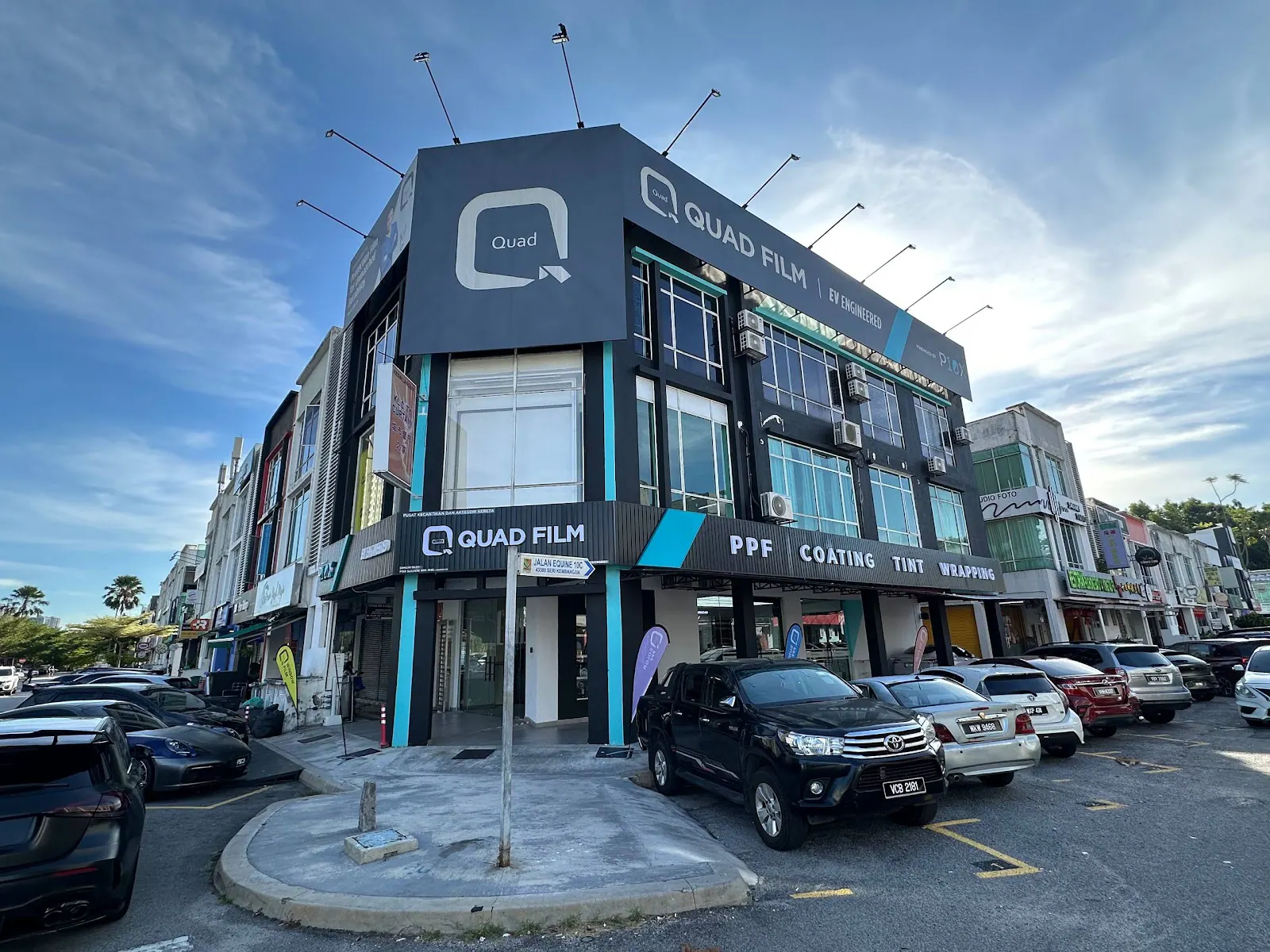
Installer skill matters more with sputtered film than with ordinary tint, so visit the shop before you commit. A proper install bay looks boring in the best way: clean, lit and unhurried, like the Quad Film Equine outlet below. You can also review the range on the Quad Film window tint page before you walk in, so the conversation starts from specs instead of sales talk.
Real customer cars tell the same story. The reel below shows a full protection job, tint included, on a car owned by one of Malaysia's best-known athletes.
Choosing Tint for Your Jetour T1
The decision comes down to four steps. Stay legal on the front glass, pick METALUX or MAGNETRON for the main cabin, give the 2.0T XWD's roof a reflective film, and treat the installer's track record as seriously as the film's spec sheet. Do those four things in your first week and the T1 stays cool, legal and calm for years. When you are ready, bring the per-window plan above to a Quad Film installer and ask for the shade codes and warranty card in writing before any film touches the glass.
FAQ
What VLT is legal for a Jetour T1 in Malaysia?
For a private T1, the front windscreen must allow at least 70% of visible light through and the front doors at least 50%. The rear doors, rear quarters and rear windscreen have no VLT limit, so darker shades are legal there without any exemption.
Does the Jetour T1 2.0T XWD panoramic roof need tint?
It needs heat control more than darkness. A reflective roof film such as Quad Film's EV Sunroof PPF reflects 95% of solar heat while keeping 72% of visible light, which a conventional tint film fitted under the glass cannot match on a panel that large.
Which Quad Film tint series suits a Jetour T1?
METALUX and MAGNETRON are the recommended starting points: METALUX for clarity and night driving at 97% IRR, MAGNETRON for balanced heat rejection at 99% IRR. MEGALUX suits owners who want maximum TSER, MIRACLE is the 100% UV specialist, and MATRIX covers tighter budgets with 99% IRR in a 2 mil ceramic film.
Will window tint affect the Jetour T1's ADAS cameras?
No, provided the installer keeps the windscreen camera housing clear or cuts the film precisely around it. Both T1 variants run the same Level 2 ADAS suite, and its camera and radar hardware does not look through the tinted side or rear glass.
How long after tinting can I wind down the Jetour T1's windows?
Plan for two to three days of curing in Malaysian humidity before winding the windows down. Your installer should state the exact curing window on the job card, along with the warranty registration details.
Does the Jetour T1's factory acoustic glass block heat?
It blocks noise, and it does that well. What it does not block meaningfully is infrared heat, which is why the cabin still heats up when the car is parked in the sun. An aftermarket heat-rejecting film closes that gap.
Protect your Investment today
Don't wait for stone chips to ruin your paint. Speak to our experts about custom PPF and Tinting solutions.