
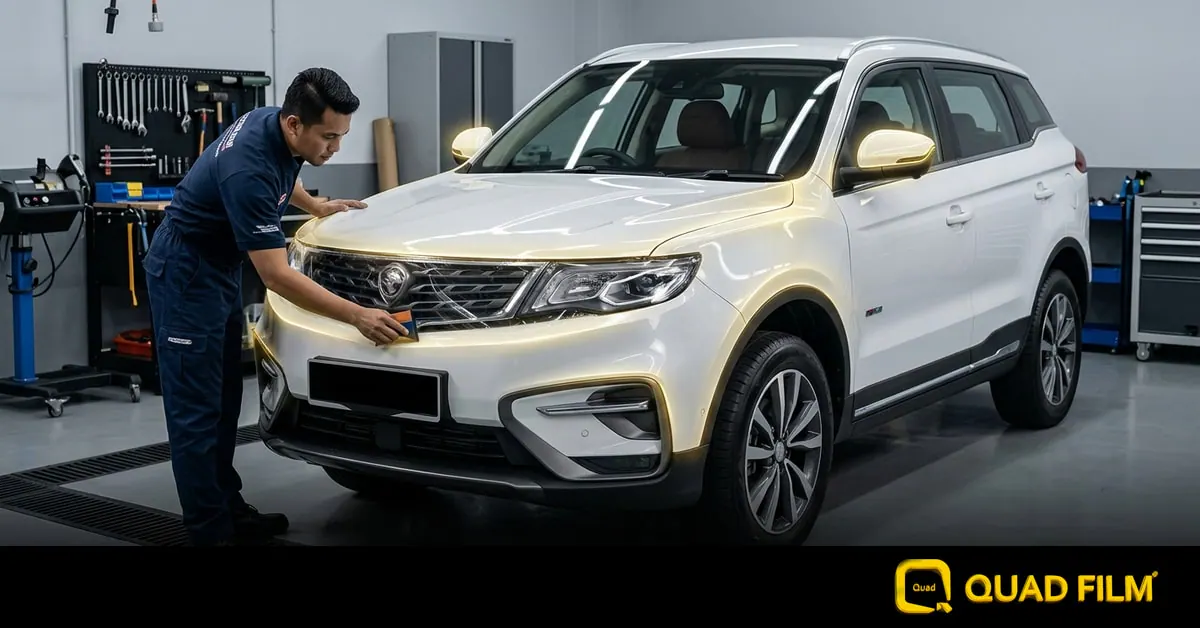
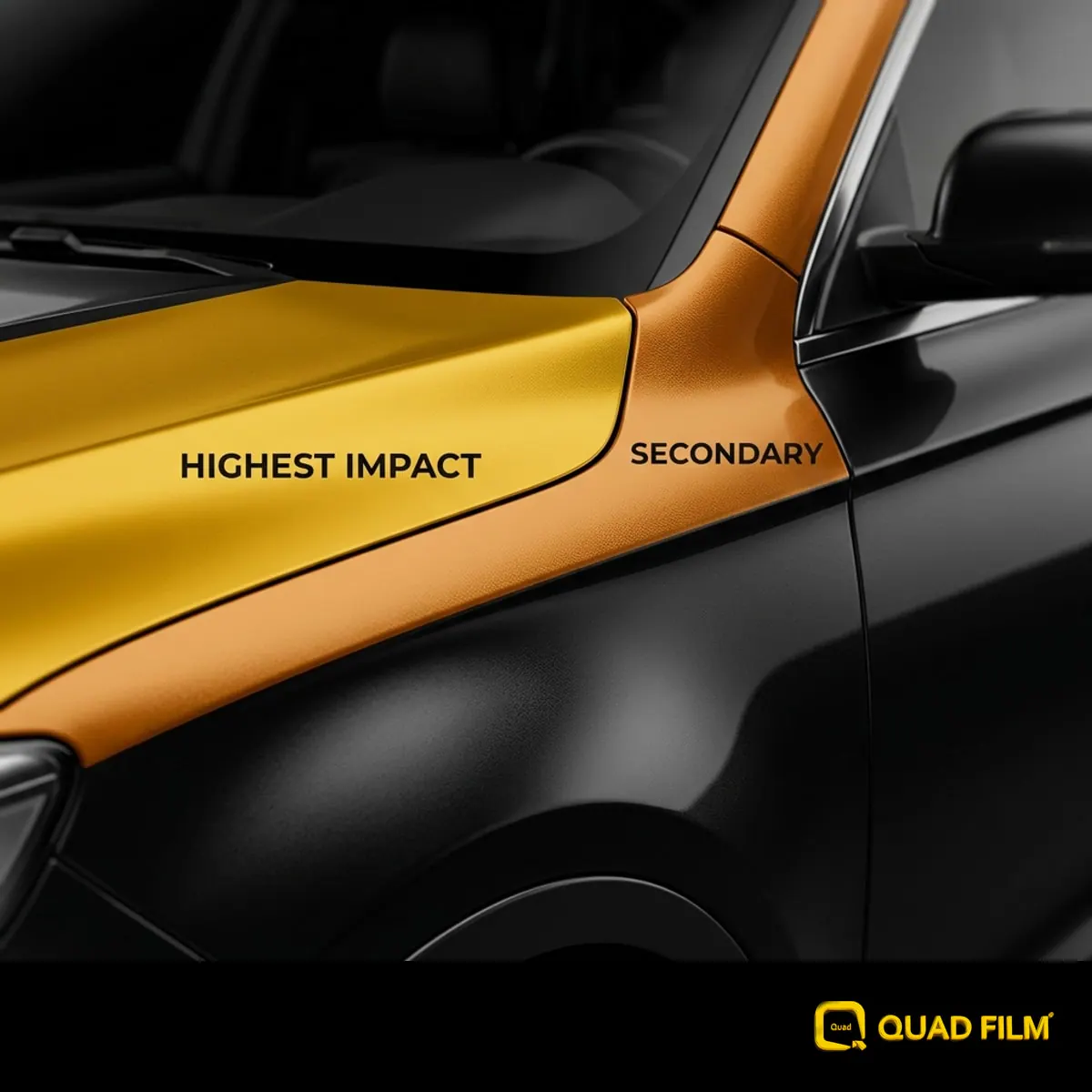
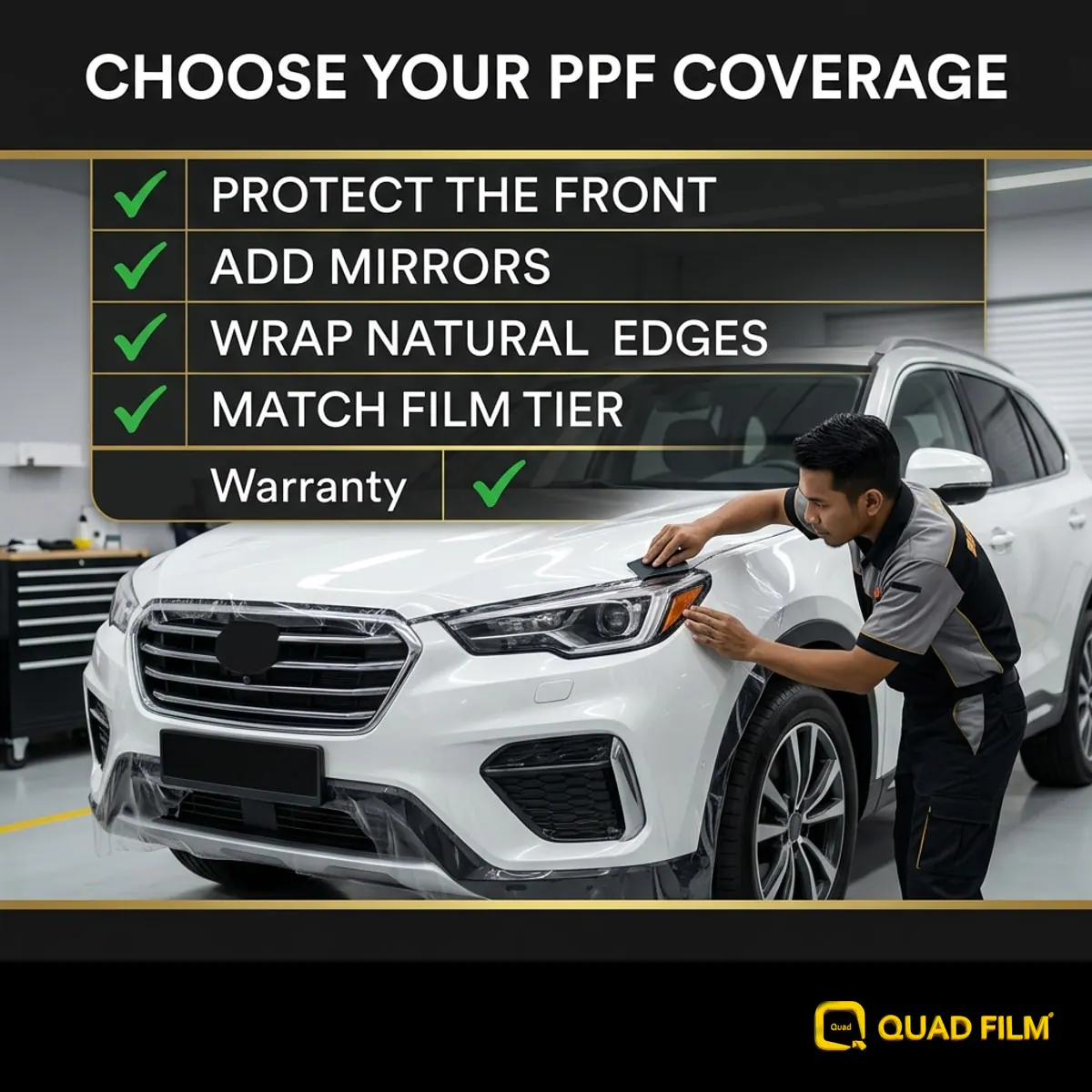
- Protect the highest-impact panels first: front bumper, hood, front fenders and side mirrors.
- Tier 2 add-ons like door cups, rocker panels, A-pillars, headlights and the boot loading lip are smart next steps.
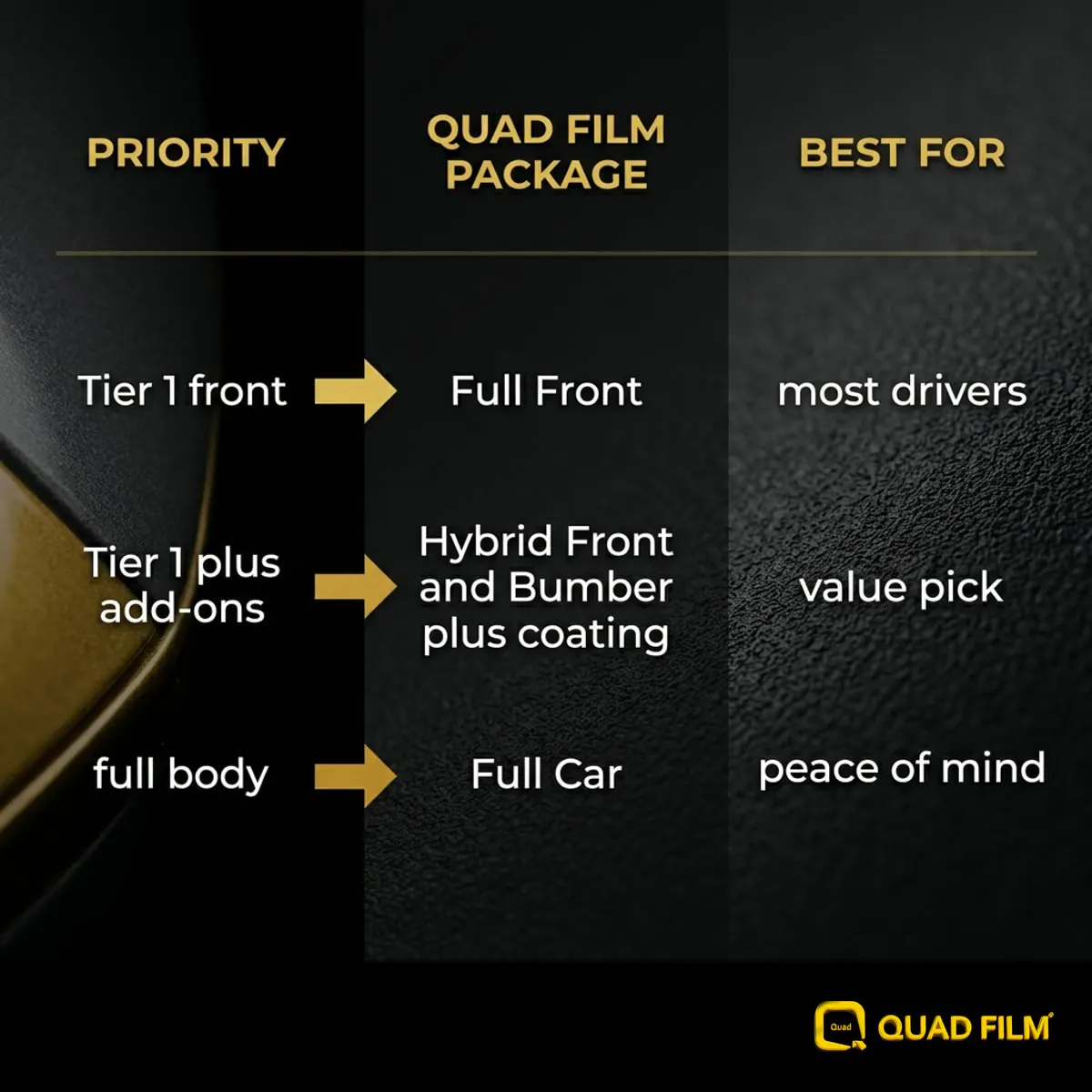
- Full body PPF is peace-of-mind coverage, best for daily highway drivers, soft or dark paint, and high resale intent.
- Wrap to a natural edge like a full bumper or full hood, awkward mid-panel partials look bad and can lift.
- Quad Film maps these priorities to Full Front, Hybrid and Full Car packages so you can match coverage to budget.
If you are asking which car parts need PPF, the smart answer for most Malaysian drivers is to protect the high-impact front panels first and then expand by budget. You do not have to wrap the whole car to get most of the benefit. Roads here throw highway debris, construction grit and carpark door dings at the same few panels, so a sensible priority map protects what actually gets hit. Here is how to spend wisely, tier by tier.
Which Car Parts Need PPF First?
The front bumper, hood, front fenders and side mirrors need PPF first, because that is where the vast majority of stone chips and road rash land. These leading surfaces meet everything the car ahead kicks up, so protecting them gives you the biggest reduction in visible damage for your money. Everything else is a sensible add-on once these are covered.
From there, you expand outward based on how you drive and what you can spend. The goal is a layered plan, start with the panels that take 80% of the hits, then add the next most exposed areas, and only go full body when the peace of mind is worth it to you.
Tier 1: Must-Protect High-Impact Zones
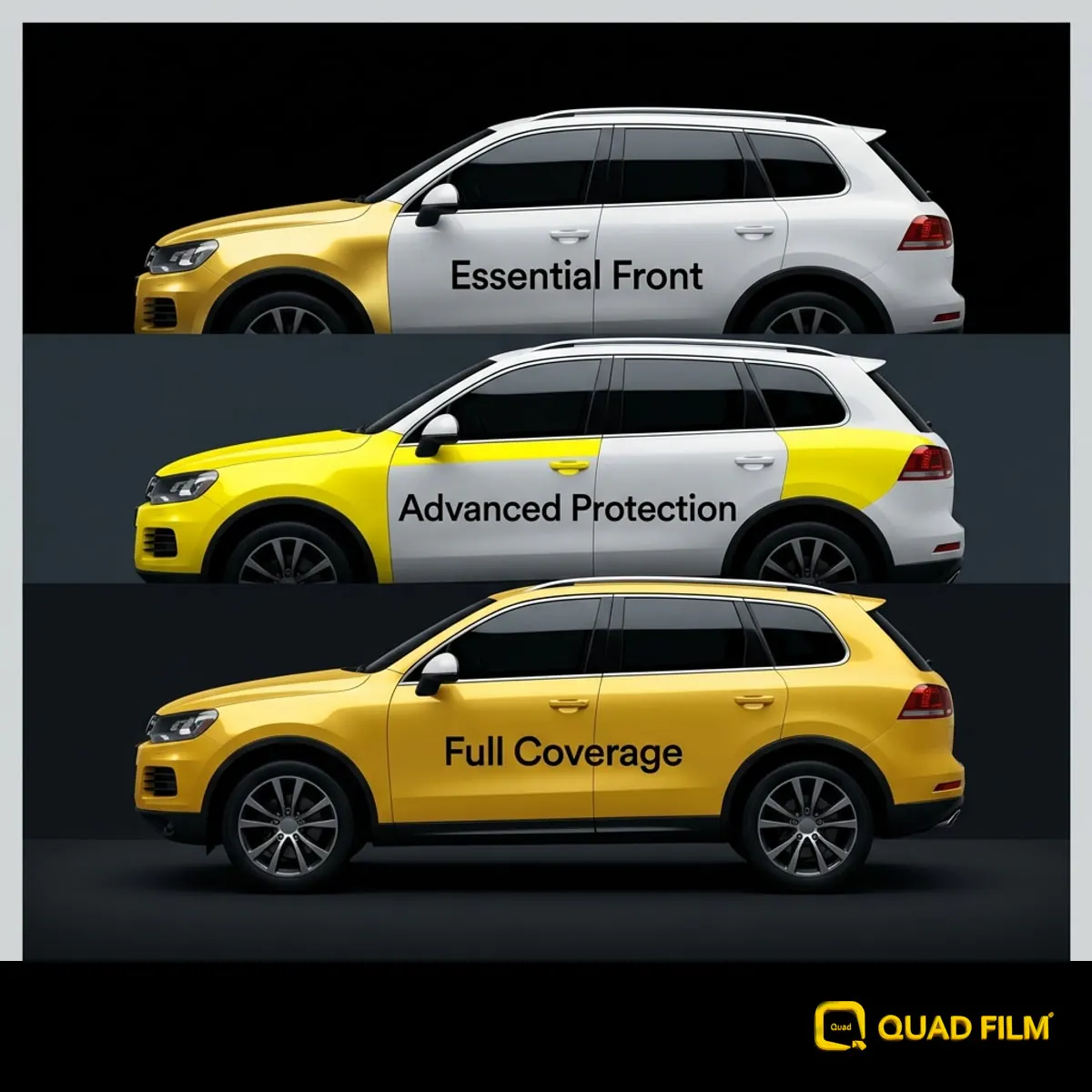
Tier 1 is the front of the car, where roughly 80% of chips happen. The front bumper takes the most hits because it faces road debris head-on. The hood, and at minimum its leading edge, catches stones thrown up at speed. The front fenders sit right behind the wheels and the bumper, and the side mirrors are constantly sandblasted by passing traffic.
If your budget only stretches to one stage, this is it. Covering these four areas, ideally as a full front rather than a thin strip, stops the chips that owners notice most and that hurt resale value. It is the single most cost-effective PPF decision you can make.
Tier 2: Smart Add-Ons
Tier 2 covers the next most vulnerable spots once the front is done. Door cups and the area behind the handles take fingernail scratches and chips. Rocker panels and lower side skirts are blasted by tyre spray and gravel. The A-pillars and roof leading edge catch debris at highway speed, headlights are expensive to replace and dull when chipped, and the rear boot loading lip gets scuffed every time you load it.
These add-ons are inexpensive relative to the panels they protect and target real, everyday wear. Many owners build up to them over time, adding door cups and a boot lip first because they are cheap and high-value, then rockers and headlights as budget allows.
Tier 3: Full Coverage for Peace of Mind
Tier 3 is full body PPF, which protects every painted panel. It makes the most sense for owners who park outdoors with no garage, drive long highway distances daily, have soft or dark paint that shows swirls and chips easily, or care strongly about resale and want the paint kept showroom fresh. For these drivers, the comprehensive coverage is worth the higher cost.
For everyone else, full body can be more than you need. A full front plus a few Tier 2 add-ons often delivers most of the real-world protection at a fraction of the price. We compare these levels in detail in our guide to full front versus full body PPF on a Zeekr X.
Partial vs Full Front vs Full Body, How to Choose
Choose by matching coverage to how you drive and what you can spend, and always wrap to a natural edge. A true full front, covering the entire bumper, full hood, fenders and mirrors, is the sweet spot for most drivers because it protects the high-impact zone without a visible film line mid-panel. Full body is peace of mind for the cases above, while small partials should wrap whole panels, never stop halfway across one.
The reason matters. A film edge in the middle of a hood or bumper is visible, collects dirt and can start to lift over time. Wrapping to a panel edge hides the transition and keeps the protection durable, which is why we steer owners away from awkward mid-panel partials.
How Malaysian Driving Conditions Change the Priority
Local conditions push the priority toward the front and lower panels. Highway debris on the PLUS and KESAS, frequent construction zones, and loose-stone stretches mean the bumper, hood and fenders earn protection first. Tight mall and condo carparks add door dings, which is why door cups and edge protection are smart early add-ons here. Heat and strong sun also make a hydrophobic, self-healing film worthwhile, since it keeps cleaning easy and shrugs off light marks.
Quad Film Packages by Coverage Level
Quad Film maps these priorities to clear packages. The figures below are SUV-size, and sedans differ, so ask for a quote for your exact model.
| Coverage | QUANTUM | QUATTRO | QUANTA |
|---|---|---|---|
| Full Front (SUV) | RM6,500 | RM5,500 | RM4,500 |
| Hybrid: Full Front & Bumper PPF + Gtechniq coating (Standard) | RM6,100 | RM4,800 | RM3,600 |
| Full Car (SUV) | RM18,000 | RM14,000 | RM12,000 |
The film tiers differ in thickness and lifespan: QUANTUM is 10 mil with roughly 99% self-healing and a 7-year life for heavy-duty protection, QUATTRO is 8.5 mil over 7 years, and QUANTA is 7.5 mil over 5 years, with finishes including QUATRIX satin, QUBOND matte and QUARMOR gloss. The Hybrid package is a popular value pick because it protects the highest-impact areas and adds a coating for the rest. For a full breakdown see our PPF price and cost guide, and browse options on the Quad Film PPF page.
Common Mistakes Choosing PPF Coverage
The biggest mistake is a hood-only job that leaves the bumper, the most-hit panel, bare. The second is skipping cheap, high-value areas like mirrors and door cups while spending on less exposed panels. The third is putting cheap film on the bumper, where impact resistance and self-healing matter most, just to save a little money.
Avoid these by funding the front properly first, adding the inexpensive high-value spots, and choosing a quality film for the panels that take real hits. If chips are already appearing, our guide on whether to still get PPF after minor stone chips and our explainer on whether PPF damages paint on removal are worth reading before you book. EV owners can also see our notes on PPF for electric cars.
Building the Right PPF Plan for Your Car
Which car parts need PPF comes down to protecting the high-impact front first, then expanding to smart add-ons, and reserving full body for the drivers who truly benefit. Wrap to natural edges, fund the bumper and mirrors before less exposed panels, and match the film tier to your roads and budget. Do that and you get the protection that matters most for Malaysian driving, without paying for coverage you do not need. When in doubt, start with the complete PPF guide.
FAQ
What parts of a car should I PPF first?
The front bumper, hood, front fenders and side mirrors. These leading surfaces take the most stone chips and road rash, so protecting them first gives the biggest benefit for your money.
Is full-front PPF enough or do I need full body?
For most drivers a full front is the sweet spot, since it covers the high-impact zone. Full body makes sense if you park outdoors, drive long highway distances daily, have soft or dark paint, or prioritise resale.
Should I PPF the side mirrors and door handles?
Yes. Mirrors are constantly sandblasted by passing traffic and door cups take regular scratches, and both are inexpensive to protect relative to repainting them.
Is partial PPF a bad idea?
Not if it wraps to a natural edge like a full bumper or hood. Awkward partials that stop mid-panel leave a visible film line that collects dirt and can lift, so avoid those.
How much does it cost to PPF just the front of an SUV?
Full front for an SUV runs around RM4,500 for QUANTA, RM5,500 for QUATTRO and RM6,500 for QUANTUM. Sedans differ, so ask for a quote for your model.
Do I need PPF if my car is garaged?
A garage reduces sun and weather exposure but not road debris while driving, so the front panels still benefit. Garaged cars often do well with a full front plus key add-ons rather than full body.
Which Quad Film package fits a daily driver?
Many daily drivers choose the Hybrid package, full front and bumper PPF plus a coating for the rest, as a strong value balance, or a straight full front in QUATTRO or QUANTUM for heavier protection.
Protect your Investment today
Don't wait for stone chips to ruin your paint. Speak to our experts about custom PPF and Tinting solutions.