
Getting your first car is exciting enough without worrying about the first scratch. First car PPF in Malaysia does not have to mean choosing between a full-body wrap you cannot afford and doing nothing at all. It means deciding, in the right order, which panels earn protection first, how to avoid overpaying as someone with zero reference point, and when to add the rest.
What "PPF Priorities" Means for a First Car
Priorities means treating PPF as a sequence, not a single all-or-nothing purchase. A first car rarely comes with a budget for full-body coverage on day one, and it does not need it on day one either. The panels that face the most contact, the front bumper, the bonnet, the headlights, and the mirrors, take almost all the early damage. Everything else can wait without the paint underneath losing its factory finish in the meantime.
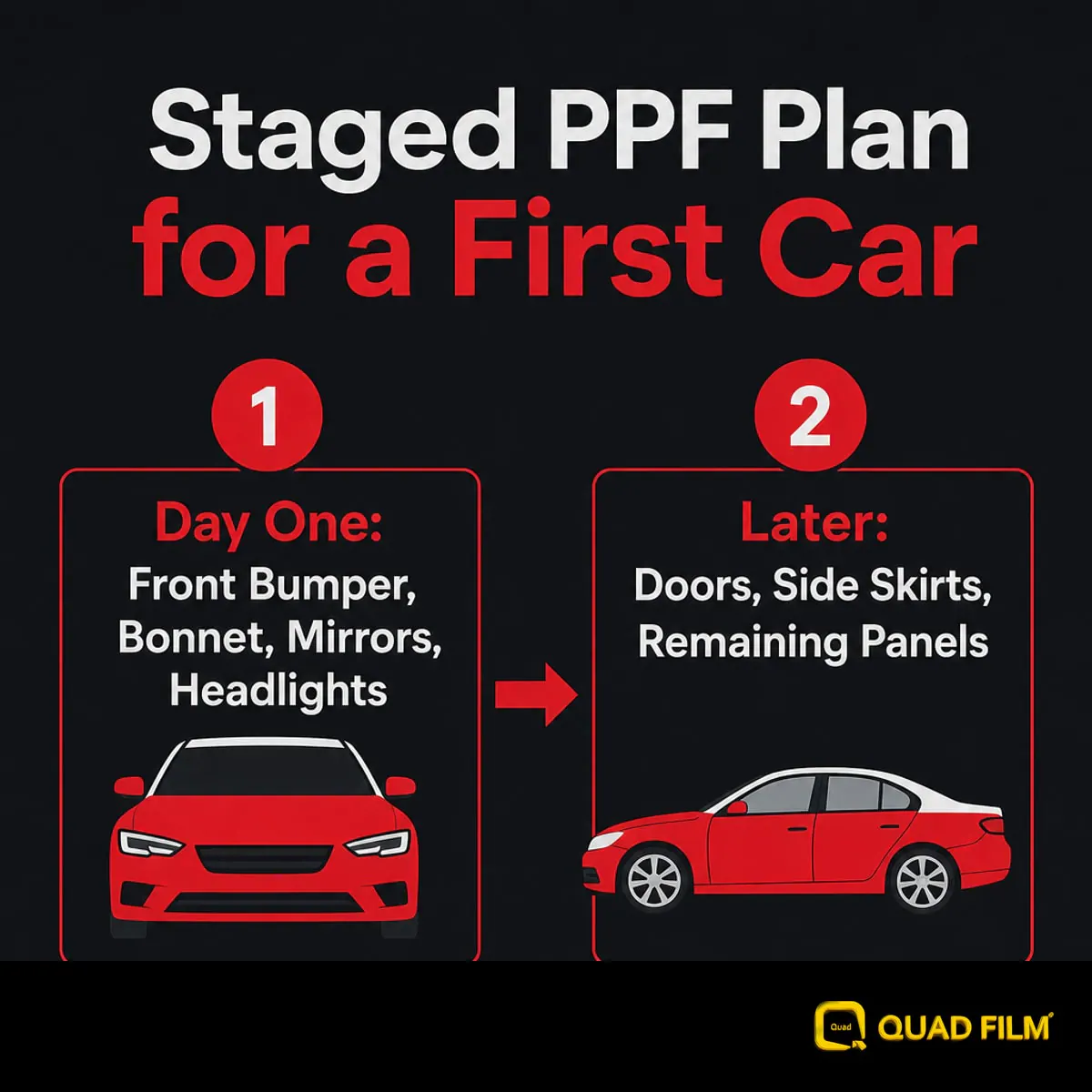
This matters because most first-time owners either overcommit to full coverage they cannot really afford, or skip protection entirely because "the whole car or nothing" feels like the only choice. Neither serves you well. A staged plan, front panels now and the rest when your budget allows, protects the areas that matter most immediately while leaving the door open to finish the job later.
Quad Film treats this the same way for a first car as for any other vehicle: match the coverage to the risk the panel actually faces, not to what looks most impressive in a before-and-after photo. For someone new to car ownership, that also means learning what a legitimate installer looks like before signing anything, which is where a lot of first-timers get caught out.
There is also a psychological piece to this that generic PPF guides skip over. When you have never owned a car before, you have no baseline for what a fair quote sounds like, what a proper installation looks like, or how long a job should take. That uncertainty is exactly what a staged, panel-by-panel plan solves. It breaks one intimidating decision into a small first step you can evaluate properly, learn from, and build on once you know what good work actually looks like.
Why New Paint Needs Protection Before the First Mark
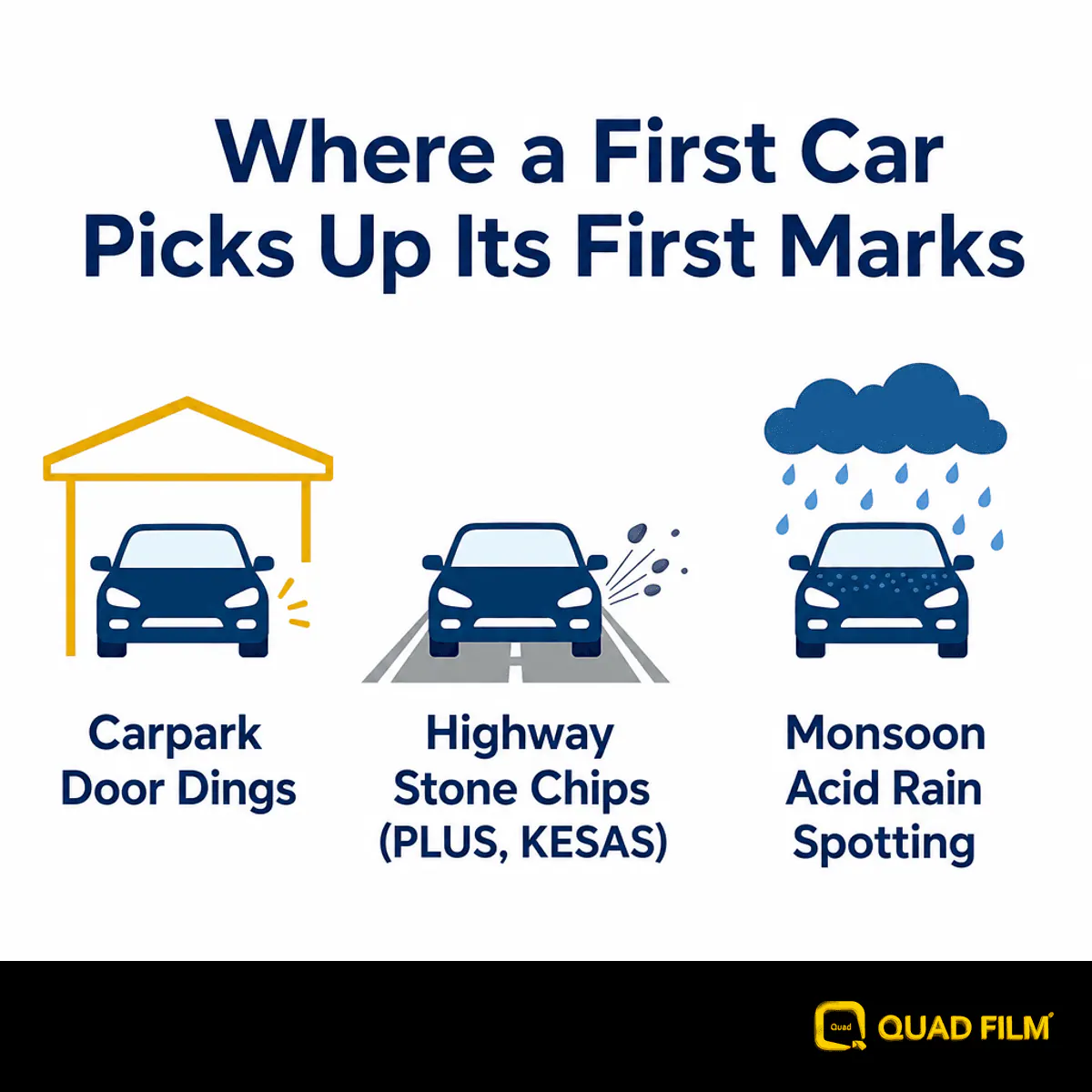
Factory paint on a brand new car is at its most vulnerable in the first few months, before it has picked up the fine surface hardening that comes with age and before you have learned your own parking habits. A first car spends its early life in exactly the environments that cause the most damage: mall and condo carparks with tight bays, the daily grind up the PLUS or KESAS highway where loose gravel kicks up from trucks ahead, and Klang Valley's monsoon downpours that leave acid rain spotting on anything left uncovered.
None of this is dramatic on its own. A door edge picks up a hairline scuff from the car in the next bay. A stone chip appears on the bonnet after one highway trip. A faint water spot etches into the paint after a storm you did not have time to wash off. Each mark is small, but they accumulate fastest in the first year, exactly when the paint has had the least time to prove it can hold up.
The reason to protect early rather than "wait and see" is simple. PPF applied to clean, undamaged paint bonds properly and looks invisible from day one. PPF applied over a bonnet that already has three stone chips is still worth doing, but it cannot undo what has already happened. If you are going to protect a first car at all, doing the front panels before your first long highway drive gets you the most value from the decision.
This is also where the tropical climate works against a first-time owner in a way drivers from cooler countries do not have to think about. Constant heat and UV exposure soften and stress factory paint faster than it would age in a temperate climate, so the same minor contact that might buff out easily elsewhere can leave a mark that sets in for good on a first car parked outdoors in Malaysia. A newly delivered car spends its first weeks adjusting to that heat cycle, which is exactly when the paint is least prepared to shrug off a scrape.
Which Panels to Protect First on a Tight Budget
If you can only protect part of the car right now, protect the part that actually faces the risk. The front end absorbs almost all of a car's road-facing damage, while the doors and roof mostly face the slower, cumulative kind from parking and weather. Here is how the panels stack up.
| Panel | Impact risk | Recommended Quad Film series | Coverage tier |
|---|---|---|---|
| Front bumper | Highest, direct stone and debris impact on every highway trip | QUANTA (Invisible Daily Guard) or QUANTUM for extra thickness | Full Front |
| Bonnet | High, catches stone chips at speed and sits exposed to the sun all day | QUANTA or QUANTUM | Full Front |
| Headlights | High, low mounting position takes direct hits from road debris | QUANTA | Full Front |
| Side mirrors | Moderate to high, exposed edges catch scrapes in tight carparks | QUANTA | Full Front |
| Front door edges and handles | Moderate, first contact point in narrow mall and condo bays | QUANTA | Partial, add when budget allows |
Front Bumper and Bonnet
These two panels, plus the front fenders that sit just behind them, take the brunt of highway driving and deserve first priority in any staged plan. QUANTA's gloss finish and Invisible Daily Guard positioning make it a natural first pick because it is built for exactly this kind of everyday exposure rather than occasional showpiece use. If you drive PLUS or KESAS regularly and want stronger protection from day one, QUANTUM's thicker 10 mil construction is the step-up option on the same two panels.
Headlights and Side Mirrors
Headlights sit low and forward, which puts them directly in the path of kicked-up gravel, while side mirrors take the kind of scrape damage that comes from misjudging a tight parking bay. Both are small panels, which keeps this addition modest even when it is bundled with the bumper and bonnet as a first-stage job.
Door Edges and Handles
This is usually the first thing to add once the front end is covered, since door edges and the door cups around the handles are where a first car in a mall or condo carpark takes its earliest cosmetic damage. It does not need to happen on day one, but it is worth planning for as the natural second stage.
One detail worth knowing before you commit to a series is what the warranty actually protects against over the years the film is on the car. The Quad PPF warranty covers yellowing, alongside the more familiar bubbling and cracking, which matters most in a climate that pushes clear film toward an amber tint faster than cooler markets ever see. For a first-time owner who has no prior film to compare against, that is one less thing to worry about years down the line.
How to Avoid Overpaying or Underprotecting as a First-Timer
The hardest part of getting PPF on a first car is not choosing panels, it is knowing whether the installer in front of you is genuine. With no reference point for what "normal" looks like, first-time owners are the easiest target for a shop cutting corners on film quality or workmanship.
Start by checking the film itself rather than taking a brand name on faith. Genuine film should carry a verifiable QR code, brand name, or serial number that traces back to the manufacturer, not just a sticker on the box. Ask to see it before the job starts, not after. A shop that hesitates to show you this is telling you something.
Next, confirm the installer is an authorised dealer rather than someone who has simply bought a roll of film and set up shop. Authorised Quad Film installers go through structured technical training before they touch a customer's car, covering installation technique, product knowledge, and consistency of workmanship, not just the sales pitch. That training is the difference between film that lies flat with clean edge wrapping and film that bubbles or lifts within months.
Finally, ask what happens if something goes wrong with the installation itself. A workmanship guarantee should be a plain, direct answer, not a vague promise. If a shop cannot tell you clearly what they stand behind, treat that as a bigger warning sign than any price you are quoted.
One genuine advantage a first-timer has that they rarely realise is time. Unlike someone replacing a damaged panel under pressure, you are not in a rush. Use that time to visit more than one outlet, ask each one the same three questions about film authenticity, installer certification, and workmanship guarantees, and compare how directly they answer. A shop confident in its own work rarely hesitates on any of the three.
Staging Protection Over Time: Front Now, Rest Later
Once the front panels are done, you are not locked into stopping there or committing to the rest immediately. Quad Film's complete guide to PPF in Malaysia walks through full coverage options for when you are ready to go further, and it is worth reading once you have lived with the front-end job for a few months and have a better feel for how the car is actually being used day to day.
Budget is usually the deciding factor in timing, and it helps to get a realistic sense of what PPF costs before you plan the next stage, so you are working from real numbers rather than guesses. There is no penalty for spacing the work out. A front-end job done properly today protects those panels exactly as well whether the rest of the car gets covered next month or next year.
The one thing to avoid is chasing the cheapest possible quote when you do add more coverage later. Film that fails in Malaysia's humidity does not fail gracefully, it lifts, discolours, or turns cloudy well before it should, which is exactly why cheap film fails in Malaysia's humidity and ends up costing more to redo than doing it properly the first time. A staged plan only saves you money if every stage is done with film that actually lasts.
What a First-Time Owner Actually Gains Over "Just Driving Carefully"
Careful driving helps, but it cannot stop another car's door from swinging into yours in a tight mall bay, and it cannot stop loose gravel from a truck two lanes over on the highway. The honest question is not whether you drive carefully, it is how many marks a first car realistically picks up in its first year regardless of how careful you are, and how much of that a protected panel actually prevents.
An industry benchmark on door-edge and bumper contact in regular public parking, drawn from door ding protection data, finds that a car parked in shared spaces at least a few times a week picks up roughly four minor dings or scuffs in a year. QUANTA carries a 98 percent self-heal rating on exactly this kind of light surface contact, meaning marks that would otherwise sit visible on bare paint largely disappear on their own with light heat, such as a warm Malaysian afternoon.
Run those two figures together and a front end protected with QUANTA should end its first year showing zero to one visible mark instead of the roughly four an unprotected bumper and door edge would carry. That is not a promise that nothing will ever touch the car. It is the practical difference between a first car that still looks new after twelve months of ordinary Klang Valley parking, and one that already has a small collection of marks you now have to live with or pay to fix. If you are also weighing this against PPF vs ceramic coating for a first car, the self-heal mechanism is the specific advantage PPF has that a coating alone does not.
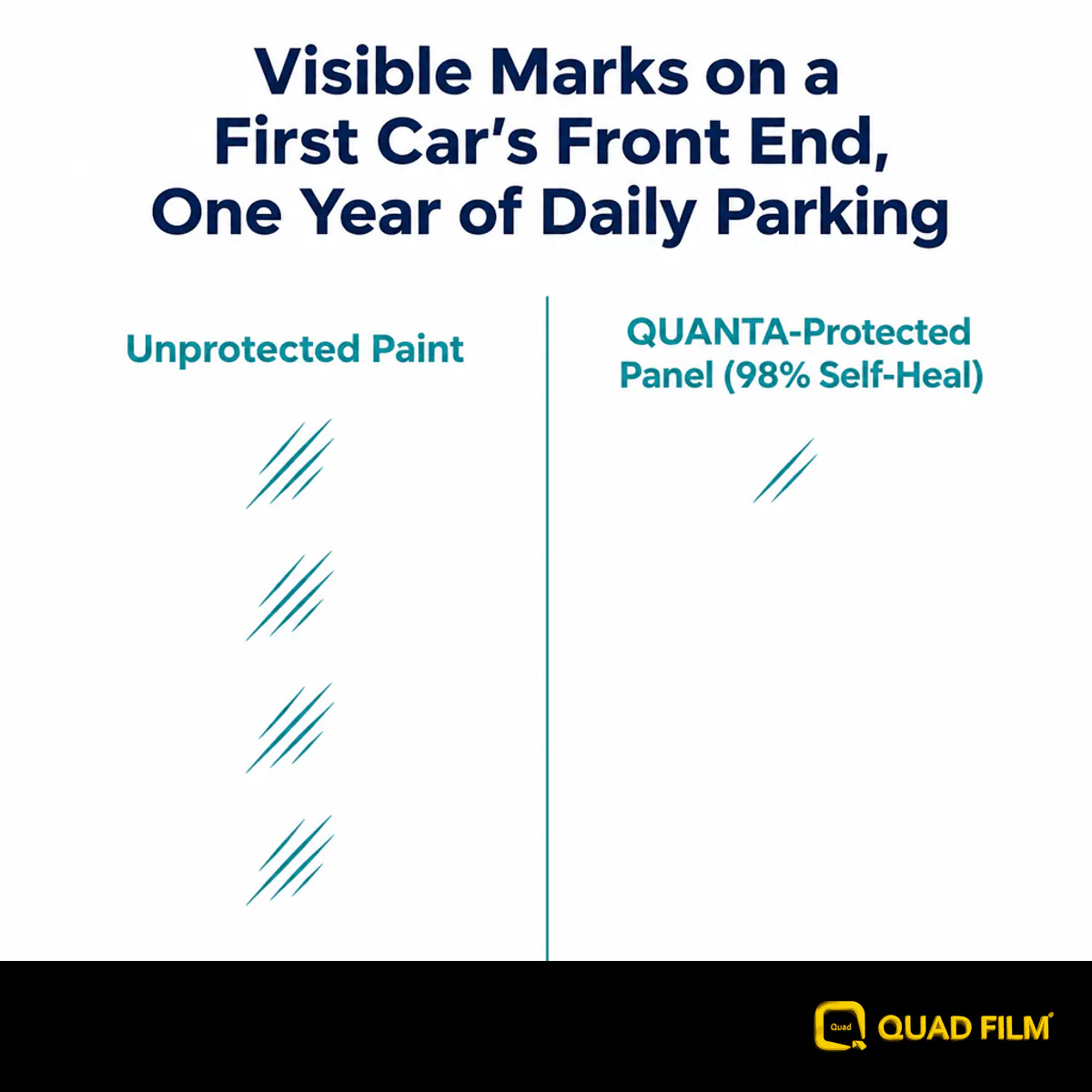
That gap only holds up if the installation itself is done properly. Self healing depends on an even, correctly bonded layer of film with no trapped air or lifted edges, which is a workmanship outcome, not just a product spec. A rushed or careless application can leave a panel that looks fine on delivery day but heals poorly six months later, which loops back to why checking the installer matters as much as choosing the right series.
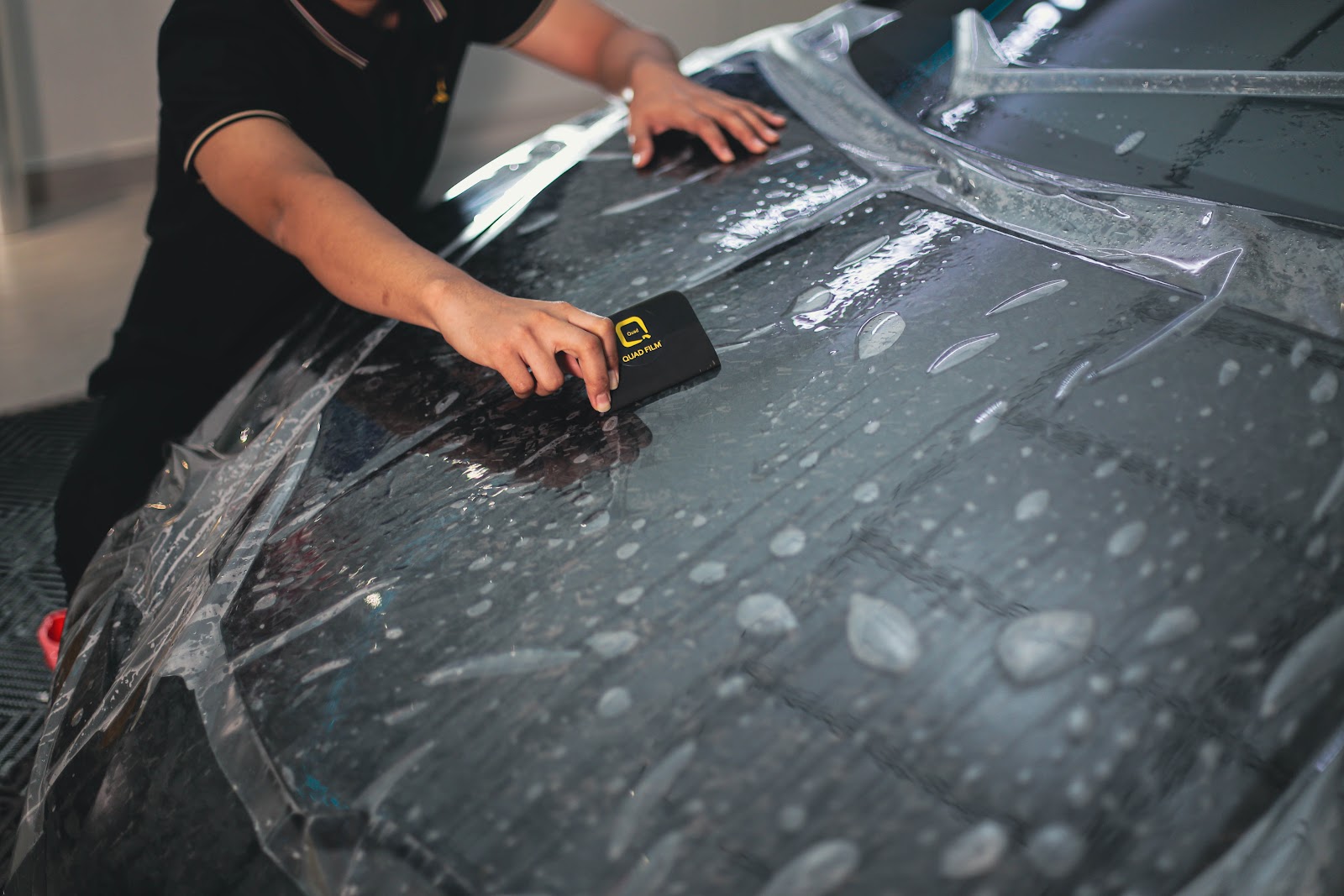
Seeing the recommended series on a familiar, everyday car rather than a showpiece helps make the choice concrete. A Honda CR-V finished in QUANTA is a useful reference point for a first car, since it shows the same gloss, self-heal series applied to a mainstream family vehicle rather than a car built for a magazine cover.
Getting Your First Car's Protection Plan Right
The decision does not have to be all-or-nothing. Protect the front bumper, bonnet, headlights, and mirrors first, since those panels carry almost all of a first car's early risk. Verify the installer before you verify anything else about the job, because a genuine film and a trained technician matter more than any single feature on a spec sheet. Add the doors and the rest of the car when your budget allows, using the complete PPF guide referenced earlier to plan that next stage. Done this way, a first car stays looking new through its first year of Klang Valley parking, highway trips, and monsoon storms, without asking a new owner to spend more than the moment calls for.
Should I protect my first car with PPF right after delivery?
Front-end panels benefit most from being protected before the first highway trip or carpark scrape, since PPF bonds best to clean, undamaged paint. Waiting is not a mistake, but the earlier the front end is covered, the more of the car's original finish it protects.
Do I need full car PPF for my first car or just the front?
Just the front is a reasonable and common first stage. The front bumper, bonnet, headlights, and mirrors carry almost all of a first car's early risk, and the rest of the car can be added later without losing any benefit on the panels already done.
How do I check if a PPF installer in Malaysia is genuine before my first job?
Ask to see the film's QR code, brand name, or serial number before installation, and confirm the installer is an authorised dealer with documented technical training rather than someone simply reselling a roll of film.
What happens if I wait a few months before getting PPF on my first car?
Nothing is lost except the protection those months would have provided. PPF applied later still works, it simply cannot undo any marks the paint has already picked up in the meantime.
Can I add more PPF coverage later if I start with just the front?
Yes. A front-first plan is designed to be extended, and the panels already covered are not affected by adding the rest of the car at a later stage.
Does PPF on a first car affect my ability to sell it later?
Paint that has been protected from day one typically shows less wear at resale than paint left bare, since the panels most exposed to daily contact are the ones a buyer inspects most closely.
Is a cheaper PPF film enough protection for a first car on a tight budget?
Budget is a reasonable constraint, but film quality is not the place to cut it. Film that fails in Malaysia's humidity ends up needing to be redone, which costs more overall than choosing a properly certified installer and film from the start.
Protect your Investment today
Don't wait for stone chips to ruin your paint. Speak to our experts about custom PPF and Tinting solutions.