
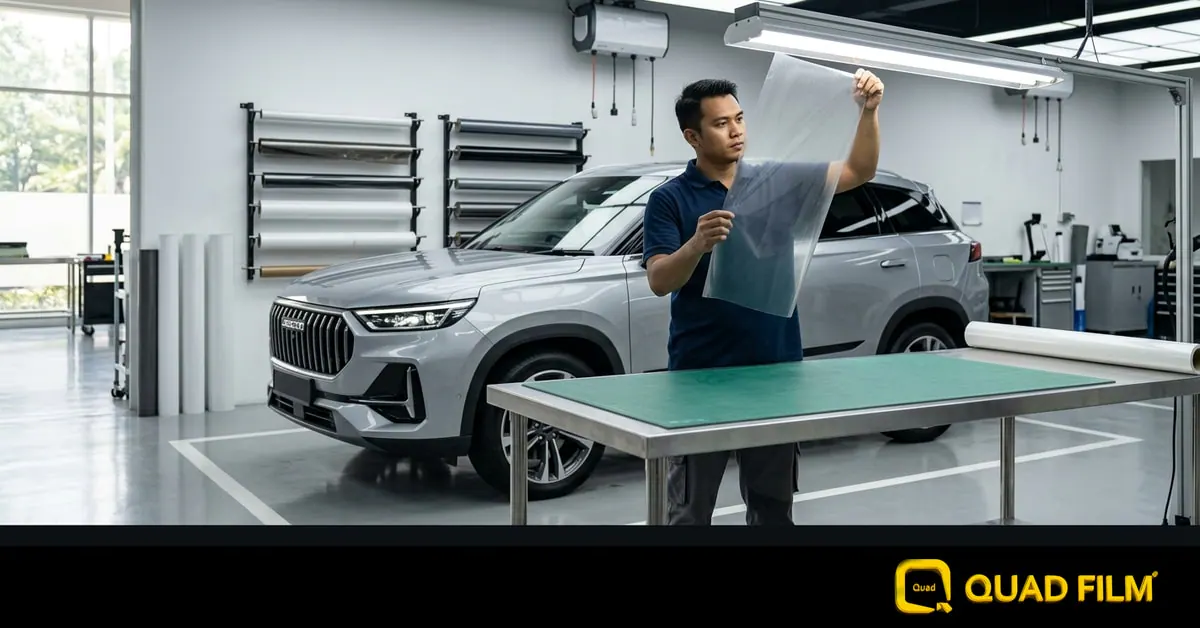
- Ask for the spec sheet, not the sales description. Heavy duty and daily guard are positioning, not numbers.
- Ask for thickness, release force and fracture growth on every grade being quoted.
- Ask which grade is going on which panel. It does not have to be one film across the whole car.
- Ask whether yellowing is covered, in those words, and get the answer in writing.
- Ask what removal will involve years from now, before you commit to anything.
Jaecoo J7 PPF in Malaysia gets chosen on the wrong specification. Owners ask about self-healing, and across the whole clear film range self-healing varies by a single percentage point. Thickness varies by a third, and so does release force, which is the number that decides how your paint looks the day the film comes off.
On Lowyat the J7 threads that get real traffic are the worried ones, including one titled as bluntly as asking why Jaecoo has had so many problems lately. The official owners' club thread by contrast is close to silent, with a member noting that most J7 owners are on Facebook instead.
You are probably here because someone quoted you three grades and explained the difference in adjectives. Heavy duty armour, increased glossiness, invisible daily guard. Those are positioning lines rather than specifications, and our complete film guide is the fastest way to get the vocabulary straight before you go back in.
Which Two Numbers Actually Separate the Grades
Thickness and release force. Everything else on the clear PPF spec sheet either barely moves between grades or does not move at all. Adhesion is identical across all three clear films at 1,000 gf, so the grip on your paint is not what you are choosing between.
The three clear films are QUATTRO at 8.5 mil, QUANTA at 7.5 mil and QUANTUM at 10 mil. Their release forces are 14 gf, 12 gf and 16 gf respectively. Their fracture growth rates are 11.5 cm, 10.5 cm and 12 cm. Their self-healing rates are 98.5, 98 and 99 percent.
Here is how differently those two properties move. Self-healing runs from 98 to 99 percent, which is a one point spread on a base of 98, or about 1 percent of variation. Thickness runs from 7.5 to 10 mil, which is a 2.5 mil spread on a base of 7.5, or 33 percent. Thickness varies roughly thirty-three times as much as self-healing across the same three films.
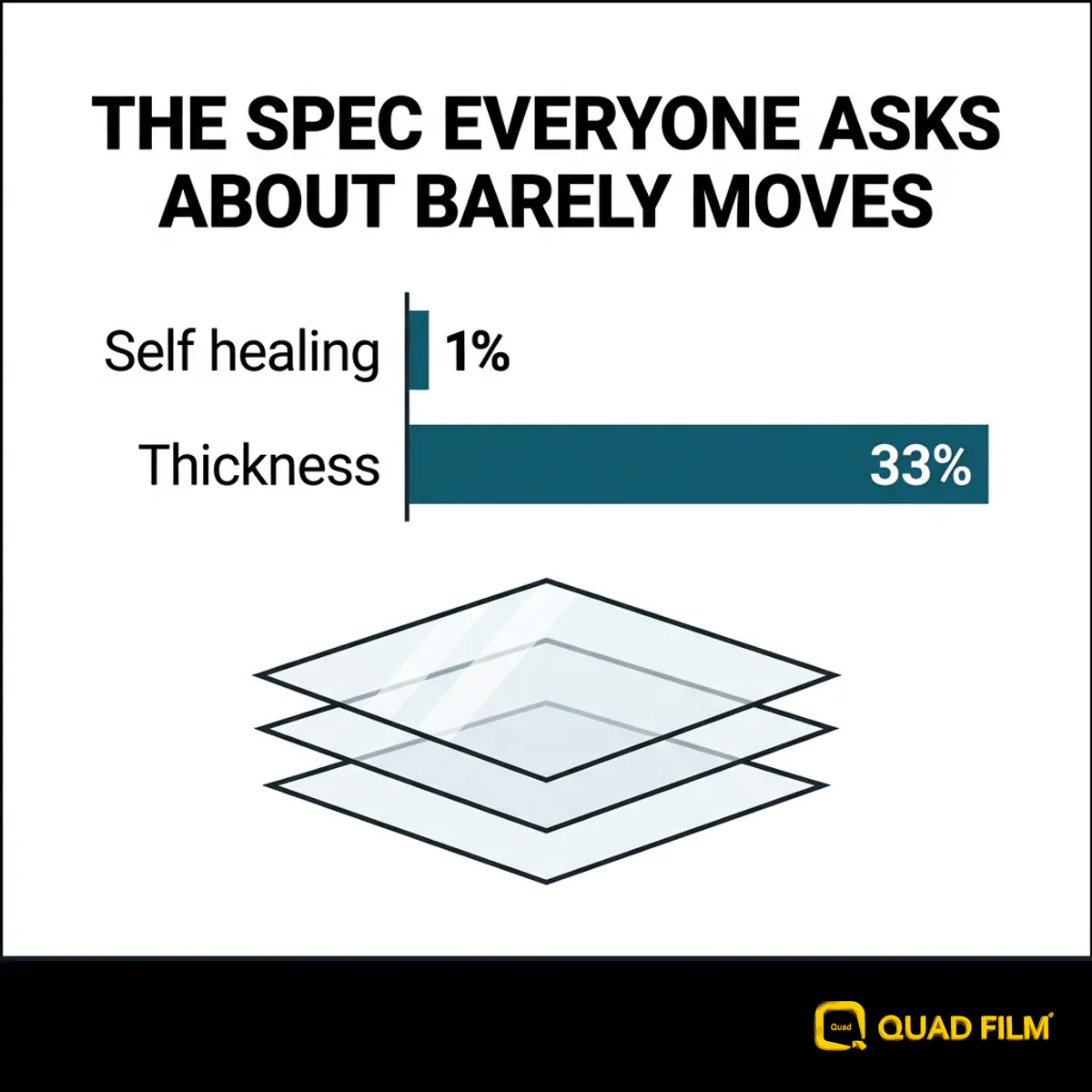
So the useful conversation at a counter is a short one. Ask for the thickness of each grade quoted, ask for its release force, and ask for its fracture growth. Three numbers, three grades, nine figures. That is enough to decide, and everything else on the sheet is context rather than a deciding factor.
Elongation to break behaves the same way as self-healing, for what it is worth. QUANTUM stretches to 490 percent and the other two clear films to 460 percent, a spread of about 6 percent. That is a real difference to the installer working a film around a bumper corner and effectively no difference at all to you once the car is back on the road.
Why Self-Healing Is Not a Deciding Factor
Because every clear film in the range does it, and does it to within one percentage point of every other. QUANTUM heals at 99 percent, QUATTRO at 98.5 percent and QUANTA at 98 percent. There is no grade in the range where you are giving it up.
What self-healing does is close light surface scratching in the film when the panel warms up. In Malaysia that mostly happens on its own. Park a filmed car in the sun for an afternoon and the fine marks a careless wash left behind will have largely disappeared by the time you come back to it.
What it does not do is repair the paint underneath. If a stone chip went through to primer before the film was fitted, it is still there and it is now sealed under a clear layer. If a deep scratch cuts through the film into the clear coat, healing closes the film and leaves the clear coat cut.
That distinction is the reason self-healing gets oversold. It is a genuinely good property that every grade in the range shares, which makes it a reason to buy film and a poor reason to pick one film over another. Our guide to which panels actually need protecting is a better place to spend the same decision energy.
That clip puts a 7 mil film next to an 8.5 mil one and shows what happens when film is stretched, which is the part of the thickness argument nobody explains at a counter.
How to Match a Grade to a Panel
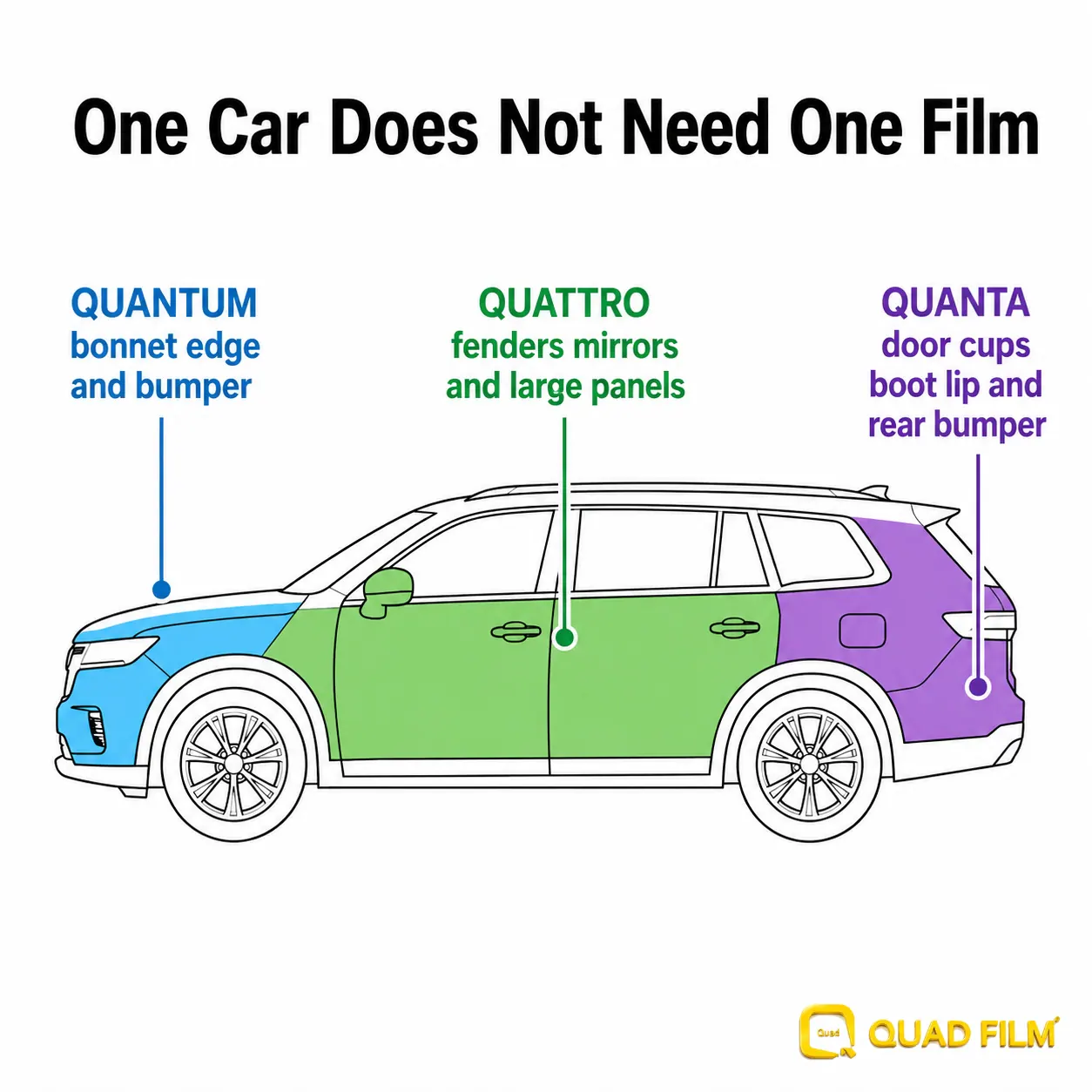
You do not have to run one film across the whole car, and on a J7 there is a good reason not to. Panels take different kinds of damage, and the grades are built around different kinds of damage. Match them.
Step 1: QUANTUM on the Impact Panels
Bonnet leading edge and front bumper face. These take direct hits at closing speed, and 10 mil of film with a 99 percent healing rate is built for exactly that.
Step 2: QUATTRO on the Contoured Panels
Fenders, mirrors and headlights. At 8.5 mil it lays into curves more easily than the thickest film while giving up very little, which is part of why it is the best selling grade.
Step 3: QUANTA on the Low Risk Panels
Door cups, boot lip and rear bumper. These take drag and scuff rather than impact, and the thinnest clear film has the lowest fracture growth at 10.5 cm and the lowest release force at 12 gf.
Step 4: QUATTRO Across the Large Flat Areas
Roof, doors and rear quarters if you go to full body. Large panels reward a film that lays flat without fighting, and 8.5 mil sits in a comfortable middle.
Step 5: Decide the Edges, Not Just the Panels
Every panel choice has an edge decision attached. Wrapped edges vanish around the panel. Trimmed edges sit on the paint and collect a visible line of dirt within a year.
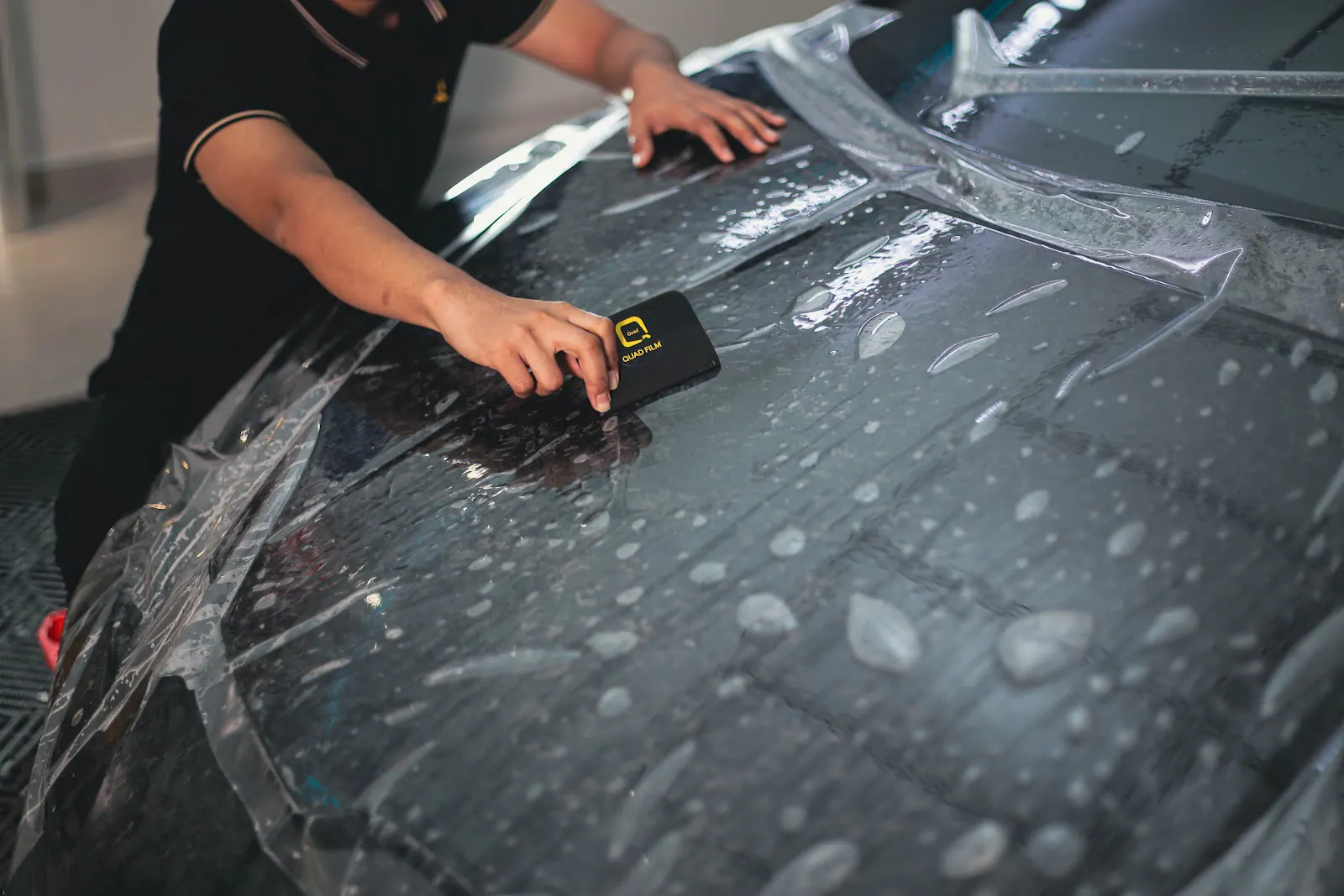
Watch how much of that work is pressure and patience rather than speed. Film laid without tension sits flat for years. Film stretched into position spends the rest of its life trying to return to the shape it started in, and the edges are where that shows first.
What Release Force Means Years Later
Release force is how hard the film has to be pulled to come away from the paint, and it is the specification that matters most on the day you sell the car. QUANTA is 12 gf, QUATTRO is 14 gf and QUANTUM is 16 gf.
That range is not large in absolute terms, but it is a 33 percent spread across the same three films, and it compounds with time and heat. A film that has been baking on a bonnet for six Malaysian years is not going to come off as easily as the number on a fresh spec sheet suggests, whichever grade it is.
Adhesion is a separate number and it does not vary at all across the clear range. All three sit at 1,000 gf. So the grip holding the film to your paint is the same regardless of grade, and the difference in removal comes from the film's own behaviour rather than from how hard it is holding on.
What that means practically is simple. If you know you will be selling in a few years, the thinner grades come off more easily. If you plan to keep the car for a decade, removal is a distant problem and the impact performance on the front panels matters more. Our piece on what removal does to paint covers what a clean removal actually looks like.
There is a related point worth raising at the counter. Film that goes on a car with existing chips seals those chips underneath it, and they come back into view the moment the film comes off. If your J7 has been on the road two years and already has a few, decide now whether they get corrected first, because that decision cannot be revisited later. Our article on getting film after the first chips appear works through that specific situation.
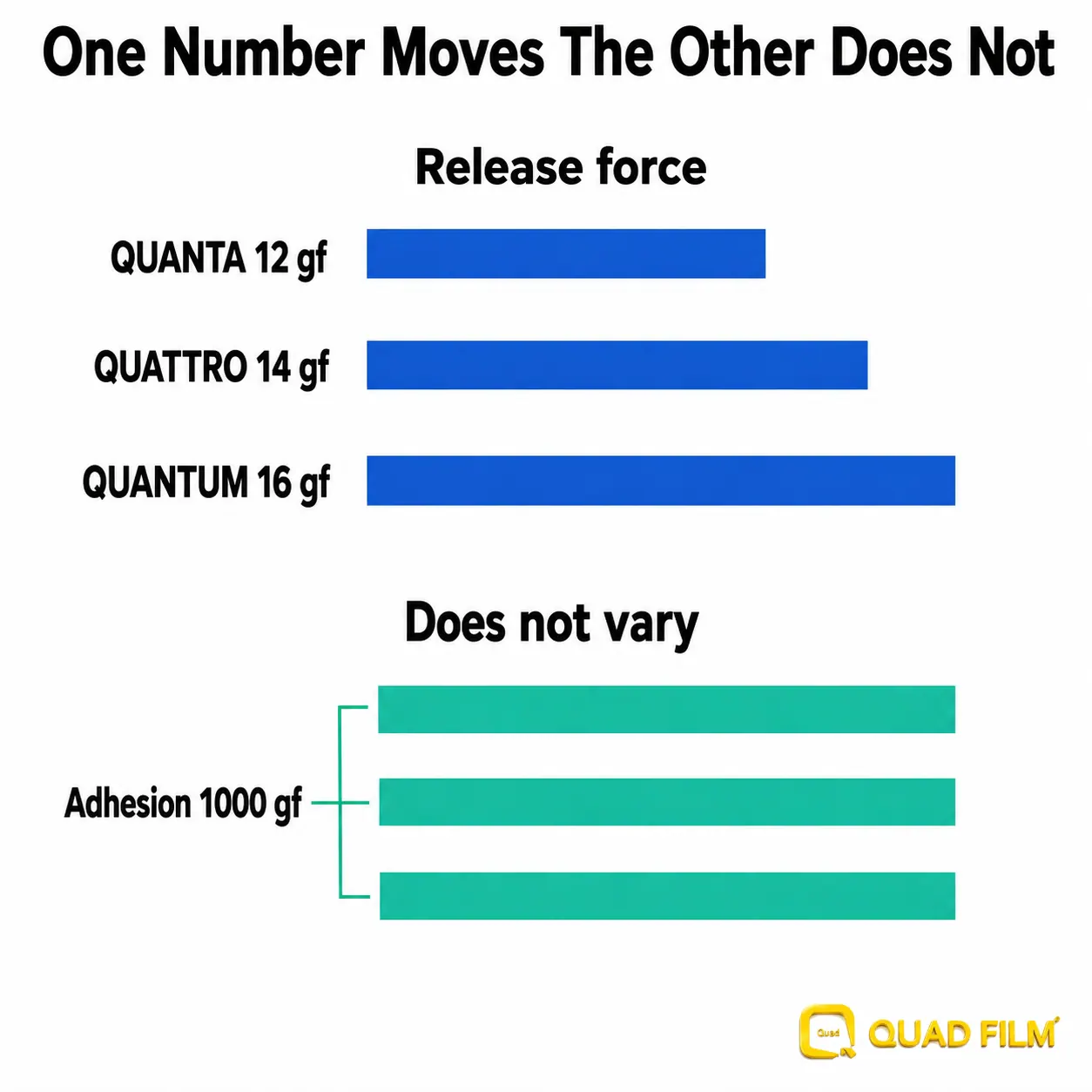
Two things follow from that chart. Nobody should be selling you a grade on how well it sticks, because they all stick the same. And anybody who cannot tell you the release force of what they are quoting has not read the spec sheet either.
4 Specs Worth Asking About by Name
Thickness, release force, fracture growth and yellowing cover. Ask for those four by name and you will learn more in two minutes than in an hour of listening to positioning language.
Thickness in Mil
Ten, 8.5 or 7.5 for the clear range. This is the impact absorption number and the only one where the difference between grades is large enough to feel.
Release Force in Grams Force
Sixteen, 14 or 12. Lower means the film lifts away with less pull on the paint when it is eventually removed.
Fracture Growth in Centimetres
Twelve, 11.5 or 10.5. This is how far a tear travels once it starts, and lower is better for containment on panels that might get snagged.
Yellowing Cover in Writing
Yellowing is covered under the Quad PPF warranty alongside the other defects. That is not standard across this market, so ask for it explicitly and note the answer.
Four questions, four numbers, no adjectives. If a shop cannot answer all four from the sheet in front of them, that tells you something useful about how much of the rest of the conversation to trust.
Where Satin and Matte Fit on a J7
They are two separate products and they are not interchangeable. Satin is QUATRIX, a soft low sheen finish at 7.5 mil. Matte is QUBOND and the dedicated Matte film, with no shine at all. Neither is a variation of the other and they look entirely different in person.
QUATRIX carries the highest adhesion in the range at 1,100 gf and a 99 percent self-healing rate, with a fracture growth of 14 cm. It scores lower on clarity and gloss than the clear films by design, because the whole point of it is to change how the panel reads in light rather than to disappear.
QUBOND is the matte option at 7.5 mil with a 98 percent self-healing rate, 1,000 gf adhesion and a fracture growth of 10.5 cm. It is positioned as a bold stealth aesthetic, which is an accurate description of what it does to a car. It is a look, not a protection upgrade.
Both are worth considering only if you actively want the finish. Neither protects better than the clear films and both change the car's appearance permanently until they come off. Our article on going beyond clear film covers what living with one is actually like. QUARMOR is also available on request for owners who specifically want a hydrophobic gloss finish.
| Grade | Finish | Thickness | Self healing | Release force | Fracture growth | Best on |
|---|---|---|---|---|---|---|
| QUATTRO | Gloss | 8.5 mil | 98.5 percent | 14 gf | 11.5 cm | Contours and large flat panels |
| QUANTA | Gloss | 7.5 mil | 98 percent | 12 gf | 10.5 cm | Low risk panels and easy removal |
| QUANTUM | Gloss | 10 mil | 99 percent | 16 gf | 12 cm | Bonnet edge and bumper face |
| QUATRIX | Satin, semi matte | 7.5 mil | 99 percent | 12 gf | 14 cm | Owners who want a low sheen finish |
| QUBOND | Matte | 7.5 mil | 98 percent | 14 gf | 10.5 cm | Owners who want no shine at all |
Every figure in that table is the published specification for that film. Note how little the self-healing column moves and how much the thickness and release force columns do, which is the whole argument of this article in one grid.
Take that in and ask for a mixed specification. Plenty of shops will quote a single grade across the whole car because it is simpler to price, and there is nothing wrong with that if it is what you want. It just should not be the default because nobody asked.
The point that clip makes is worth holding onto through all of this. The grade matters, and so does who fits it. A premium film installed badly performs worse than an entry film installed well, and the spec sheet cannot tell you which one you are about to get.
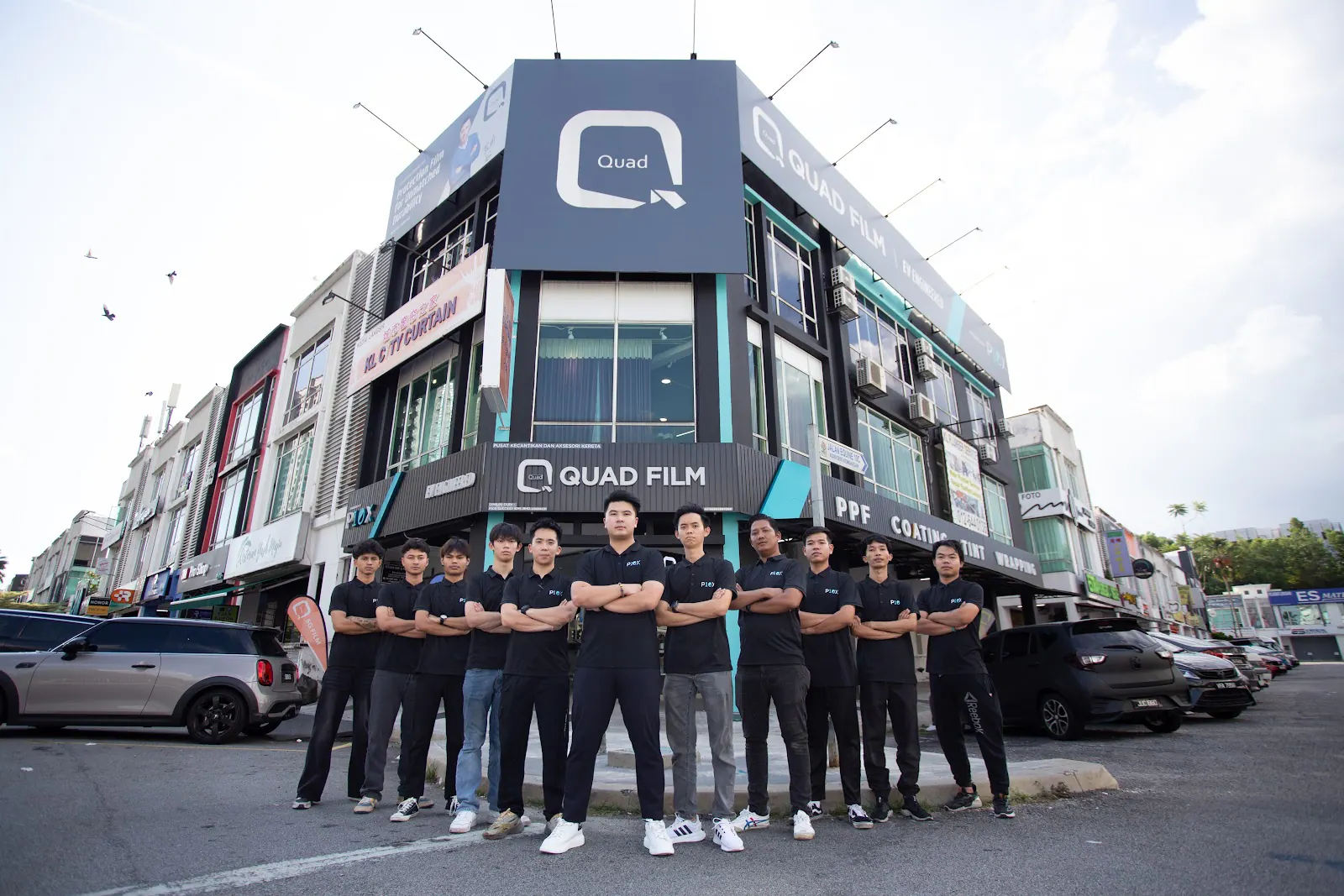
Ask who is doing the work as well as what film is going on. On a car with as many curved surfaces as a modern SUV, the difference between a good installer and an average one shows up in exactly the places you look at every day.
Choosing the Grade for Your J7
Start from the panels, not the package. QUANTUM where the car takes direct hits, QUATTRO where the panels curve or run large, QUANTA where the damage is drag and scuff rather than impact. Write it down before you call anyone.
Then ask the four questions by name. Thickness, release force, fracture growth, yellowing cover. Getting four numbers back means you are dealing with someone who has read the sheet, and getting adjectives back means you are not. Our piece on what humidity does to cheap film explains why that distinction stops being academic after about eighteen months here.
If you want a mixed specification quoted panel by panel rather than one grade across the car, Quad Film will do it that way when you ask. Bring your marked-up panel list and the whole conversation takes about ten minutes.
Jaecoo J7 PPF Questions Owners Ask
Which PPF grade is best for a Jaecoo J7?
It depends on the panel rather than the car. QUANTUM at 10 mil for the bonnet edge and front bumper where impacts land, QUATTRO at 8.5 mil for fenders, mirrors and large flat panels, and QUANTA at 7.5 mil for door cups, the boot lip and the rear bumper.
Is thicker PPF always better on a Jaecoo J7?
Not on every measure. QUANTUM is 33 percent thicker than QUANTA, but its fracture growth is 12 cm against 10.5 cm and its release force is 16 gf against 12 gf. Thicker buys impact absorption and costs you a little on tear containment and removal.
Does self-healing Quad PPF really work?
Yes, and every clear grade does it to within one percentage point of the others, from 98 to 99 percent. It closes light surface marks in the film when the panel warms up, which in Malaysia usually happens on its own. It does not repair the paint underneath.
What is release force on PPF?
It is how hard the film has to be pulled to come away from the paint. QUANTA is 12 gf, QUATTRO is 14 gf and QUANTUM is 16 gf. Adhesion, which is how firmly the film grips, is 1,000 gf on all three and does not vary between grades.
Does Quad PPF cover yellowing?
Yes. Yellowing is covered under the Quad PPF warranty alongside the other defects, which is a genuine point of difference in this market. It is worth asking for that in writing wherever you buy, because the answer is not the same everywhere.
Is QUBOND matte the same as QUATRIX satin?
No. Satin is QUATRIX, a soft low sheen finish. Matte is QUBOND and the dedicated Matte film, with no shine at all. They are separate products with different specifications and they do not look alike in person.
Can I use different PPF grades on different J7 panels?
Yes, and on an SUV it usually makes more sense than one grade everywhere. Impact panels, contoured panels and drag-wear panels have genuinely different requirements, and the grades are built around those differences.
How do I compare two Jaecoo J7 PPF quotes?
Ask both for thickness in mil, release force in grams force and fracture growth in centimetres, for every grade quoted, along with the panel list. Those numbers plus the panel list are the only things that make two quotes comparable.
Protect your Investment today
Don't wait for stone chips to ruin your paint. Speak to our experts about custom PPF and Tinting solutions.