
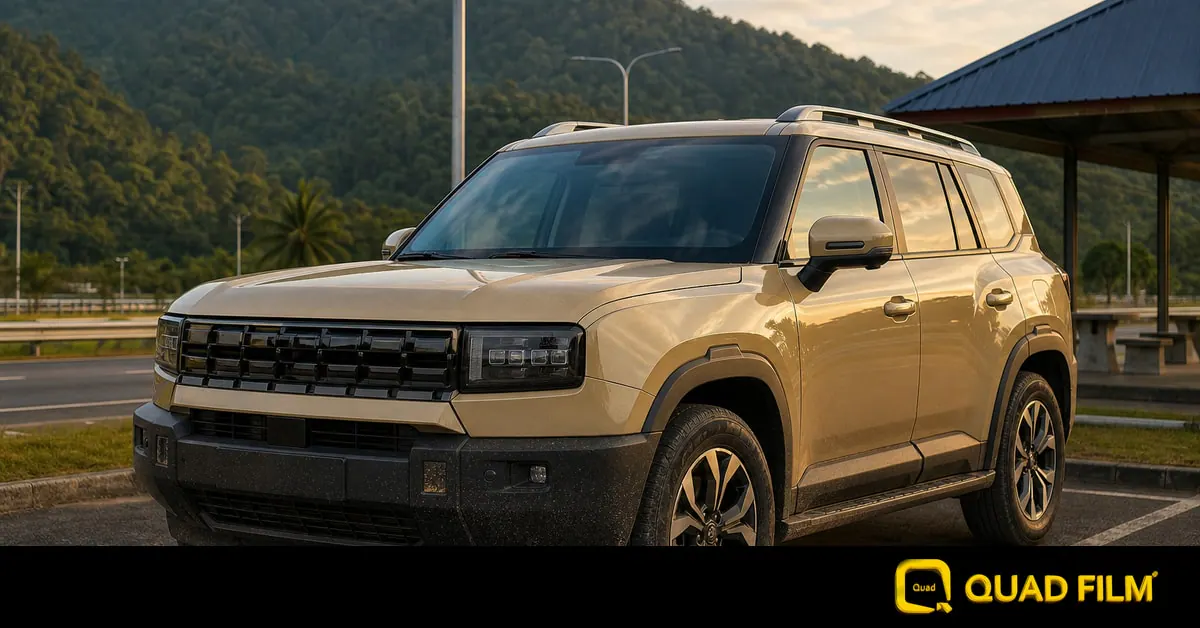
- The Jetour T1's upright front end takes stone chips on every highway run, so the front bumper, bonnet, fenders and mirrors are the minimum worth protecting.
- A full front pack covers only about 18% of the T1's painted area yet intercepts the large majority of chip strikes, based on the worked figure inside.
- QUATTRO 8.5 mil is Quad Film's best-selling clear film, with QUANTA 7.5 mil below it and QUANTUM 10 mil at the top.
- Quad Film's PPF warranty covers yellowing, which matters in Malaysian heat, and workmanship carries a money-back guarantee through authorized installers.
- Book PPF within the first week of ownership, before daily commuting puts the first chips into fresh paint.
Booking Jetour T1 PPF in Malaysia is one of the smartest jobs you can schedule in your first week of ownership. The T1 only launched here on 22 July 2026, and its boxy, upright nose behaves very differently from a sleeker SUV when a lorry sheds gravel in front of you at highway speed.
This guide breaks down what paint protection film actually does, which T1 panels get hit first, how the coverage tiers compare, and where cheap film goes wrong in our heat. If you want the category basics first, our paint protection film guide for Malaysia covers how the film works from the ground up.
Everything below applies to both the 1.5 TGDi 2WD and the 2.0 TGDi XWD, with the variant differences called out where they matter.
What PPF Protects on a New SUV
Paint protection film is a clear TPU layer that takes the physical hits so your factory paint does not have to. It absorbs stone chips, gravel spray, light scratches and organic fallout, and quality film self-heals fine swirl marks with heat. It does not prevent dents or accident damage, and any shop that implies otherwise is overselling.
The T1's shape makes the case for film stronger than usual. The front end is upright and flat, which means it meets debris squarely instead of deflecting it. On a PLUS run at 110 km/h, 20 minutes behind a gravel lorry near Slim River is enough to pepper an unprotected bumper, and you will hear the strikes before you see them.
Heat and weather do slower damage. Organic fallout from roadside trees bakes into clear coat within days under our sun, and haze-season dust acts like fine sandpaper at every wash if it is not lifted properly. Film takes that daily abrasion instead of the paint, which is what keeps a five-year-old T1 looking newer than a two-year-old one without it.
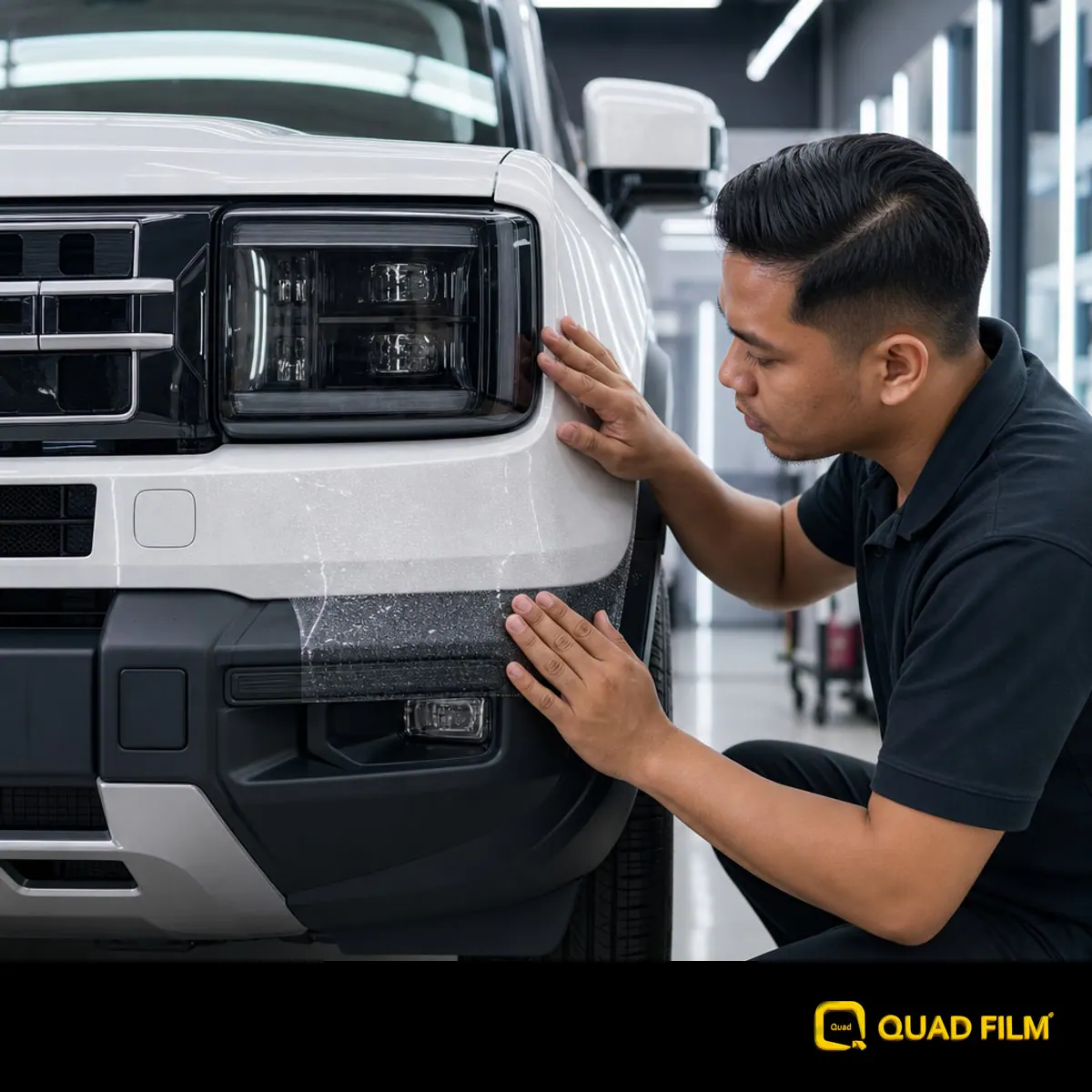
The macro shot below shows the leading edge of a bonnet with film already on it, which is the seam a good installer works hardest to hide.
There is a resale angle too. Buyers of newer Chinese-brand SUVs already ask hard questions about long-term condition, and second-hand inspectors read paint quickly. Our guide on PPF and resale value covers exactly what those buyers look for.
Chips also arrive faster than new owners expect. Bonnet stone chips are the number one complaint among MG S5 owners, covered in our MG S5 PPF guide, and the T1's upright nose presents a similar target on the same roads.
Which T1 Panels Get Hit First
Front-facing surfaces take nearly all the strikes: the bumper, the bonnet's leading edge, the front fenders, the side mirrors and the headlamps. Everything behind the front wheels is a secondary priority unless your driving mix says otherwise.
A KL to Ipoh run shows why. Over 200 km on the highway, the front bumper and bonnet meet a constant stream of grit kicked up by traffic ahead. After monsoon rain, the daily crawl along Jalan Kuching throws sandy water at the rocker panels and wheel arches, which is why those lower panels sit in the second tier.
One strip new owners forget is the leading edge of the roof, just above the windscreen. On a boxy body it meets the airflow head-on and catches more than its share of grit. It is a small area, simple to include while the shop has the film out, and annoying to respray later.
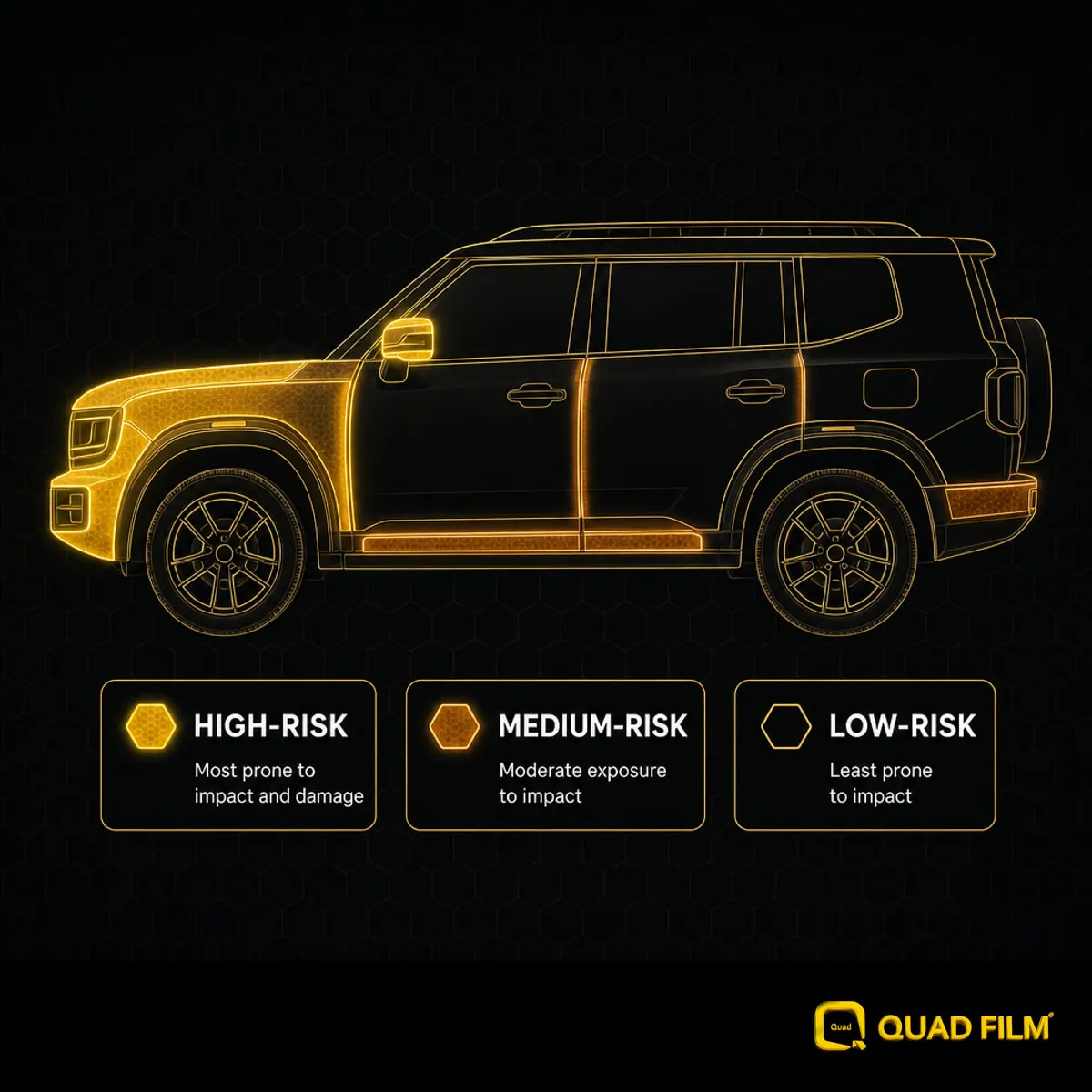
The table below maps each T1 panel to its risk level and a sensible Quad Film match. Door cups and door edges earn their place not from highway debris but from fingernails and neighbouring car doors in mall carparks, week after week.
| Panel | Impact risk | Recommended series | Coverage tier |
|---|---|---|---|
| Front bumper | Very high | QUATTRO 8.5 mil | Full front |
| Bonnet | High | QUATTRO 8.5 mil | Full front |
| Front fenders | High | QUATTRO 8.5 mil | Full front |
| Side mirrors | High | QUATTRO 8.5 mil | Full front |
| Headlamps | High | QUATTRO 8.5 mil | Add-on |
| Door cups and edges | Medium | QUANTA 7.5 mil | Extended front |
| Rocker panels | Medium | QUANTA 7.5 mil | Extended front |
| Rear load lip | Medium | QUANTA 7.5 mil | Full body |
| Roof and rear quarters | Low | QUANTA 7.5 mil | Full body |
| Panoramic roof (2.0T XWD) | Heat, not impact | Titanium Sunroof PPF | Add-on |
If you are planning a full colour change to a stealth finish, that is a different film entirely: QUBOND matte, covered in our matte and color PPF guide. For pure protection on factory paint, clear film is the answer.
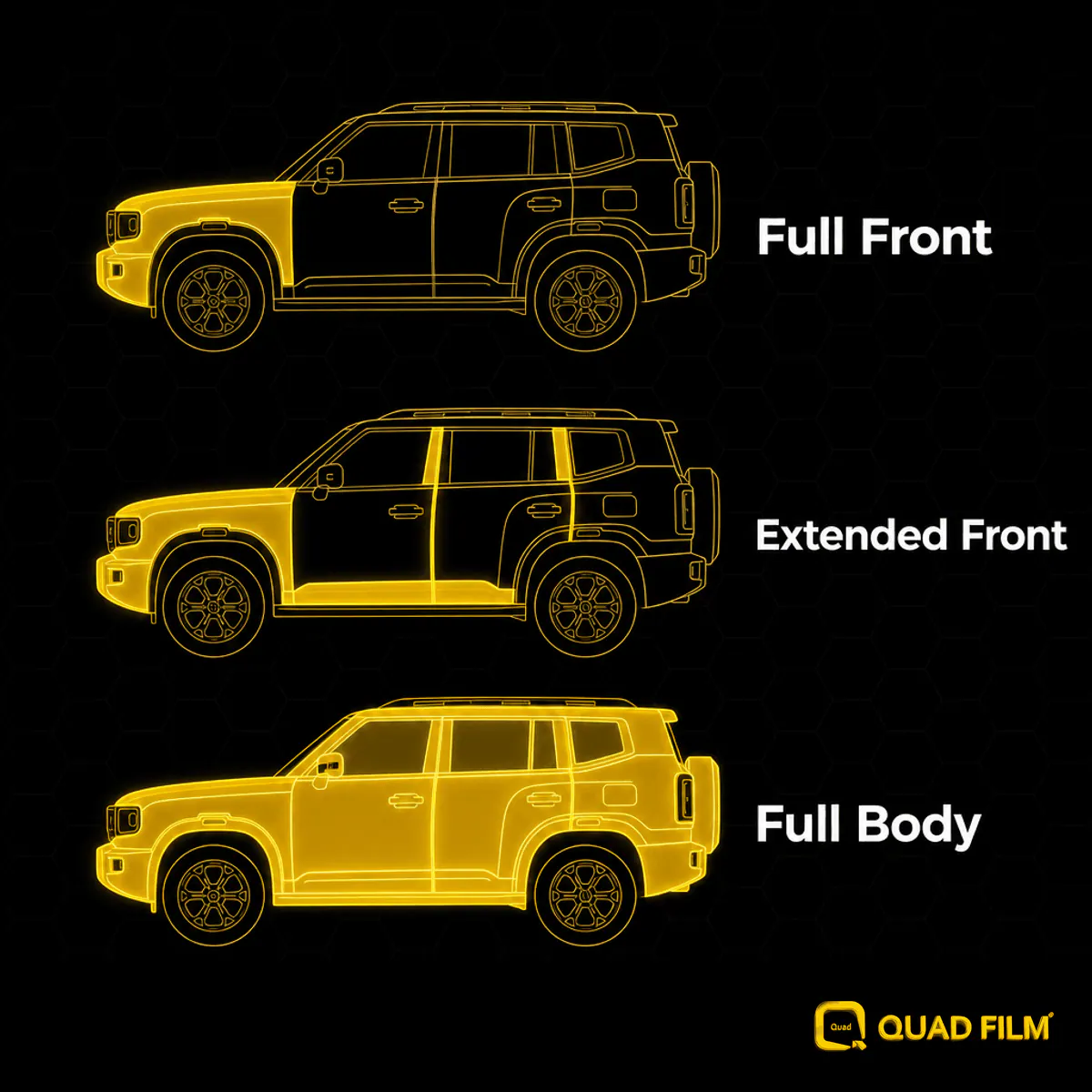
The panel map below shows the same priority zones on the T1's outline, so you can see exactly where each tier stops.
Full Front or Full Body on a T1
For a T1 that mostly commutes in the Klang Valley with occasional highway trips, a full front pack is the rational choice. For daily highway driving, frequent balik kampung runs, or an owner planning to keep the car well beyond the loan tenure, full body coverage earns its keep.
Here is the arithmetic behind that advice. The T1 measures 4,705 mm long and 1,967 mm wide, and a C-segment SUV this size carries roughly 15 square metres of painted surface. A full front pack, bonnet at about 1.3 square metres, bumper at 0.6, front fenders at 0.7 and mirrors at 0.1, totals about 2.7 square metres. That is 18% of the painted area. The working assumption, shared by panel shops and detailers, is that front-facing panels take about 80% of stone chip strikes at highway speed, because the debris comes from vehicles ahead. So 18% of the area intercepts roughly four out of five strikes.
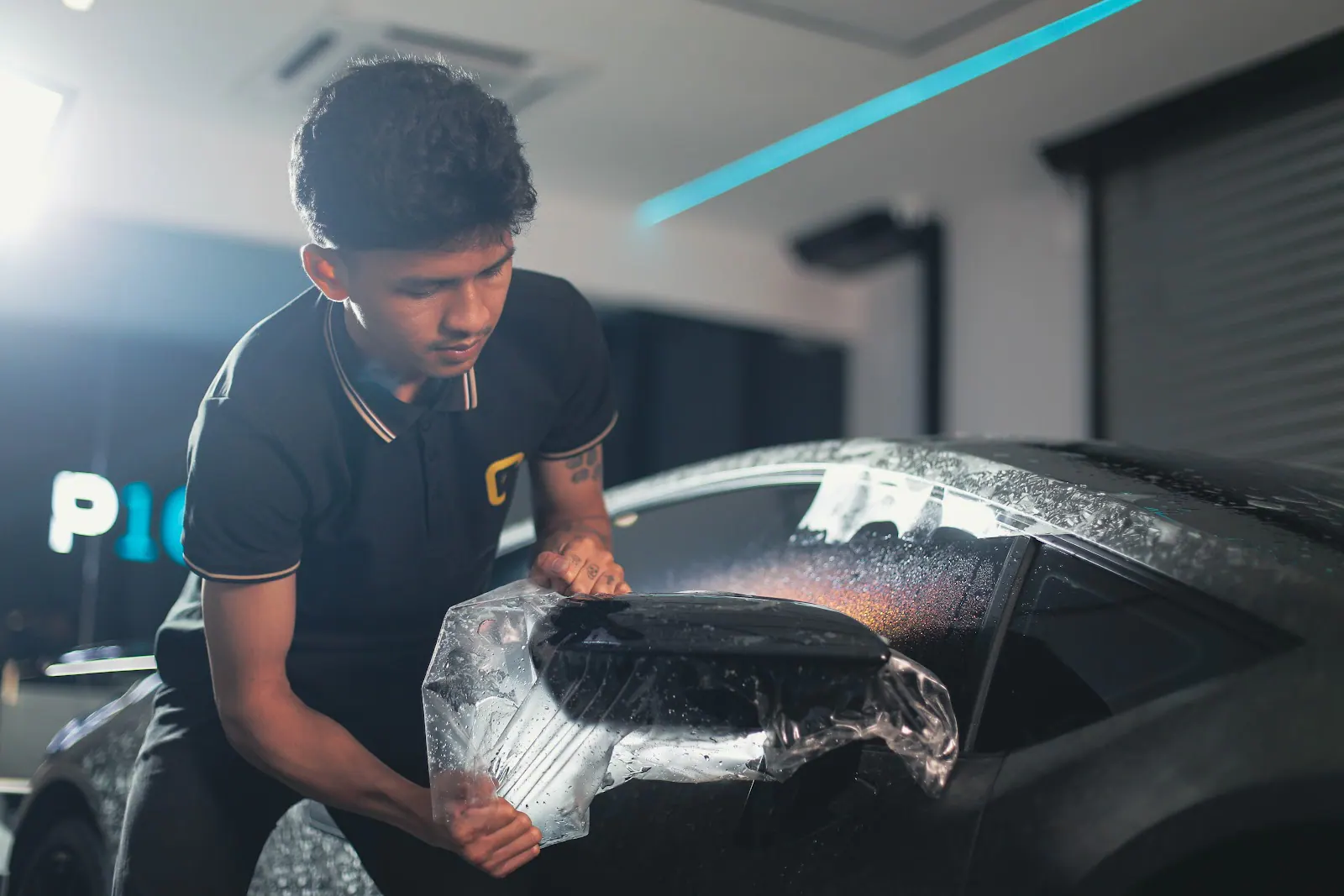
Mirrors sit inside that high-risk zone, and they are fiddly, high-curvature pieces. The Photo Bank shot below shows the level of edge work a careful installer puts into a single mirror, and it is worth asking any shop how they handle yours.
Your driving mix decides the rest. A Subang to KL office commute barely touches the rear quarters. A monthly 440 km run from KL to Kota Bharu, with two hours of trunk roads each way, hits the rocker panels and load lip far more often. Match the tier to the roads you actually drive, not the roads in the brochure.
The tier comparison below lays the three coverage levels side by side.
PPF or Ceramic Coating First?
Film first, coating second. PPF absorbs physical impacts, while ceramic coating adds gloss, slickness and chemical resistance on top. A coating cannot stop a stone chip, so if the budget only stretches to one this month, the film goes on the high-risk panels first.
The order of work matters because coating bonds best over a finished surface. A typical first-week schedule at a proper install bay looks like this: drop the T1 off on Monday at 9 am, film goes on the front end, coating follows over the full body, and you collect the car on Wednesday evening. Doing coating first and film later means stripping and redoing work.
Coating still earns its place in the plan, just in the right order. On a coated T1, monsoon mud and oily road film rinse off with far less scrubbing, and the paint holds its gloss longer between details. What coating cannot do is absorb a stone strike at 110 km/h. Owners who understand that difference stop asking which one is better and start asking which panels need which.
There is also a middle path. Quad Film's hybrid package pairs a full front film with a full-body coating in one booking, which suits owners who want chip protection up front and easier washing everywhere else. Our PPF vs ceramic coating comparison walks through the chemistry and the trade-offs in detail.
Cheap PPF Traps in Local Heat
Three traps catch new owners: film that cannot handle humidity, missing paperwork, and shopping on the lowest quote alone. All three show up months after the install, when the money is already spent.
Humidity is the quiet film killer here. A car parked outdoors in Shah Alam through one monsoon season can show edge lifting and a gummy surface within 18 months if the adhesive was not built for it, a failure mode called hydrolysis. Our piece on why cheap PPF turns to glue in Malaysia's humidity shows what that looks like up close.
Yellowing is the second trap, and this is where film choice matters. Cheap films amber under tropical UV within a couple of years. Quad Film's PPF warranty covers yellowing, a genuine differentiator for a white or sand gold T1, and the brand backs workmanship with a money-back guarantee through authorized installers. Get both in writing on the warranty card before work starts.
Quality film also behaves differently day to day, and the self-healing demo in the reel below shows what a good topcoat does with light wash marks.
What Changes Your PPF Quote
Two T1 owners can receive very different quotes for what sounds like the same job. The levers are the coverage tier, the film series, the panel complexity, and the installer's track record. A boxy SUV with chunky wheel-arch cladding takes more film and more labour than a smooth sedan of the same length.
Compare quotes line by line, not by the total. Ask each shop to write down the film series, the exact panel list, whether the edges are wrapped, and what the warranty covers. A quote that simply says full front with no series named tells you nothing, and it is usually the one that becomes a hydrolysis story after the first monsoon.
Film thickness is part of that conversation. Thicker film resists deeper impacts and self-heals better because there is more material to recover, but it also demands more skill to stretch and wrap cleanly around the T1's arches. The reel below explains why an 8.5 mil film holds its protective thickness after installation better than a thinner alternative.
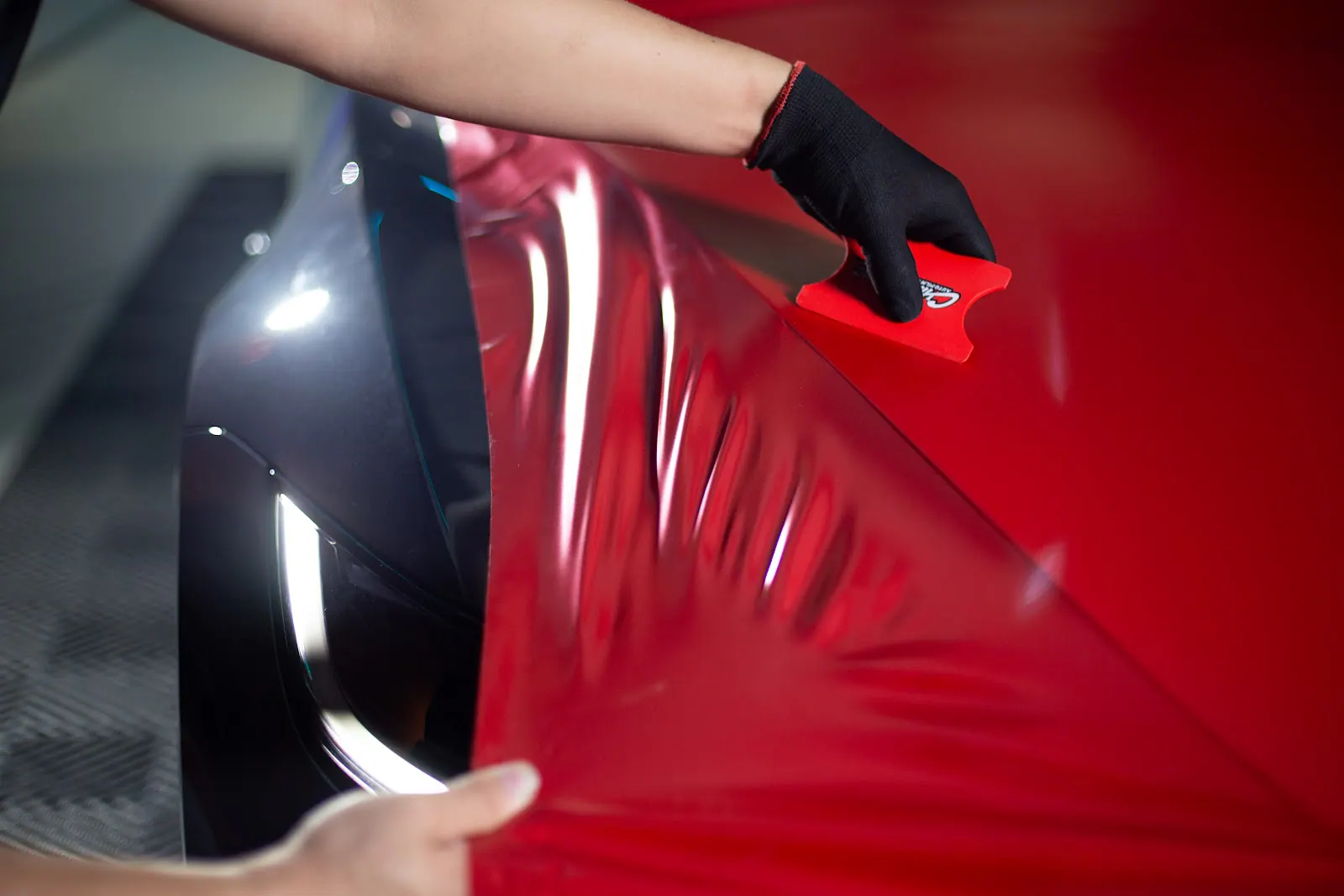
Colour film work sits at the far end of the skill scale. The Photo Bank shot below shows a colour film being squeegeed onto a fender, and the same discipline applies to clear film: solution control, steady pressure and clean edges. Ask to see a car mid-install when you visit a shop, not just the finished ones.
Quad Film PPF for Your T1
Three clear films cover this SUV. QUATTRO 8.5 mil is the best seller and the default for most T1 owners, balancing thickness, gloss and self-healing at 98.5%. QUANTA 7.5 mil sits below it as the daily guard at 98% self-healing. QUANTUM 10 mil tops the range for heavy highway use, with 99% self-healing and the deepest impact reserve.
Whichever series you land on, get the specifics in writing before work starts: the series name, the panel map, and the warranty registration. A shop that hesitates to document those three things is telling you something useful before you have paid anything.
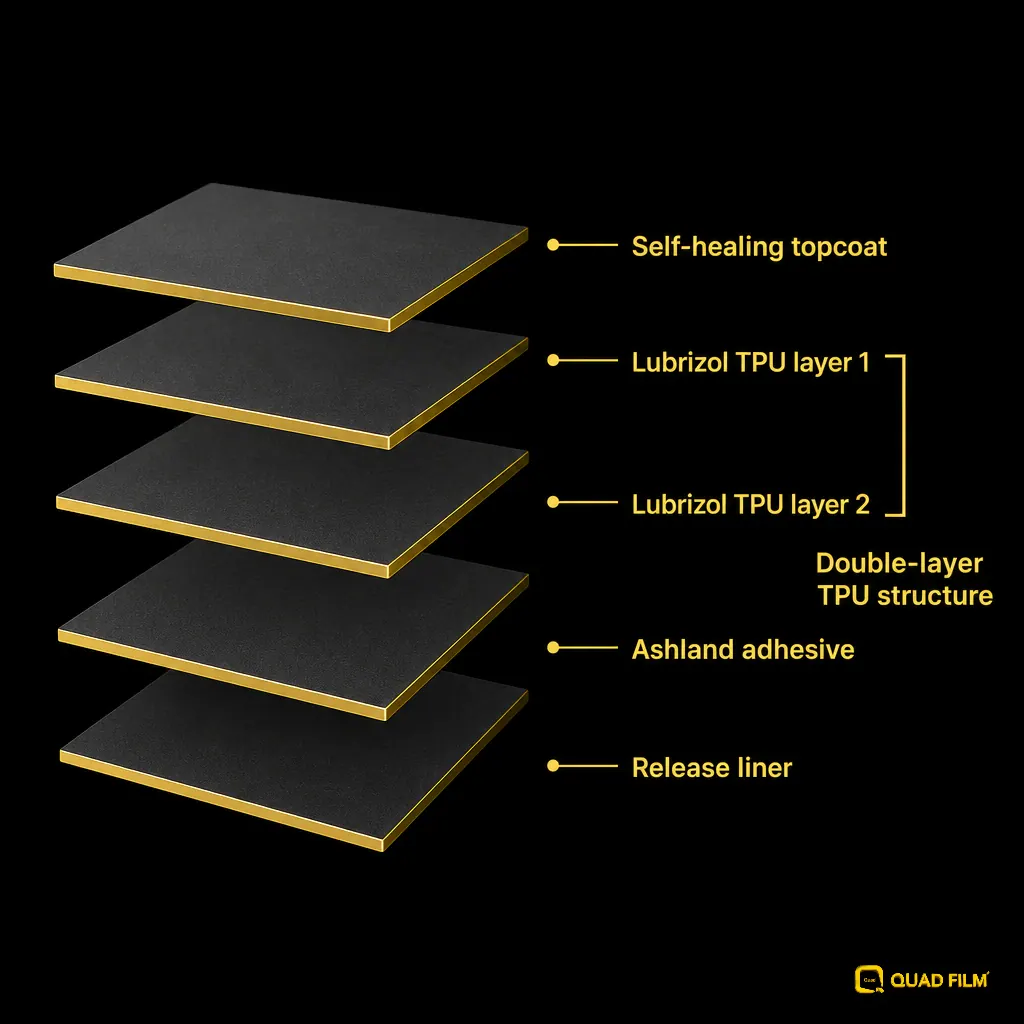
All three use a double-layer TPU structure with an Ashland adhesive, formulated for anti-yellowing and residue-free removal years down the road. The Quad Film PPF page lists the current series specs, and the layer diagram below shows how the film is built.
One more option exists for specific tastes: QUBOND matte turns the T1's paint into a flat stealth finish in the same 7.5 mil class. It is a style decision first and a protection decision second, so only choose it if the matte look is the goal.
Deciding on PPF for Your Jetour T1
The decision comes down to four steps. Protect the front end in your first week, pick QUATTRO unless your highway mileage justifies QUANTUM, verify that the warranty card names the film series and includes yellowing coverage, and choose the installer as carefully as the film. Do those four things and the T1's factory paint stays untouched underneath. When you are ready, take the panel table above to a Quad Film installer in Sunway and ask for a written panel map before any film is cut.
FAQ
Does the Jetour T1 need PPF in Malaysia?
If the car sees regular highway driving, yes. The T1's upright front end meets debris squarely, and Malaysian trunk roads add gravel spray after rain. A full front pack covers the panels that take the large majority of strikes.
Which Quad Film PPF series suits a Jetour T1?
QUATTRO 8.5 mil suits most owners and is the best seller. QUANTUM 10 mil fits heavy highway use, and QUANTA 7.5 mil covers tighter budgets on lower-risk panels. QUBOND matte is only for owners who specifically want the flat stealth finish.
Can I install PPF on my Jetour T1 before registration?
Yes. Clear protection film changes nothing about the car's appearance or specifications, so it can be installed any time after collection, including before the registration number is issued. Earlier is better, because every unprotected highway trip is exposure.
How long does PPF installation take on a Jetour T1?
A full front pack on an SUV this size typically takes one to two working days, and a full body job takes three to five. Add curing time before the first wash, which your installer should state on the job card.
Will PPF affect the Jetour T1's sensors or cameras?
No, provided the installer works around the sensor and camera zones with proper cutouts. Both T1 variants share the same Level 2 ADAS suite, and an experienced shop masks and trims around the radar and camera areas as standard practice.
How should I wash my Jetour T1 after PPF installation?
Wait for the curing period your installer specifies, usually about a week, before the first wash. After that, hand wash or use a touchless wash, avoid high-pressure jets aimed at film edges, and skip abrasive polishes on the film surface.
Protect your Investment today
Don't wait for stone chips to ruin your paint. Speak to our experts about custom PPF and Tinting solutions.