
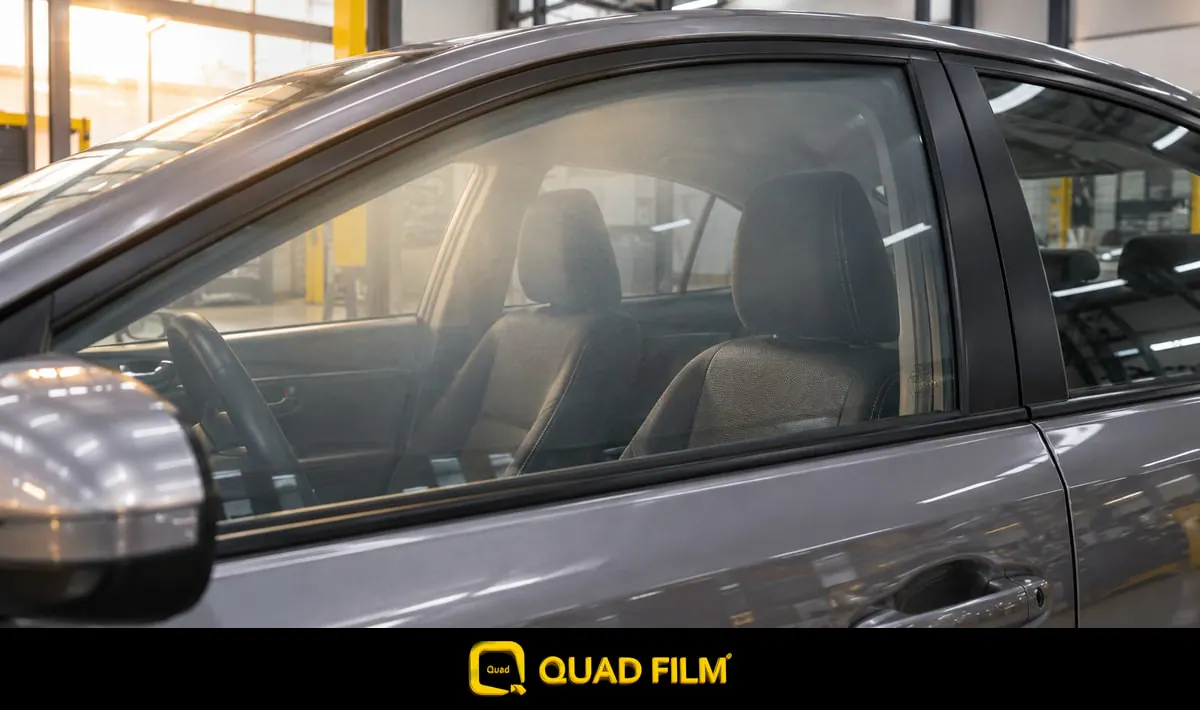
- Low angle haze is the cloudy look some tint films get when the morning or evening sun hits the window at a shallow angle.
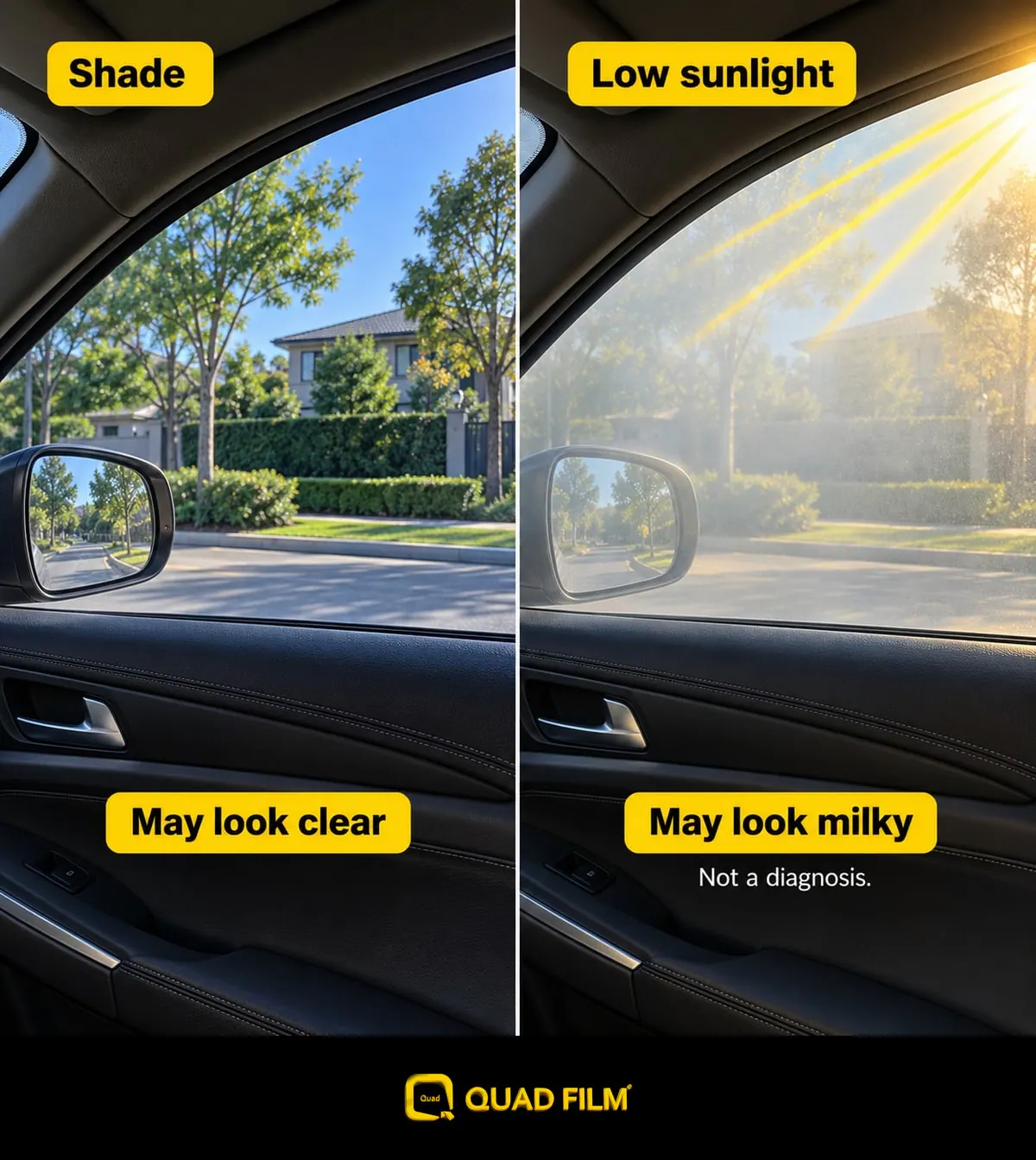
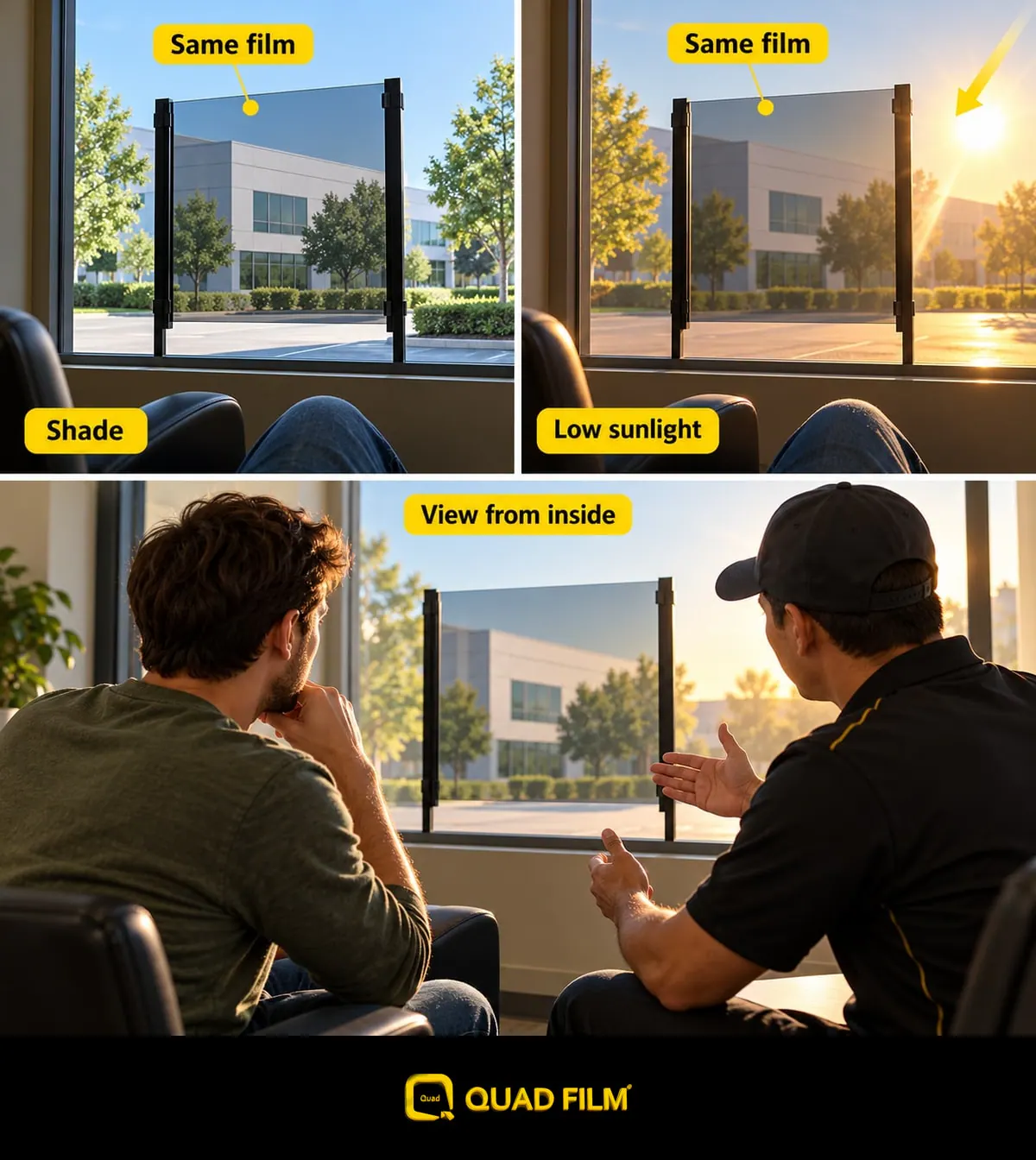
- You can look through the same window in shade and in direct sunlight to see whether the cloudiness changes with the light.
- Newly installed window tint may also look cloudy while moisture under the film dries.
- If a mark stays in one spot, or the haze makes it hard to see out, you can ask the installer to check the window.
Low angle haze can make ceramic window tint look cloudy in morning or evening sunlight, even when the same window looks clear in shade. It does not automatically mean the tint was fitted badly. Before deciding what to do, it helps to distinguish haze that changes with the light from drying moisture or damage that leaves a fixed mark.
Some ceramic window tint films show this effect more than others. If you are still choosing car tint in Malaysia, the view through a fitted sample matters alongside its heat rejection figures. A film can suit your budget and still look different from what you expected when the sun is low.
Some films contain tiny particles that scatter the light and make the view look hazy. Uviron’s window film information describes the same effect in films containing particles, including ceramic tint.
When does low angle haze appear?
Low angle haze becomes noticeable when sunlight reaches the tinted glass at a shallow angle. Instead of the view simply looking darker, it can look as though a thin white mist is across it. The same window may look much clearer once the light or your viewing angle changes.
That difference is why haze can catch you by surprise after leaving a covered carpark. The tint may look fine inside the building, then milky once you are outdoors. A morning drive towards the sun can reveal something you did not see when collecting the car in the afternoon. Neither view, on its own, tells you everything about the film.
It also helps to separate what you see through the window from what is reflected on it. A bright dashboard reflection or dirt on the glass can make the view harder to judge. If the tint is newly installed, cleaning has to wait until the installer says it is safe. Looking through the glass without sunglasses removes another possible difference between checks.
For a useful comparison, the car needs to be safely parked. You can look through the same window towards the same outdoor objects in shade and low sunlight. A broad milky appearance that changes with the light is a clue, not a diagnosis. The difference between those two views is more useful than whether one photograph looks especially cloudy.
Is it haze, moisture or a fitting problem?
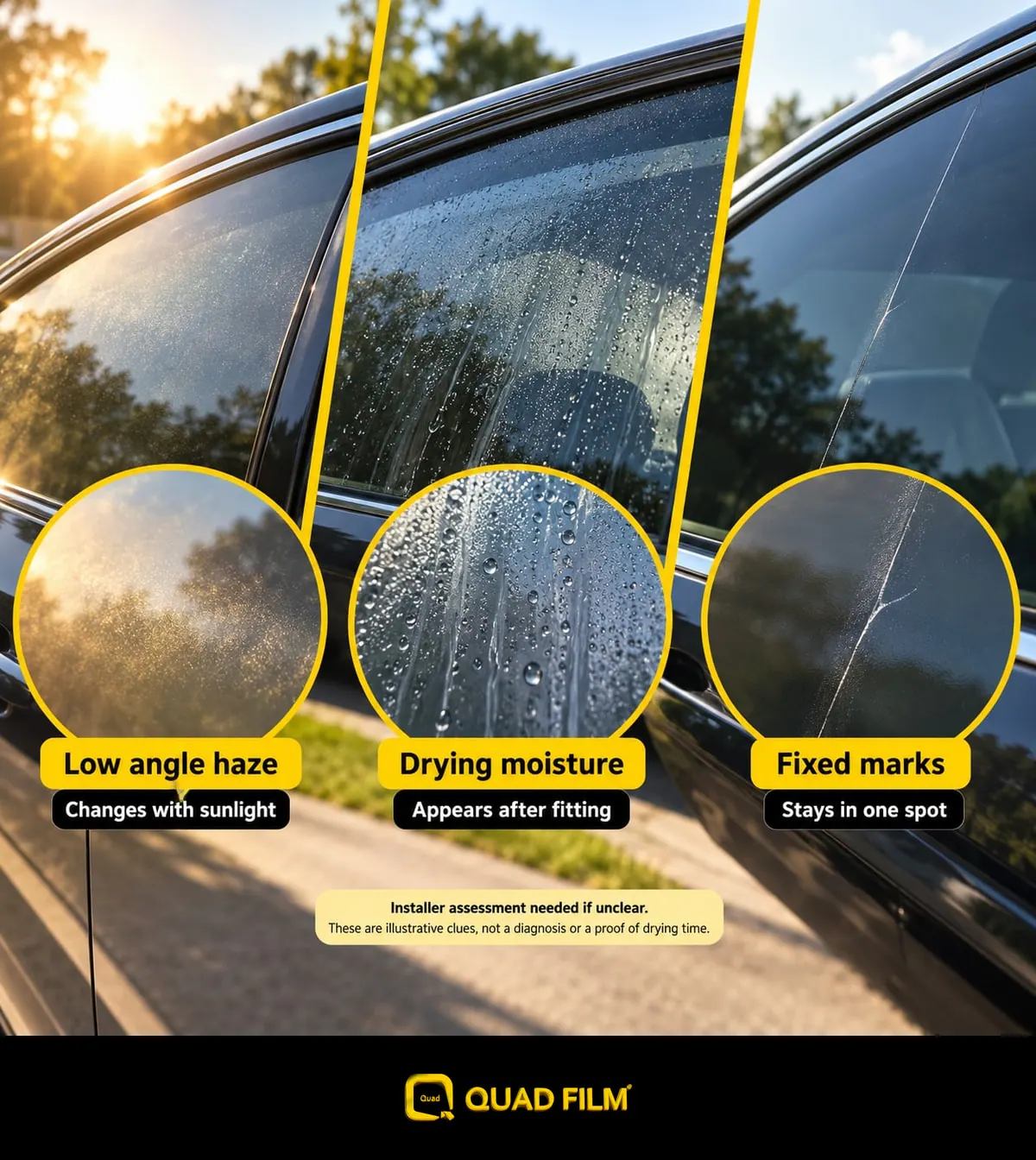
Low angle haze, drying moisture and fitting marks can all make a tinted window look wrong, but they do not behave in the same way. Haze may change with sunlight. Moisture is a possibility after fitting. A crease, scratch or lifted edge can leave a more clearly defined mark.
The first distinction is between an overall cloudy view and something you can point to on the glass. A thin line across one corner is a different complaint from the whole window looking milky when you face the sun. Calling both problems “haze” can make it harder for the shop to understand what you mean.
Timing helps too. Cloudiness noticed straight after installation needs a different discussion from a mark that first appears months later. That does not prove the cause, but it gives the installer somewhere to start. If car tint bubbling is the main problem, the age and condition of those bubbles matter more than a general explanation of low angle haze.
These signs can also overlap. Newly installed film may have moisture underneath it and still show light-dependent haze once it has dried. One window can have a fixed mark as well as a cloudy view in sunlight. A check therefore needs to account for the particular patch or line you are worried about, not stop at the first explanation that sounds plausible.
Why can newly installed tint look cloudy?
Newly installed window tint may look cloudy because fitting leaves some moisture between the film and the glass. This is separate from low angle haze. The moisture needs time to dry, and the film’s appearance during that period is not necessarily its finished appearance once the window has cleared.
The International Window Film Association’s automotive inspection guidance explains that installers use a water-based solution to position the film. A squeegee removes excess water, but some remains. Its guidance also notes that film thickness, coatings, climate and vehicle storage can affect drying. That is why one fixed number of days is not a reliable answer for every car and film.
The waiting period before you can wind the windows down is a separate aftercare question. Permission to lower a window does not, by itself, prove that every trace of moisture has gone. Your installer’s instructions should explain both when the window can move and when its appearance should be reviewed.
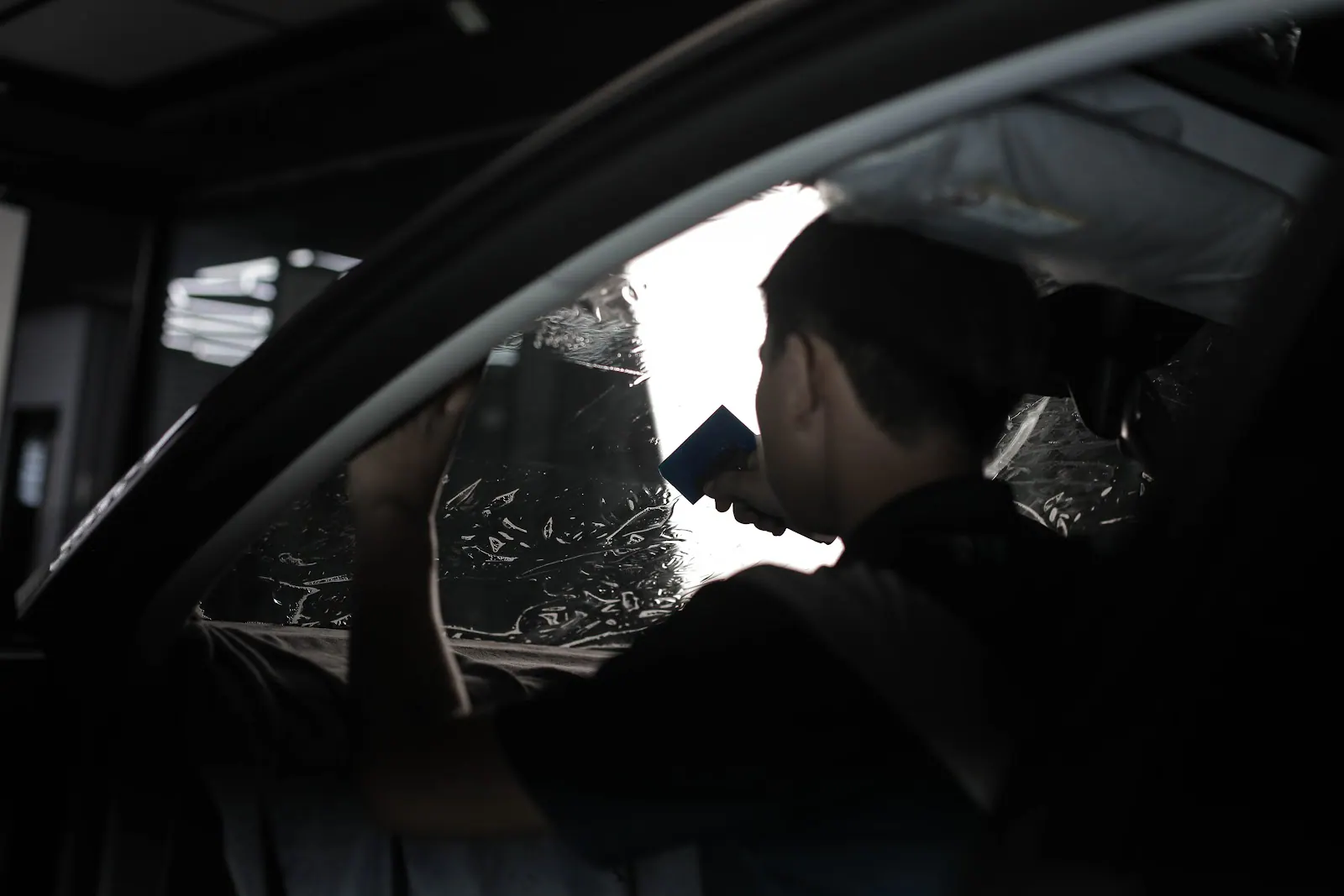
While the film dries, pressing a cloudy patch or trying to flatten a bubble yourself can interfere with it. A heat gun is not a safe shortcut for an owner trying to clear the view. The wet fitting process uses solution and controlled squeegee work while the installer positions the sheet against the inside of the window. A window being worked on at that stage is not evidence of low angle haze in the finished installation.
Which marks need a closer inspection?
A scratch, crease or lifted film edge deserves a closer inspection rather than being dismissed as low angle haze. These marks may stay in one place even when the lighting changes. A description of where the mark sits and what it looks like is more useful than calling everything cloudiness.
For example, a line that follows a cut near the edge is a different thing to show the installer from an even milky look across the window. You do not have to decide whether that line is in the film or the glass before reporting it. The shop needs to inspect it closely enough to distinguish the two.
There is also a difference between finding a small blemish by studying the surface and having trouble seeing through the window from the driver’s seat. The IWFA guidance assesses the installation by looking through the glass in natural daylight. It lists scratches, creases, distortion and edge lift among the things to assess, while allowing for temporary effects during drying.
Workmanship is relevant to this discussion because fitting can leave damage that sunlight does not cause. Protective measures during trimming and suitable cutting tools are intended to avoid scratches and damaged film. Those precautions address the fitting process. They do not establish whether a finished film will show low angle haze, so good installation and a clear view in low sunlight remain two separate things to consider.
Does darker tint mean a clearer view?
Darkness and clarity describe different things about a tinted window. A film can look dark from outside without proving that the view from the driver’s seat is clear in low sunlight. Equally, a lighter-looking film is not automatically free from haze. The actual view still needs to be judged.
Visible light transmission, usually shortened to VLT, describes how much visible light passes through the glass or film being measured. It does not tell you everything about whether the view looks milky, wavy or sharply defined. A darkness figure and an observation about haze therefore answer different questions, even though both affect what you see.
This matters when comparing samples at a shop. If one sample is much darker than the other, you may prefer the look of one without noticing why. Comparing broadly similar shades makes it easier to concentrate on the view itself. Looking at the same objects through each sample also avoids confusing a different background with a difference in the film.
Heat rejection figures are another separate part of the choice. They are useful for comparing the stated heat-control performance, but they do not replace a visibility check. Whether you are comparing nano ceramic tint and sputter tint, or two ceramic options, the view from inside matters more than the darkness you see from outside.
Can a fitted sample reveal haze?
A ceramic tint sample fitted on glass can help you see whether the view becomes cloudy in sunlight. A demonstration window is useful for the same reason. Neither guarantees how every window on your car will look, but both let you compare more than a colour swatch or a specification sheet.
The sample needs to represent the film you are actually considering. A clear view through one series does not prove that a different series or shade will look the same. Knowing which film is on the demonstration glass keeps the comparison meaningful. A loose sheet held over a counter is not the same setup as film fitted to glass.
The viewing position matters as well. You will be driving from inside the car, not studying its windows from the pavement. Looking through the sample from a seated position, with recognisable objects beyond it, gives you something specific to judge. Fine lines on a sign or the edges of a building are easier to compare than an empty bright background.
A useful sample check includes shade and low sunlight, rather than only the lighting inside the showroom. You can compare the same view through the intended film and another suitable option. If one looks milky, the installer can see the difference you mean. You are checking how the glass looks to you in those conditions, not awarding the film a performance score from one quick look.
What does the shop need to check?
An installer needs the car, the film details and the conditions in which the cloudiness appears to make a useful assessment. Knowing when the tint was fitted and whether the problem affects one window or several helps. A photograph can support that conversation, but may not show what you see in person.
It helps to describe the pattern before arranging a visit. Does the view change in shade? Is there one fixed line or patch? Did you notice it as soon as you collected the car, or only later? Those details help the shop decide whether the film needs more drying time, whether there is fitting damage or whether another film might suit you better.
You can also explain when the problem is easiest to see. If it only appears in low sunlight, a visit under very different lighting may leave both of you looking at a clear window. Discussing that in advance is more useful than taking the car back repeatedly without reproducing the conditions. Any comparison still needs to happen with the car safely parked.
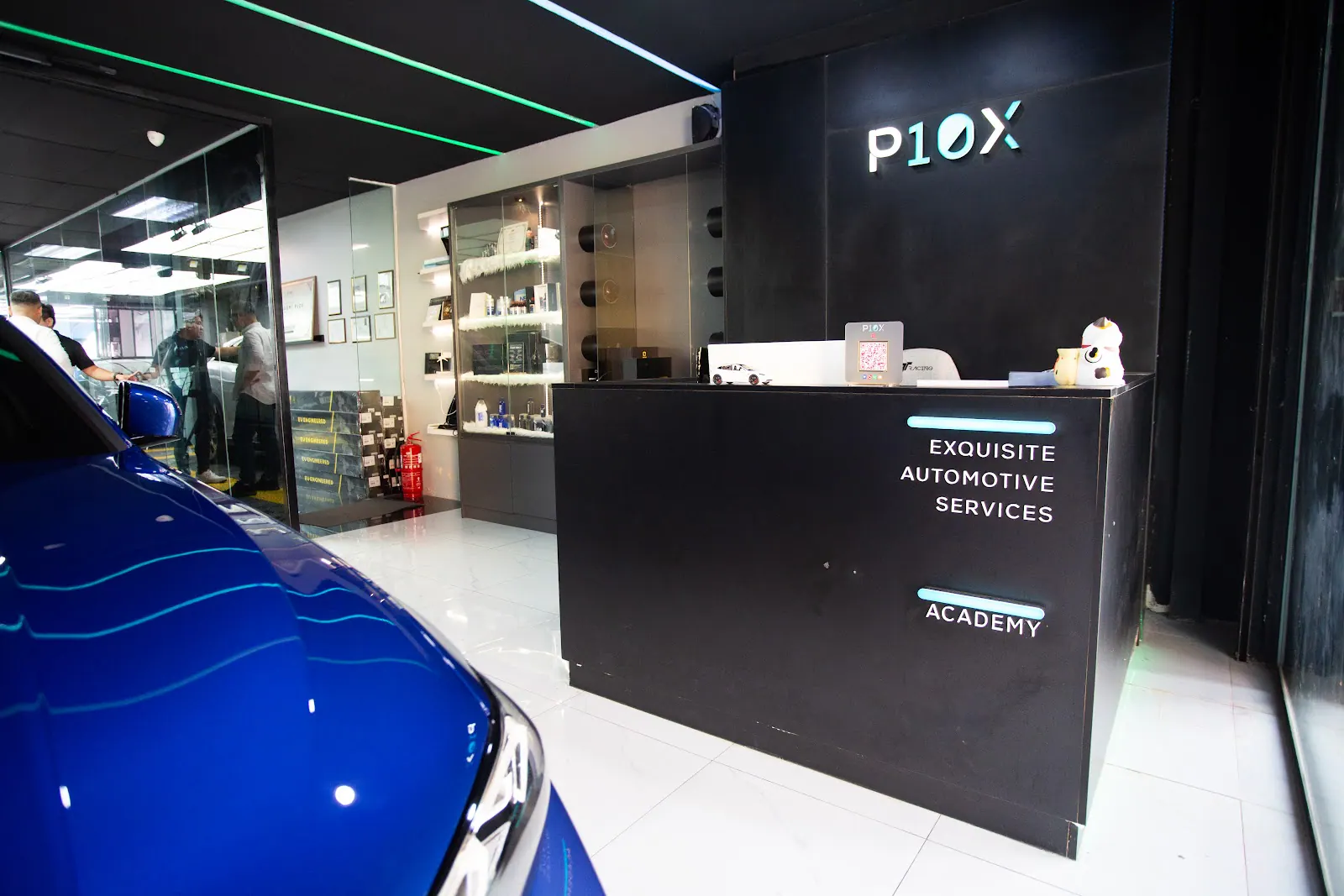
Booking details and the film name are useful to have for that conversation. At a service counter such as our Bandar Sunway outlet, you can explain the concern and arrange for the car to be assessed. The counter is where that discussion starts, not a substitute for inspecting the glass. Any decision about aftercare, replacement or warranty cover needs to relate to the actual film and the problem found.
Will replacing the film solve the haze?
Replacing window tint may help if the problem is damaged film or an installation fault, but replacement is not automatically the answer to low angle haze. The cause needs to be established first. If the haze comes from the way the film scatters light, fitting the same film again may not make it go away.
That makes the proposed replacement important. “We will redo it” is not the whole explanation if the original complaint is an optical effect of that film. Before agreeing, you can discuss whether the shop proposes the same product, a different film or more time for drying. Each addresses a different possible cause, and the result should not be promised before inspection.
Warranty cover is another separate question. A description of low angle haze does not establish that your particular complaint is covered, or that it is excluded. The relevant terms and the shop’s findings need to be considered together. If another film is proposed, seeing a fitted sample in the conditions that bothered you is more useful than assuming a different name alone will solve it.
You do not have to accept poor visibility simply because someone calls it normal. At the same time, a temporary cloudy appearance after installation is not enough on its own to prove the whole job needs replacing. The useful outcome is a clear explanation of what was found, what the proposed remedy addresses and how the result will be checked.
When should low angle haze be checked?
Low angle haze needs attention when it makes the road hard to see, or when you cannot tell it apart from moisture or a fixed mark. A cloudy view that changes with sunlight is a clue, not permission to ignore a visibility problem. An inspection is more useful than guessing from a photograph.
For a newly tinted car, the next step is to relate what you see to the aftercare instructions and the film’s expected drying behaviour. For an older installation, the timing and location of the change matter. If you are buying tint, a fitted sample gives you a chance to compare the view before committing to the job.
A Quad Film installer can look at the glass in the light where you notice the problem and discuss the available options. The aim is to find out why the view looks wrong before deciding whether the film needs time, further inspection or replacement.
Frequently Asked Questions
What is low angle haze in ceramic tint?
Low angle haze is a cloudy or milky look that appears when sunlight hits the tint at a shallow angle. The same glass may look clear when the light changes.
Is low angle haze normal in ceramic tint?
It can be. Some ceramic tint films show low angle haze, and how visible it is varies from one film to another. If the haze is distracting or uneven, or makes it hard to see out, you can have an installer inspect the window.
Will low angle haze disappear after the tint dries?
Not necessarily. Cloudiness from moisture under newly installed window tint may clear as the film dries, but low angle haze is linked to the way light passes through the film itself, so it may still be there afterwards. If you are not sure which one you are seeing, your installer can check.
How can I check for low angle haze?
With your car safely parked, you can look through the tinted window from inside, first in shade and then in low sunlight. If the haze changes with the angle of the light, it may be low angle haze, although this check alone cannot confirm it.
Does ceramic tint need replacing because of low angle haze?
Not always. An installer can first check whether the cloudiness comes from the film itself, moisture that is still drying under the film or a fitting problem. If the haze comes from how the film scatters light, fitting the same film again may not remove it.
Can darker ceramic tint prevent low angle haze?
Darker ceramic tint is not automatically clearer. Visible light transmission (VLT) describes how much visible light passes through the film or glass, not whether the view looks hazy. A fitted sample viewed from inside in shade and low sunlight helps you compare the actual view before choosing a film.

William Lee
Car Detailing Expert, Blog Editor
"He is a chemical engineer, automotive aesthetic practitioner, and founder in the car protection industry. Through his writing, he provides genuine, practical, and technically grounded information for car owners who want to better understand paint protection film, coatings, window tint, detailing, and long-term vehicle care. His content focuses on clarity, honesty, and real-world results — helping readers avoid misleading claims, poor workmanship, and shortcuts that often lead to premature damage or costly rework. By combining material science knowledge with industry experience, William helps car owners make informed decisions that protect their vehicles with confidence."
View All ArticlesProtect your Investment today
Don't wait for stone chips to ruin your paint. Speak to our experts about custom PPF and Tinting solutions.