
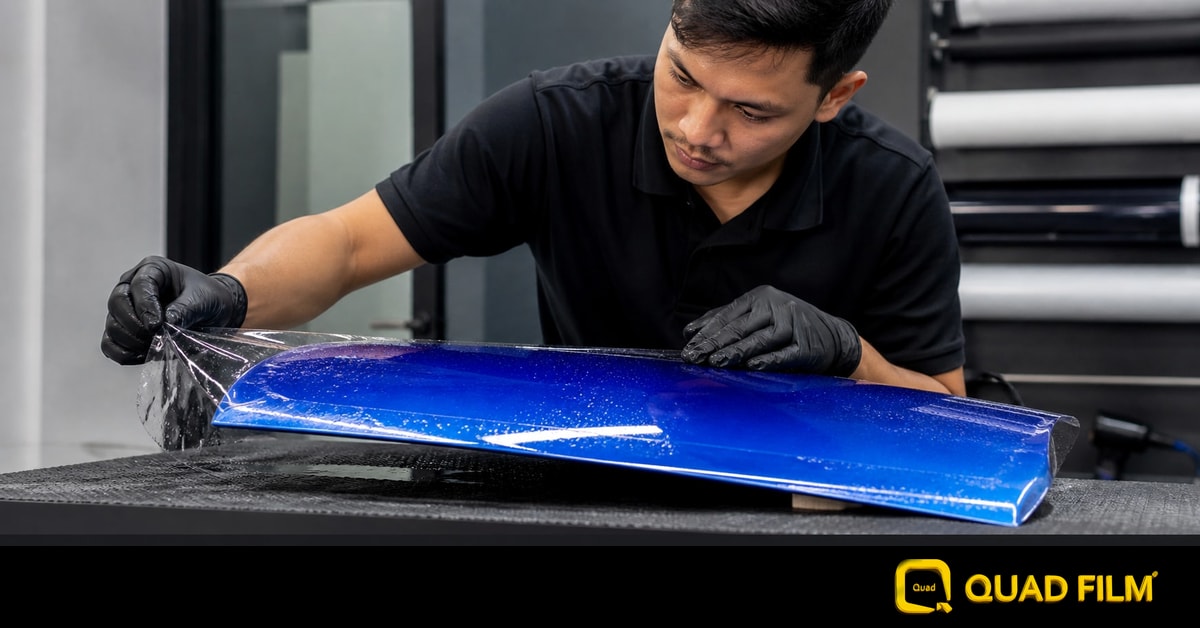
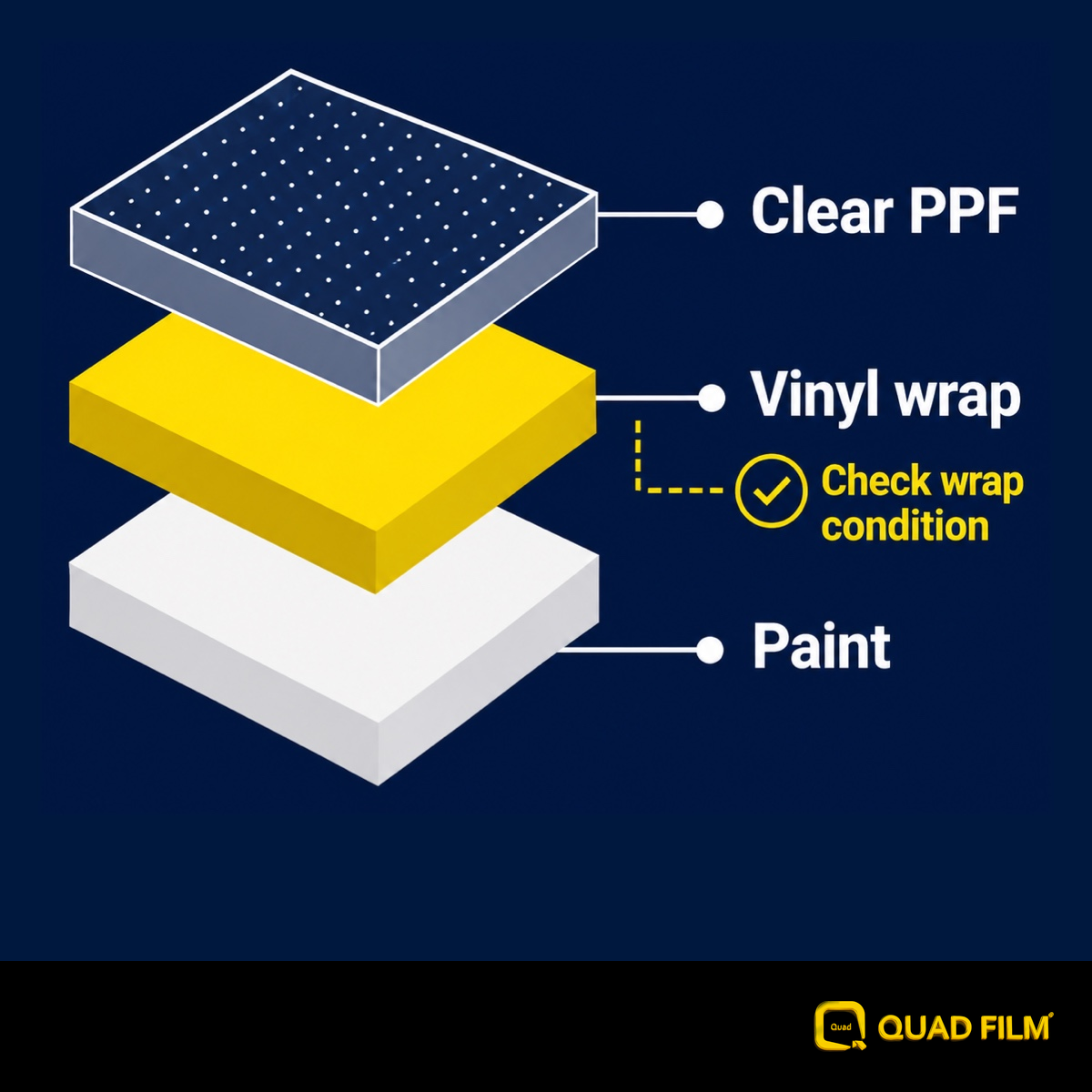
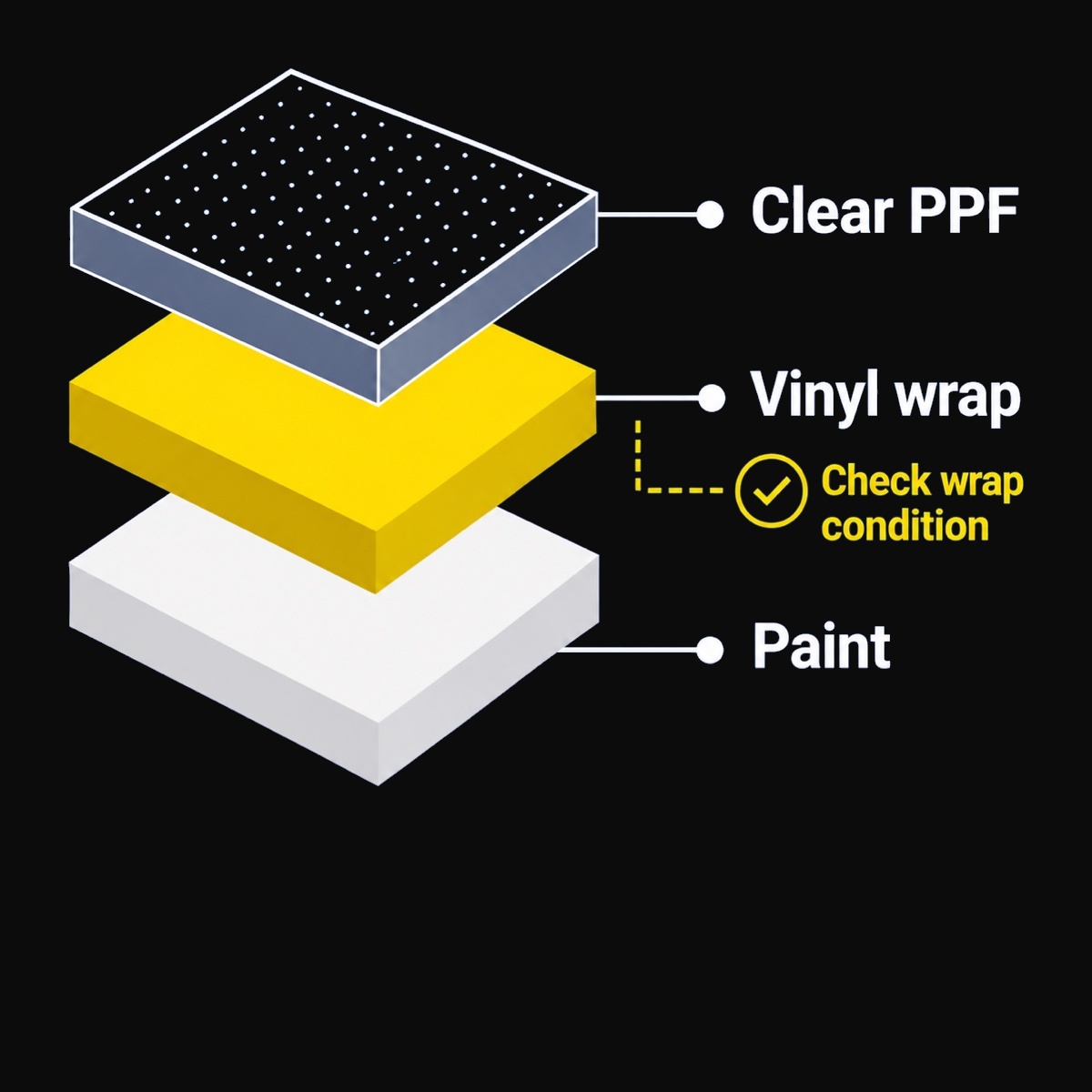
- Paint protection film (PPF) can go over some vinyl wraps, as long as the wrap is in good condition and the two products can be used together.
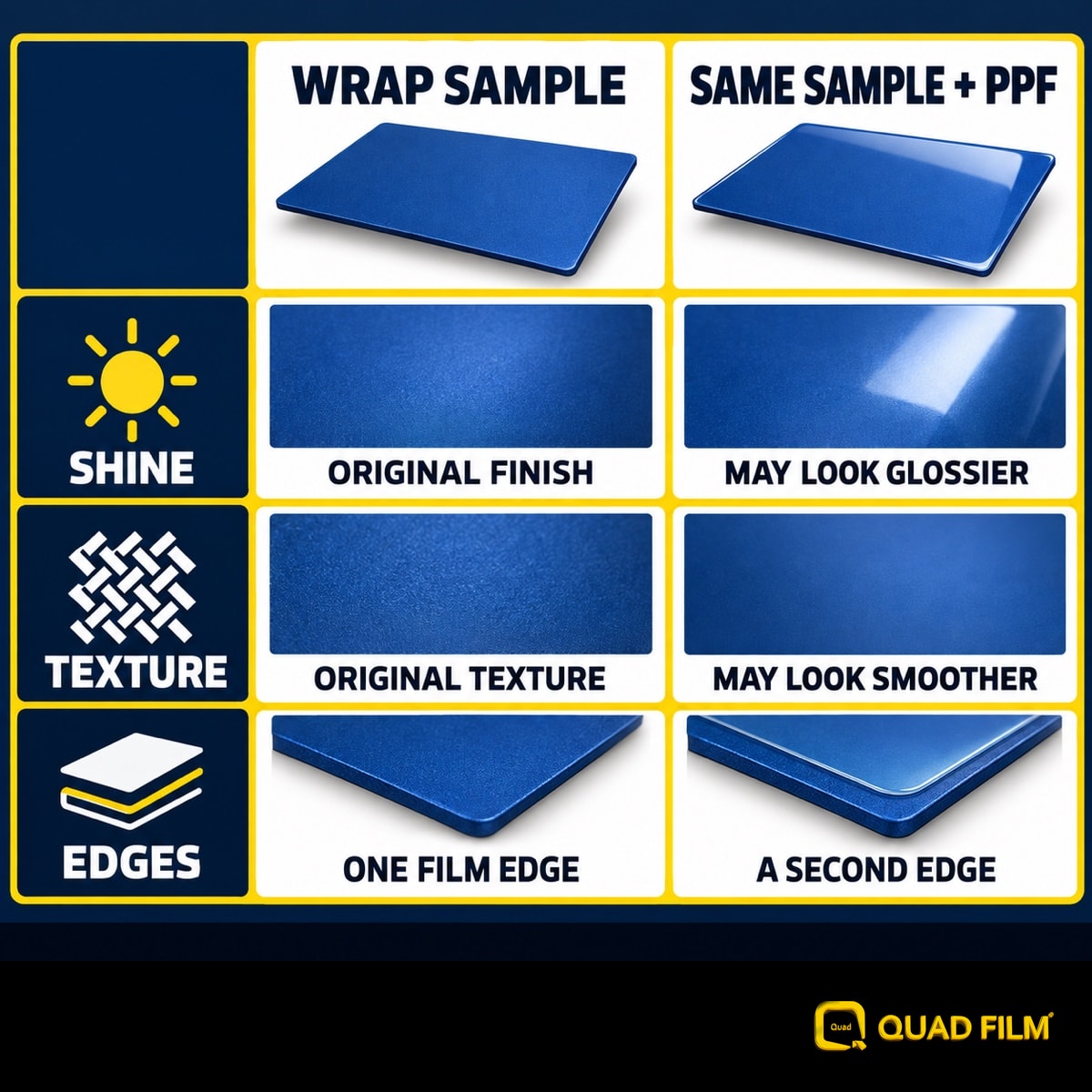
- Clear PPF may change the shine or texture of a matte or satin wrap.
- If the PPF is removed later, it may lift or damage the vinyl underneath.
- Before the job starts, it helps to ask the installer whether the warranty covers PPF fitted over a wrap, and what happens if the film later needs repair or removal.
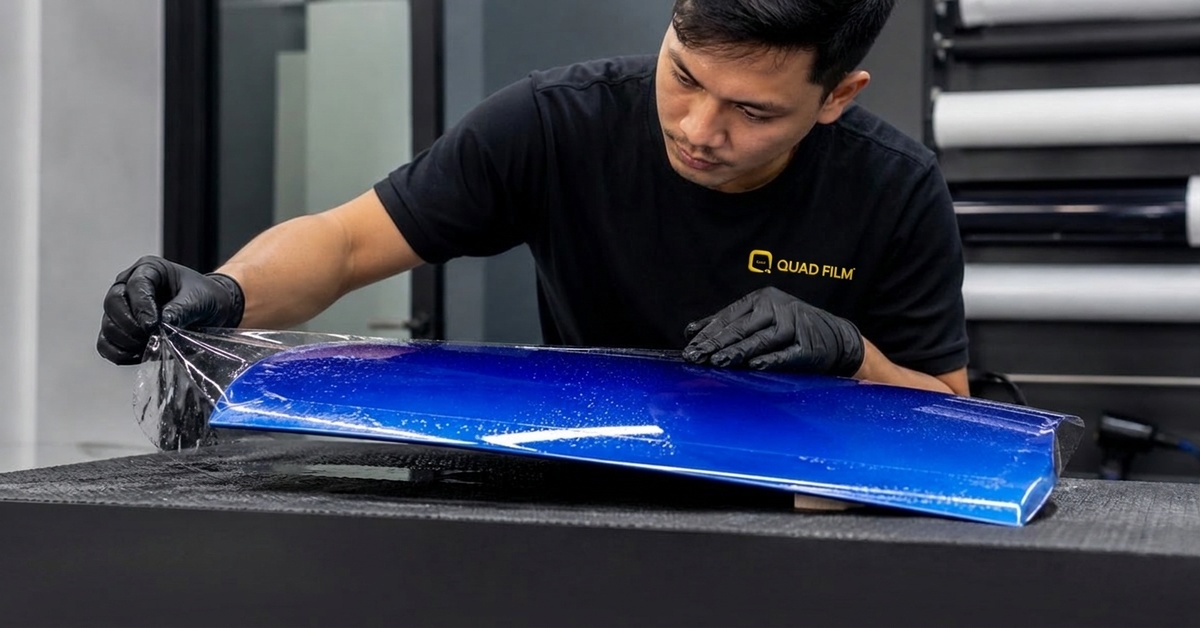
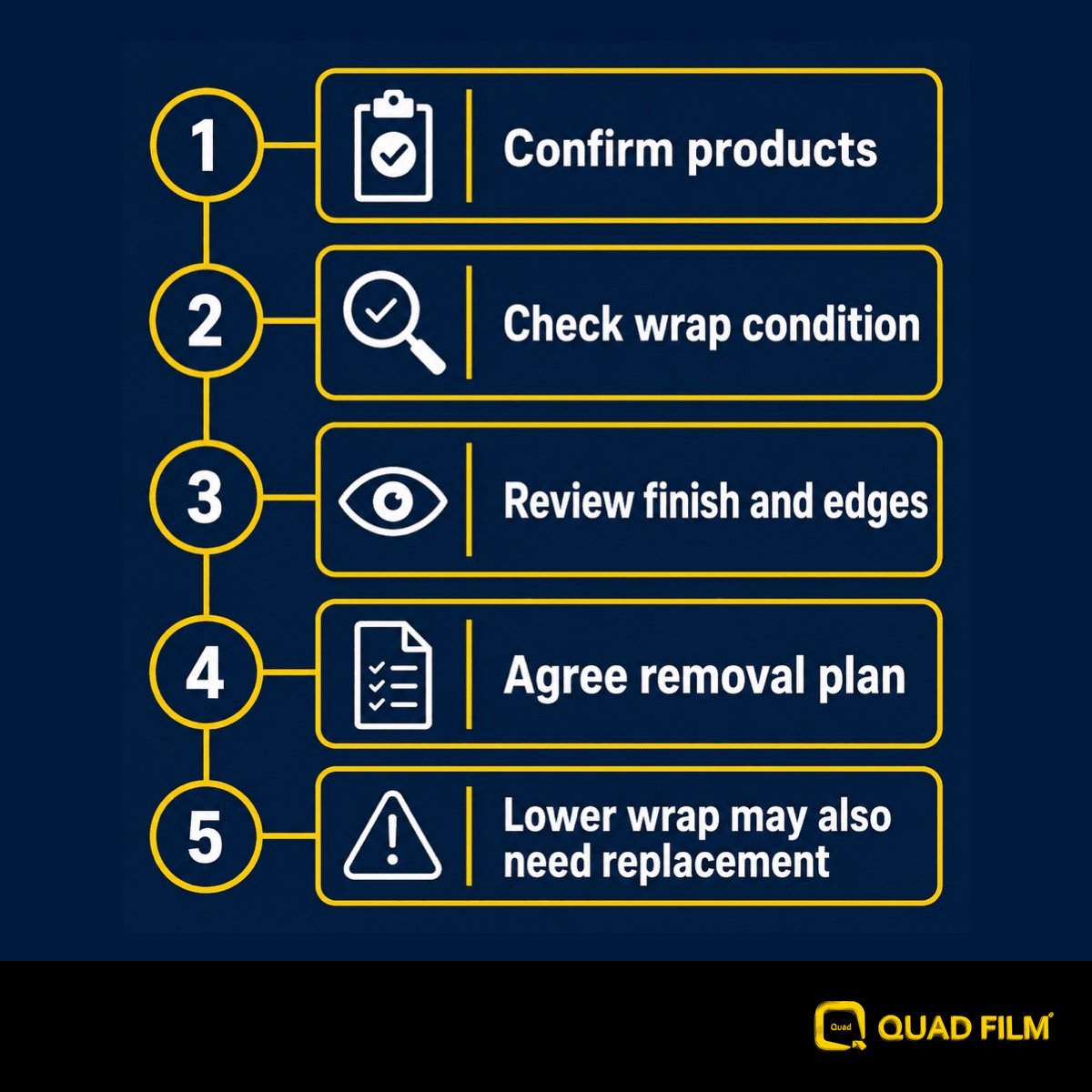
You can put PPF over vinyl wrap in some cases, but your installer needs to check the exact wrap and film first. If the wrap is already lifting or damaged, it shouldn’t just be covered over with another layer.
Paint protection film (PPF) is a protective sheet that can help reduce damage from minor scratches and stone chips. It won’t repair damage that is already in the vinyl underneath. Fitting it over a wrap is also a different job from putting one layer of PPF over another, although in both cases the installer has to check that the products can be used together.
Is your wrap in good enough condition for PPF?
Before fitting PPF, your installer needs to check whether the wrap is in good enough condition to carry another layer. Lifting edges, bubbles, surface damage and stretched or shrunken vinyl need attention first. PPF will not repair them. Once fitted, the PPF sticks to the vinyl, which in turn holds onto the paint.
They will also need to know which wrap was used and when it was fitted. If a coating or anything else has gone on the wrap since then, the installer has to know about it before preparing the surface for PPF.
Before any film goes on, your exact wrap and the PPF need to be approved for use together. A good result on another car with a different vinyl doesn’t prove that your wrap will behave the same way.
The installer is checking a different surface from bare paint. A wrap that looks smooth from a distance may have a loose corner or a damaged section that needs closer attention. Adding PPF would not put that area back into sound condition. It would leave the new film relying on the same underlying wrap.
Any uncertainty about the wrap's identity matters here. An invoice, a leftover sample or the original installer's records can help identify it. A guess based only on its colour is not enough, because different products can look similar. If the shop cannot establish whether the proposed combination is allowed, postponing the job is better than treating the whole car as a test.
Will PPF change how your wrap looks?
Clear PPF may change the shine or texture of a vinyl wrap, especially a matte or satin one. A sample of your vinyl with the intended PPF fitted over it lets you see the difference before deciding. Looking at it in daylight from a few angles helps you judge the colour and finish.
Adding PPF also means one more edge on the car, where the clear film ends on top of the wrap. If you only want some panels covered, it helps to agree with the installer where the film will stop around corners, handles and panel gaps before it’s fitted.
A small sample is useful because clear does not mean visually identical. You are judging the finished combination of wrap and PPF, not either product on its own. A sample made with a different wrap colour or a different film can give you a misleading expectation, even if both are described as matte or satin.
It helps to look at a boundary too. If the PPF covers only part of a wrapped bonnet, the change may be easiest to see where protected vinyl meets uncovered vinyl. If that difference bothers you on the sample, it is worth resolving before the car is covered.
Indoor lighting can hide a difference that stands out outside. Looking from a normal standing distance and from the side gives you a more useful impression than one close photograph. This is about choosing a finish you can live with, not proving compatibility. Even a sample that looks good still needs the product checks discussed above.
Where will the clear film end on the wrap?
The PPF boundary needs agreeing before fitting, especially if you want only selected wrapped panels protected. A line across a panel can look different from a film edge near a panel gap. The installer also needs to check whether the existing vinyl edges leave a suitable place to finish the clear film.
Sheet PPF needs trimming and finishing after it has been positioned. On a wrapped car, the installer also has to account for the vinyl beneath it. The two films may have different stopping points, and a loose vinyl corner cannot be treated as a sound base for the clear film.
This is worth discussing around handles, corners and other areas where you will see the boundary regularly. An example on bare paint can show how neatly a shop trims film, but it cannot prove how the same detail will look over your vinyl. A sample using the intended materials answers a different, more specific question.
If the shop proposes a small patch rather than a complete panel, the position of every edge becomes part of the choice. Wider coverage might avoid a line across the middle of a surface, but it also means more material to replace later. There is no need to agree to the whole car just to avoid asking where a smaller piece stops.
Can you remove PPF later and keep the wrap?
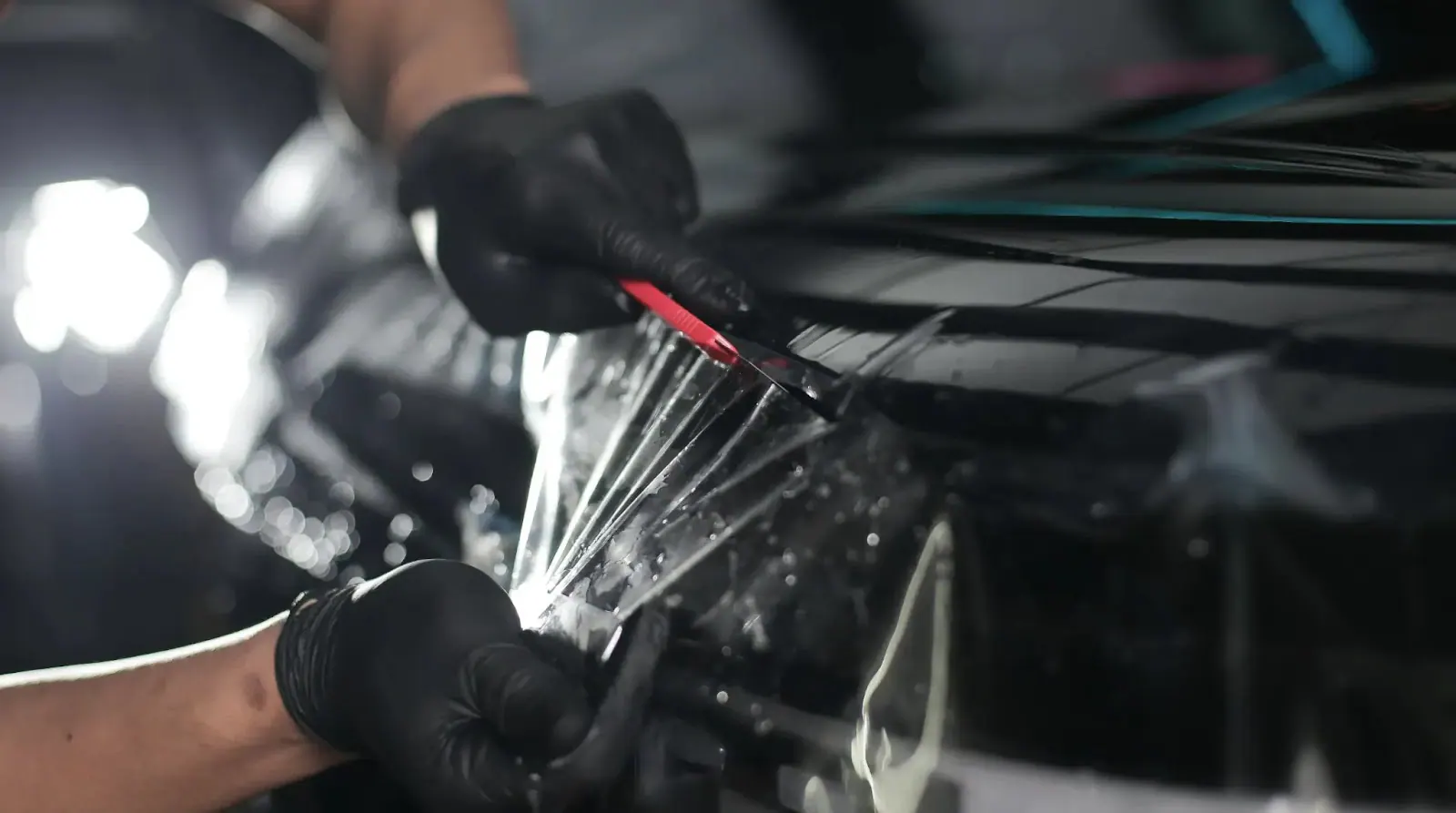
Taking PPF off may lift or damage the vinyl underneath. Whether the wrap stays intact depends on the two products, their condition and the removal method. Before booking, it helps to know whether damaged PPF could be replaced on its own or whether the wrap beneath it might need replacing too.
If the wrap is older, or its colour is no longer available, it may also be hard to get one replacement panel to match the rest of the car.
If both layers have to come off, the condition of the paint matters too. Your installer can explain the risk of paint damage during removal.
Removal needs a plan for both layers, not just a promise that the clear film can be peeled. If the lower wrap is damaged while the PPF comes off, the job may no longer be a simple replacement of clear film. The colour layer and the condition of the paint underneath then become part of the discussion.
A small repair can also create a matching problem. New vinyl may not look exactly like vinyl that has been on the car for some time. If you have a spare piece, the installer still needs to judge whether it is suitable and whether its colour matches. Keeping the old invoice helps identify the material, but it does not guarantee that stock is available.
Before agreeing to PPF, you can ask what would happen if a stone damages one protected panel. Knowing whether the shop would inspect the PPF first, replace both materials or refer the wrap work elsewhere helps you understand the possible repair.
Are coating and spray-on PPF alternatives?
Ceramic coating is a liquid that goes on over the surface, so it doesn’t add another sheet of film. You don’t have to use it with PPF, but if you do want ceramic coating over the finished PPF, the coating must be suitable for that film.
Spray-on PPF is sprayed onto the car instead of being fitted as a sheet. Approval to use sheet PPF on your wrap does not cover a spray-on product. Each needs to be checked separately.
A coating also needs to suit the wrap's finish if it is going directly onto vinyl rather than onto PPF. A treatment sold for gloss paint is not automatically the right product for a matte wrap. The shop should be able to name the intended surface and explain whether the product changes its appearance.
If a coating is proposed, the product name needs to be on the quote, along with the surface it will treat. A coating directly on vinyl and one on top of PPF are different combinations. The shop needs to confirm the intended use rather than list coating as an unspecified extra.
Your reason for wanting another product matters as much as its application method. Easier cleaning and a physical film over an exposed panel are different aims. If washing is your only concern, it is worth discussing a suitable care routine before adding another layer. If impact marks are the concern, the proposal needs to address the limits and repair risks of the film combination rather than only water beading.
What should the installer explain before fitting?
The installer should explain how the wrap will be inspected, which products are proposed and what happens if the combination is not suitable. A familiar PPF brand is not enough on its own. Good preparation and finishing still matter, and an experienced shop should be willing to discuss the limits of the job.
The PPF brand and the installer answer different questions. The brand identifies the material being proposed. The installer has to prepare and fit it properly on the surface of your car. With vinyl underneath, that starts with checking the wrap and the written guidance for the proposed combination.
It also helps to know who is responsible for the wrap. If a different shop fitted it, there may be questions for both businesses before work starts. One shop's willingness to fit clear film does not establish what the other shop's wrap warranty allows. Those are separate terms and need separate answers.
You can reasonably pause the booking if the response is simply that the shop has done similar cars before. A similar colour or shape is not the same product combination. The explanation needs to be specific enough that you know what is being fitted, what has been checked and what risks remain if a panel later needs repair.
What details belong on the booking?
A PPF-over-wrap booking needs the names of both materials, the panels being covered and the finish you agreed to after seeing a sample. It should also record existing damage and any work needed before the PPF is fitted. Those details make it easier to distinguish an agreed limitation from an unexpected result.
At the Quad Film Sunway service counter in Bandar Sunway, you can start by providing the wrap's details and arranging an assessment. The booking conversation is not itself approval to cover the wrap. The shop still needs to check whether the proposed film suits that exact surface and whether it can offer the work.
Repair and removal terms deserve the same attention as the appearance. It is useful to know who to contact if the PPF is damaged, whether the vinyl might need replacement and what the relevant warranty covers. A general film warranty is not a promise that every layer beneath it will survive removal.
If something important cannot be confirmed, the quote can wait. You are not obliged to proceed because the car is already wrapped or because the shop has supplied a total. Having a clear answer before fitting is easier than trying to resolve incompatible expectations after the films have been applied.
The panel list also needs to say whether the clear film covers complete wrapped panels or only selected areas. If it covers only the front of the bonnet, for example, its boundary will be on the visible vinyl surface. That is different from ending the film near the bonnet edge and should be clear before the booking is confirmed.
When might keeping the wrap as it is make more sense?
Keeping a sound wrap without adding PPF is a reasonable choice if you are happy with its appearance and accept the wear it may collect. Another film is optional. It brings its own edges, care requirements and future removal questions, so there needs to be a benefit you actually want.
If the vinyl is already near the point where you would replace it, the better discussion may be about the next finish rather than protecting the present one. Covering damage does not restore the old wrap. It can also complicate a repair you already expected to make.
There is a difference between protecting a rare colour you want to keep and adding clear film because it was offered as an upgrade. In the first case, availability of replacement vinyl and the risk of lifting it matter greatly. In the second, seeing the finished sample and reading the terms may be enough to decide that no extra layer is worth it for you.
A refusal to approve the combination is not a reason to try a different application technique without checking. It is a reason to reconsider the materials or leave the wrap alone until a suitable option can be established.
What should you confirm before booking PPF over vinyl wrap?
A Quad Film installer can inspect your wrap and check its product details against the proposed PPF. Before agreeing to the work, you will want to know whether the warranty covers this combination and what might need replacing if the film is damaged or removed later.
Frequently Asked Questions
Can you put PPF over vinyl wrap?
Yes, in some cases. Your installer needs to check the wrap’s condition and confirm that the instructions for your exact vinyl and PPF allow them to be used together.
Will PPF change the look of a vinyl wrap?
Yes, clear PPF may change the shine or texture of a vinyl wrap, especially a matte or satin one. Before deciding, it helps to see a sample of your wrap with the PPF you plan to use.
Can PPF be removed without lifting the vinyl wrap?
There’s no guarantee that the PPF and the vinyl wrap will come apart cleanly. Taking the PPF off may lift or damage the vinyl underneath.
Does my vinyl wrap need to be new before adding PPF?
No, the vinyl wrap doesn’t have to be new. It does need to be clean and firmly stuck down, with no lifting edges, bubbles or damage.
What should I ask before putting PPF over vinyl wrap?
It helps to ask the installer whether your exact wrap and the PPF they plan to use are suitable together, and how the finished look may change. You can also ask where the film edges will sit, how a damaged panel would be repaired and what may happen if the film is ever removed.

William Lee
Car Detailing Expert, Blog Editor
"He is a chemical engineer, automotive aesthetic practitioner, and founder in the car protection industry. Through his writing, he provides genuine, practical, and technically grounded information for car owners who want to better understand paint protection film, coatings, window tint, detailing, and long-term vehicle care. His content focuses on clarity, honesty, and real-world results — helping readers avoid misleading claims, poor workmanship, and shortcuts that often lead to premature damage or costly rework. By combining material science knowledge with industry experience, William helps car owners make informed decisions that protect their vehicles with confidence."
View All ArticlesProtect your Investment today
Don't wait for stone chips to ruin your paint. Speak to our experts about custom PPF and Tinting solutions.