
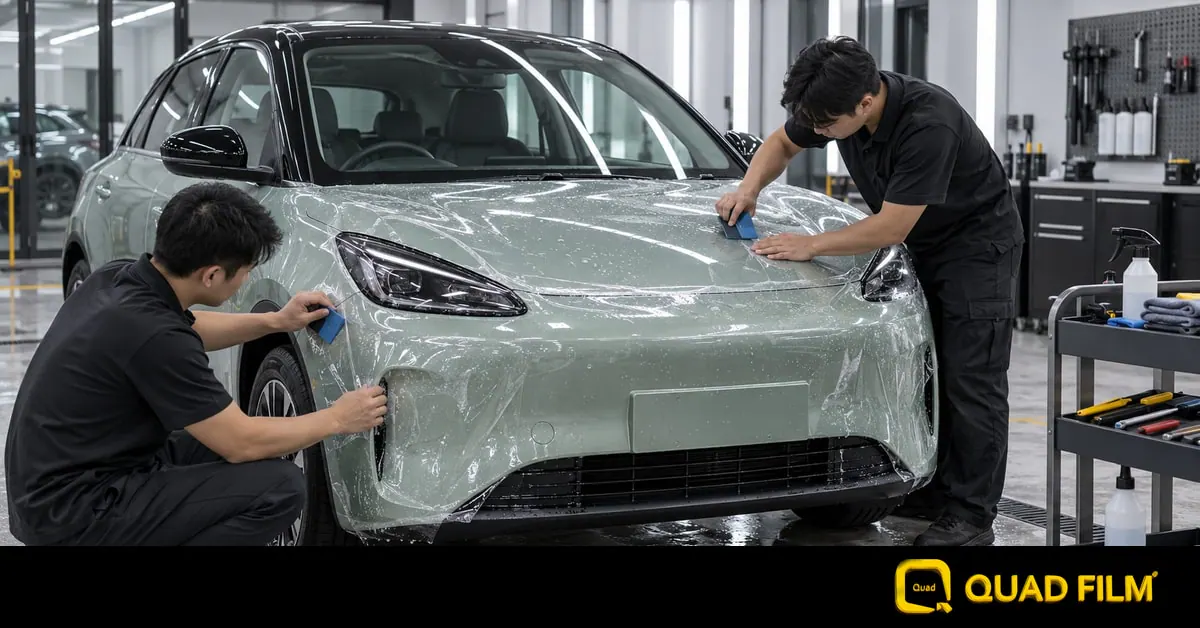
- Paint protection film (PPF) on the front of an eMAS 5 can reduce stone chip damage without wrapping every panel. Small painted areas around the handles and boot lip may also benefit from film.
- Frequent highway driving makes a full front package worth considering. For town use, the areas you touch or scrape most may matter more.
- Film quality, installation and warranty matter as much as the number of panels covered. Thickness alone doesn't guarantee protection.
- A written quote should name the film series, exact panels and warranty coverage before you book.
PPF for your Proton eMAS 5 can be worth it on the panels most likely to chip or scratch, without wrapping the whole car. Paint protection film is a clear layer fitted over selected panels. It can reduce some stone chip damage and light scratches, but it won't stop every impact or prevent dents.
Highway grit can chip the front bumper and bonnet, rings can scratch around the handles, and luggage can scuff the painted boot lip. Protecting those areas may be enough for how you use the car.
If you've just collected your car, you may be choosing between a few pieces of Quad Film PPF, a full front package and a full wrap. Your driving, the paint condition and how much minor wear you're happy to accept matter more than whether another car has every panel covered.
Front bumper and bonnet take road debris
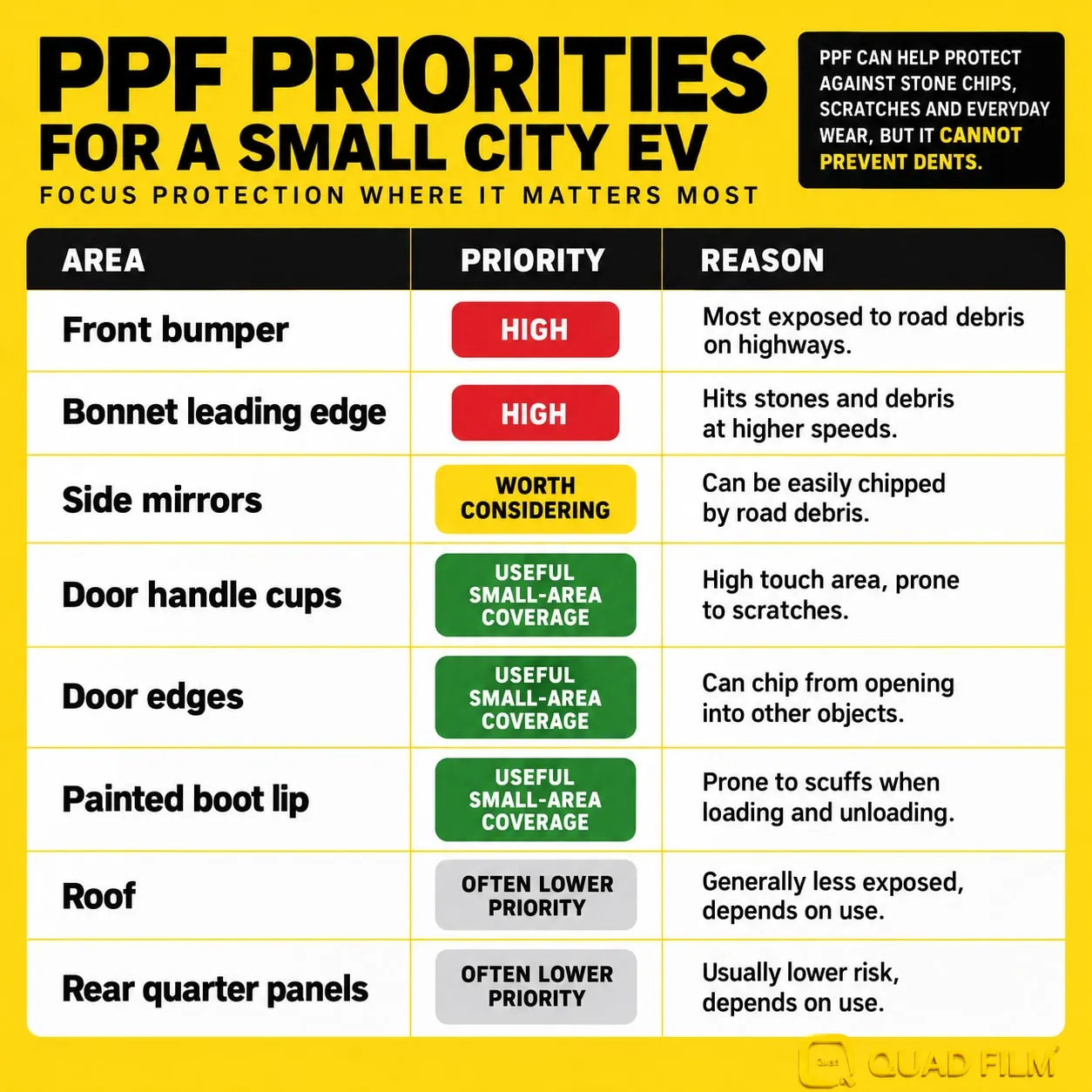
For highway use, the front bumper and bonnet leading edge are the car parts that need PPF most. Mirror covers and front fenders, the panels above the front wheels, are also worth considering. Around town, painted areas behind the handles, door edges and the boot lip may face more daily contact.
A bonnet strip leaves the rest of the bonnet uncovered and an exposed film edge across the paint. Covering the whole bonnet avoids that line across the middle, although film edges still exist around the panel. If your car already has minor stone chips, film won't fill the missing paint or make it new again.
For the handles, the useful area is the painted surface your fingers or rings touch, not simply a piece labelled ‘door cup’. Proton eMAS 5 has semi-concealed handles, so the fit needs to match their shape and movement. At the boot, coverage belongs on the painted lip that luggage touches. Bare plastic trim is a different surface and should not be assumed to accept the same film.
| Area | Likely damage | When to consider coverage |
|---|---|---|
| Front bumper | Chips from stones and road grit | A priority for frequent highway driving |
| Bonnet leading edge | Chips from road debris | A priority for frequent highway driving |
| Side mirrors | Scrapes and chips from road debris | Worth adding when you're already covering the front |
| Painted areas behind the handles | Scratches from fingernails and rings | Useful if rings or fingernails touch the painted area |
| Door edges | Scrapes against pillars or walls | Worth it in tight car parks, but film won't prevent dents |
| Painted boot lip | Scuffs from luggage, groceries and strollers | Worth it if you load the boot most days |
| Roof | Fewer stone chips than the front | Lower priority if stone chips are your main worry |
| Rear quarter panels | Scrapes and chips | Depends on where you park and how often you drive in traffic |
Front bumper and bonnet coverage targets incoming road debris. Around the sides and boot, smaller pieces target everyday contact instead: a painted handle recess, a door edge or the lip where bags slide into the boot. Those are different reasons for fitting film, so a highway package may still need a small addition for how you use your car.
Roof and rear quarters can usually wait
If front stone chips are your main worry, the roof can usually wait. Rear quarter panels, the body panels above the rear wheels, may also be lower priority. Door panels can wait if you park with space around you. Film cannot prevent a dent from another car's door.
Full car coverage becomes easier to justify if you want physical protection beyond the front, dislike visible wear on the doors, or want a consistent changed finish across the body. It is still a choice, not a requirement for an electric car. Paying for extra panels makes little sense if you'd happily live with the marks those panels might collect.
You can add film later if your driving changes, provided the paint is suitable then. Waiting means accepting that uncovered areas may collect marks first. It also means the first film has been used while the new film is fresh, so the finish may not match perfectly. A later addition is possible, but it isn't a way to reverse wear.
If easier washing matters more to you than reducing stone chips, PPF and ceramic coating do different jobs. A coating changes how water and dirt behave on the surface, but it isn't a sheet of film that can take an impact. It should not be counted as equivalent coverage when you compare a front PPF package with a whole car coating package.
You can combine suitable products, with PPF on the front and coating on the remaining paint. That leaves the unfilmed panels without PPF's physical barrier, even if water beads across the whole car. The installer needs to identify where each product goes and whether any coating applied over film is compatible. A glossy finish alone doesn't tell you which panels have film.
Keeping the original paint looking tidy may matter to you even without a guaranteed financial return. Our reel about why people choose PPF focuses on that personal reason for buying, not proof that an eMAS 5 will sell for more. If minor chips don't bother you, leaving some panels bare remains a reasonable decision.
Film and fitting matter beyond panel count
More panels won't compensate for film that deteriorates or fitting that leaves edges lifting. For an eMAS 5, the material, surface preparation and fitting all matter alongside coverage. A named film series and clear warranty coverage give you something concrete to compare, rather than an assurance that a package is ‘premium’.
TPU means thermoplastic polyurethane, a flexible plastic used in our PPF. Heat and moisture can contribute to material breakdown, including PPF hydrolysis. A material name alone doesn't tell you how the complete film and adhesive will age. Hazy or sticky film needs an installer to assess it, rather than a promise that more polishing will sort it out.
Films with a self healing top layer can make very light surface scratches fade with warmth when the product conditions are met. That is different from repairing a cut through the film. Torn film may need replacement, while a dent beneath it may need body repair. The same limitation applies whether you cover one bumper or the whole car.
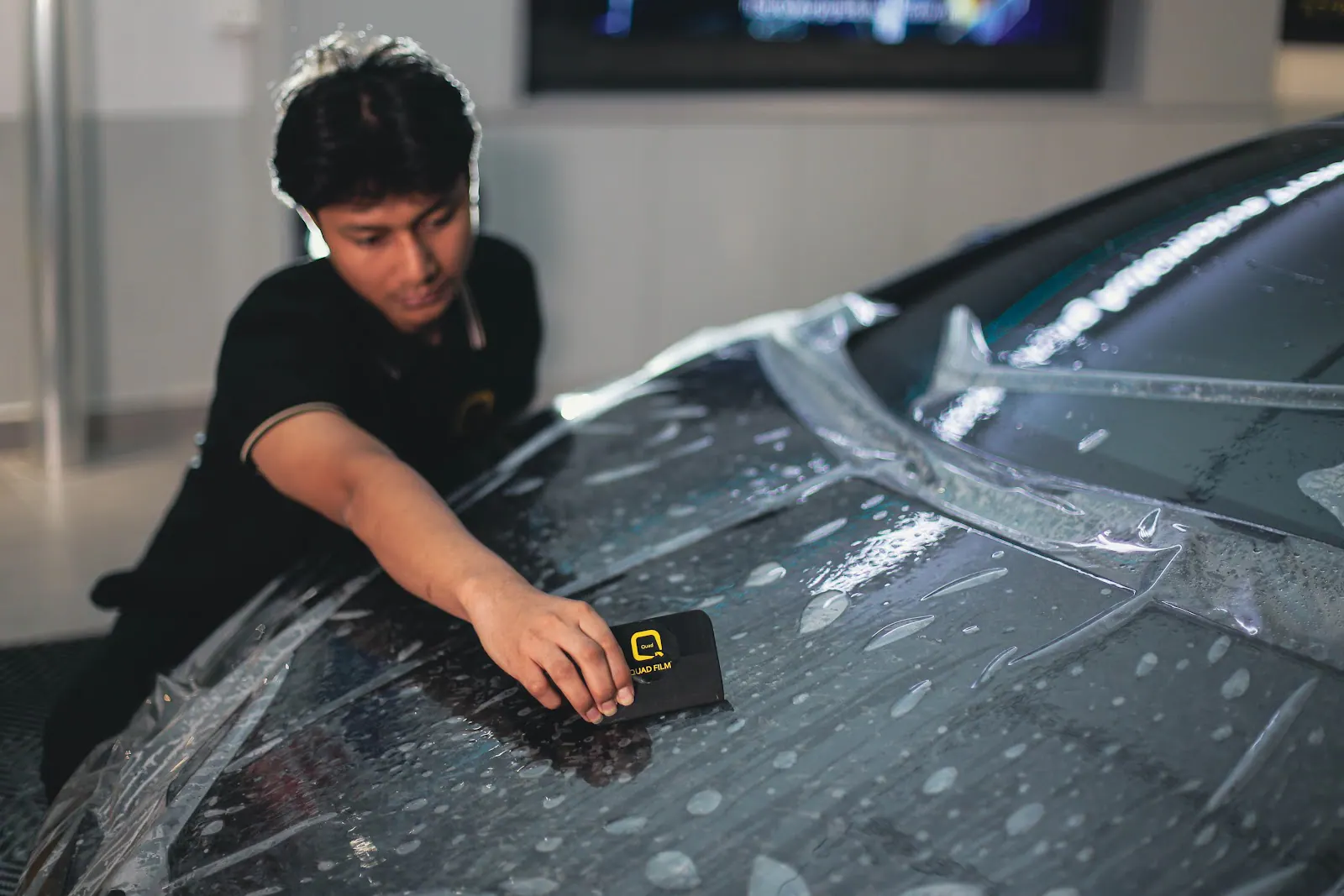
During fitting, a technician smooths the flexible film onto the panel with a squeegee, as shown on the black bonnet below. Neat fitting matters because you will see the surface and wash around its edges long after choosing the package. A finished example can help you discuss the level of finish you expect.
If a fitted piece later develops a problem, the claim process should identify who assesses it and what happens if the film or fitting is at fault. Product warranty coverage and an arrangement to correct installation defects are not automatically the same promise. It helps to have both explained on the quote rather than discover the difference when an edge starts lifting.
PPF thickness is only one specification
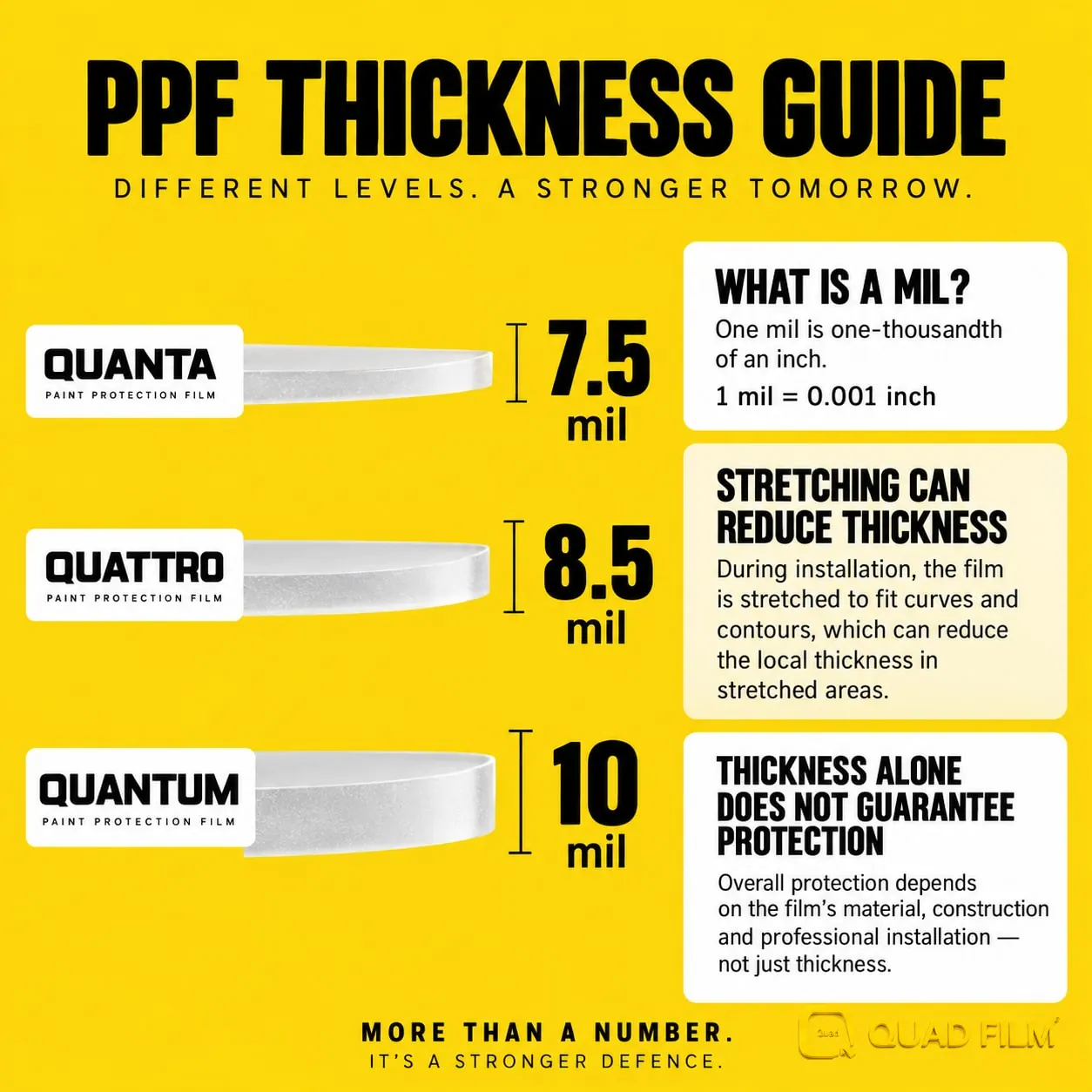
PPF thickness is one part of comparing films, not a score for how well every impact will be handled. Our clear gloss grades are QUATTRO at 8.5 mil, our best seller, QUANTA at 7.5 mil and QUANTUM at 10 mil. One mil means one thousandth of an inch, not one millimetre.
All three gloss grades have anti-yellowing properties, and yellowing is covered under our PPF warranty. That doesn't mean a film can never discolour, or that every change in appearance is automatically the same kind of claim. Written warranty coverage and exclusions matter more than a casual promise that the film will always look new.
Comparing two grades on the same panels helps separate the film choice from the coverage choice. QUANTUM is thicker than QUATTRO, while QUANTA is thinner. Those measurements don't tell you where an installer will put a seam, how the film will fit a bumper corner or whether you need rear door coverage at all.
A finish change needs a separate decision. QUBOND is matte, with a flat appearance, while QUATRIX is satin, with a soft sheen. They are not two names for the same finish. For a few protective pieces that should blend with glossy paint, the gloss grades are the relevant comparison. A matte or satin section will look different beside an uncovered glossy panel.
PPF quotes need matching coverage
PPF quotes are easier to compare when the film series and panel list match. Selected areas, a full front and a full car wrap describe different amounts of work. PPF costs in Malaysia vary with coverage, film and installation work, so a package name alone isn't enough for a fair comparison.
A full front package on our product page lists the bonnet, bumper, front fenders, mirrors and headlights. A quote still needs to state the actual inclusions for your car and the suitability of any light or trim surface. A bumper and a bonnet strip are not the same coverage as whole front panels, even if both quotes say ‘front PPF’.
For selected coverage, the written description should show where each piece stops. For full front coverage, it should name the whole panels. For a full car wrap, it should identify any painted sections or trim left out. The three options differ in coverage, not simply in the number printed beside the quote.
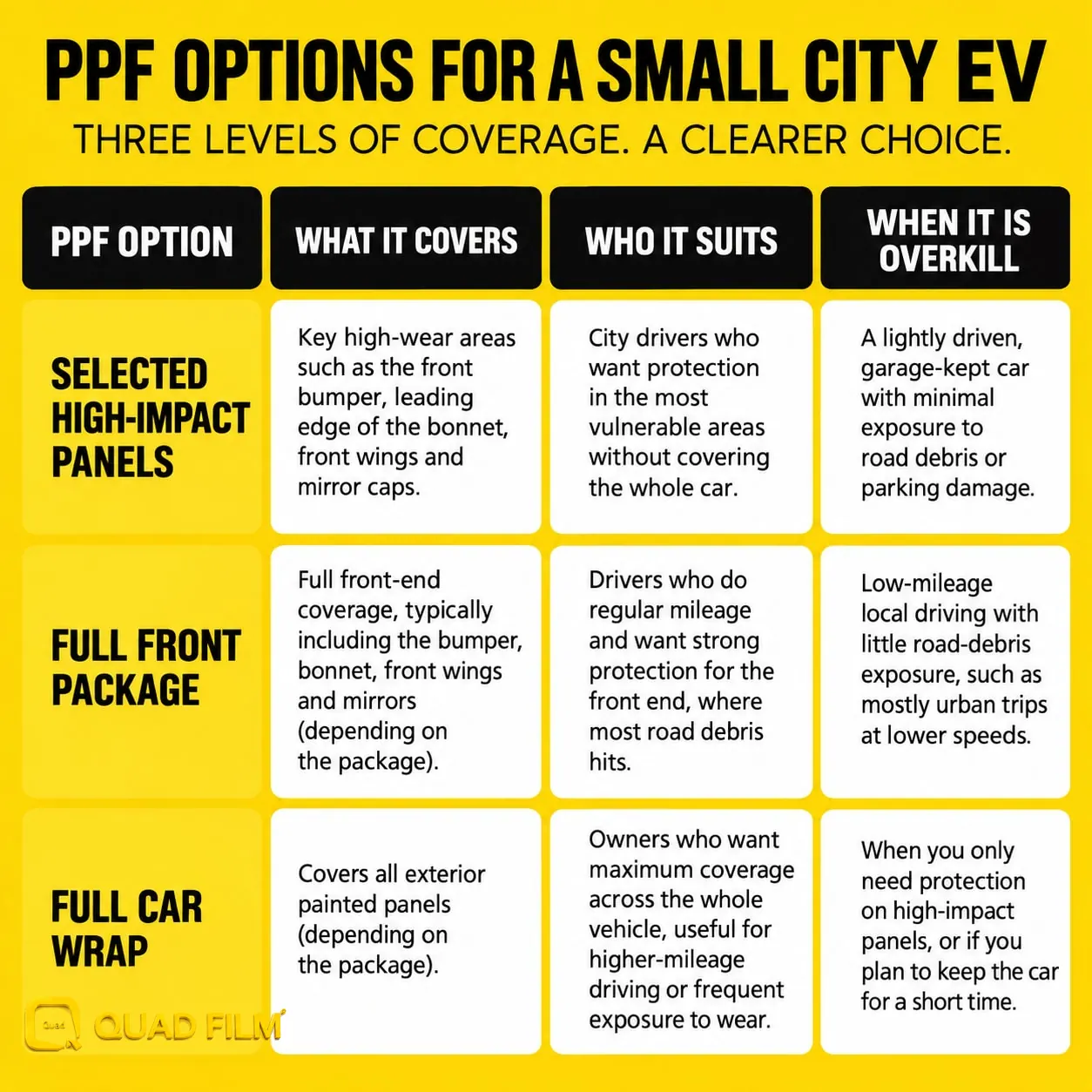
It also helps to think about which damage you would actually pay to repair. A few small chips may be something you live with or touch up, while a deep scrape across a bumper may mean a respray. PPF isn't guaranteed to pay for itself or increase resale value. Nor is a smaller package automatically good value if it omits the exact painted area you wanted protected.
Paint condition and edges affect the result
PPF protects the paint your eMAS 5 has when the film goes on. It doesn't replace missing paint or straighten a damaged panel. Before fitting, existing chips, scratches and any resprayed areas need to be discussed, so you know what will remain visible and whether repair is needed first.
A new car still deserves a look under good lighting. You can agree which marks need attention before they are covered rather than assume the film will hide them. If paint has recently been repaired, the body shop and installer need to agree that it has cured enough for film. There is no single waiting period that suits every repaint.
Edges also change how a small package looks. Film stopping across the bonnet leaves a line on the visible surface, whereas whole bonnet coverage moves the boundary to its perimeter. Around a mirror or bumper curve, a seam may be needed. You can see an example of the intended edge finish before booking instead of treating ‘edge wrapped’ as a promise that no boundary exists anywhere.
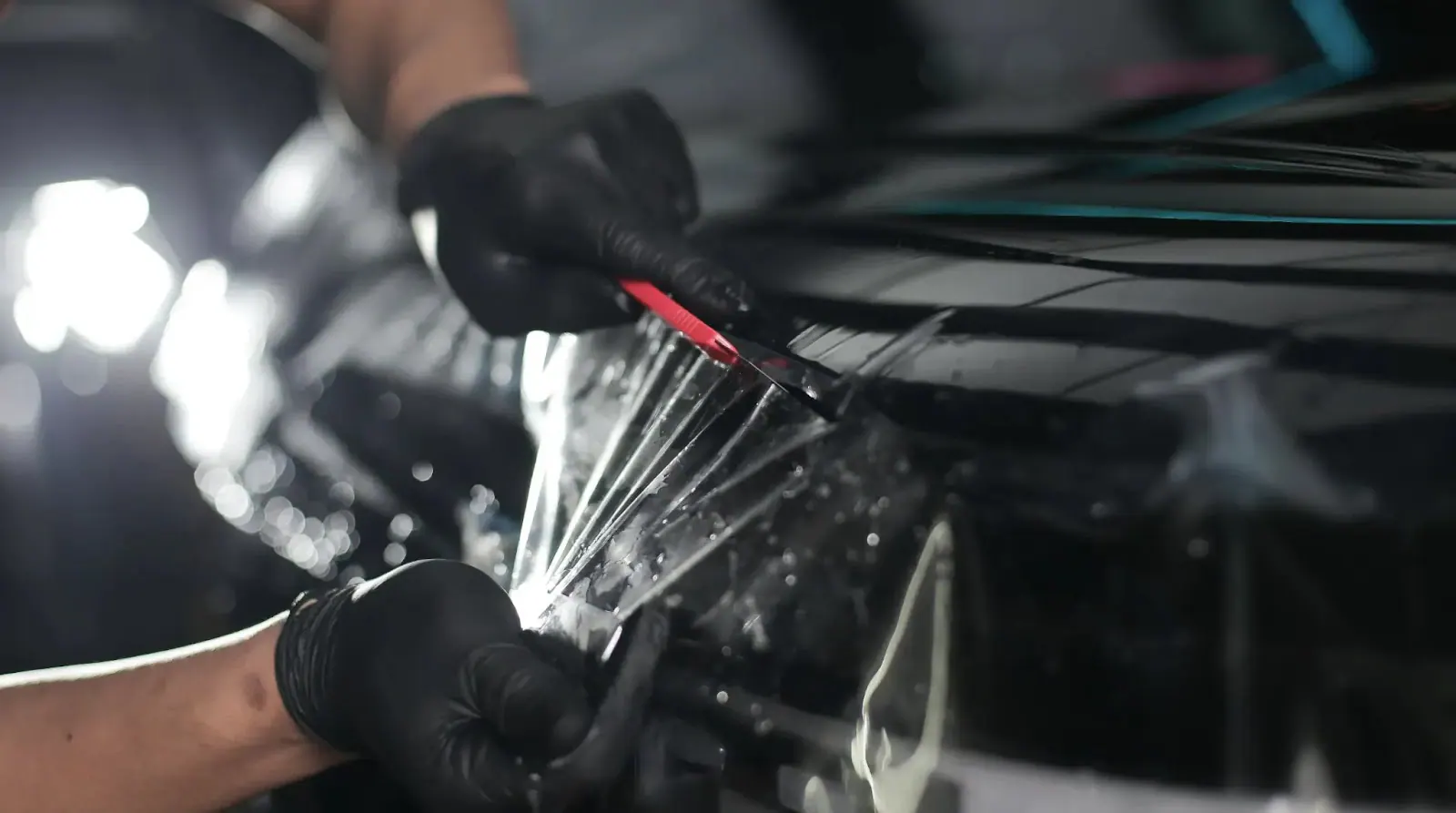
Trimming determines where the film stops around a panel edge. The close-up below shows hand-cutting beside a dark panel. Your installer can explain how the paint is protected during trimming, which edges will remain visible and whether a seam is needed around a tight curve. These details are easier to agree on before work begins.
Our installation reel follows a full-body PPF job on a Tesla Model Y. It gives you a broader view of fitting than the edge close-up, though the shape and access differ from an eMAS 5. For your car, the installer still needs to explain which panels are covered and how the film will finish around their edges.
PPF still needs washing and inspection
PPF on your eMAS 5 still needs cleaning and occasional attention. A self healing surface isn't a reason to leave bird droppings, insects or road grime on the film. Gentle washing and the care instructions for your chosen series matter, whether you have a few pieces fitted or full body coverage.
Our PPF care guidance favours hand washing with gentle car shampoo and a soft wash mitt. Abrasive brushes, strong solvents and cutting compounds can be unsuitable for the film. Freshly fitted film also needs time before its first wash. Your installer can provide the waiting instructions for the product and installation conditions rather than you borrowing a schedule from another film.
After washing, you can look at the corners and edges without picking at them. A lifting edge, a tear or a cloudy patch that stays needs assessment rather than a home repair with extra heat or glue. If a piece is damaged, an installer can explain whether it can be corrected or needs replacement. The paint beneath may need checking too.
Removal is part of owning PPF, not something to leave out of the buying decision. Factory paint in good condition usually tolerates professional removal better than a weak respray, but paint history, film condition and removal technique affect the risk of paint damage on removal. Keeping the fitting record and reporting deterioration early gives the installer useful information when assessing the film.
Proton eMAS 5 PPF: coverage before extras
For Proton eMAS 5 PPF, front coverage is worth considering if stone chips worry you, with smaller pieces where daily contact marks the paint. A full wrap is optional, not a requirement for an electric car. Our Quad Film PPF range and an authorised installer can help you compare films and coverage.
Frequently Asked Questions
Is PPF worth it on an affordable car like the eMAS 5?
PPF can be worth it on an eMAS 5 if you only cover the areas that chip or scratch most. It's also reasonable to leave the car unwrapped if you'd rather accept minor wear than pay for film.
How much of the Proton eMAS 5 should I cover with PPF?
For an eMAS 5, the front bumper and bonnet are worth considering if stone chips are your main worry. Small painted areas around the handles and boot lip may also benefit. A full front adds wider front coverage, while a full car wrap suits a wish for protection beyond those areas. None prevents every mark or dent.
Can PPF be removed safely from an eMAS 5 later?
PPF can usually be removed safely from an eMAS 5 if it was fitted to factory paint in good condition and a professional removes it correctly. Previous resprays, paint condition, film age and adhesive can all affect the risk. A previously repaired panel needs assessment rather than a promise of damage free removal.
Will PPF on my eMAS 5 heal every scratch?
No. Self-healing film can fade very light surface scratches once the panel warms up, but deep cuts, torn film and dents need the installer or a body shop.
Should I get PPF or ceramic coating on my eMAS 5?
PPF and ceramic coating do different jobs. PPF is the better choice if your priority is reducing damage from stone chips and light scratches, while a coating mainly changes how the paint looks and washes. You can use both if the products are compatible: PPF on the front and a coating on the rest of the paint.
Will PPF on an eMAS 5 turn yellow in Malaysian weather?
Some films can yellow with age and exposure. Our clear gloss PPF grades have anti-yellowing properties, and yellowing is covered under our PPF warranty. The written coverage and exclusions for the chosen series still matter. A change in appearance needs assessment to establish the cause.
Protect your Investment today
Don't wait for stone chips to ruin your paint. Speak to our experts about custom PPF and Tinting solutions.