Will tinting void my Mitsubishi Triton manufacturer warranty?
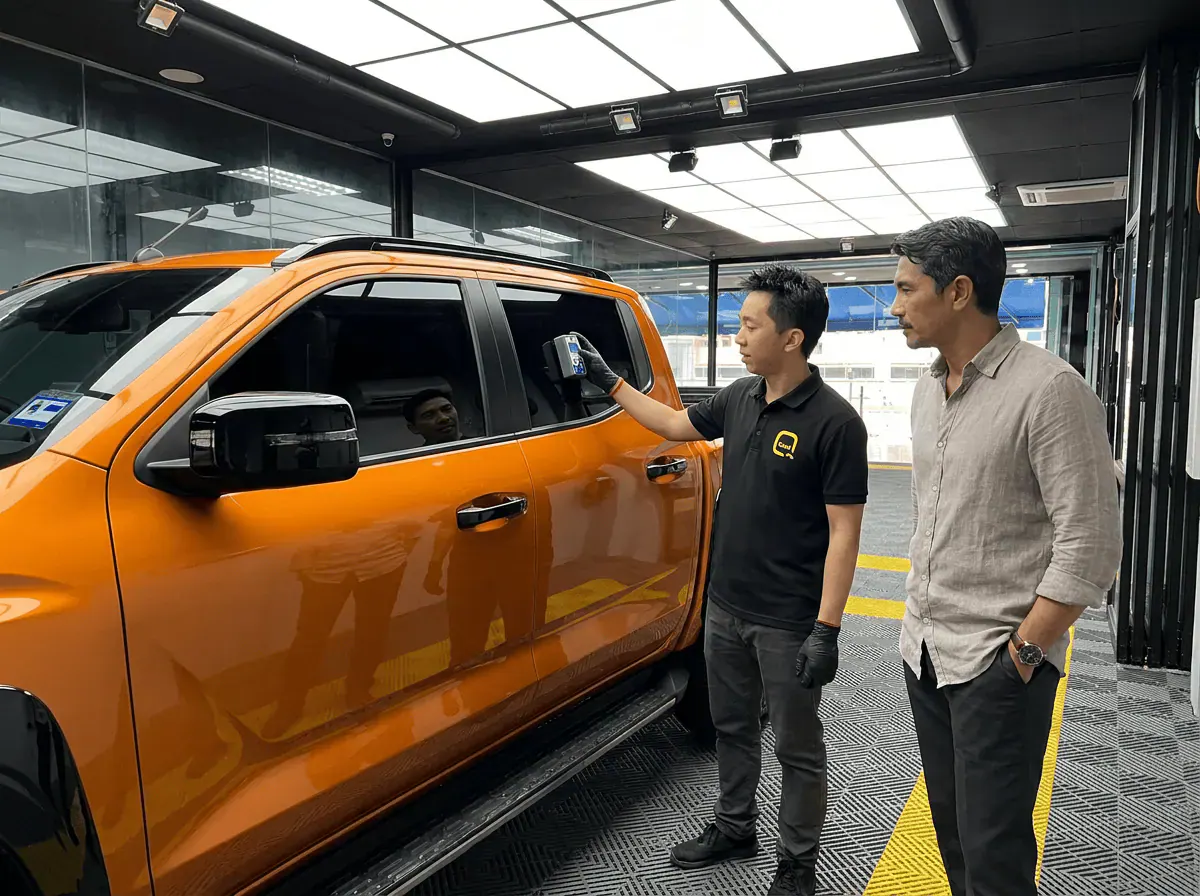
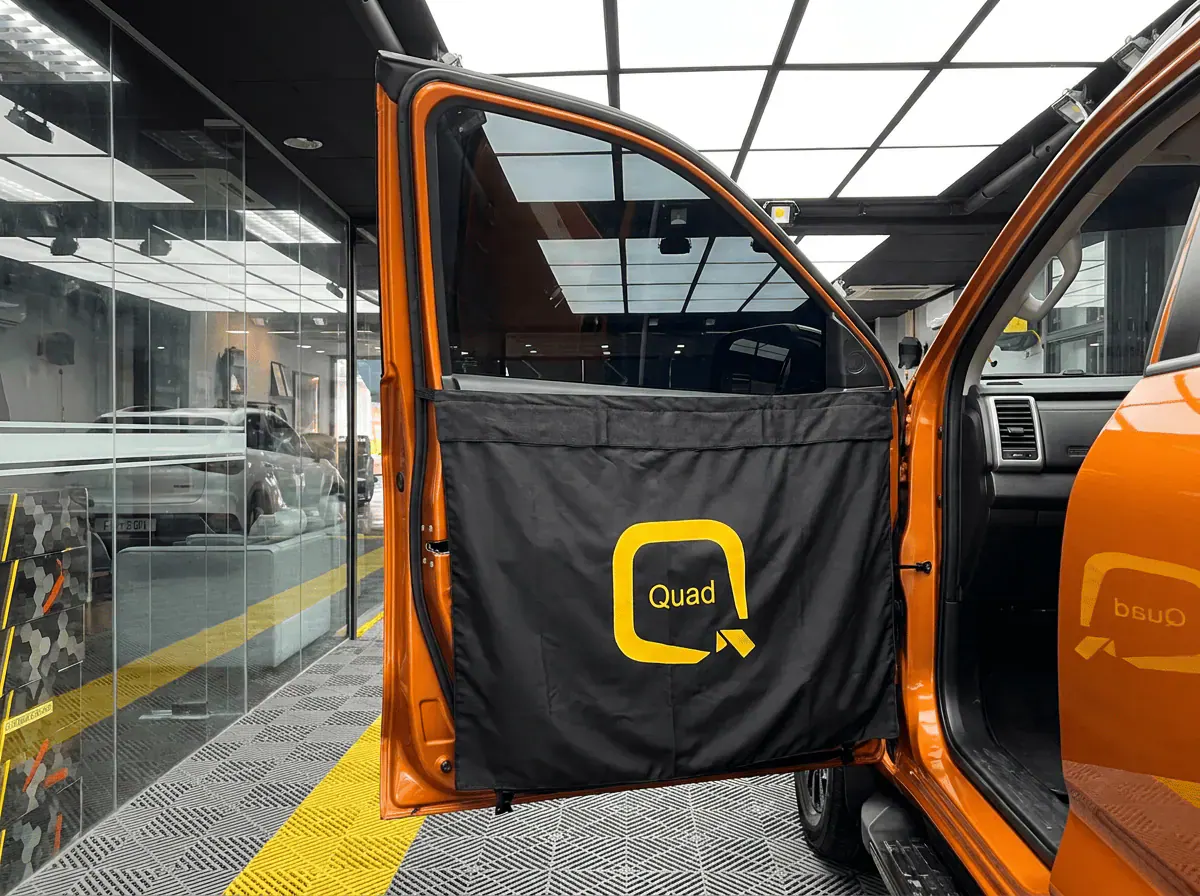
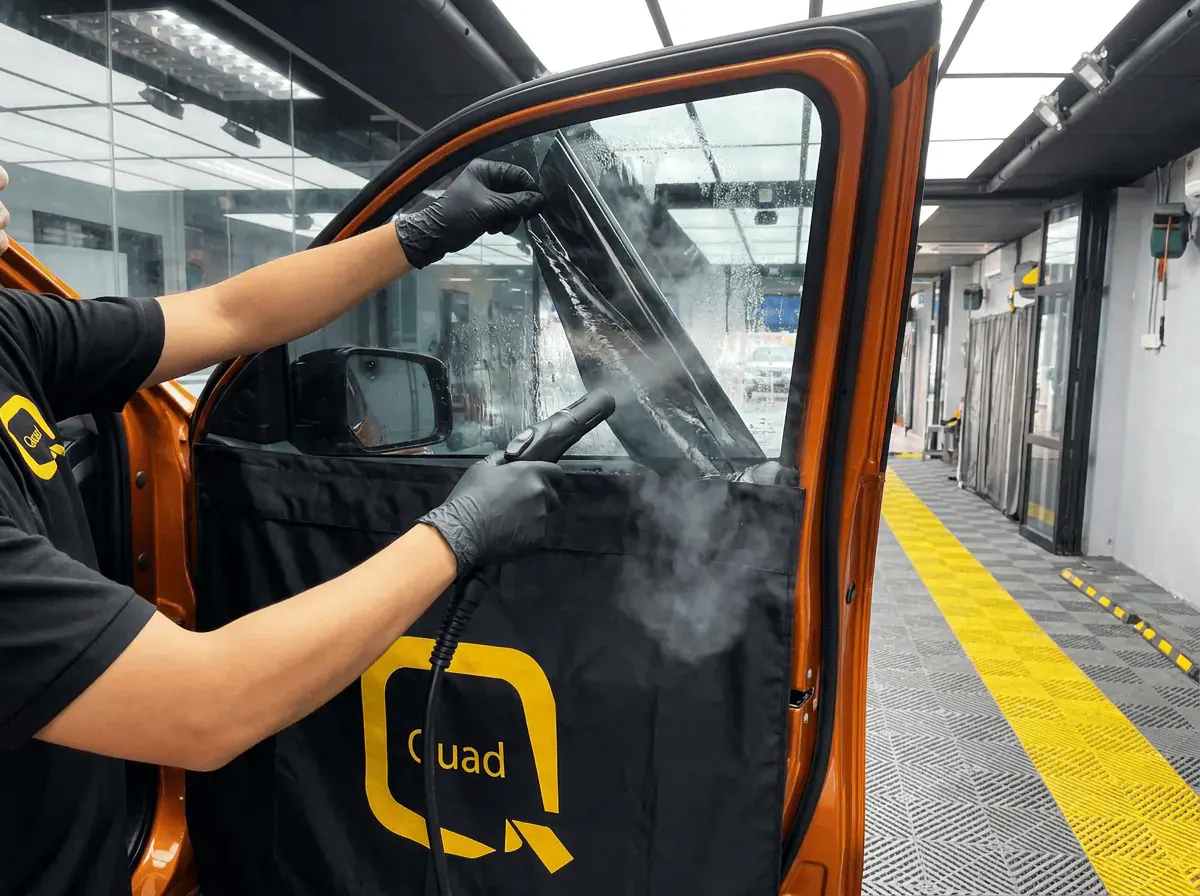
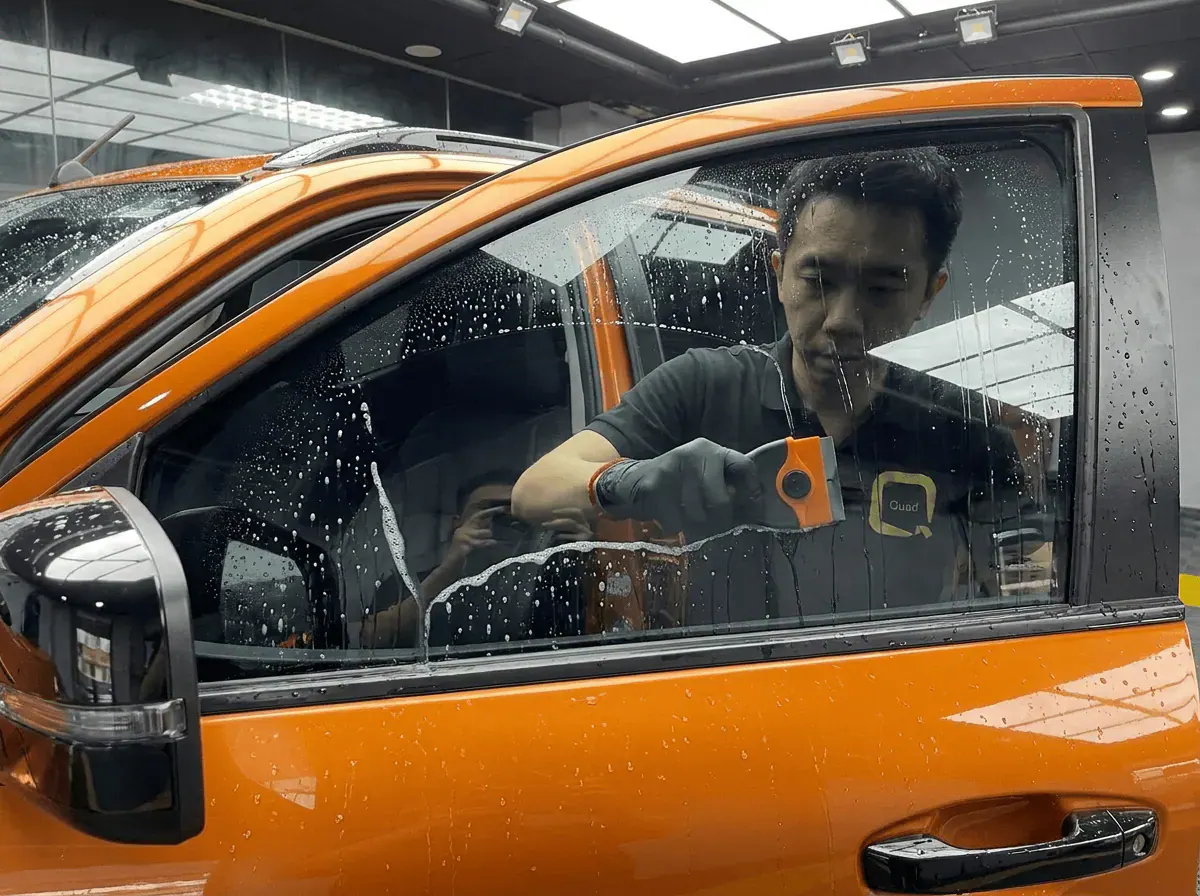
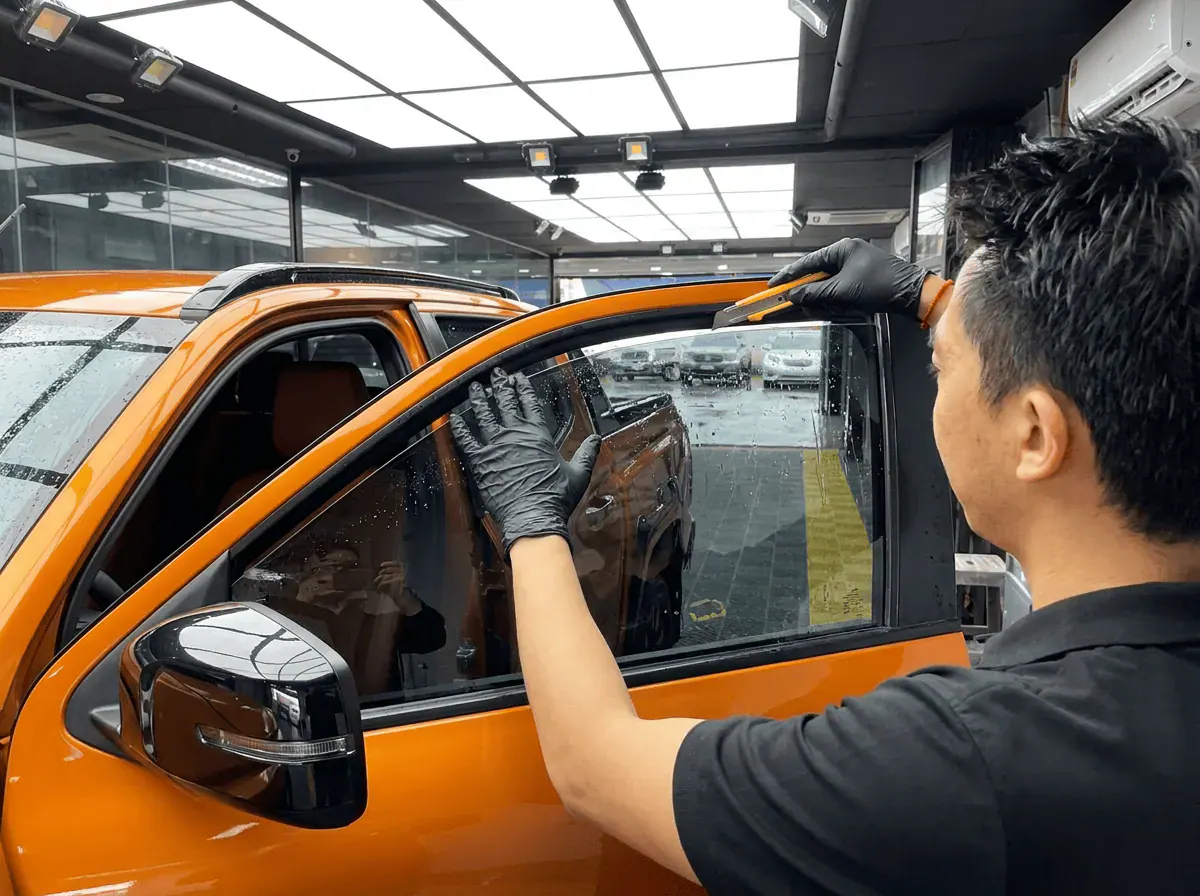
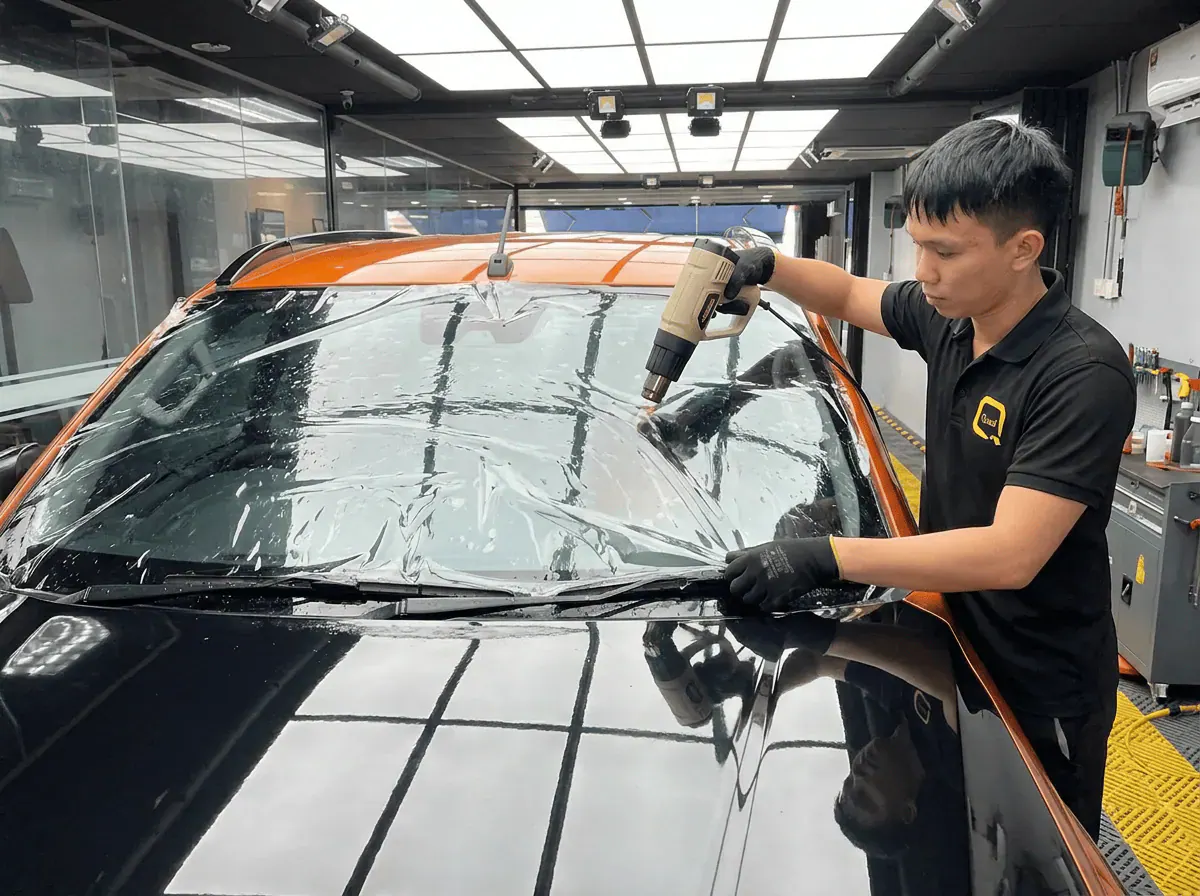
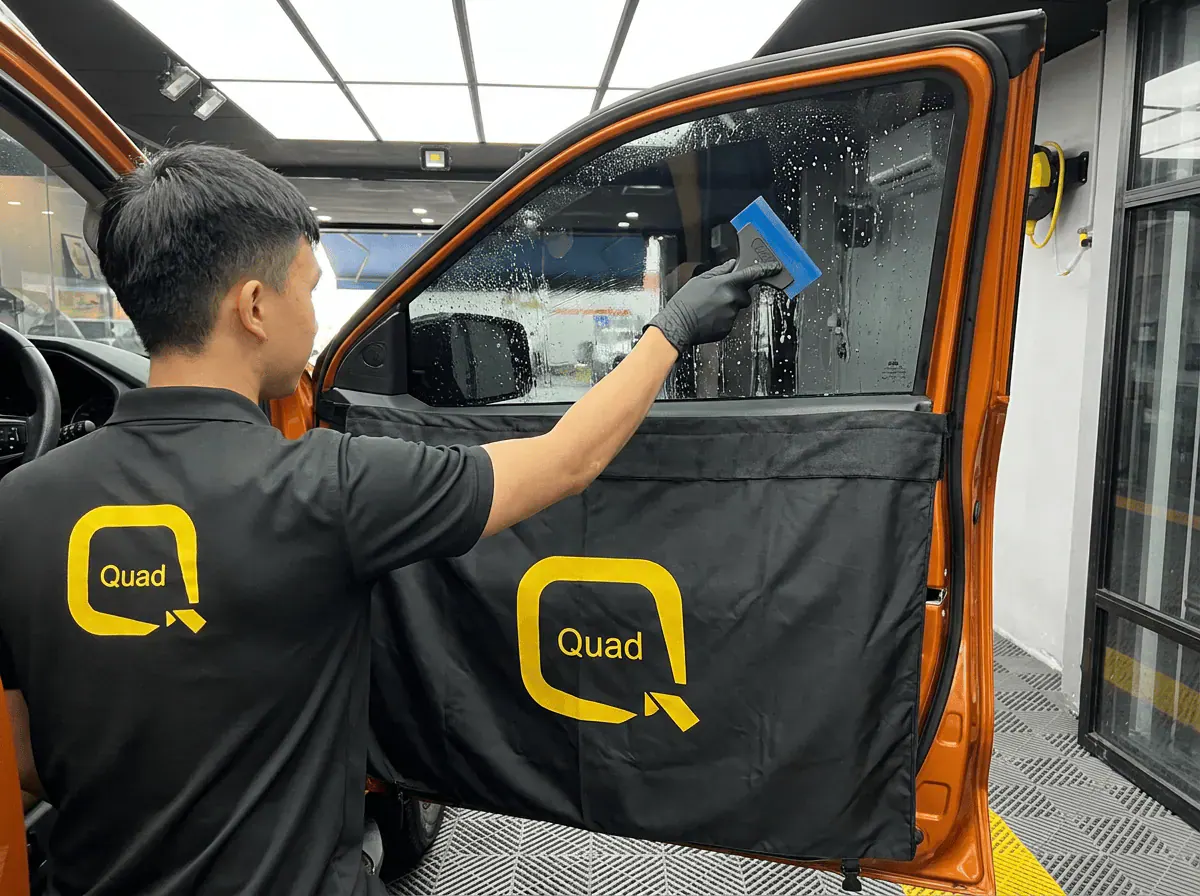
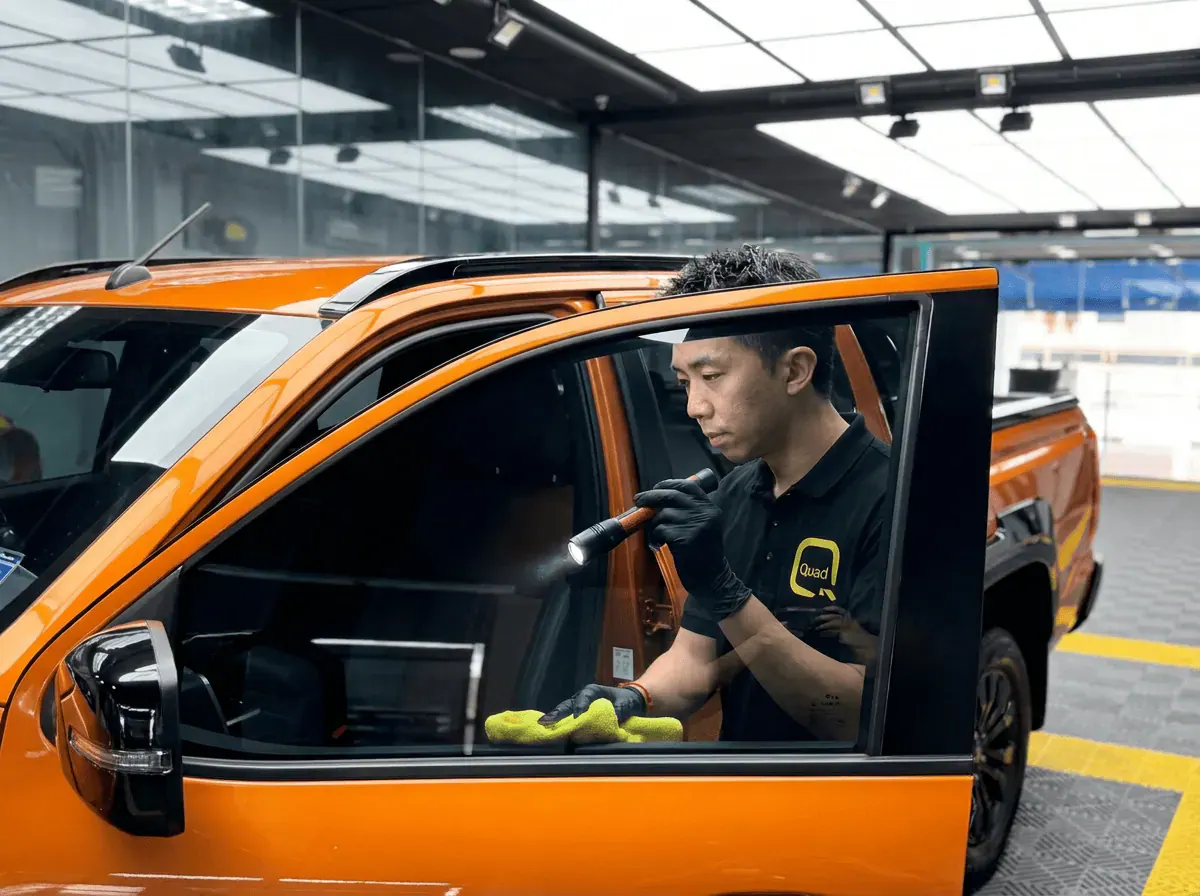
No. Window film is applied to glass and does not affect Mitsubishi's coverage of the engine, drivetrain or electronics on your Triton. Our installers follow a documented 8-step process with door panel protection and torchlight QC, and every Quad Film series carries its own 5 to 15 year warranty, plus a 100% Money Back Guarantee for Workmanship at authorized installers.
Is window tint worth it for a Triton that parks at worksites all day?
Honestly, it is one of the best upgrades for a work Triton. Site parking means full sun for eight to ten hours, and the upright windscreen plus big rear screen let heat pour in. A heat-rejecting film like MAGNETRON cuts total solar energy by up to 79% at VLT 5, so the cabin is bearable when you climb in at 5pm instead of being an oven. The film sits on the inside of the glass, so dust, mud and site grime on the outside do not affect it.
Which Quad Film package is best for a Mitsubishi Triton?
The Triton double cab runs 6 glass panels, but the upright windscreen and tall cabin take brutal sun exposure. Our smart value pick is MAGNETRON at RM2,600, a hybrid of 12-layer sputtering and nano-ceramic with TSER up to 79% at VLT 5 and 99% IRR. For maximum rejection, MEGALUX at RM4,800 reaches 85% TSER at VLT 5 with a 15-year warranty. For a pure work truck on a budget, MATRIX at RM1,600 still gives 99% IRR.
How much does it cost to tint a Mitsubishi Triton in Malaysia?
A full car Quad Film tint for the Mitsubishi Triton starts at RM1,600 for MATRIX nano-ceramic and goes up to RM4,800 for the flagship MEGALUX. In between sit MIRACLE at RM2,200, MAGNETRON at RM2,600 and METALUX at RM3,400. The Triton falls in the Large bucket. All prices are full car, windscreen included, with a written warranty card.
How long does it take to install window tint on a Mitsubishi Triton?
A full tint installation on your Triton typically takes about 2 to 5 hours. Actual timing varies with the number of glass panels, windscreen curvature, the film series chosen, whether old tint needs steaming off, and current workshop queue and manpower availability. The Triton is a straightforward 6-panel job, so it sits at the faster end of that range. We confirm your exact time slot when you book.
Is dark tint on a Mitsubishi Triton safe for night driving?
Yes, provided the film has high optical clarity. Cheap dyed films turn hazy at night, and that haze is the real risk, not the darkness, especially on unlit rural roads. If you drive at night often, METALUX is tuned for optical clarity and suits drivers with astigmatism, with 97% IRR and a 10-year warranty. A common Triton setup is VLT 70 in front and VLT 30 or VLT 20 at the rear.
Will tinting affect my Smart Tag or RFID on a Mitsubishi Triton?
It needs planning, and we handle both, which matters when your truck goes through tolls daily. SmartTAG runs on infrared, which every heat-rejecting film partially blocks by design, so our installers leave a small untinted patch on the windscreen at the reader zone and toll scans stay normal. Touch n Go RFID uses UHF radio, which passes through the non-metallic MATRIX and MIRACLE films. Metallic films like MEGALUX, METALUX and MAGNETRON can weaken it, so we relocate the tag to the headlamp.
Does Quad Film tint fade or turn purple on a Mitsubishi Triton?
No. Purple, bubbling windows come from cheap dyed film whose colour layer breaks down under UV, and a Triton parked at worksites in full sun makes cheap film fail even faster. Quad Film's sputtered and nano-ceramic films use metal and ceramic layers instead of dye, so colour and adhesion stay stable for years. Every series carries 5 to 15 years of warranty, and colour stability is part of it.
What is the best VLT for a Mitsubishi Triton to pass JPJ and Puspakom?
Your Triton's front glass measures about 73% VLT from the factory. JPJ requires 70% final VLT on the windscreen and 50% on the front side windows, so a VLT 70 film on the front sides lands around 51%, comfortably legal. The rear glass on the double cab measures about 20% VLT with no legal limit, so darker film at the back is fine. All five Quad Film series come in VLT 70 for a compliant front setup.
One thing we tell every customer honestly: the windscreen is the one panel where the math gets tight. Even VLT 70 film over factory glass reads in the low 50s on a JPJ meter, so technically no heat-rejecting film passes the 70% windscreen rule on paper. In practice it reads visually clear at roadblocks and most owners tint it anyway. Zero-risk option: leave the windscreen untinted or fit a virtually clear safety film. We can meter your glass free before you decide.
How do I clean the tinted windows on my Mitsubishi Triton?
The film lives on the inside of the glass, so worksite mud and dust on the outside wash off as usual. On the inside, give the film about a week to cure, then wipe with a soft microfibre cloth and plain water or a mild ammonia-free glass cleaner. Avoid abrasive sponges, blades and ammonia sprays, which scratch the film and weaken the adhesive. Wipe in one direction instead of hard circles, and the film stays clear for its full warranty life.