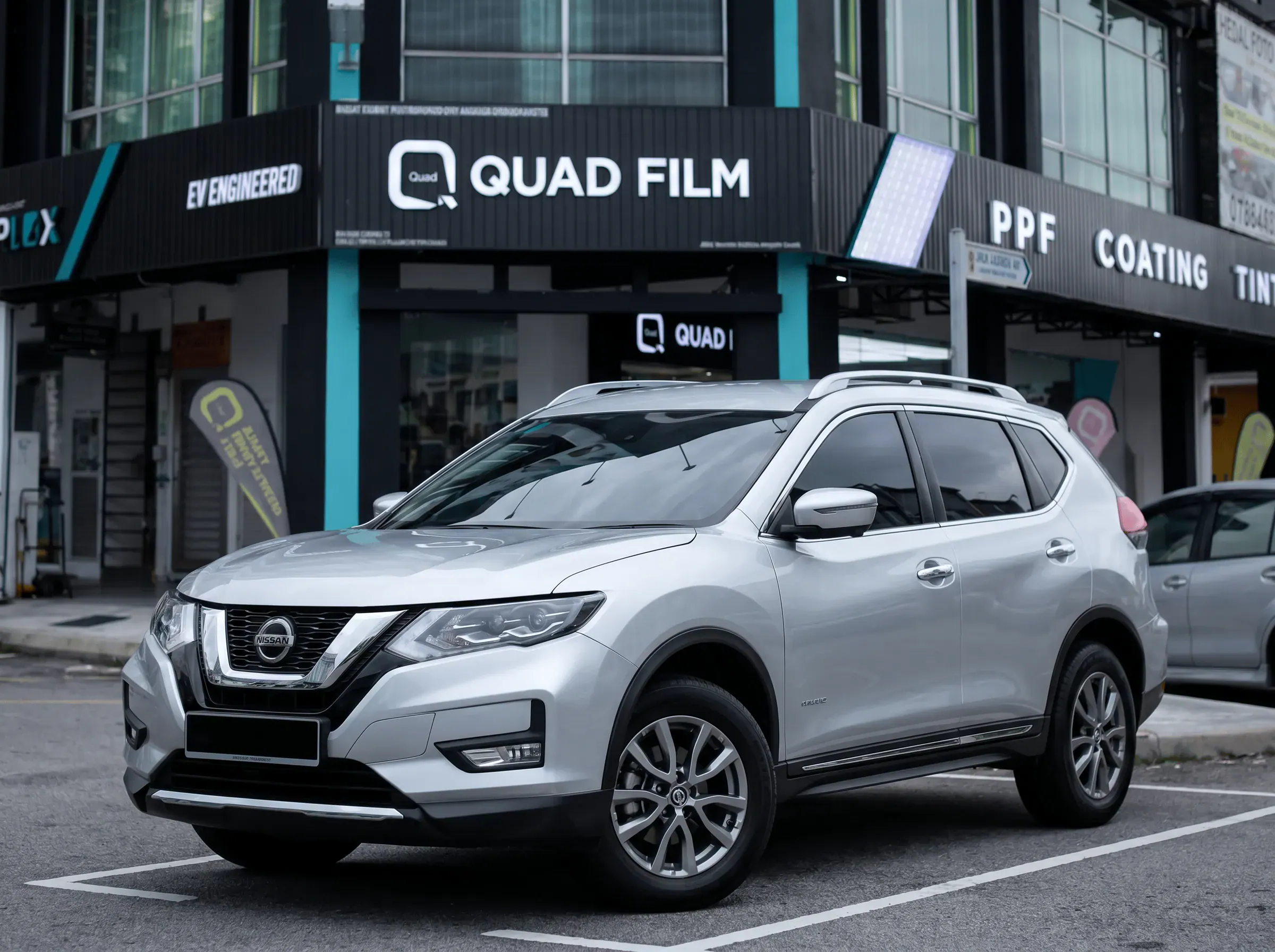
Does Quad Film tint fade or turn purple on a Nissan X-Trail?
No. Purple, bubbling windows come from cheap dyed film whose colour layer breaks down under Malaysian UV. Quad Film's sputtered and nano-ceramic films get their performance from metal and ceramic layers instead of dye, so colour and adhesion stay stable for years. MIRACLE adds Fade Proof Technology on top. Warranty runs 5 to 15 years by series, and colour stability is covered.
Does tinting the panoramic roof on my Nissan X-Trail really make a difference?
It makes the biggest difference of any panel on the car. A panoramic roof is a huge overhead heat source, and an untreated glass-roof cabin reached 52°C in Quad's own testing. For the roof we recommend a high-rejection setup such as MEGALUX at VLT 20, which delivers 82% TSER, and for maximum relief you can add Quad Film EV Sunroof PPF, which uses 24 layers of rare earth metal sputtering to reflect 95% of heat, bringing interior temperature from 52°C down to 22°C while staying 72% see-through.
Is dark tint on a Nissan X-Trail safe for night driving?
Yes, as long as the film has high optical clarity. Cheap dyed films go hazy and yellowish after dark, and that haze is the real danger, not the darkness itself. If you drive a lot at night, METALUX is engineered for optical clarity and suits drivers with astigmatism, with 97% IRR and a 10-year warranty. A common X-Trail setup is VLT 70 in front and VLT 30 or VLT 20 at the rear.
Will tinting my Nissan X-Trail affect my Nissan warranty?
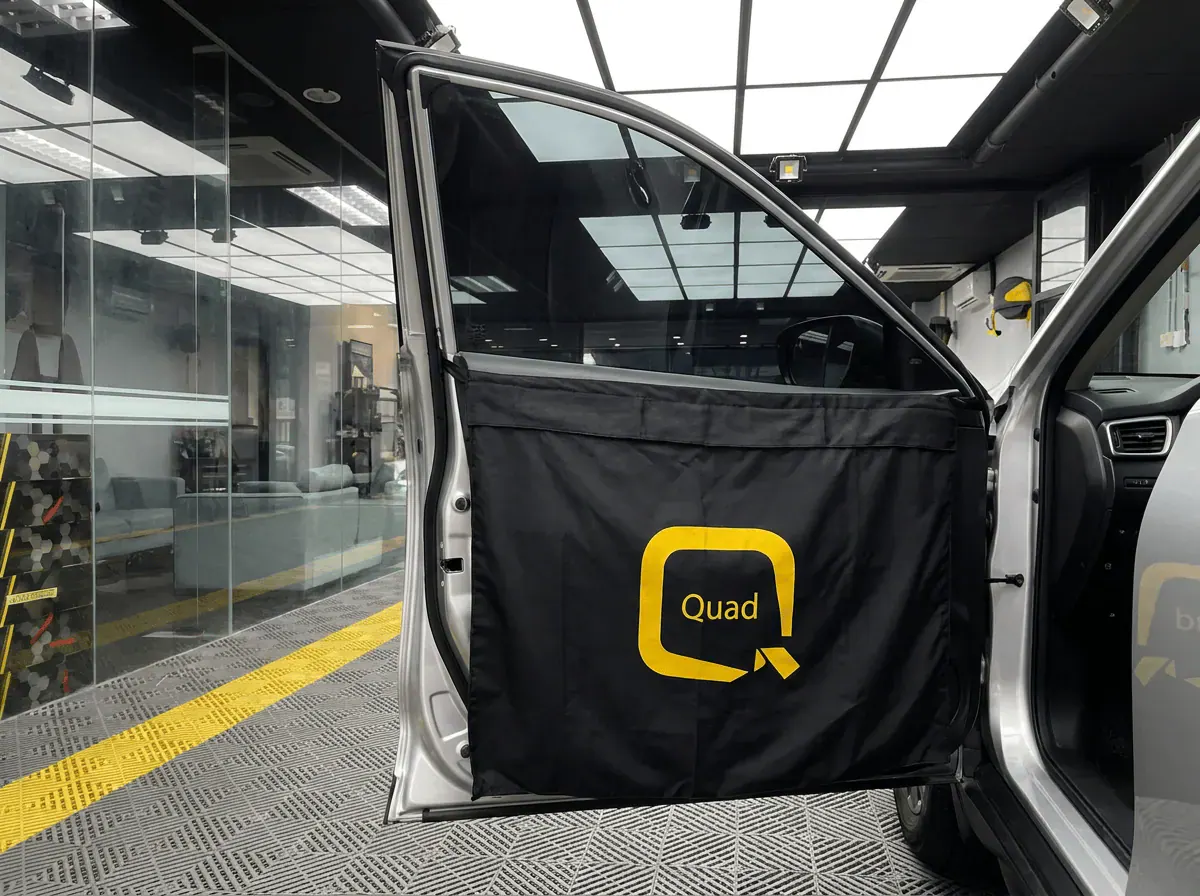
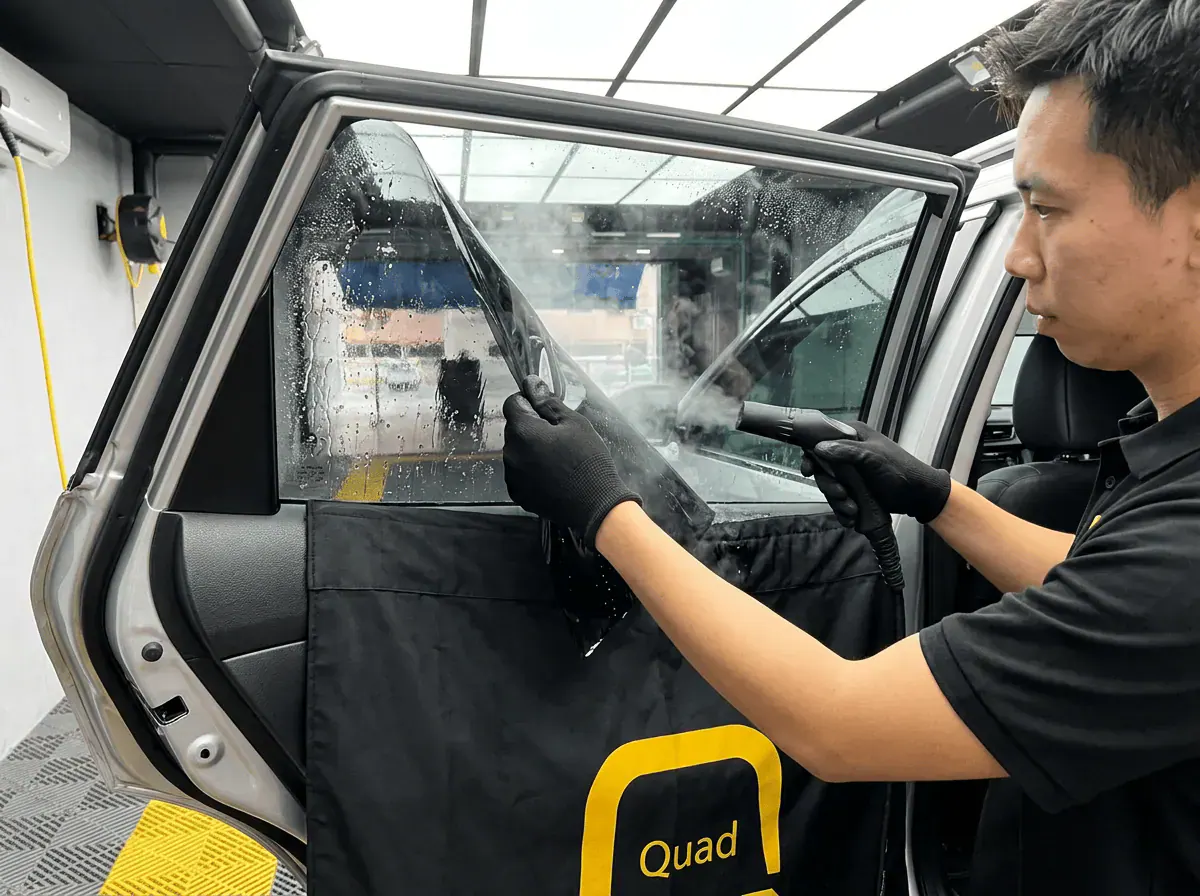
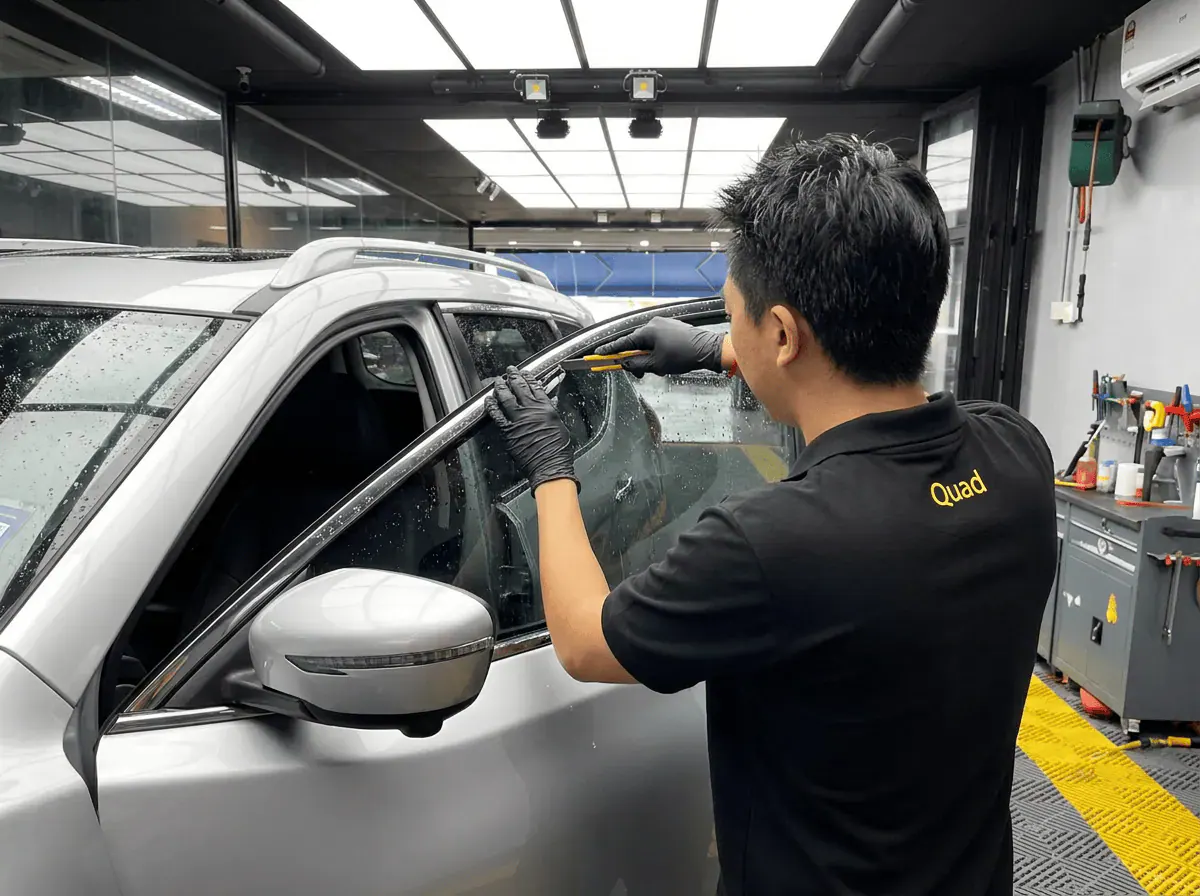
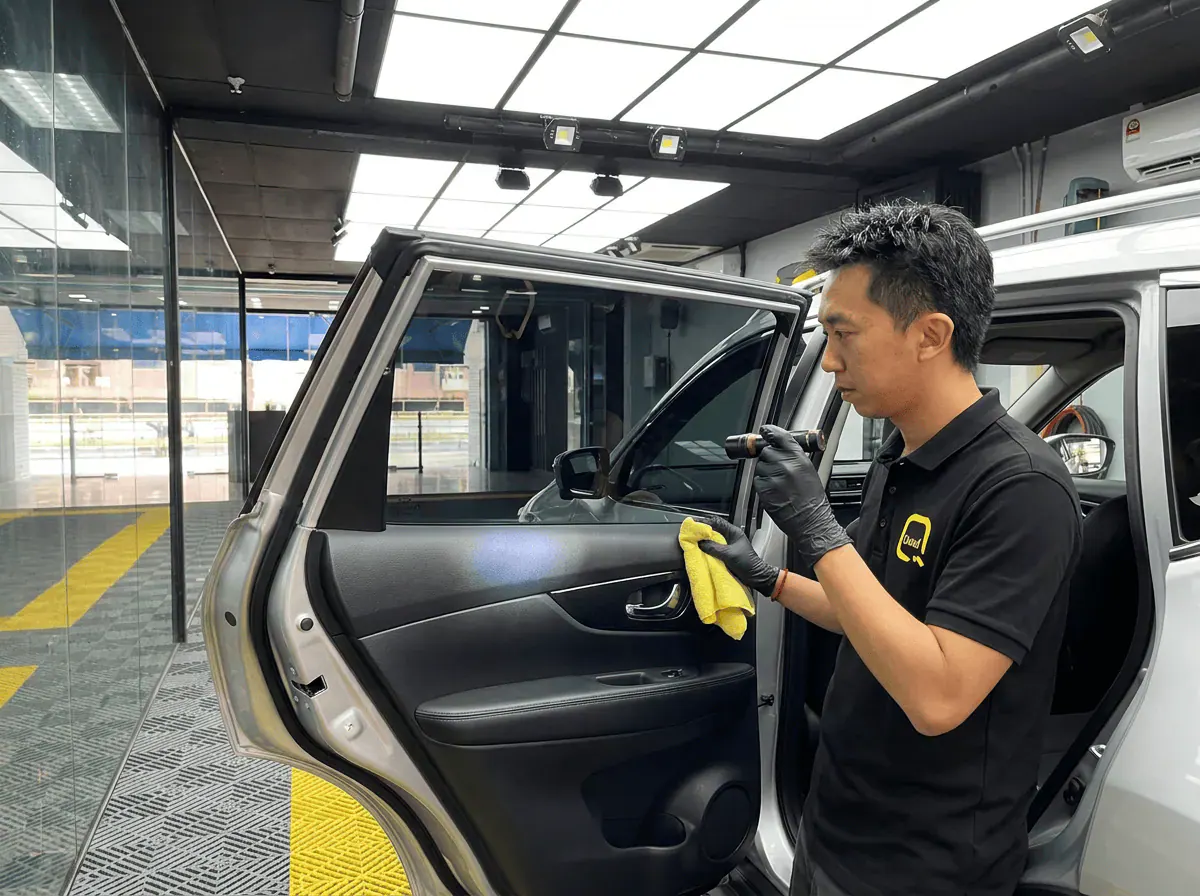
No. Window film is applied to glass and does not touch the engine, gearbox or electronics, so your Nissan manufacturer warranty stays intact. The same goes for e-Power variants, since the film never goes near the battery or power electronics. What manufacturers will not cover is installer damage like scratched glass or water in the door switches, which is why our 8-step process includes door panel protection and a pre-inspection report you can keep on file.
Which Quad Film package is best for a Nissan X-Trail?
The X-Trail runs 8 glass panels on the cabin, and the upper 2.5L 4WD variant adds a panoramic roof, so it carries a serious solar load for a family SUV. For maximum rejection across every panel, MEGALUX at RM4,800 reaches 85% TSER at VLT 5 with a 15-year warranty. Our smart value pick is MAGNETRON at RM2,600, a hybrid of 12-layer sputtering and nano-ceramic with TSER up to 79% at VLT 5 and 99% IRR. On a tighter budget, MATRIX at RM1,600 still delivers 99% IRR.
How do I clean the tinted windows on my Nissan X-Trail?
Give the film about a week to settle before the first wash. After that, a soft microfibre cloth with plain water or a mild ammonia-free cleaner is all your X-Trail needs. Skip ammonia sprays, rough sponges and anything sharp near the edges, and the film will stay clear for the full warranty period.
What is the best VLT for a Nissan X-Trail to pass JPJ and Puspakom?
Your X-Trail's front glass measures about 73% VLT from the factory. JPJ requires 70% final VLT on the windscreen and 50% on the front side windows, so a VLT 70 film on the front sides lands around 51%, comfortably legal. The rear glass measures about 25% VLT with no legal limit, so darker shades at the back are fine. All five Quad Film series come in VLT 70 for a compliant front setup.
One thing we tell every customer honestly: the windscreen is the one panel where the math gets tight. Even VLT 70 film over factory glass reads in the low 50s on a JPJ meter, so technically no heat-rejecting film passes the 70% windscreen rule on paper. In practice it reads visually clear at roadblocks and most owners tint it anyway. Zero-risk option: leave the windscreen untinted or fit a virtually clear safety film. We can meter your glass free before you decide.
What tint setup do most Nissan X-Trail owners choose for family use?
Most families go with VLT 70 on the front sides to stay JPJ-compliant, then VLT 20 or VLT 5 on the rear quarters and rear windscreen for privacy and heat. The third row sits right next to the rear quarter glass, so that is where kids feel the sun first, and darker rear shades fix it. If your X-Trail has the panoramic roof, add a roof treatment so the whole cabin stays even.
How long does it take to install window tint on a Nissan X-Trail?
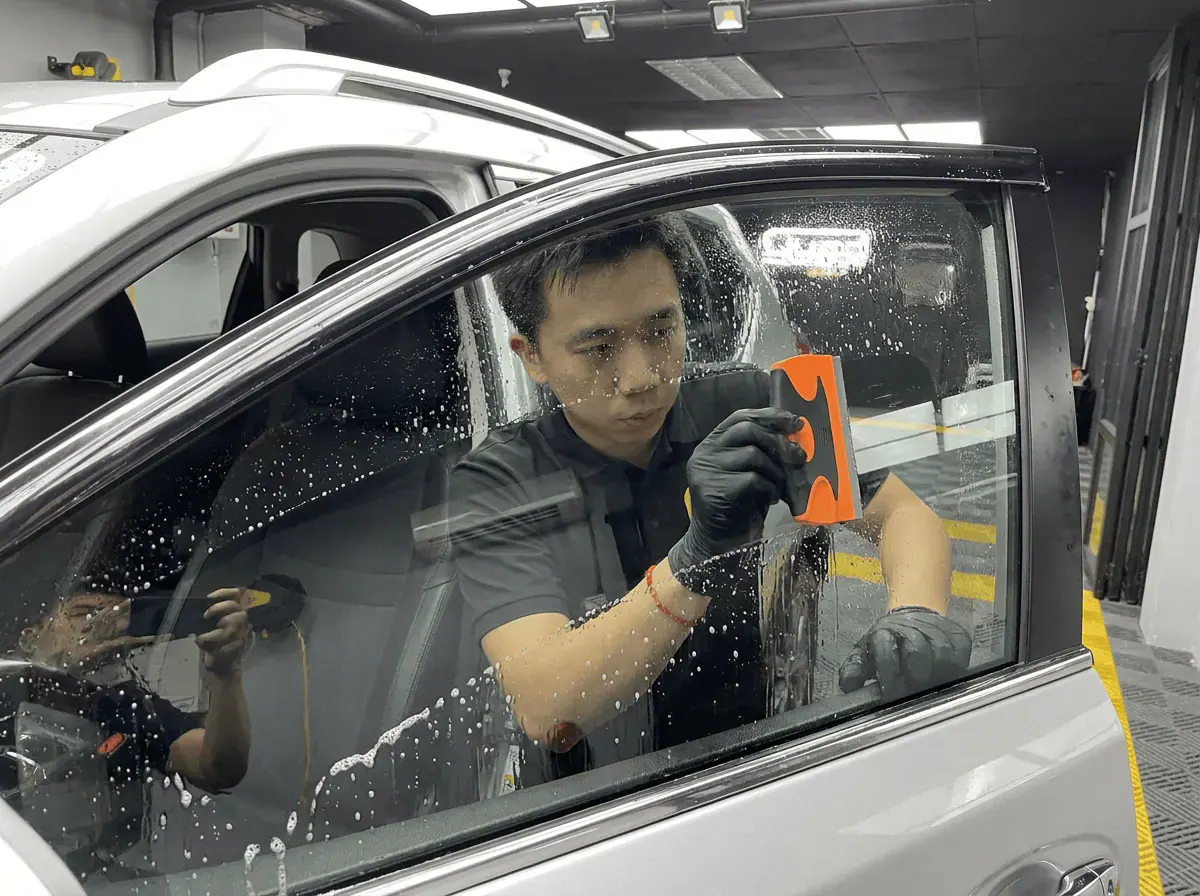
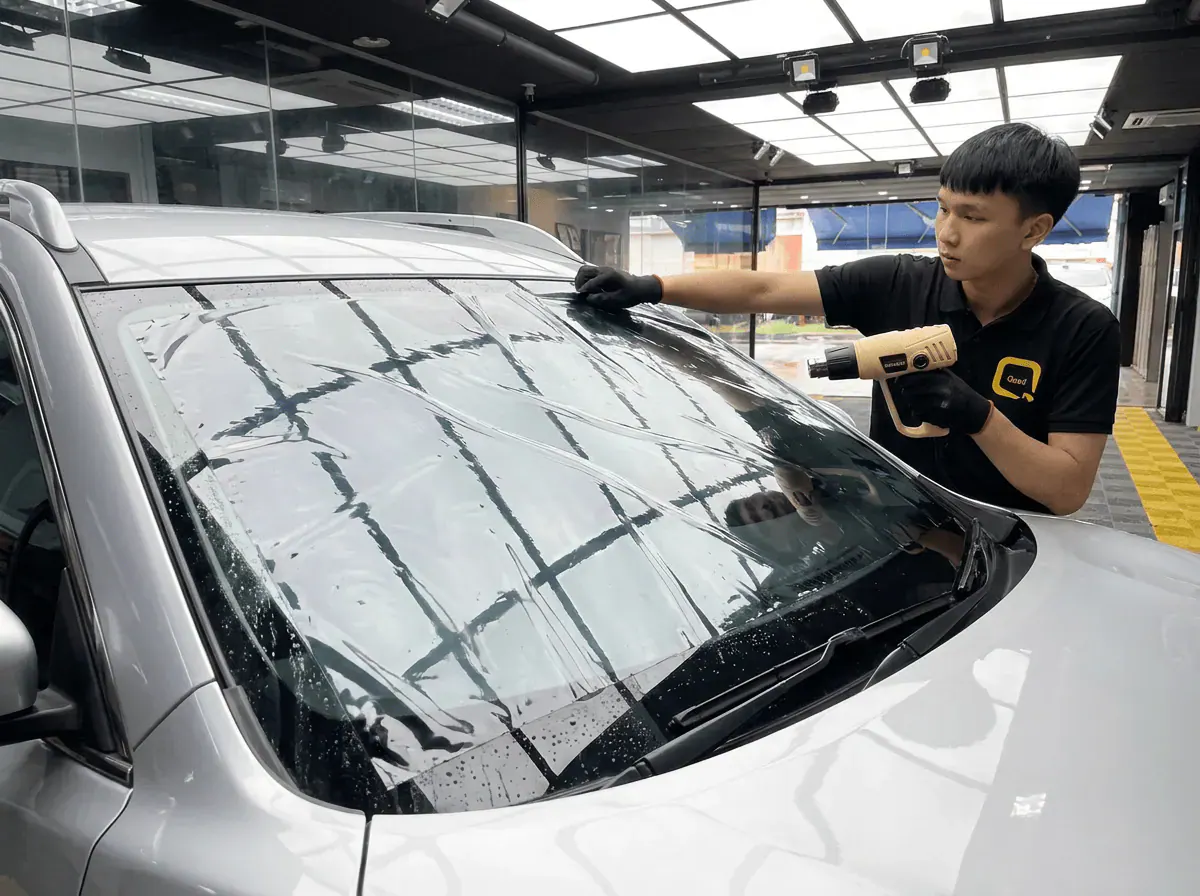
A full tint installation on your X-Trail typically takes about 2 to 5 hours. Actual timing varies with the number of glass panels, windscreen curvature, the film series chosen, whether old tint needs steaming off, and current workshop queue and manpower availability. Multi-layer sputtered films like MEGALUX need more controlled heat-shrinking time. We confirm your exact time slot when you book.
How much does it cost to tint a Nissan X-Trail in Malaysia?
A full car Quad Film tint for the Nissan X-Trail starts at RM1,600 for MATRIX nano-ceramic and goes up to RM4,800 for the flagship MEGALUX. In between sit MIRACLE at RM2,200, MAGNETRON at RM2,600 and METALUX at RM3,400. The X-Trail falls in the Large bucket for its SUV glass area. All prices are full car with the windscreen included, and every package comes with a written warranty card.
Will tint affect the Smart Tag or RFID on my Nissan X-Trail?
It needs planning, and we handle both. SmartTAG runs on infrared, which every heat-rejecting film partially blocks by design, so our installers leave a small untinted patch on the windscreen at the reader zone and toll scans stay normal. Touch n Go RFID uses UHF radio, which passes through the non-metallic MATRIX and MIRACLE films. If you pick a metallic film like MEGALUX, METALUX or MAGNETRON, we mount the RFID sticker on the headlamp instead, which is also Touch n Go's own recommended fix.
Can window tint help my Nissan X-Trail e-Power's fuel economy?
Indirectly, yes. The e-Power system charges its battery with a petrol engine, and a heat-soaked cabin forces the aircond to work hard, which pulls more fuel. A proper heat-rejecting film reduces cabin soak temperature, so the aircond does less work on every drive. In Quad's road test, an untreated glass-roof car used about 10% more energy over 140 km. Less heat in means less energy spent on cooling.