What is the best VLT for a Tesla Model 3 to pass JPJ and Puspakom?
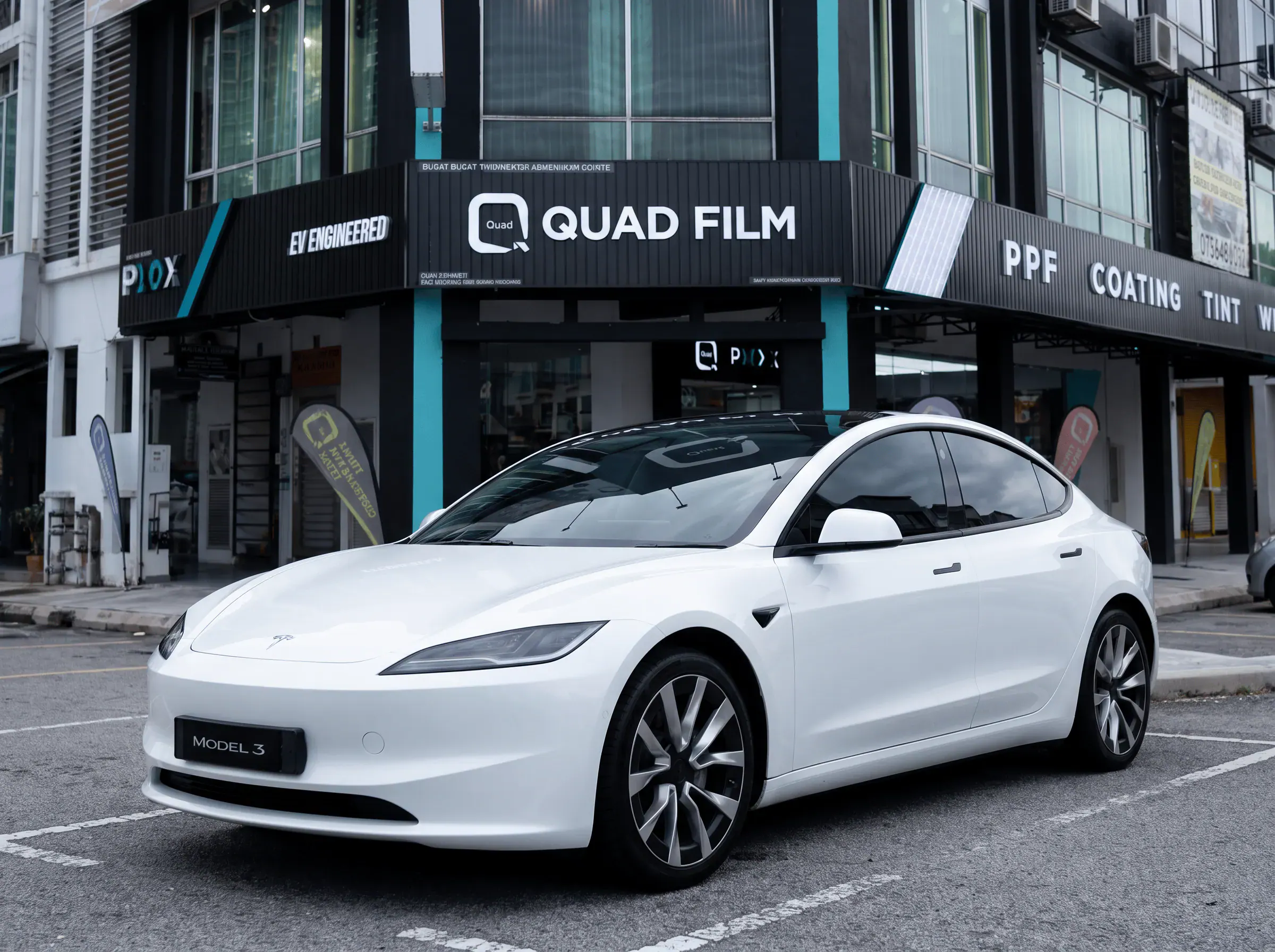
Your Model 3's front glass measures about 76% VLT from the factory. JPJ requires 70% final VLT on the windscreen and 50% on the front side windows, so a VLT 70 film on the front sides lands around 53%, comfortably legal. The rear glass measures about 22% VLT with no legal limit, so darker shades at the back are fine. All five Quad Film series come in VLT 70 for a compliant front setup.
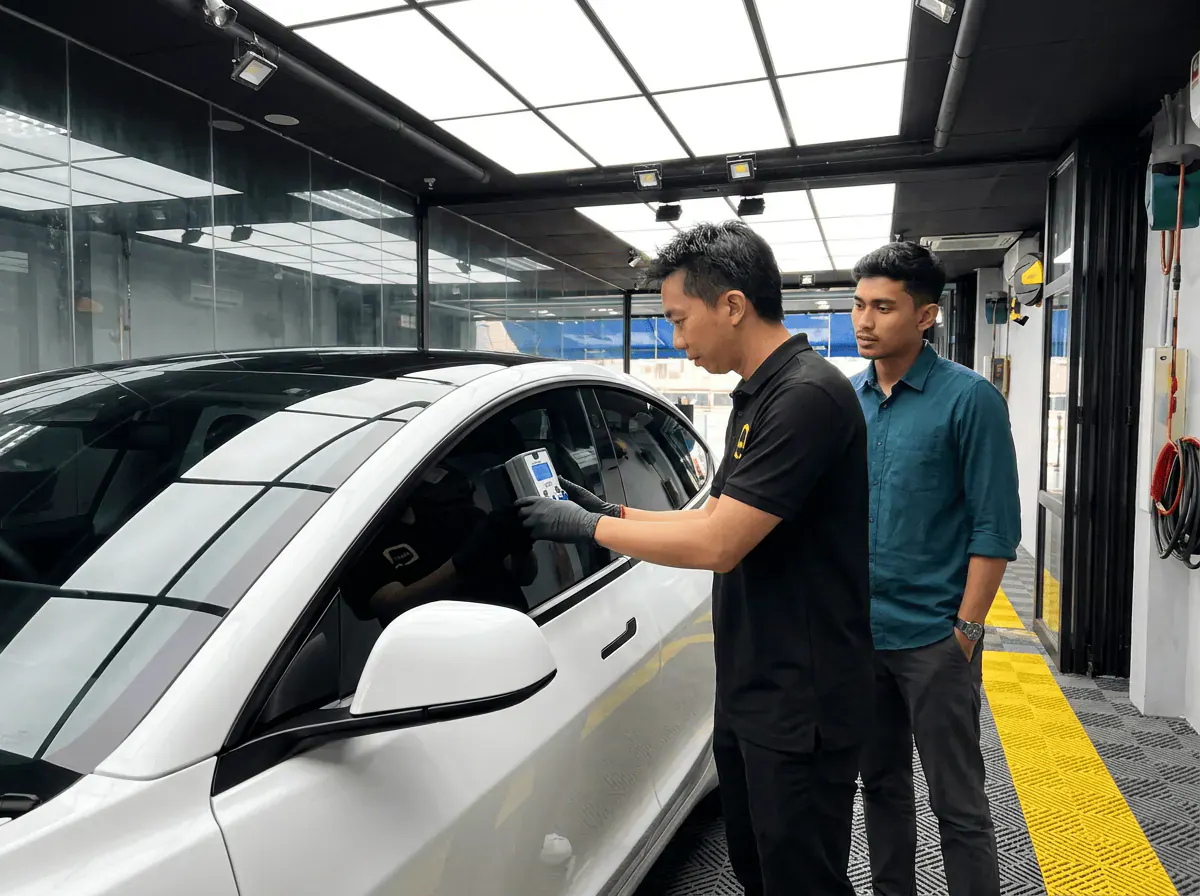
Worth being straight about the windscreen: with factory glass in the mix, even VLT 70 film lands in the low 50s on a meter, which means no real heat-rejecting film passes the strict 70% windscreen rule on paper. Most owners still tint it because it reads visually clear at roadblocks. If you prefer zero risk, we can leave the windscreen clear or use a virtually clear safety film, and we will meter your actual glass for free before you decide.
Does Quad Film tint fade or turn purple on a Tesla Model 3?
No. Dyed films go purple and bubble because the dye layer breaks down under Malaysian UV. Quad Film's sputtered and nano-ceramic films use metal and ceramic layers instead, so the colour holds for years on your Model 3. Every series carries a 5 to 15 year warranty that covers exactly this.
Will tint affect the Smart Tag, RFID or GPS on my Tesla Model 3?
Planned for, on both counts. SmartTAG runs on infrared, and every heat-rejecting film blocks part of that signal by design, so our installers keep a small clear patch on the windscreen where the reader sits. Touch n Go RFID is UHF radio: it passes through non-metallic films like MATRIX and MIRACLE, and on metallic films like MEGALUX, METALUX or MAGNETRON the sticker moves to the headlamp. Your Model 3's toll reads stay normal.
Will tinting my Tesla Model 3 affect my Tesla warranty?
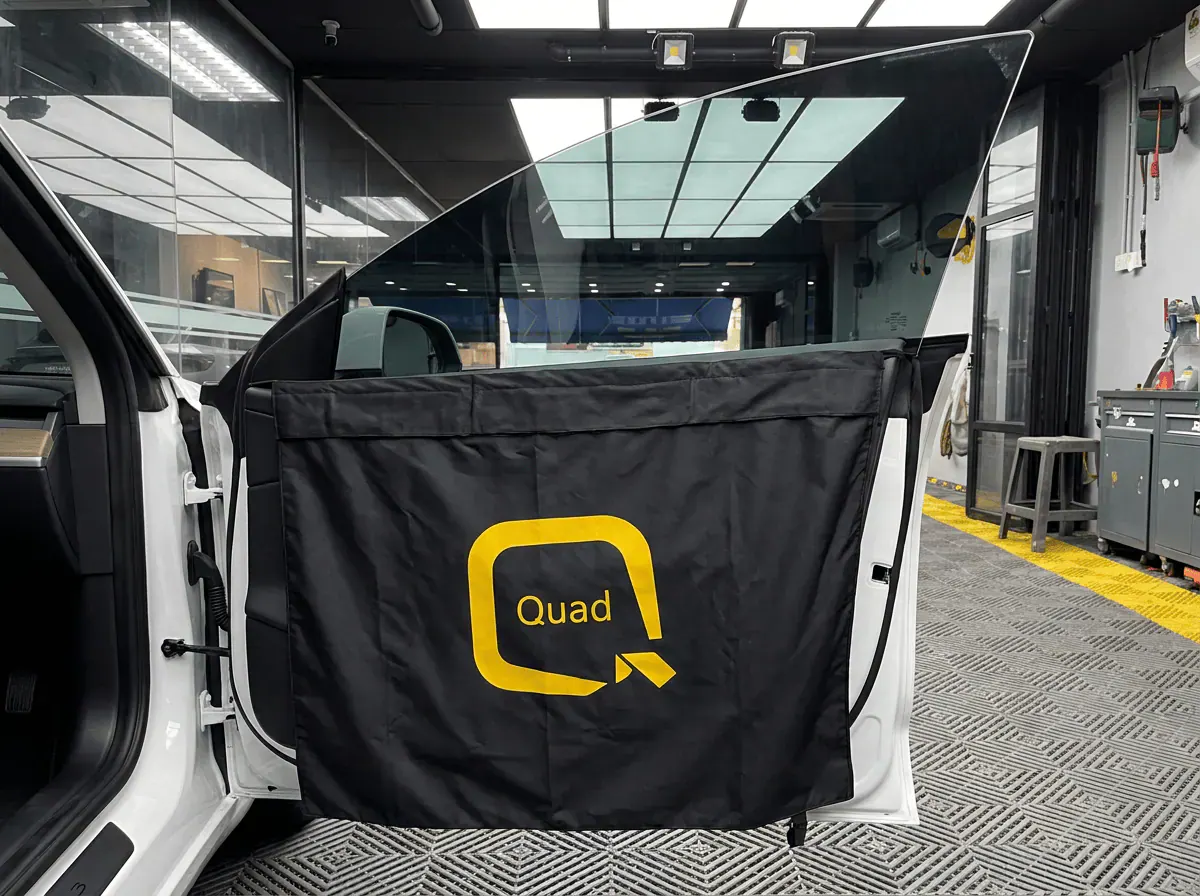
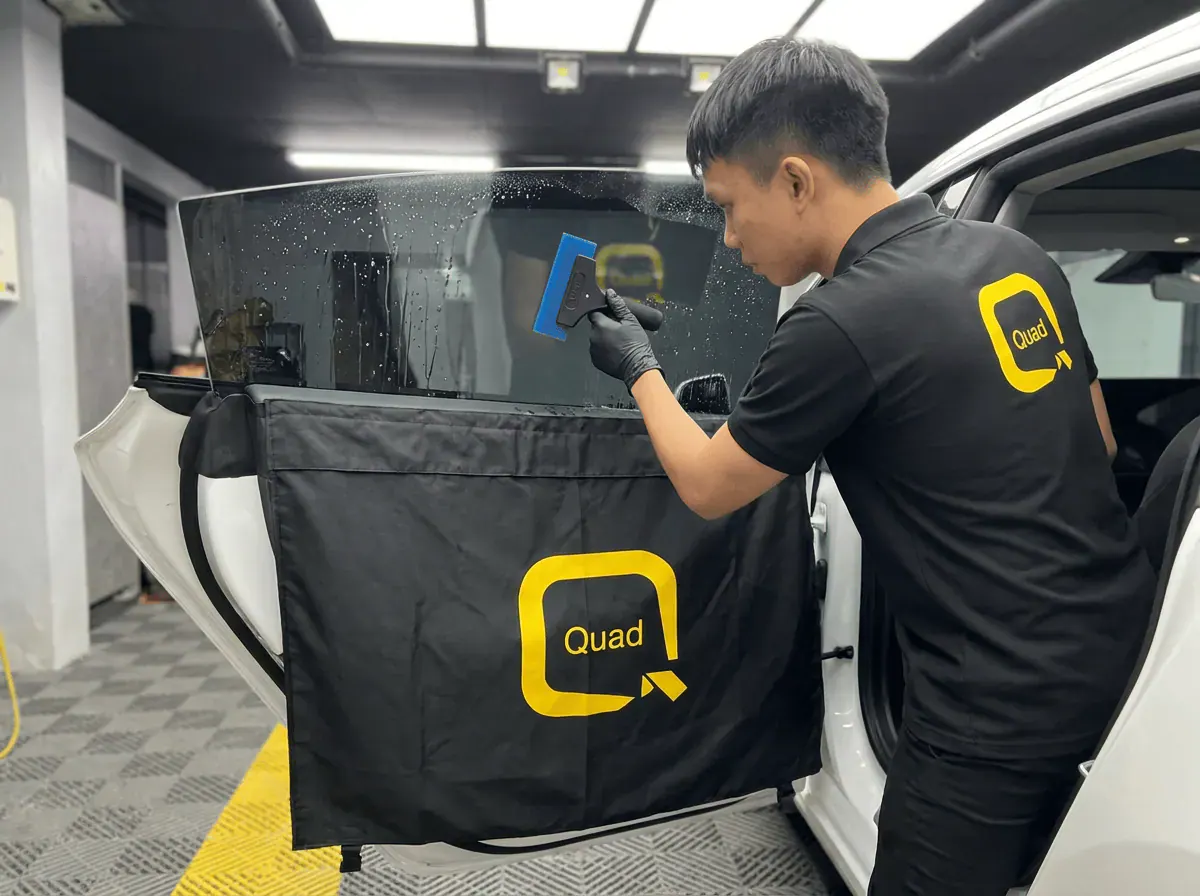
No. Window film is applied to glass and never goes near the battery, motors or electronics, so your Tesla vehicle warranty and battery warranty stay intact. What no manufacturer covers is installer damage, like scratched glass or water in the door switches. That is why our 8-step process includes door panel protection and a pre-inspection report you can keep on file, useful documentation for any future service visit. The film itself carries 5 to 15 years of warranty depending on the series.
Is dark tint on a Tesla Model 3 safe for night driving?
Yes, provided you keep the front at VLT 70, which is also the Model 3's JPJ-compliant setup, so night visibility stays clear. For extra confidence in the dark, METALUX carries Night Vision Technology for optimal clarity in low light, even for drivers with astigmatism. Save the darker VLT 20 or VLT 5 shades for the rear glass, where there is no legal limit.
How do I clean the tinted windows on my Tesla Model 3?
Wait about seven days for the film to cure before washing. After that, use a soft microfibre cloth and plain water or a mild ammonia-free cleaner, wiping in one direction. Avoid abrasive pads, blades and ammonia-based sprays near the edges. Your Model 3's film needs nothing more than that.
How long does it take to install window tint on a Tesla Model 3?
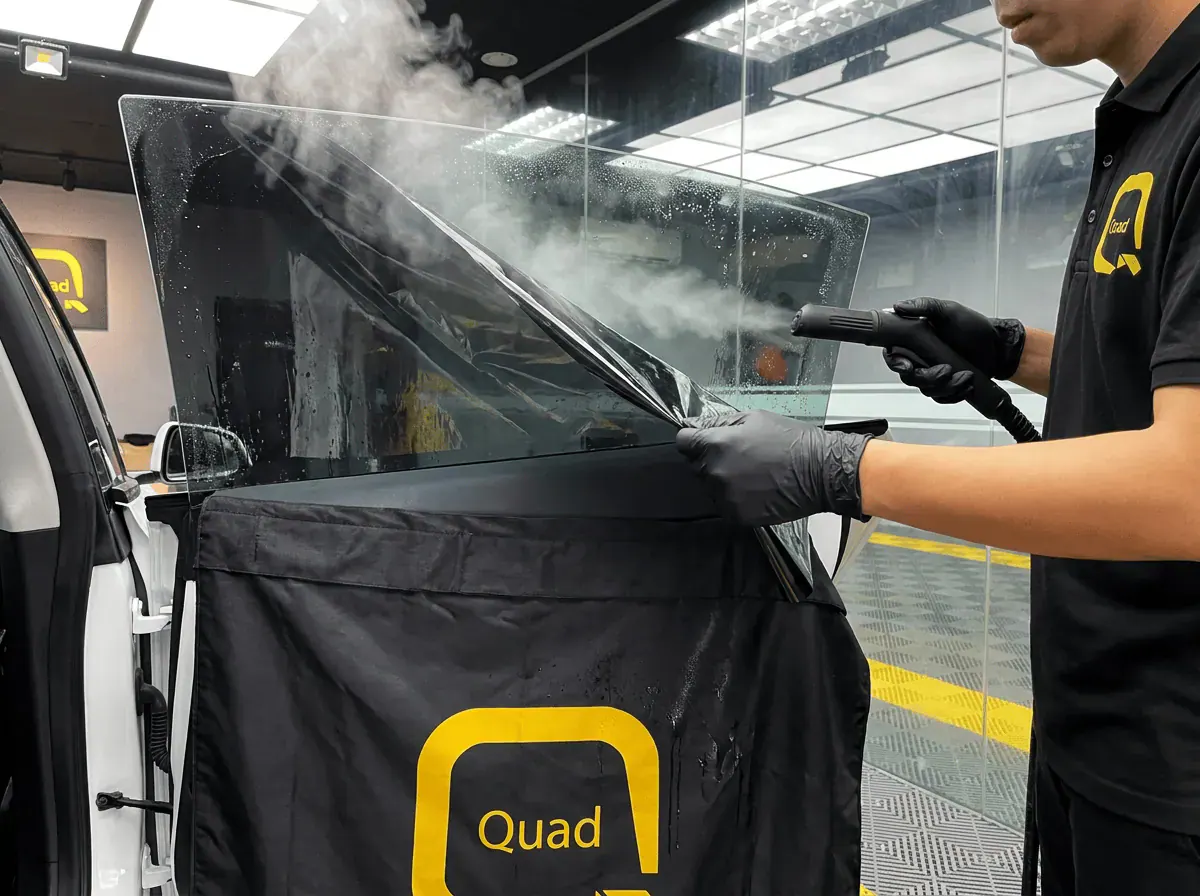
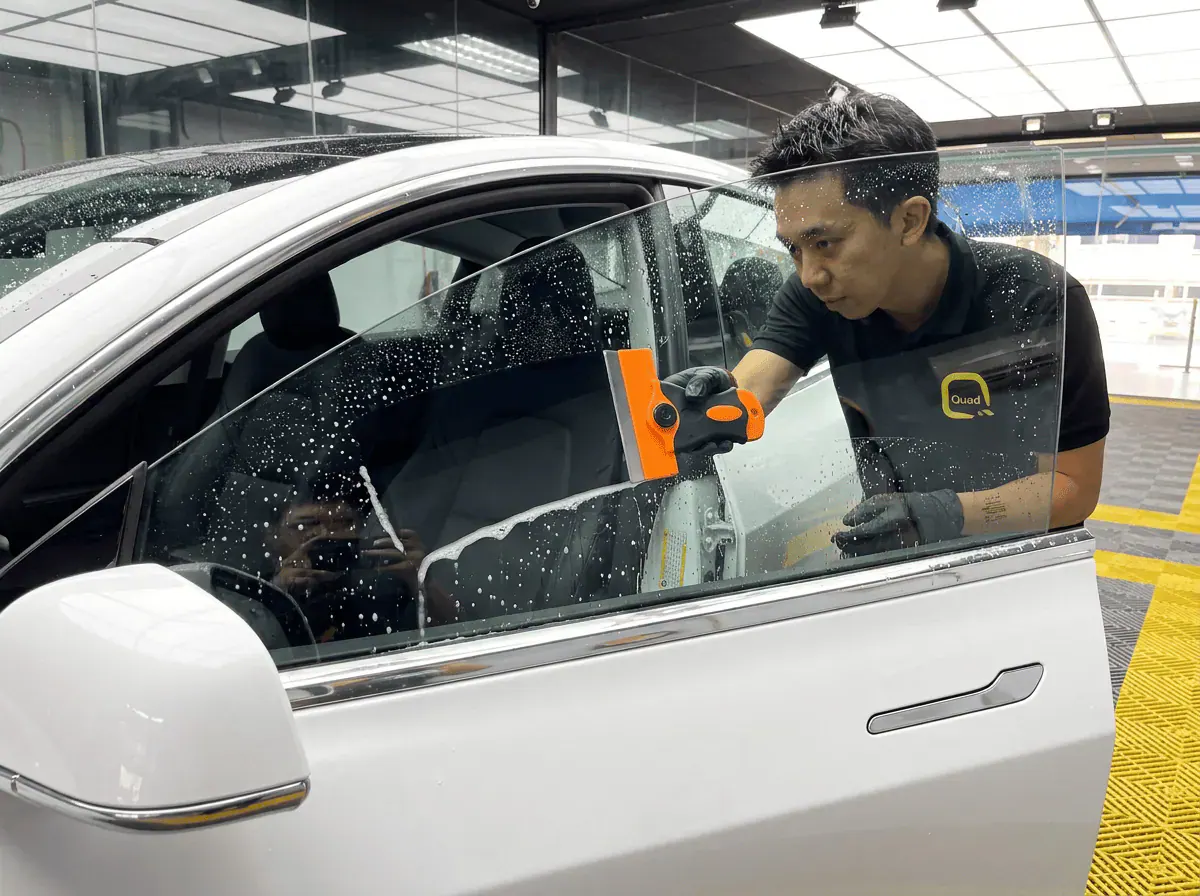
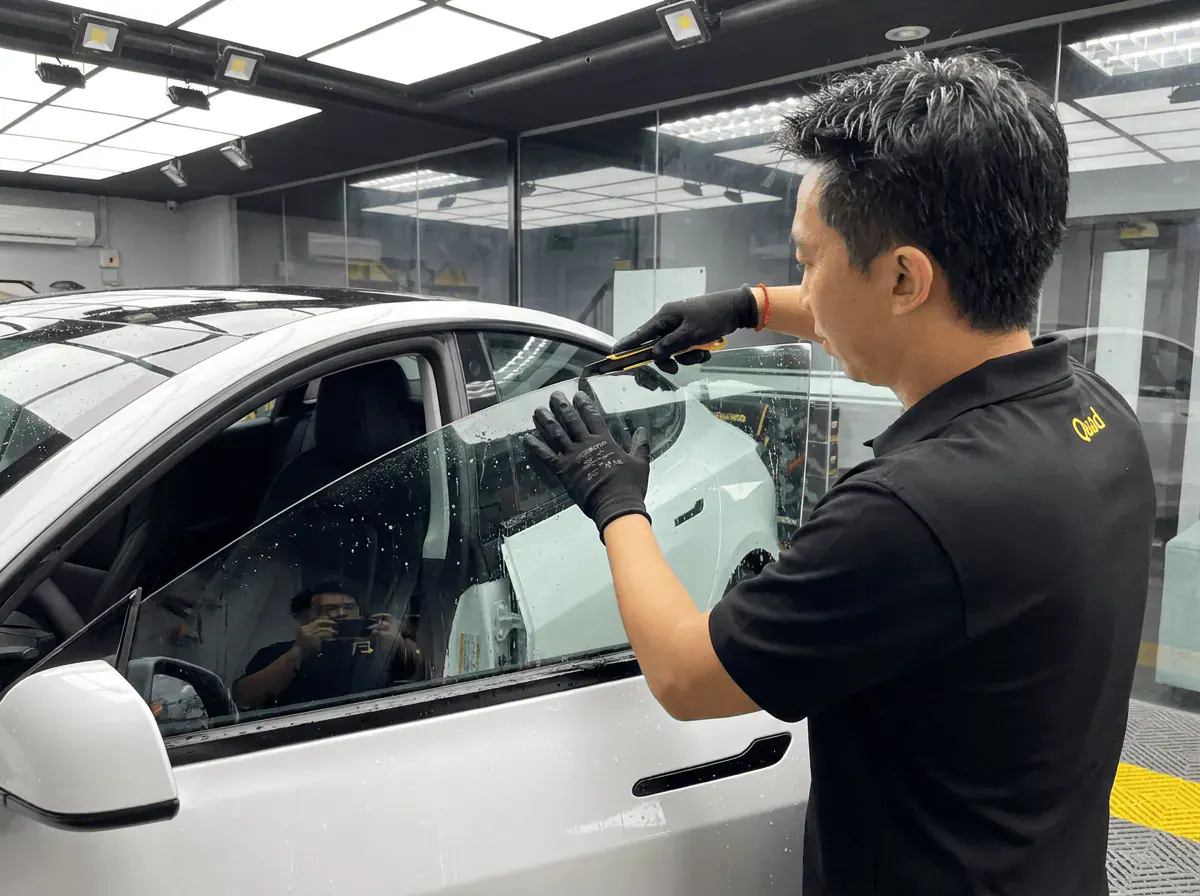
A full tint installation on your Model 3 typically takes about 2 to 5 hours. Actual timing varies with the number of glass panels, windscreen curvature, the film series chosen, whether old tint needs steaming off, and current workshop queue and manpower availability. The large rear glass on the Model 3 needs careful heat-shrinking, which multi-layer sputtered films spend more time on. We confirm your exact time slot when you book.
Will tinting the glass roof on my Tesla Model 3 cause it to crack?
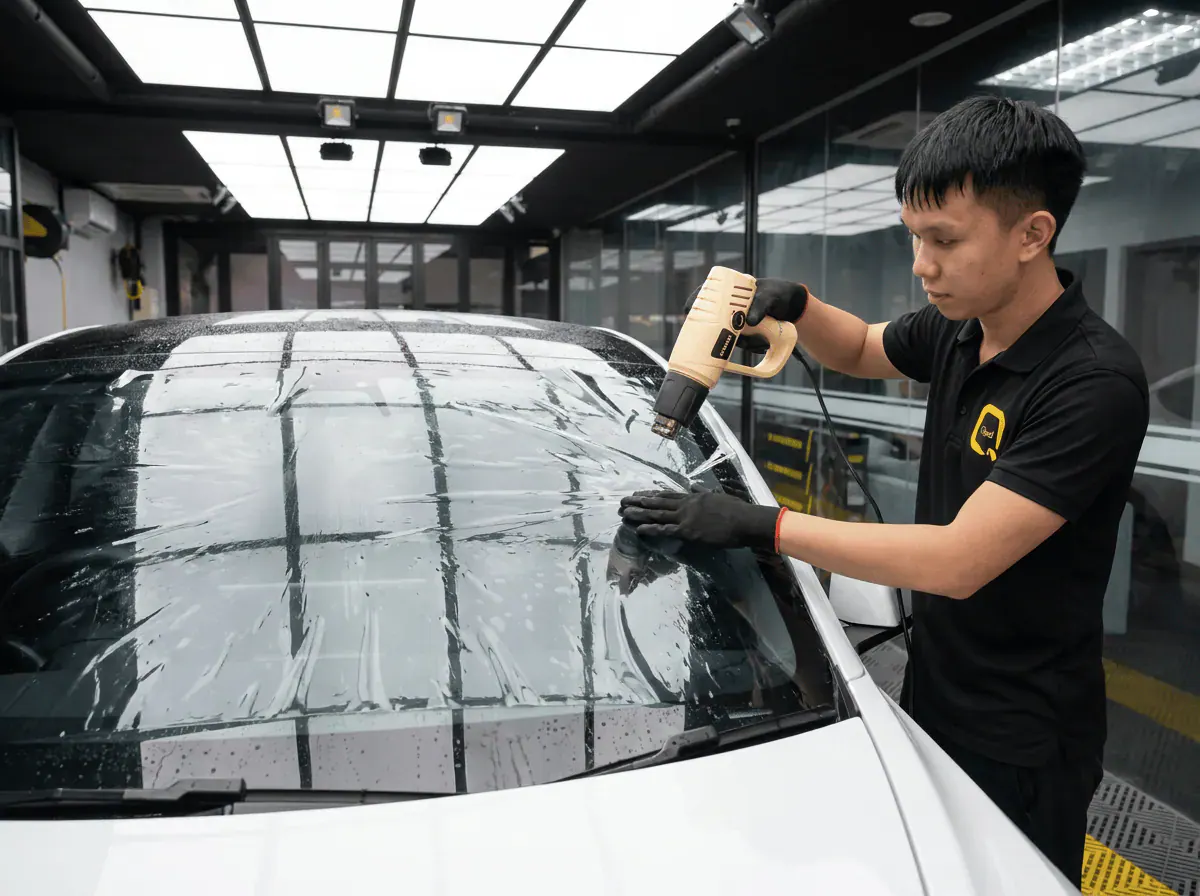
This worry circulates in Tesla owner groups, and the honest answer is that technique decides it. Films absorb some heat, so careless installers who blast one spot with a heat gun create stress points. Our installers shrink film with controlled heat in smooth passes and never spray water on hot glass. If you want to avoid absorption entirely, Quad Film EV Sunroof PPF reflects 95% of heat at the surface instead, which is why it is our preferred roof treatment for the Model 3.
Which Quad Film package is best for a Tesla Model 3?
The Model 3 runs 7 glass panels plus a huge glass roof, so it carries one of the biggest solar loads of any sedan on Malaysian roads. For maximum rejection, MEGALUX at RM4,600 reaches 85% TSER at VLT 5 with a 15-year warranty, and we strongly suggest pairing it with Quad Film EV Sunroof PPF on the roof, which reflects 95% of heat. Our smart value pick is MAGNETRON at RM2,500 with TSER up to 79% at VLT 5 and 99% IRR. On a tighter budget, MATRIX at RM1,400 still delivers 99% IRR.
How much does it cost to tint a Tesla Model 3 in Malaysia?
A full car Quad Film tint for the Tesla Model 3 starts at RM1,400 for MATRIX nano-ceramic and tops out at RM4,600 for the flagship MEGALUX. MIRACLE is RM2,000, MAGNETRON is RM2,500 and METALUX is RM3,200, all full car with the windscreen included. The Model 3 sits in the Standard bucket, our most affordable tier. Most owners at our branches pair MEGALUX or MAGNETRON with a roof treatment, and every package includes a written warranty card.
Can tinting really improve my Tesla Model 3's range?
Yes, modestly but measurably. Cabin heat forces the aircond to draw more from the battery, and the Model 3's glass roof makes heat soak worse. In Quad's own road test, an untreated glass-roof car used about 10% more battery over 140 km compared with a treated one. Tinting all 7 panels plus the roof reduces how hard the aircond has to work, especially after open parking. On hot afternoons, that saving shows up directly in your remaining range.