
- Work out your actual annual mileage before you talk to anyone. It changes the answer more than the car does.
- Decide whether you are keeping the car past year four. Below that, film buys you a different thing.
- Ask what happens to the film when you eventually sell, and ask for the release force figure.
- Ask whether yellowing is covered, in those words, and get the answer written down.
- Ask for a grade named against each panel rather than one film quoted across the whole car.
PPF for a daily driver in Malaysia is worth it above roughly 20,000 kilometres a year, and a much harder call below that. It is a mileage decision dressed up as a car decision, and the badge on the bonnet has almost nothing to do with it.
Lowyat has both sides of this argument in one thread. One owner says flatly that repainting every three years is cheaper and more effective and that film is a scam. Another describes a rock the size of a small basketball hitting his Alphard, with only the film damaged and one small dent getting through. A third points out that on a car in the lower price brackets, the maths simply reads differently.
You are probably somewhere in the middle of those three, driving a car you actually use, wondering whether film is for people with nicer cars than yours. The complete guide to film here covers what it is. This is about whether your particular week justifies it.
What 20,000 Kilometres a Year Actually Means
Motorist Malaysia puts the average Malaysian car at about 20,000 kilometres a year. That figure is the hinge this whole decision turns on, because paint damage accumulates against distance travelled rather than against calendar time.
Most people underestimate their own number badly. A 25 kilometre commute each way, five days a week, is already 13,000 kilometres before you have driven anywhere at a weekend, visited family in another state, or done a single airport run. Add normal life and the average is easy to clear.
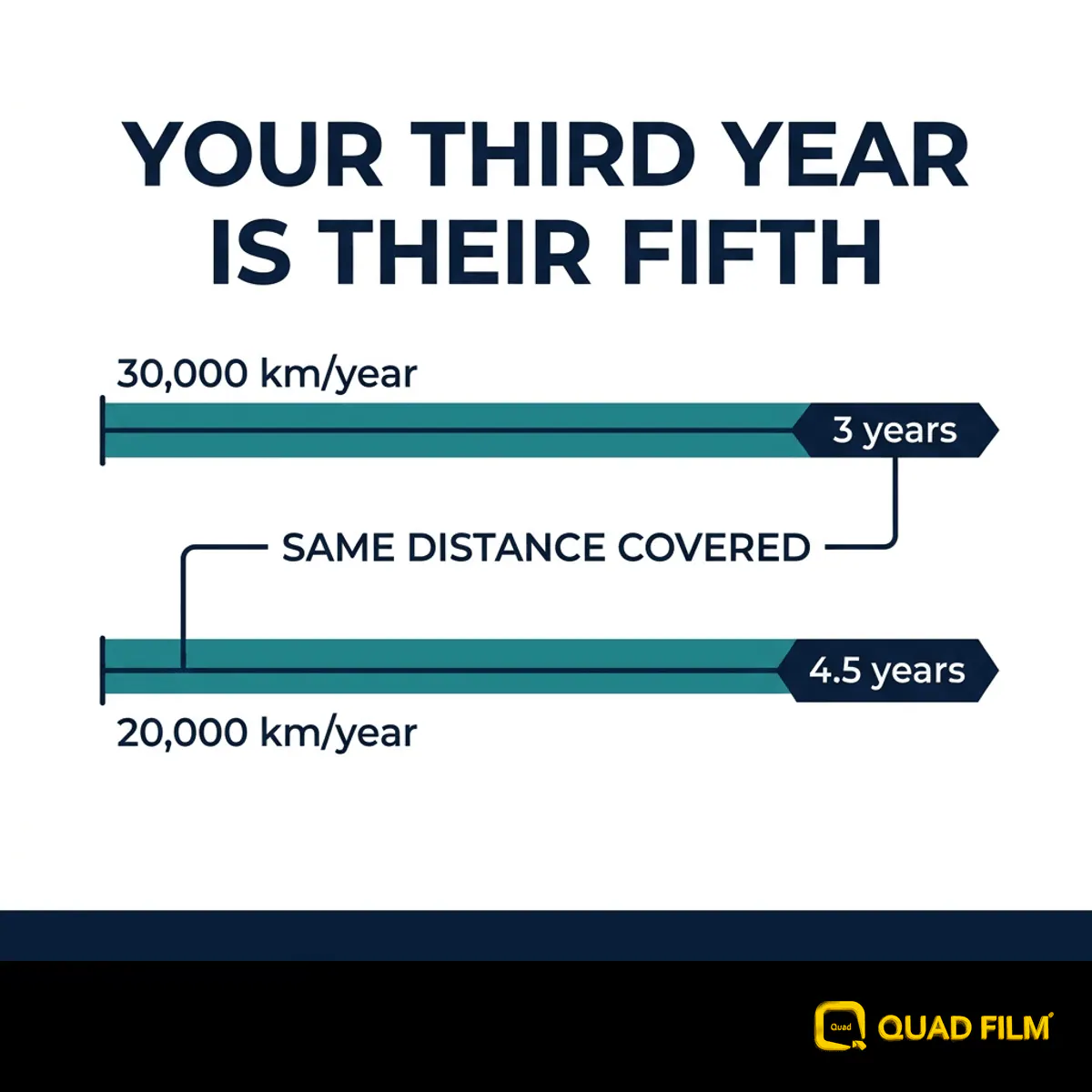
Here is what that does to your timeline. Take a driver covering 30,000 kilometres a year against the national average of 20,000. After three years they have covered 90,000 kilometres. Divide that by 20,000 and the average driver needs four and a half years to reach the same exposure. Your third year is somebody else's fifth.
That is the honest case for film on an ordinary car. Not that your car is special, but that your week is heavier than the average the paint was engineered around. Someone doing 8,000 kilometres a year on the same model genuinely has a weaker case, and should be told so.
There is a second reason mileage matters that has nothing to do with stones. Every kilometre is also a kilometre of the car being dirty, being washed, and being dried. A high mileage car goes through that cycle far more often, and the cumulative fine scratching from washing is the damage most owners actually see when they look down a panel in strong sunlight. Our piece on what to do once the first chips appear covers the point where that becomes visible.
Why the Verdict Splits at Year Four
Because film and paint solve the same problem on different timescales. Below about four years of ownership, the paint has not accumulated enough damage for the difference to show at resale. Past that point, the gap opens quickly and keeps opening.
The sceptical position from that Lowyat thread deserves a fair hearing here. If you change cars every three years, a car with unfilmed paint and a car with filmed paint often trade at similar money, because neither has visibly aged yet. Buying film on a three year cycle is buying a benefit you will hand to the next owner.
The other side is the long keeper. Malaysian ownership periods are frequently much longer than three years, and it is over years five, six and seven that unprotected forward-facing paint starts reading as tired rather than used. That is the point at which the question of which parts actually need film becomes a resale question rather than a cosmetic one.
So the honest verdict has a condition attached. High mileage plus long ownership is a clear yes. Low mileage plus a short cycle is a defensible no. Everything in between is decided by the two questions in the next section.
The point the sceptic gets wrong is treating a respray as equivalent. A resprayed panel is a repaired panel, and everyone in the trade can see one. It shows in the way light travels down the flank where two panels meet, and it follows the car through every future valuation. Film is not competing with a respray on cost. It is competing on whether the car ever needs one.
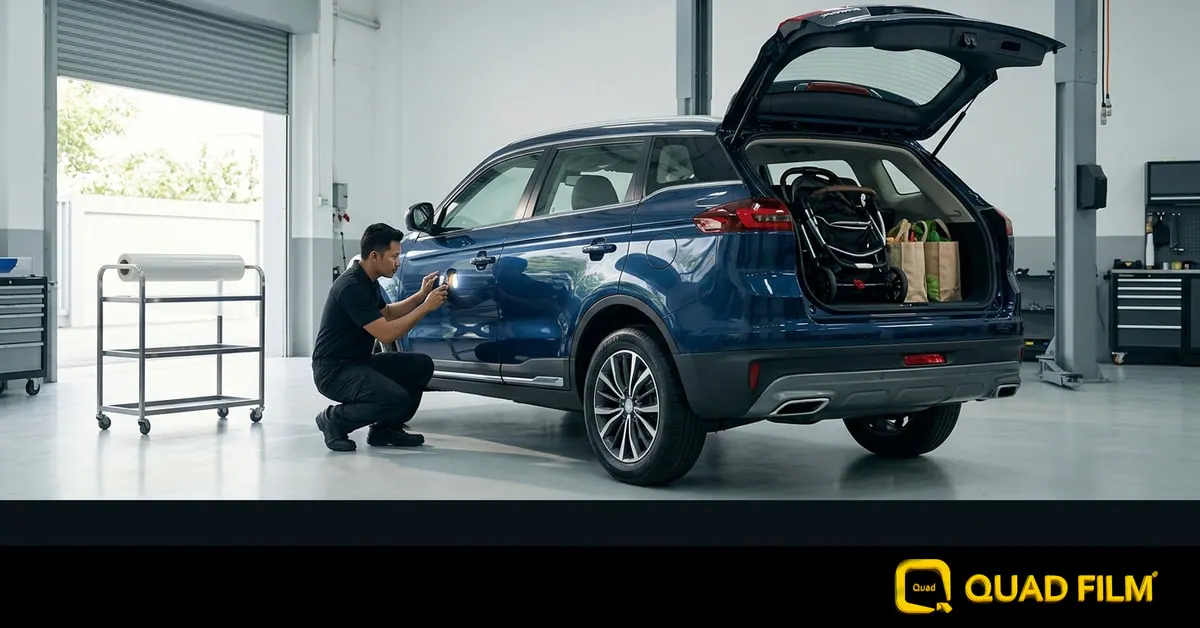
That is a mainstream family SUV going through a full fitting, which is a more useful reference point than the supercars that usually appear in film content.
How Your Week Picks the Grade
Four questions, and they matter in this order. Answer them before anyone quotes you, because each one moves the answer in a different direction and only one of them is about how far you drive.
Step 1: Your Annual Mileage
Above 20,000 kilometres a year and you are accumulating damage faster than the average car. Below 10,000 and you should be honest with yourself about whether film is solving a problem you actually have.
Step 2: How Long You Are Keeping It
Under four years and film mostly protects the next owner. Past five and it protects you, because that is when the difference becomes visible from across a carpark.
Step 3: What the Car Carries
Children, shopping, sports kit, work gear. Every one of those loads the door cups and the boot loading lip far harder than it loads the fenders, and the wear arrives from inside your own life rather than off the road.
Step 4: What Happens When You Sell
If the film is coming off in five years, the grade that lifts away most easily is worth more to you than the thickest one on the shelf. Ask for the release force figure before you settle anything else.

Notice that not one of those four questions is about the car. They are all about you, and together they tell an installer whether the film belongs across the front of the vehicle or around the places your hands and your shopping actually touch it.
Which Grade Suits a Car That Works
QUATTRO for most daily drivers. QUANTA when you are covering a lot of panels or expect to sell within a few years. QUANTUM when the front of the car is genuinely taking impacts every week rather than occasionally.
QUATTRO is 8.5 mil gloss double-layer TPU, self-healing at 98.5 percent, adhesion 1,000 gf, fracture growth 11.5 cm and release force 14 gf. It is the best selling clear film and it is the default answer on a working car because it sits between the extremes without giving much up at either end.
QUANTA is 7.5 mil, self-healing at 98 percent, adhesion 1,000 gf, fracture growth 10.5 cm and release force 12 gf. It has the lowest fracture growth and the lowest release force in the clear range, which makes it the easiest to remove cleanly. On a car you plan to sell inside five years that is a real advantage.
QUANTUM is 10 mil, self-healing at 99 percent, adhesion 1,000 gf, fracture growth 12 cm and release force 16 gf, with elongation to break of 490 percent. It is the heavy duty option and it belongs on the bonnet edge and bumper of a high mileage highway car, rather than across a whole vehicle that mostly does town work.
| Your week | Annual mileage | Keeping it | Panels to cover | Suggested grade |
|---|---|---|---|---|
| Long highway commute | Above 30,000 km | Five years plus | Bonnet edge, bumper, fenders, headlights | QUANTUM front, QUATTRO rest |
| Standard office commute | 20,000 to 30,000 km | Five years plus | Full front plus boot lip | QUATTRO |
| School run and errands | 10,000 to 20,000 km | Five years plus | Boot lip, door cups, rear bumper, bonnet edge | QUANTA |
| Weekend and occasional | Below 10,000 km | Any | Bonnet edge and bumper only | QUANTA |
| Any mileage, short cycle | Any | Under four years | Bonnet edge and bumper only | QUANTA |
| Carries children and cargo | Any | Any | Add door cups and boot loading lip | QUANTA |
| Keeping it a decade | Any | Ten years plus | Front, touch points and rocker panels | QUATTRO |
Find the row that matches your honest answers rather than the one you would like to be in. Two rows can apply at once, and most working cars sit in two or three of them. When that happens, take the combined panel list and the grade from whichever row describes how far you drive.
Worth saying plainly that no row in that table is full body. On a daily driver, a full body wrap is rarely the answer that the mileage and ownership numbers point to. It becomes the answer when the car is being kept for a decade, or when it lives permanently outdoors, and even then it is worth arriving at panel by panel rather than as a package.
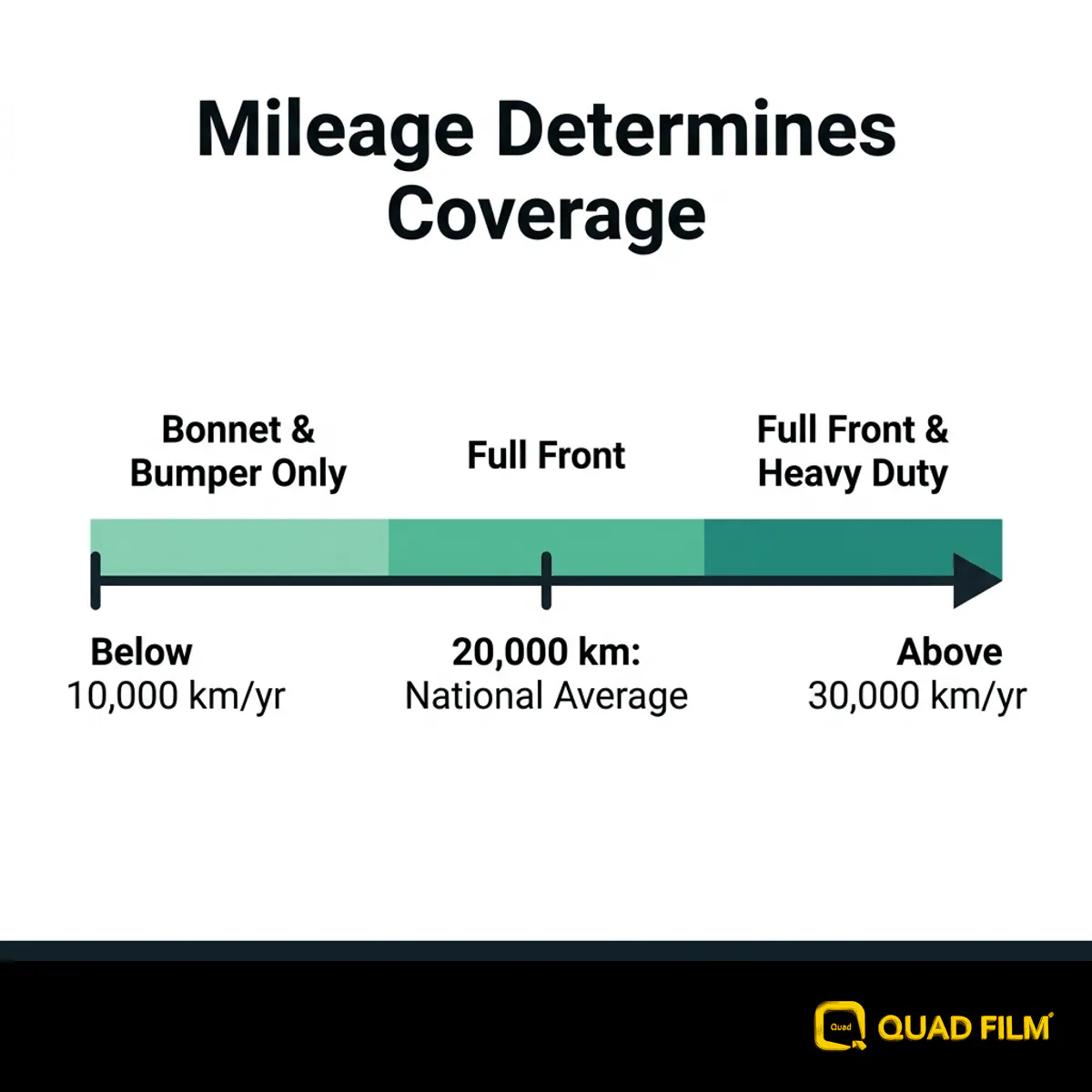
Notice the scale does not run from less film to more film in a straight line. It changes which panels matter as well as how many, because a low mileage town car and a high mileage highway car are damaged in genuinely different places.
What a Working Car Does to Film
Daily use puts three separate loads on film, and only one of them is stones. There is impact at the front, drag and scuff at the touch points, and chemical and thermal load across the horizontal panels from sitting in the sun.
The touch points are the part owners never predict. Door cups collect a fingernail from everyone who gets in. The boot loading lip loses paint to grocery bags and suitcase corners in amounts too small to notice until the whole edge has gone dull. Those two surfaces are the clearest sign that damage on a working car is not only arriving from the road.
The chemical load is the quiet one. Organic fallout, road grime and rain that has picked up whatever was in the air all sit on the paint until the next wash, and heat accelerates everything. Film gives you a sacrificial surface above the clear coat so that load lands somewhere replaceable.
One thing worth knowing about that: yellowing is covered under the Quad PPF warranty alongside the other defects, stated without any duration attached. That is not standard across this market, and it matters most on exactly the kind of car this article is about, one that lives outside and works for a living. Our piece on what humidity does to cheap film explains what happens when that clause is missing.
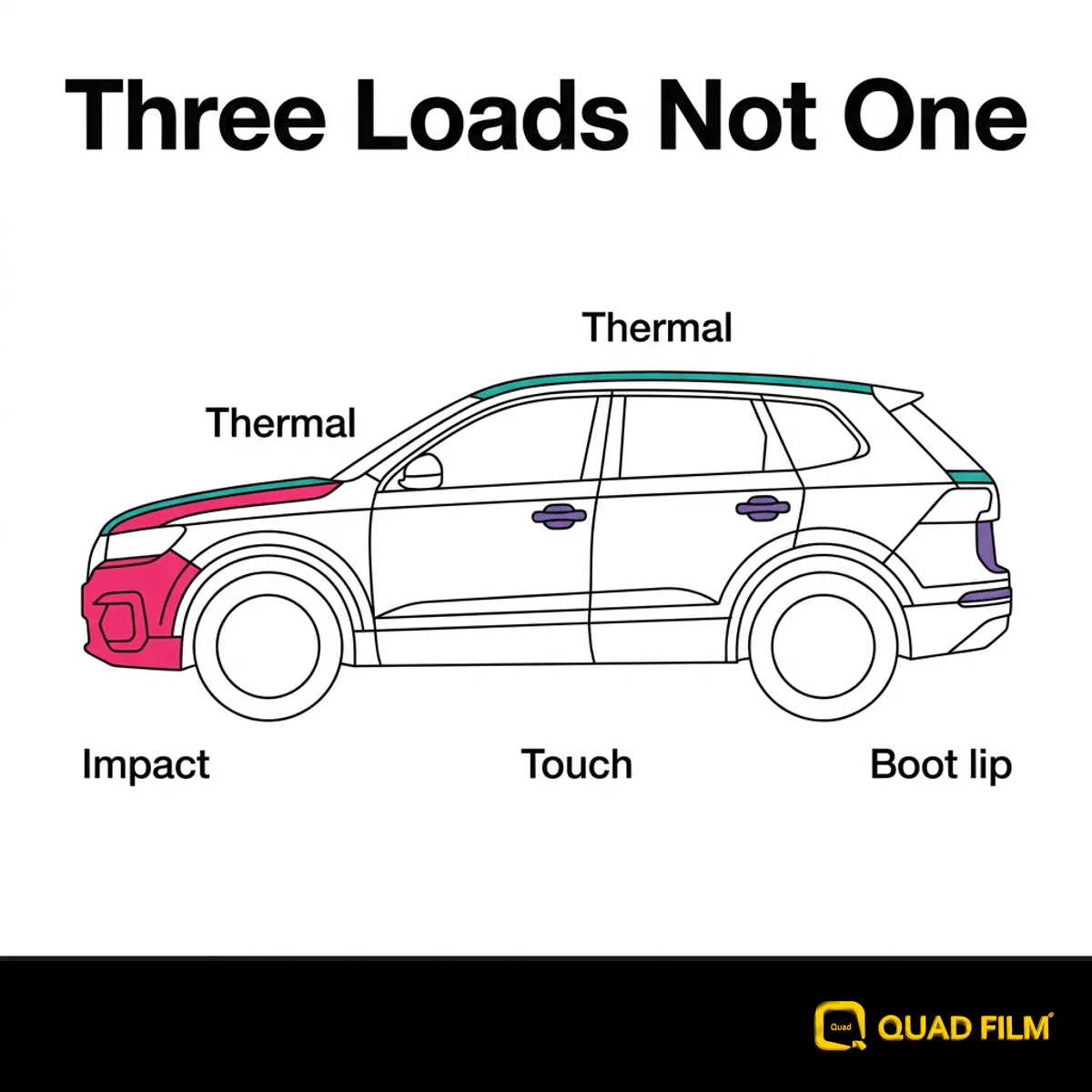
Most standard packages are built to answer the first zone and ignore the other two. On a car that is genuinely used every day, that is backwards, and it is why so many owners feel their film did not do much.
4 Things to Settle Before You Commit
Your real mileage, your ownership horizon, the removal plan and the panel-by-panel spec. None of them are about the film itself, and all four change what you should buy.
Check Your Mileage Against the Odometer
Do not estimate. Look at the reading, divide by the age of the car, and use that number. Almost everybody guesses low.
Decide Your Ownership Horizon Honestly
If you know you are changing the car in three years, say so. It should push you toward the easier-removing grade and a shorter panel list, not toward a bigger package.
Ask About Removal at the Start
Release force differs across the range, 12 gf on QUANTA up to 16 gf on QUANTUM. Lower means the film lifts away with less pull on the paint years later, and our article on removal and paint covers what a clean job looks like.
Ask Which Grade Goes on Which Panel
One film across the whole car is the easy quote to write, not the right answer. Impact panels, touch points and large flat areas each want something different, and a mixed specification usually works out smaller than a single premium grade everywhere.
Those four take about five minutes to answer and they are the difference between film that suits the car and film that suits the price list.
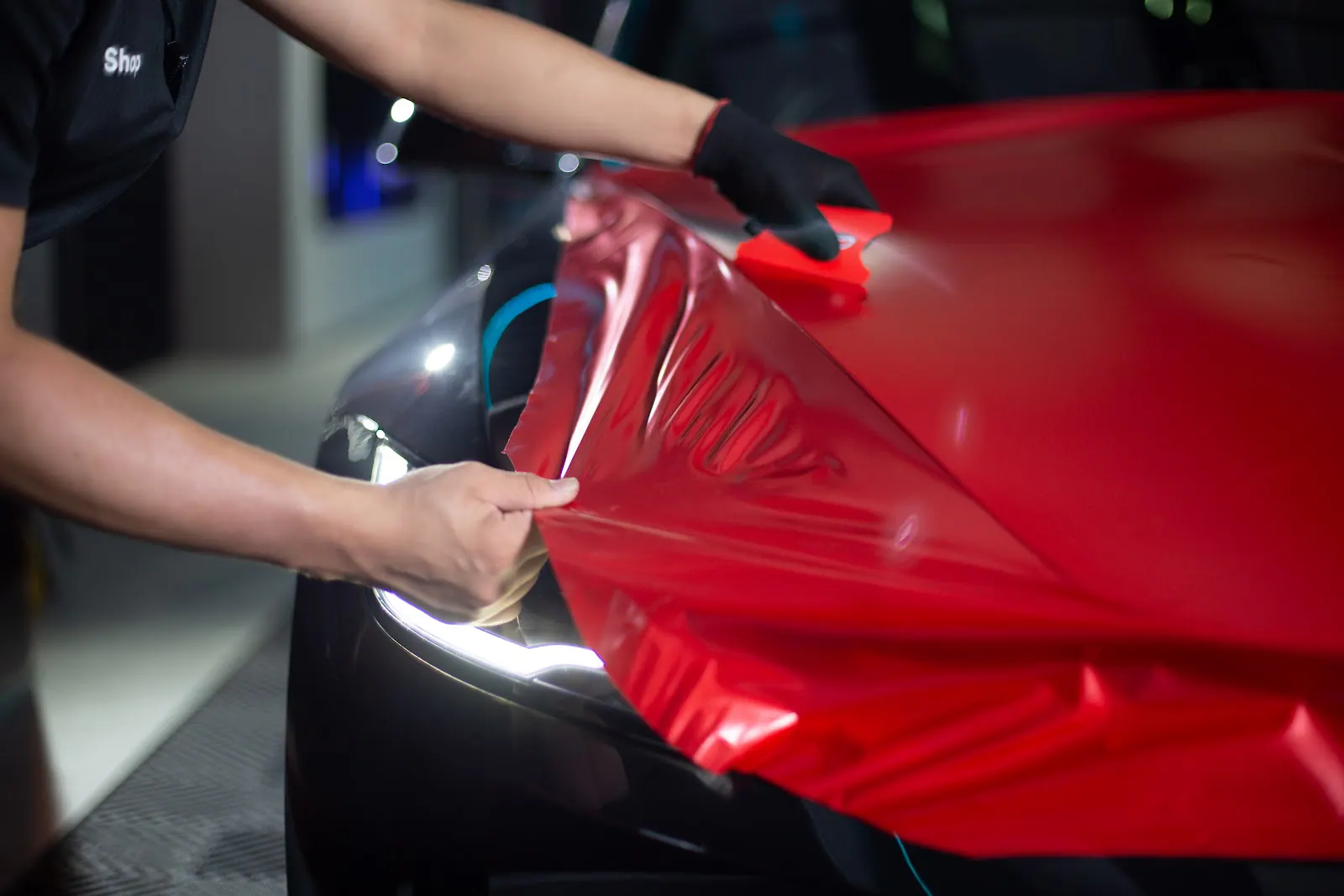
Whatever grade you land on, the fitting decides how it looks. Film laid without tension sits flat for years. Film stretched into position spends the rest of its life trying to return to its original shape, and the edges are where that shows up first.
The practical side matters on a car you depend on. A full job takes the vehicle off the road for a stretch, and knowing that in advance is part of deciding whether now is the right time.
Making the Call on Your Own Car
Get your real annual mileage off the odometer, add your ownership horizon, and read those two against the table above. That gives you a panel list and a grade. Everything else in the conversation is detail hanging off those two numbers.
If the numbers say no, that is a legitimate answer and a good shop will say it. A car doing 8,000 kilometres a year that is being sold in two years does not need a full body wrap, and the person telling you it does is not looking at your week. If you are weighing film against a coating instead, our comparison of the two sets out what each one actually stops.
If the numbers say yes, walk in with your mileage and your horizon rather than with a package name, and let the panel list fall out of those two figures. Quad Film will build the quote in that direction when you ask for it, and it takes about ten minutes.
PPF for Daily Drivers Questions Malaysians Ask
Is PPF worth it on a daily driver in Malaysia?
Above roughly 20,000 kilometres a year and with more than four years of ownership ahead, yes. Below 10,000 kilometres a year on a car you are selling within three years, it mostly protects the next owner rather than you, and a bonnet edge and bumper job is enough.
How many kilometres a year is average in Malaysia?
Motorist Malaysia puts it at about 20,000 kilometres a year. That figure is a useful line to measure yourself against, because paint damage accumulates against distance rather than against calendar time.
Does PPF pay for itself at resale?
It protects the condition of the paint, which is what a buyer actually judges. Whether that shows up in the price depends heavily on how long you keep the car, because below about four years an unfilmed car often has not visibly aged yet.
Which PPF grade is best for a daily driver?
QUATTRO at 8.5 mil for most working cars. QUANTA at 7.5 mil if you are covering a lot of panels or selling within a few years, because it has the lowest release force at 12 gf. QUANTUM at 10 mil only where the front is taking real impacts weekly.
Do I need full body PPF on a normal car?
Rarely as a package. On most working cars the mileage and ownership numbers point to a front list plus two or three individually chosen touch points. Full body starts making sense at ten years of intended ownership, and even then it is worth building panel by panel.
Does daily driving make PPF wear out faster?
It loads the film in three separate ways rather than one. Impact at the front, drag and scuff at the touch points, and heat and fallout across the horizontal panels. A car that works every day gets all three, and a weekend car mostly gets the third.
Does Quad PPF cover yellowing on a car parked outside?
Yellowing is covered under the Quad PPF warranty alongside the other defects, with no duration attached to the claim here. It is worth asking for that in writing wherever you buy, because the answer varies by brand and it matters most on a car that lives outdoors.
Is it too late to get PPF on a three-year-old daily driver?
No, but the sequence changes. Anything already in the paint stays visible through clear film permanently, so the correction conversation has to happen before the coverage conversation. On a car with 60,000 kilometres behind it, that is usually a real conversation rather than a formality.
Protect your Investment today
Don't wait for stone chips to ruin your paint. Speak to our experts about custom PPF and Tinting solutions.