
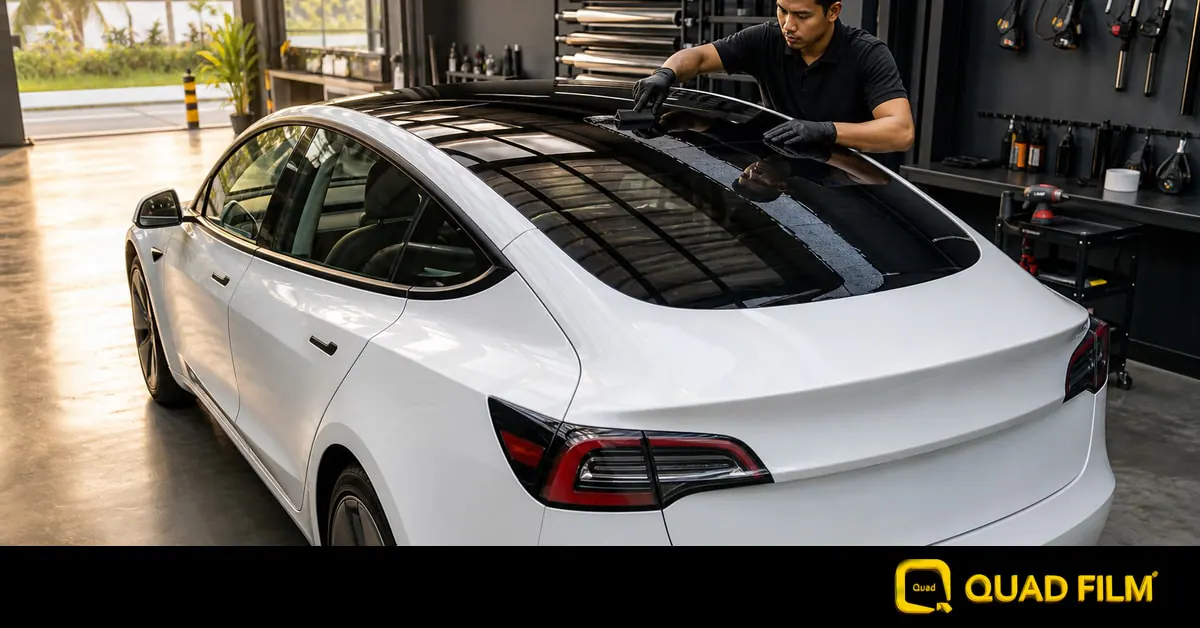
- Tesla Model 3 window tint in Malaysia comes down to five pieces of glass, and only two of them are legally constrained.
- The roof glass and the rear screen are one continuous panel on this car, so a single shade decision controls both cabin heat and rear visibility.
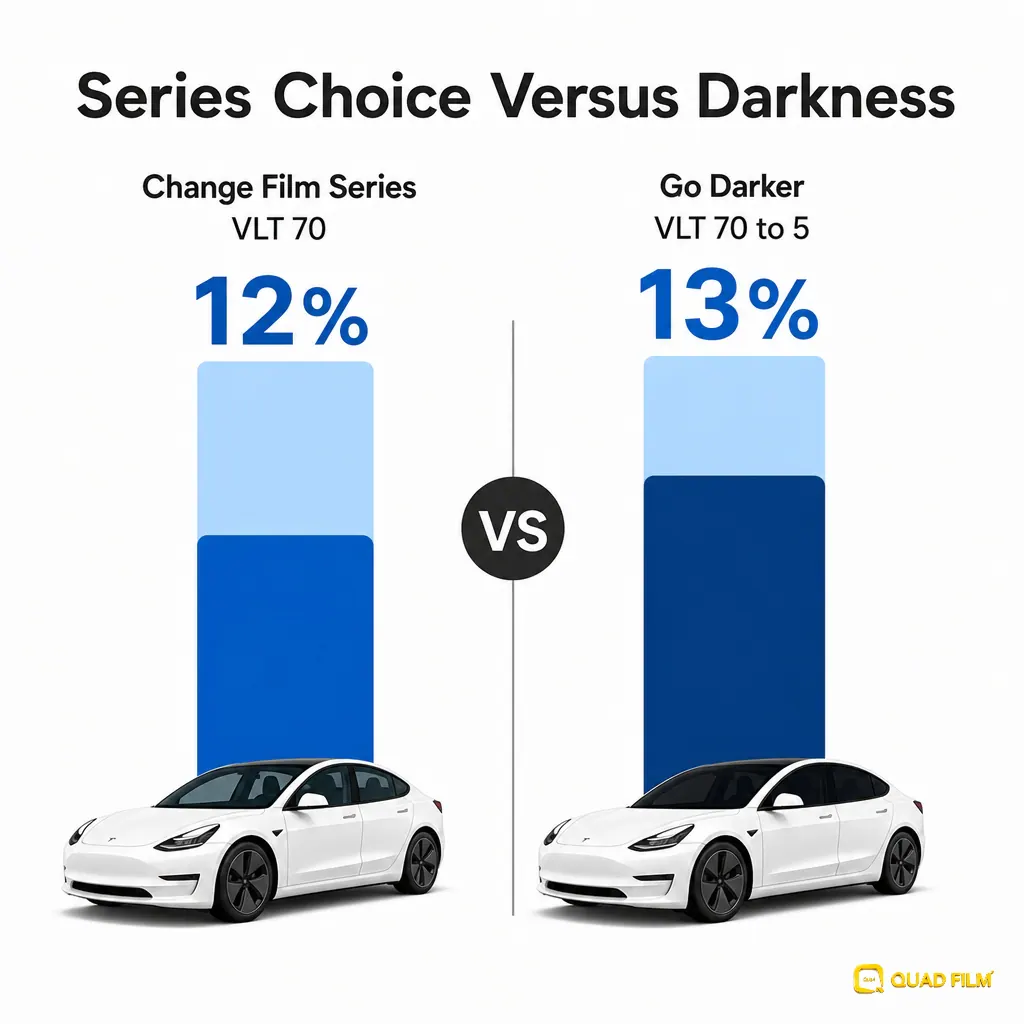
- Changing film series at the legal windscreen shade is worth 12 percentage points of heat rejection. Going from that legal shade to the darkest film in the range is worth 13. Series choice is almost as powerful as darkness.
- METALUX at VLT 70 still rejects 70% of total solar energy on a fully legal windscreen, with 97% infrared rejection and 99% UV rejection.
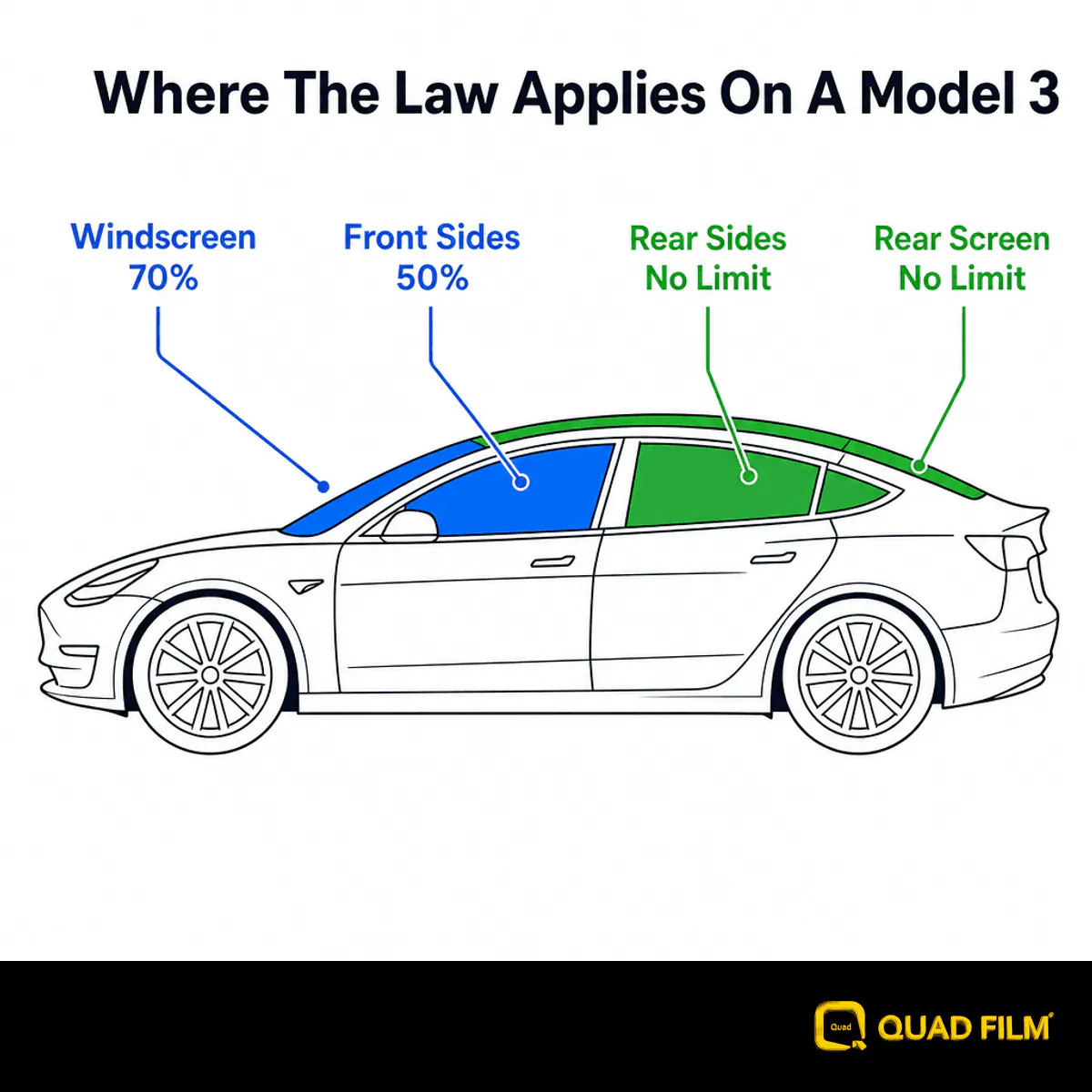
- JPJ sets a 70% VLT minimum on the windscreen and 50% on the front sides. The roof, the rear screen and the rear side windows have no limit.
Specifying Tesla Model 3 window tint in Malaysia is easier than it looks once you stop shopping by darkness and start shopping by glass. This car has five distinct surfaces that need a decision, two of them are capped by law, and the other three include the largest single piece of glass most owners have ever had over their heads.
If you are still deciding on a film brand or comparing metal against ceramic in general, start with our pillar on the best window tint for Teslas and EVs in Malaysia, which works through that argument across the whole Tesla range. This article assumes that decision is made and gets specific about the Model 3 itself, which behaves differently from a Model Y and very differently from a conventional saloon.
What follows is the shade for each piece of glass, the legal limits you have to respect, and the one comparison that shows why most owners over-buy darkness and under-buy film.
Model 3 Glass Is the Whole Problem
The Model 3 is 4,720 mm long, sits low, and devotes an unusual proportion of its surface area to glass. There is no painted steel roof and no headliner above the front seats. There is a single panoramic panel, and it runs the whole length of the cabin.
That construction is pleasant to sit under and expensive to cool. Steel reflects solar energy and the headliner insulates what gets through. Glass simply passes infrared into the cabin, which is why owner reports and independent testing put the difference at roughly 3 to 8 degrees Celsius of extra cabin temperature when the car is parked in direct sun. Four hours on an open deck at Sunway Pyramid is enough to make that gap the difference between driving off and standing outside with the air conditioning running.
The factory glass carries a UV coating, which is genuine and worth having, but UV is not the heat problem. Infrared is, and infrared rejection is a film property rather than a glass property. This is also where the difference between film constructions stops being academic, because a two-mil ceramic film and a four-mil multi-layer sputtered film do not perform alike in this specific application. Our explainer on sputtered against multi-layer sputtered tint covers why the layer count matters, and the practical side of that is set out in why so few installers can fit multi-layer sputtered film properly.
Five surfaces, five decisions. The rest of this article works down that list in the order that matters.
Your Roof Is Also Your Rear Screen
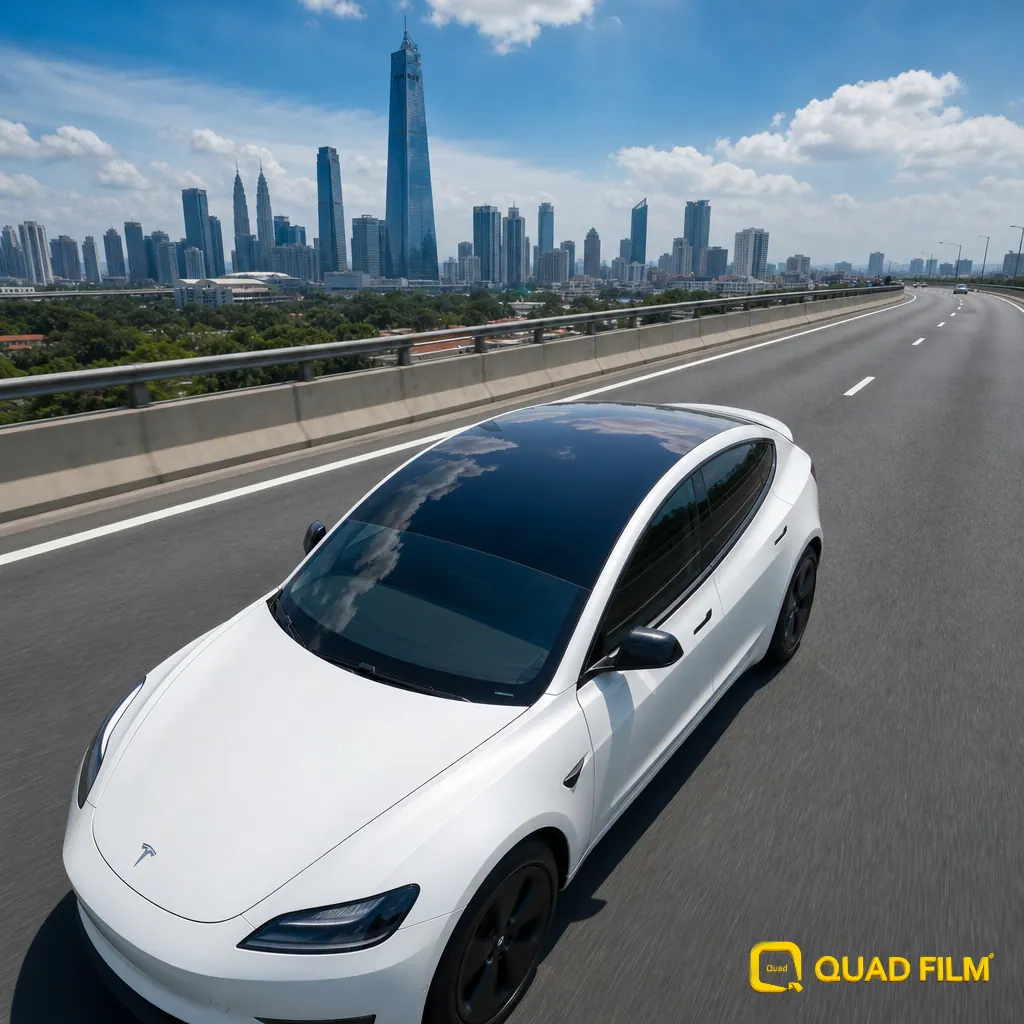
This is the Model 3 detail that catches owners out, and it changes the shade decision completely. The panoramic roof glass does not end at the back of the cabin. It continues down and becomes the rear screen, flowing to the base of the C-pillar as one unbroken surface. There is no separate rear windscreen the way there is on a conventional saloon.
So the shade you choose to keep the roof cool is the same shade you look through in the rear-view mirror. Go very dark to fix the carpark problem and you have darkened your entire rear view at the same time. Go light to protect the mirror and the roof keeps loading heat into the cabin all afternoon.
The way out is to stop treating darkness as the heat lever. Across the Quad range, total solar energy rejection moves only a few points between mid shades, while the film construction moves it far more. That means a mid shade on the roof panel gives up very little heat rejection while keeping the rear view usable at night, which is the combination almost every Model 3 owner actually wants once it is put to them plainly.
The cost of getting it wrong shows up on a specific journey. Reversing out of a narrow basement bay at Mid Valley at 9 pm, with one car waiting behind you, is when a roof panel taken down to 5% VLT stops being a heat decision and starts being a visibility one. The mirror gives you almost nothing and you are relying entirely on the camera. That is a 30 second problem you will repeat several times a week for as long as you own the car.
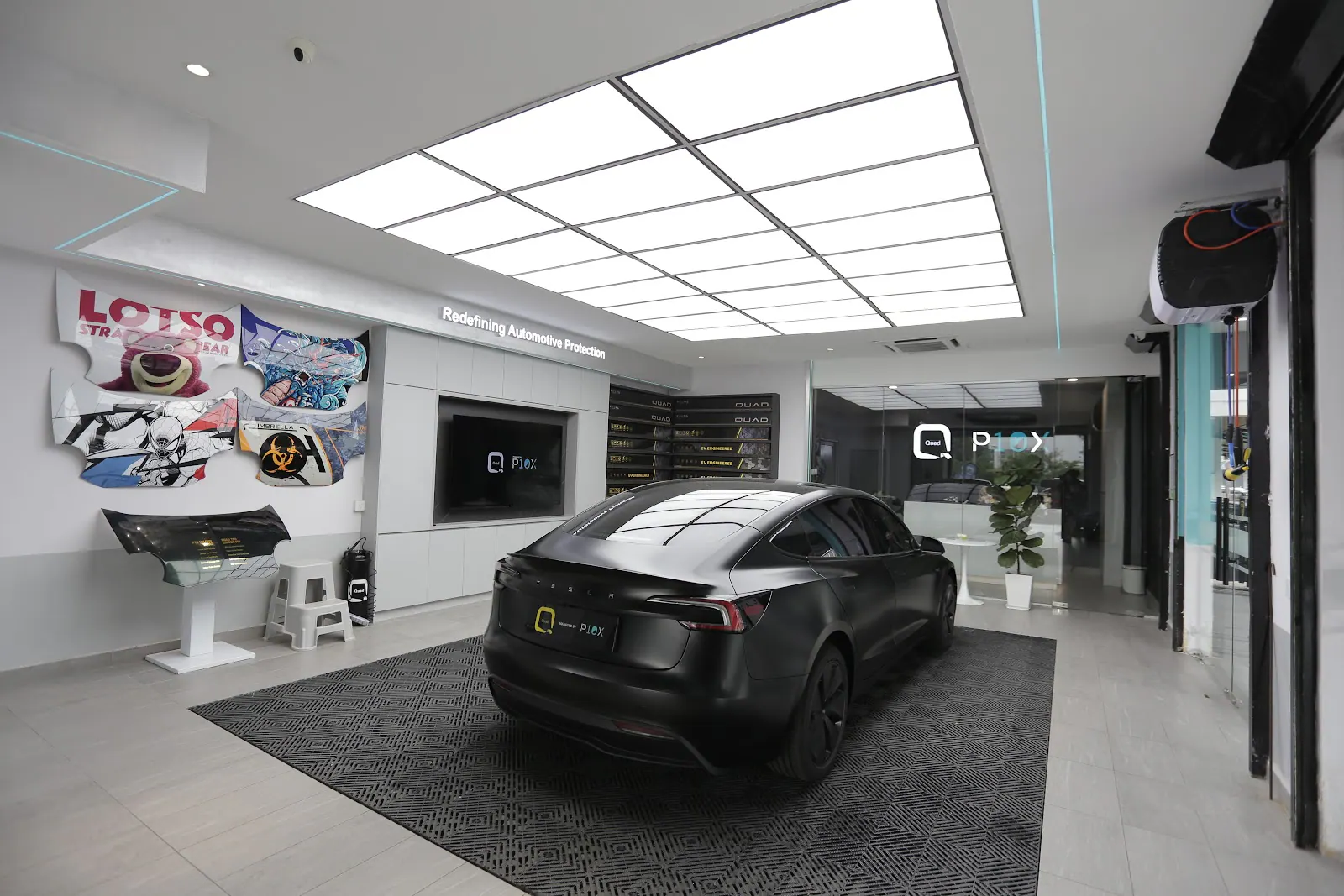
Seeing the car under showroom light, as in that photo, is the easiest way to judge a shade before it goes on. A sample held against the actual glass tells you more about the finished rear view than any percentage on a price list.
Model 3 Tint, Glass by Glass
The table below specifies each surface using METALUX, which is one of the two officially recommended series and the one built around optical clarity and night driving. That matters more than usual on a car where a large part of your rear vision runs through a tinted panel. Infrared rejection is a series-level property, so it is stated identically down the column.
| Glass | Recommended series and shade | VLT | TSER | IRR | JPJ legal status |
|---|---|---|---|---|---|
| Windscreen | METALUX 70 | 70% | 70% | 97% | Legal, meets the 70% minimum |
| Front side windows | METALUX 50 | 50% | 74% | 97% | Legal, meets the 50% minimum |
| Rear side windows | METALUX 20 | 20% | 80% | 97% | Legal, no VLT limit |
| Glass roof, front section | METALUX 30 | 30% | 78% | 97% | Legal, no VLT limit |
| Glass roof rear section and rear screen | METALUX 30 | 30% | 78% | 97% | Legal, no VLT limit |
Read down the TSER column rather than the VLT column. The windscreen sits at the legal maximum lightness and still rejects 70% of total solar energy, which is within 13 points of the darkest shade in the same series. You are not being punished for staying legal at the front, which is the single most useful thing to know before you walk into a shop.
The roof recommendation of METALUX 30 is deliberate. It rejects 78% of total solar energy, only two points below the rear side windows, while leaving enough light transmission that the rear screen half of the panel still works in the mirror after dark. If your car rarely carries rear passengers and daytime heat is the whole problem, METALUX 20 on the roof is defensible. Below that you are paying for darkness rather than cooling.
That clip runs through a Tesla-specific upgrade package, and it is a useful look at how the glass surfaces get treated as their own category rather than folded into a general tint job.
Film Series Beats Darkness by 12 Points
Here is the comparison that should change how you shop, and it takes two subtractions.
First, the series lever. At VLT 70, the shade you are stuck with on the windscreen, MEGALUX rejects 72% of total solar energy and MATRIX rejects 60%. Subtract them and changing film series is worth 12 percentage points, at the identical shade, on the identical glass.
Second, the darkness lever. Stay within MEGALUX and go from VLT 70 all the way to VLT 5, the darkest film in the range. Total solar energy rejection moves from 72% to 85%. That is 13 percentage points for going from legal-light to almost opaque.
Twelve against thirteen. Choosing a better film construction at a fully legal shade delivers almost exactly as much heat rejection as making the car as dark as it can physically be made, and it does it on every window rather than only on the ones behind the B-pillar.
The reason is structural. Heat rejection in this range comes from sputtered metal layers reflecting infrared, and those layers are present regardless of how much visible light the film passes. Darkness controls glare and privacy. Layer count controls heat. Once you see that, the shop that pushes you toward a darker shade of a cheaper film is doing the opposite of what your Model 3 needs, which is a pattern we have written about in why tint shops keep pushing ceramic film.
METALUX, MAGNETRON or MEGALUX
Three series are worth naming for a Model 3, and they solve slightly different problems.
METALUX is the officially recommended default and the one specified in the table above. It runs 24 sputtered layers, rejects 97% of infrared and 99% of UV, and is built around optical clarity and night-driving comfort. On a car where a tinted panel forms part of your rear vision, that clarity focus is not a soft benefit, it is the reason to choose it.
MAGNETRON is the other officially recommended series and takes a different route to a similar place. It is a hybrid, combining 12 sputtered layers with a nano-ceramic layer, and it rejects 99% of infrared and 99% of UV. Total solar energy rejection sits a few points below METALUX at matching shades, but the hybrid construction gives strong colour stability and it is a sensible choice if you want sputtered performance with a ceramic film's behaviour.
MEGALUX is the flagship. Forty-eight sputtered layers, 99% infrared rejection, 99% UV rejection, and the highest total solar energy rejection figures in the range at every shade. It is the answer when maximum heat rejection is the only criterion, which on a Model 3 parked outdoors all day is a defensible position. MIRACLE sits alongside these as the UV specialist, rejecting 100% of UVA and UVB, which matters if skin exposure rather than cabin heat is your main concern, as covered in our piece on whether car tint really protects your skin.
One practical note on the sputtered films. Metallic layers can attenuate radio-frequency signals, so if you rely on any RF accessory mounted behind glass, raise it with your installer at booking rather than after the film is on. Non-metallic constructions behave differently, and an installer who knows the difference will place things accordingly.
The choice usually resolves against how the car is parked. A Model 3 that spends nine hours a day on an uncovered office carpark deck in Cyberjaya is a heat problem first, which argues for the flagship. A Model 3 that lives in a basement and does a 40 kilometre night commute is a clarity problem first, which is exactly what METALUX was built around.
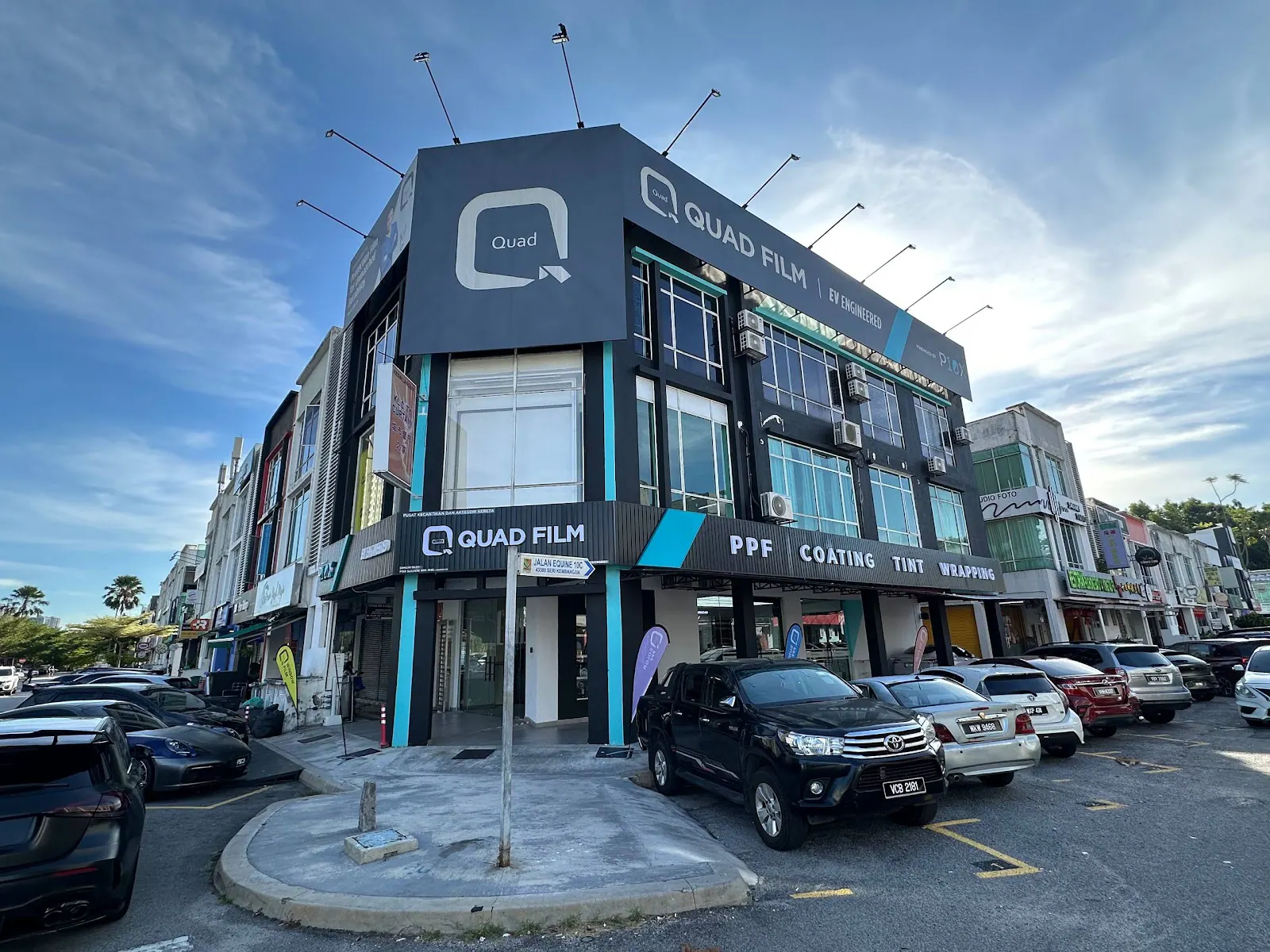
The Taman Equine outlet shown there is one of the Klang Valley locations. Booking a slot where the installer has fitted the car before matters on a Model 3, because the roof panel is one of the harder jobs in the range to do without a seam.
What JPJ Lets You Do
Malaysian law caps visible light transmission on the two pieces of glass the driver looks through most directly. The windscreen must transmit at least 70% of visible light. The front side windows must transmit at least 50%. Those are floors, so a film rated at exactly those numbers is compliant.
Everything behind the B-pillar is unrestricted. Rear side windows, the rear screen and the glass roof carry no VLT limit at all. Owners frequently assume a panoramic roof must be treated like a windscreen because it is above the driver. It is not, and you have complete freedom there, which is exactly why the roof decision is about visibility and heat rather than about law.
The measurement detail worth carrying with you is that any roadside check reads the glass as it stands, meaning factory glass plus your film together. The Model 3's rear glass already carries factory tint, so film applied behind the B-pillar stacks on top of it. That remains legal, but it explains why a shade that looked moderate on a sample can look considerably darker once it is on the car.
Getting Model 3 Tint Right in Malaysia
Work it in this order. Accept the legal shades at the front, because METALUX 70 on the windscreen still rejects 70% of total solar energy and there is nothing to gain by fighting the limit. Spend the money on film construction rather than on darkness, because the numbers say the series lever is worth almost as much as the darkness lever and it applies to every window. Then treat the roof and rear screen as one panel and pick a mid shade that keeps your mirror usable after dark.
When you are ready, bring the car to a Quad Film installer, ask for the roof and rear screen to be quoted as one continuous panel, and ask to see the total solar energy rejection figure for each shade before anything is cut.
Tesla Model 3 Tint Questions
What tint shade should I put on a Tesla Model 3 in Malaysia?
METALUX 70 on the windscreen at 70% TSER, METALUX 50 on the front sides at 74%, METALUX 20 on the rear sides at 80%, and METALUX 30 on the roof and rear screen panel at 78%.
Is the Model 3 roof separate from the rear screen?
No. The panoramic roof glass continues down and becomes the rear screen as one unbroken panel, so both take the same film and the same shade.
Does the Model 3 glass roof have a JPJ tint limit?
No. Only the windscreen at 70% VLT and the front side windows at 50% VLT are capped. The roof, rear screen and rear side windows are unrestricted.
Will a darker film keep my Model 3 cooler?
Only marginally. Going from the legal windscreen shade to the darkest film in the range gains 13 percentage points of heat rejection, while upgrading the film series at that same legal shade gains 12.
Which Quad film series suits a Tesla Model 3?
METALUX is the recommended default for its clarity and night-driving performance. MAGNETRON is the other recommended option, and MEGALUX is the flagship when maximum heat rejection is the priority.
How much infrared does Model 3 tint block?
METALUX rejects 97% of infrared. MEGALUX, MAGNETRON, MIRACLE and MATRIX each reject 99%.
Does tinting a Model 3 help with battery range?
Reducing the heat load reduces how hard the air conditioning works, and on an electric car that shows up as consumption. The roof is the largest single contributor on this model.
Can I tint the Model 3 windscreen and stay legal?
Yes. METALUX 70 sits at the 70% VLT legal minimum and still rejects 70% of total solar energy with 97% infrared rejection.
Protect your Investment today
Don't wait for stone chips to ruin your paint. Speak to our experts about custom PPF and Tinting solutions.