
- You may not need PPF on the whole car. Highway grit can chip the front bumper and bonnet, while carpark walls can scrape doors, rings can scratch around the handles, and luggage can scuff the boot ledge.
- Clear film will not repair old chips or scratches, and rough touch-up paint can still show through.
- Film should stay clear of the cameras, radar and parking sensors. You can ask the installer to show you where each piece ends.
- Before collecting the car, you can check the film's edges and seams and ask for written confirmation of which film was used and which panels it covers.
On a Volvo EX30, paint protection film (PPF) is most useful on the parts that pick up chips and scuffs most often: the front bumper and bonnet if you drive on highways a lot, and the door edges and boot ledge if you often park beside walls or load luggage.
You can compare the Volvo EX30 PPF options before getting a quote. If you plan to tint the windows too, getting EX30 window tint quoted on the same visit can save you a second trip.
What PPF can and cannot protect against
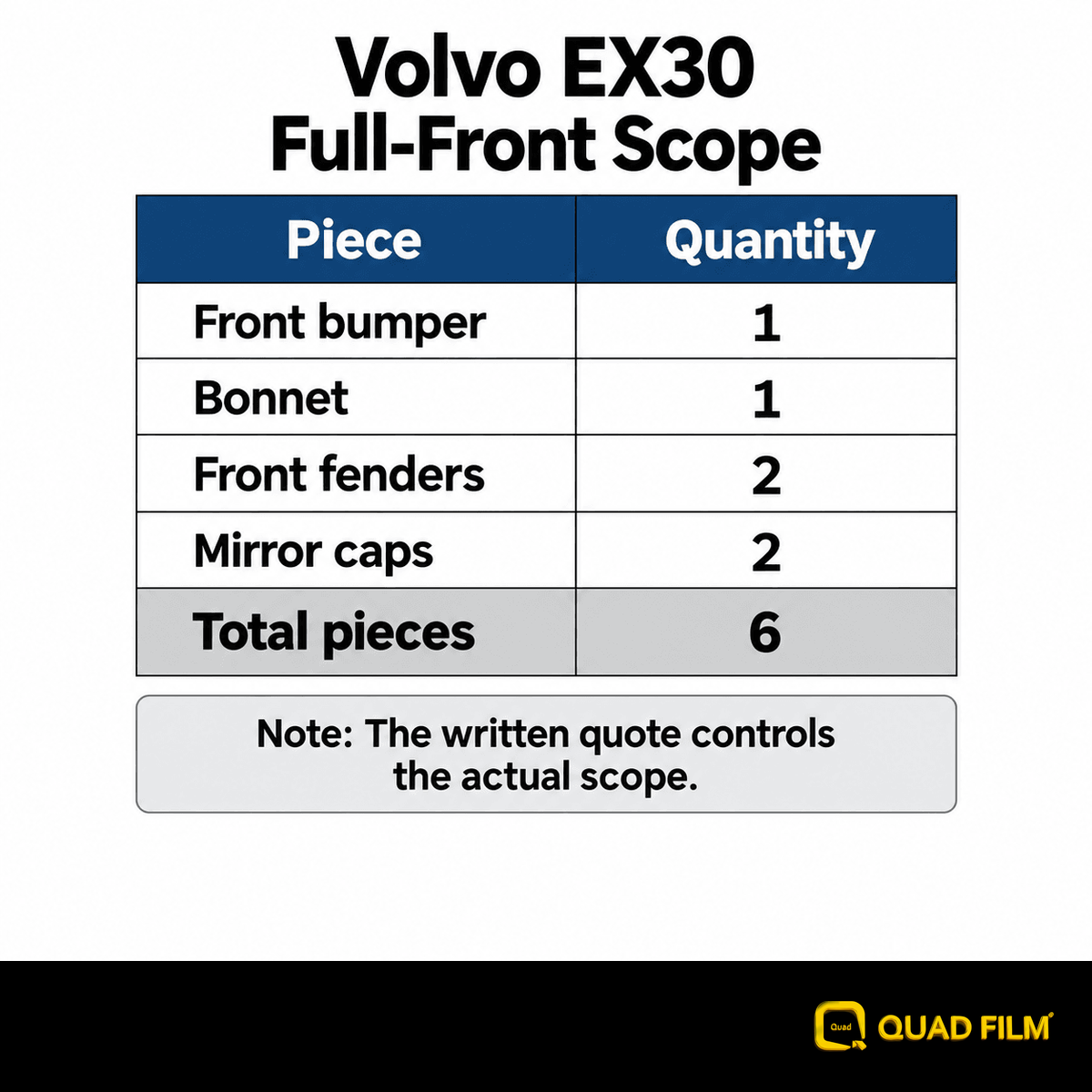
Paint protection film is a clear layer fitted over the panels you choose to cover. It can reduce damage from some stone chips, light scrapes, ring and fingernail marks, bag scuffs and the fine marks left by washing. It will not stop every impact: a sharp stone can cut the film, and a hard knock can dent the metal beneath it.
Clear film also cannot repair an old chip, hide uneven touch-up paint or straighten a damaged bumper. Light surface marks on a self healing film can fade with warmth, depending on the film. If the film is torn or your fingernail catches in a deep gouge, the sun will not fix it, and the installer will need to look at it. A dented panel may need body repair instead.
Ceramic coating helps water bead off the paint and makes dirt easier to wash away, while PPF adds a physical sheet over the paint. If your main worry is debris hitting the front bumper at 110 km/h, ceramic coating does not give the same physical protection as PPF.
Which EX30 panels to cover: full front, small pieces or full car PPF
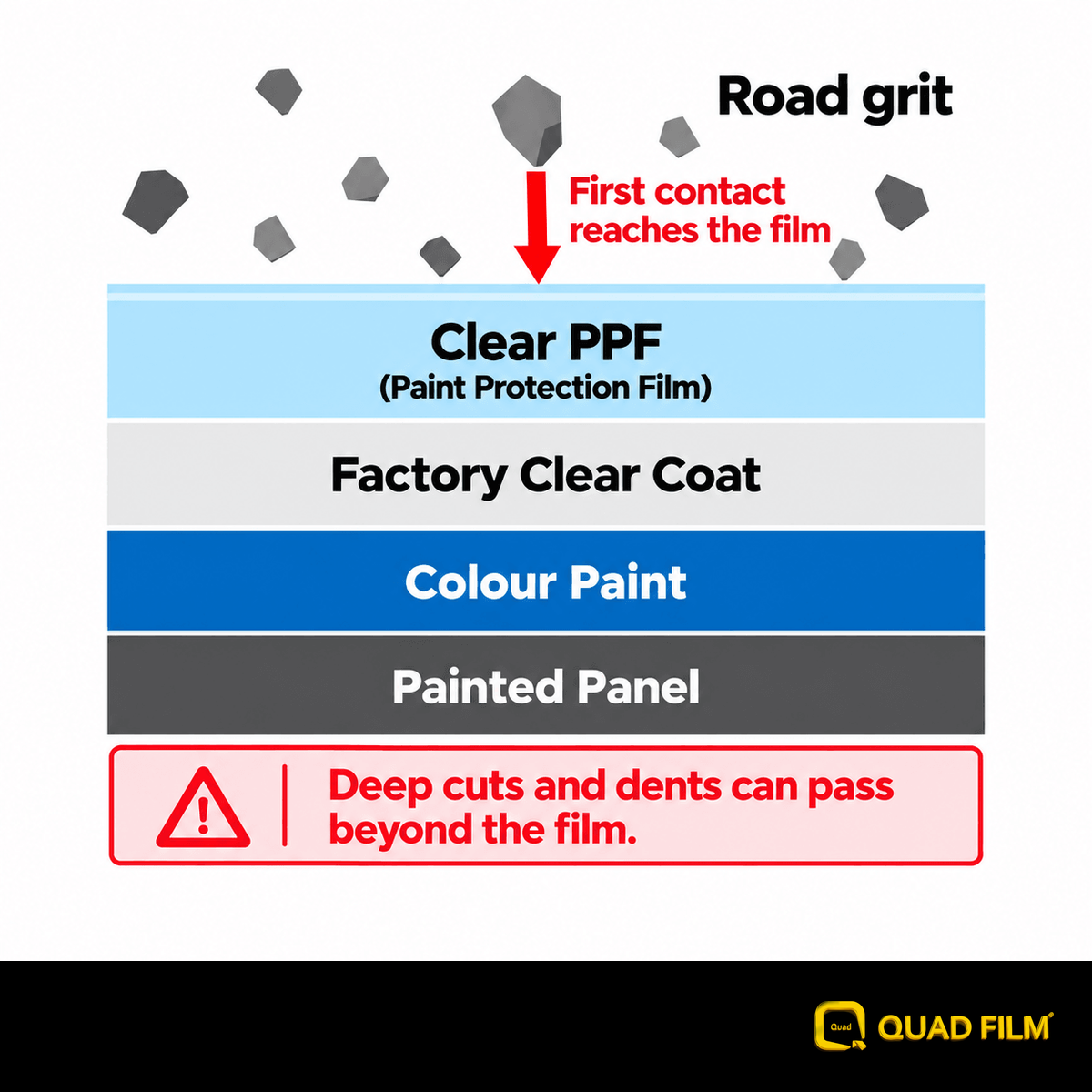
For regular highway driving, a full front PPF package usually covers the parts road grit hits most: the bumper, bonnet, both front fenders and mirror caps. Full car coverage adds the remaining painted panels, which can also pick up washing marks and light scuffs. Small pieces on the door edges and boot ledge suit owners who mainly worry about parking and loading scuffs.
Shops define packages differently, so a written list of included and excluded panels tells you more than a name such as "full front PPF" or "hybrid PPF". Mirrors, headlights and any other pieces you want should appear on that list. The list also shapes the quote, because PPF prices depend on both the coverage and the film you choose.
For some drivers, smaller areas such as the door edges, handle recesses and boot ledge may be more useful to cover than more of the front. Door edges can knock against walls or nearby cars, fingernails and rings can scratch the paint around the handles, and bags or prams can scuff the boot ledge.
We heard an EX30 owner reported scratching the rear bumper edge while unloading a large box. If you often load luggage, you can show the installer where it touches the paint so they can suggest a suitable strip width.
It is worth agreeing where the film will end before you book. If you are covering only part of the bonnet, you can ask to see where the exposed film edge will sit. For the mirror caps, the installer can tell you whether the film is one piece, where any seam sits and which edges can be wrapped. Fitted examples help here, because a small sample on a flat board cannot show how the film finishes around those curves.
This checklist can help you compare the quote with the coverage you want:
| EX30 panel or area | Common source of damage | Coverage to discuss | Details to confirm on the quote |
|---|---|---|---|
| Front bumper | Road debris and parking scrapes | Full front | Full bumper piece and openings around sensors |
| Bonnet | Road debris | Full front | Full bonnet or the position of a partial film edge |
| Front fenders | Road debris beside the bumper and bonnet | Full front | Left and right fenders |
| Mirror caps | Road debris and light scrapes | Full front | Number of pieces and seam positions |
| Door edges and handle recesses | Walls, rings and fingernails | Small pieces | All four doors or the specific doors included |
| Boot ledge | Bags and luggage crossing the lip | Small pieces | Strip width and where each end stops |
| Remaining painted panels | Washing marks and light scuffs | Full car | Every included and excluded panel |
Paint marks and sensor areas to check before installation
An old chip will normally stay visible under clear film. Rough touch-up paint can also show through because the film follows the uneven surface. Before cleaning starts, it helps to look over the panels you want covered with the installer under bright workshop light and photograph any existing damage.
Even a newly delivered car needs that check. It may have marks from transport or dealer polishing, adhesive residue, or a small delivery scratch. If the EX30 is going straight from the showroom to the workshop, daylight photos of the bonnet, bumper corners, mirrors, doors and boot opening taken beforehand will show which marks were already there.
If the quote says "paint correction included", you can ask which panels will be worked on, which marks are expected to improve and what will still be visible afterward. A lightly marked panel may only need cleaning and preparation. A deep chip or failed repair may need paint work before film is fitted. Minor stone chips that are purely cosmetic can be filmed over if you accept they will still show, so it is worth asking the installer which chips need repairing first.
Volvo EX30 is an electric car with cameras, radar units and parking sensors around its front, mirrors and rear. Volvo's EX30 support guidance states that these areas must stay clear of labels, objects, dirt and other obstructions. Before any film is cut, you can ask the installer to point out the camera, radar and sensor locations for your model year and explain how those areas will stay clear.
Choosing a film: pick the panels first, then the finish
It makes sense to decide which panels to cover first, then choose the film and finish. Thickness alone will not tell you how neatly the film fits a bumper corner, where a seam will sit or how the finish looks beside uncovered paint. It also says nothing about how the film holds up in our heat and humidity, where cheap PPF can turn sticky.
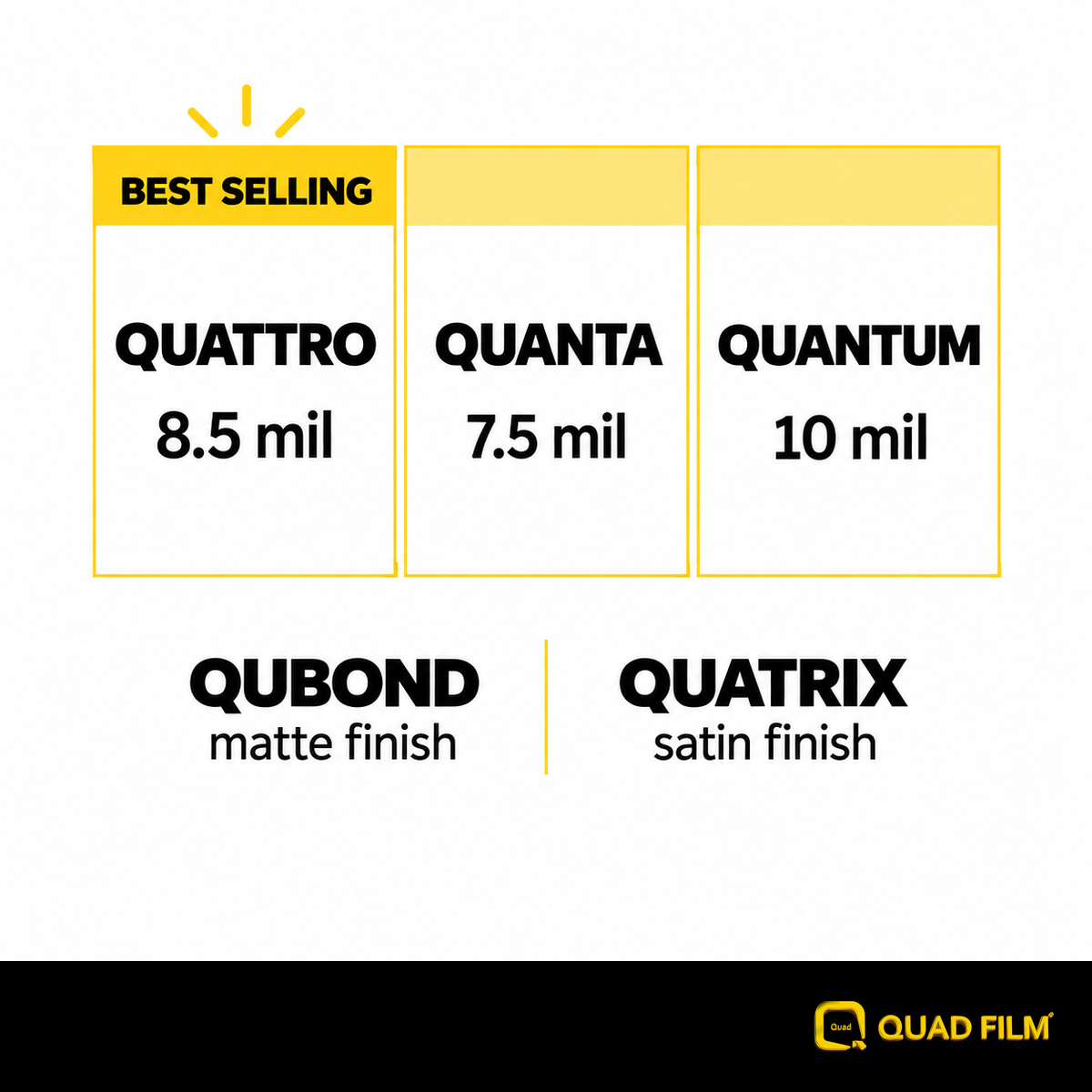
Quad Film's clear PPF range includes QUANTA 7.5 mil, QUATTRO 8.5 mil (the best seller) and QUANTUM 10 mil. A mil is a thousandth of an inch, so a higher number means a thicker film. QUBOND has a flat matte finish, while QUATRIX is a separate product with a low sheen satin finish. The product name on your quote should match one in the current Quad Film PPF range.
If you want to keep the EX30's factory look, you can ask to see clear film fitted over a paint colour close to yours, both in daylight and under workshop lamps. A small film card can show gloss, but not whether a covered panel will match the uncovered one beside it.
If you are thinking about matte or colour PPF to change how the car looks, it helps to see a finished car as well as a sample panel. A matte bonnet beside glossy front fenders can look unfinished unless that contrast is what you want.
How PPF is fitted, and why a clean bay matters
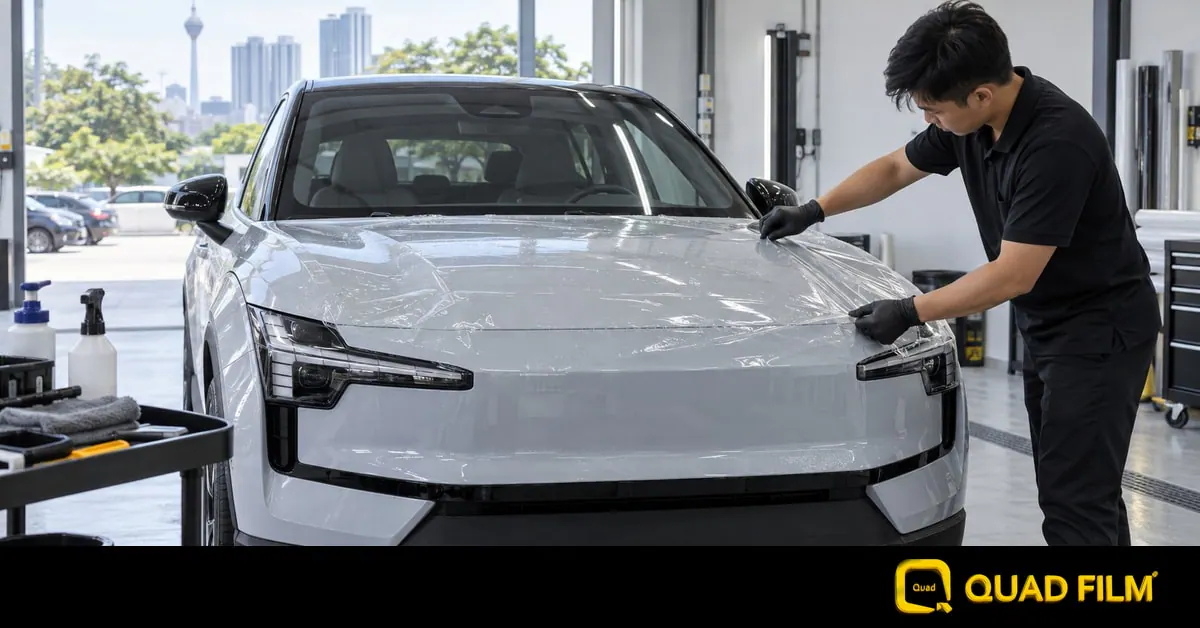
A good installation starts with washing and decontaminating the selected panels and checking the paint again. The film should then be fitted in a clean bay. Dust on exposed adhesive can stay visible under clear film, so it is worth looking at the working area as well as the shop's photos of finished cars.
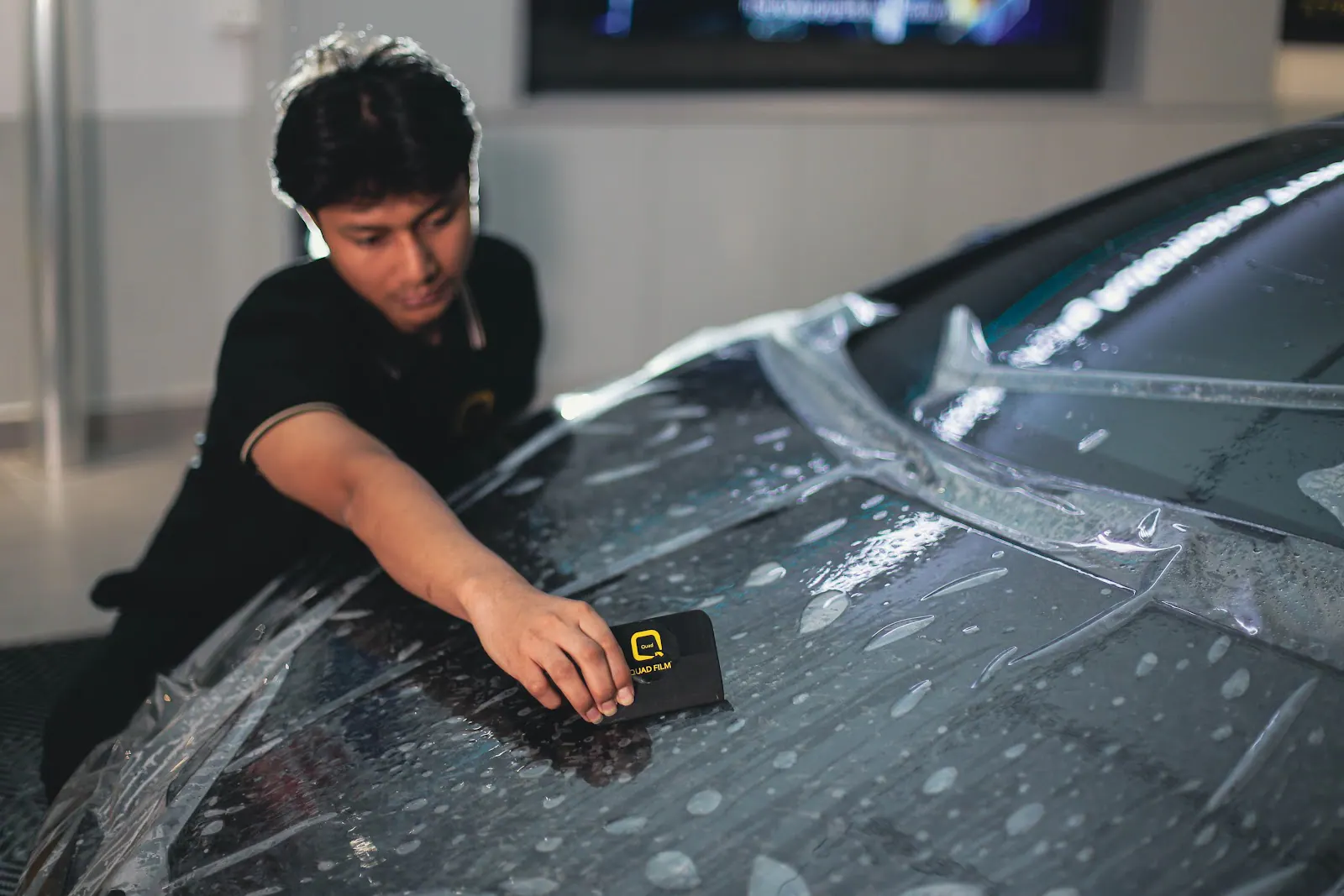
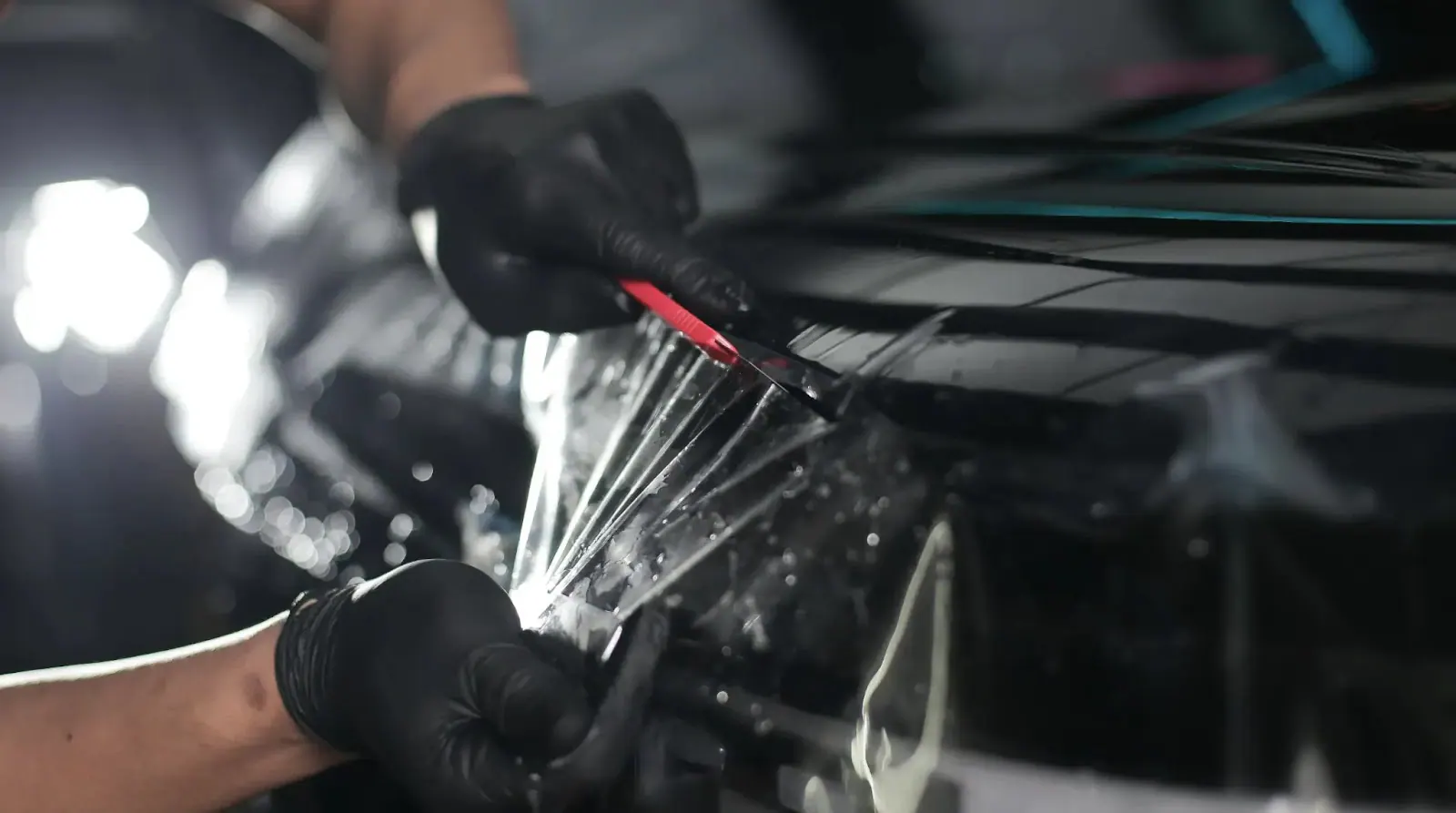
Installers use fitting solution to position the film, then push liquid and air towards the edges with a squeegee. Curved bumper corners and mirror caps need more shaping than a flat bonnet, and stretching must be controlled so the film sits properly. You can ask which pieces are cut from a pattern, which are trimmed during fitting and how the installer protects the paint when cutting.
What to check before collecting your car
It helps to bring the written quote when you inspect the car. Walking around the EX30 from the front bumper, you can tick off every listed panel and small piece, including the boot strip and all four door edges if they were quoted. Missing coverage is easier to fix before you leave.
Bright, even light makes the film easier to check, especially around bumper recesses, mirror corners, wrapped edges, seams and the cutouts around cameras and sensors. Visible dirt, hard creases or unexplained cuts are worth pointing out to the workshop. If you are told a mark will disappear, you can ask how long it should take and when to return if it does not.
A little moisture under fresh film can be normal while it settles. A lifted corner, trapped dirt or a cut that reaches the paint is different and is worth raising with the workshop. Before leaving, you can ask for written aftercare instructions for your exact film, including who to contact if an edge lifts and when to return.
A few quick checks before you drive off:
- No camera, radar or parking sensor warnings when the car starts. If one appears, follow Volvo's diagnostic advice and let the workshop inspect the film rather than peeling it back yourself.
- Every door and the boot open and close normally.
- Mirrors fold and unfold normally, if film was fitted there.
- Bonnet release works and panel gaps look normal.
- Photos of anything concerning, with a date agreed for another inspection.
- Written confirmation of the film and covered panels, kept with the car records.
A record of any paint repairs is worth keeping too. Old repairs and repainted panels can affect how film comes off, so the installer needs to know about them before removal or replacement.
How to care for your PPF
Your installer can tell you when the car can be washed for the first time. Waiting times depend on the film and installation conditions, so the instructions for your film matter more than advice written for another product. If an edge starts lifting while the film settles, it is best to send a clear photo to the installer before road dirt works underneath it.
Routine washes are gentler on the film when loose grit is rinsed off before wiping, the wash tools are clean and strong water pressure stays away from the film edges. Edges around bumper corners, mirrors, handle recesses and the boot strip need the most care.
Tree sap and road grime are easier to clean off when removed early. Products approved for the film are the safer choice, and scraping can damage the surface. If you later take the car to a detailer for polishing or coating, let them know which panels are covered with PPF. A method that suits bare paint may not suit the film's surface.
One damaged piece does not always mean replacing the film on the whole car. A mirror cap, boot strip or bonnet sheet can usually be replaced separately. Keeping the original film name and coverage details, including where each piece ends, makes it easier for the installer to match the replacement.
Getting a written quote for your EX30
You can compare the Volvo EX30 PPF options and ask a Quad Film installer to show you the proposed coverage on your car. Before any film is cut, a written quote should name the exact film and each included panel, along with where the edges will sit and how the camera, radar and sensor areas will stay clear.
Frequently asked questions
Do I need PPF on the whole car?
Not necessarily. Full front coverage can be useful for highway driving. Smaller pieces may help with scrapes on the door edges, ring and fingernail scratches around the handles, or luggage scuffs on the boot ledge. The written panel list shows what a package actually includes.
Will the film edge show if I cover only part of the bonnet?
Yes, there will be an exposed film edge where the coverage stops. Before booking, you can ask where it will sit and, ideally, look at a similar finished car in daylight.
Can I put PPF on the boot ledge?
Yes, on a suitable painted section. You can show the installer where your luggage touches the boot ledge so the film is wide enough to cover that area.
Will the film cover any cameras or sensors?
It should not cover a camera lens, radar face, parking sensor or other functional opening. You can ask the installer to point out those locations for your model year and show where each piece of film will end.
What's the difference between matte and satin PPF?
Matte has a flat finish; satin has a low sheen. In Quad Film's range, QUBOND is matte and QUATRIX is satin. Fitted examples are worth seeing before you choose, especially if some panels will remain glossy.
Protect your Investment today
Don't wait for stone chips to ruin your paint. Speak to our experts about custom PPF and Tinting solutions.